By Durell Namasani
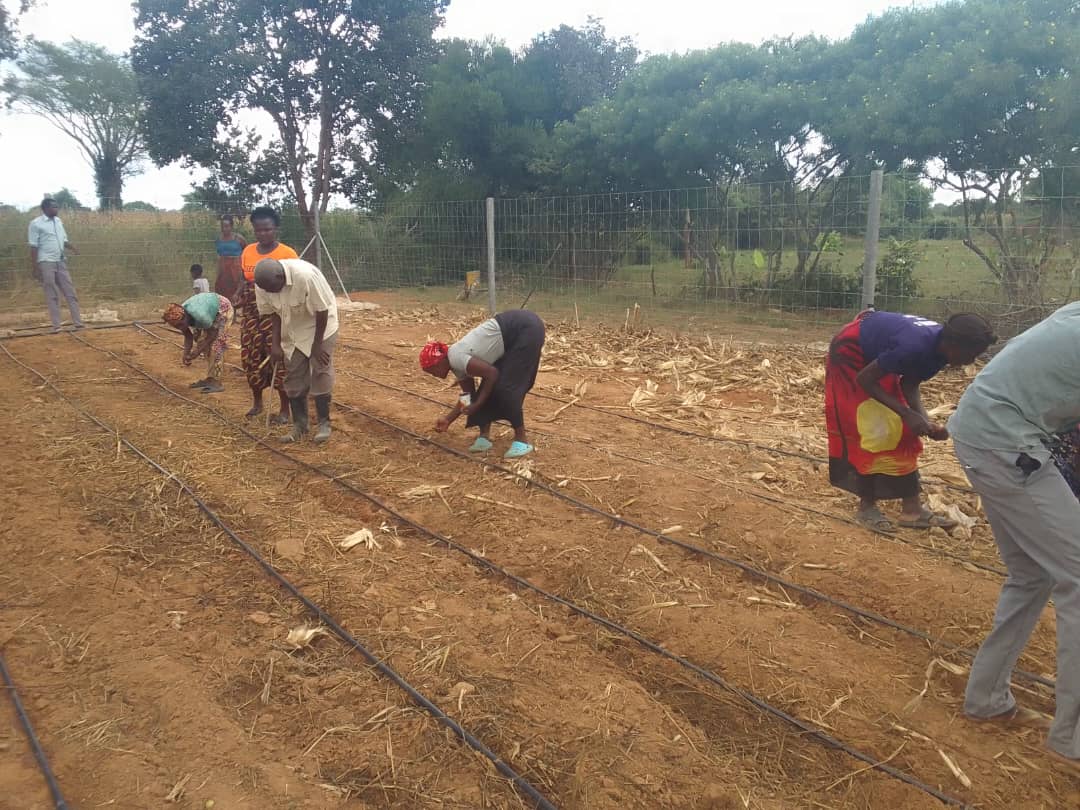
As the world marks the International Day of Education, focus is turning to the humble vegetable garden as a powerful, living classroom. In the face of pervasive hunger and a changing climate, climate-smart agricultural practices are providing vital lessons in food security, ecosystem health, and community resilience across Africa.
The need for such innovation is stark. Over 300 million Africans were chronically undernourished in 2024, according to global reports. In Zambia alone, an estimated 5.8 million people were projected to face heightened food insecurity due to droughts and climate shocks.

“Growing food locally is thus more than a livelihood strategy, it is education in action,” said Vincent Mofya, Senior Project Manager at Solidaridad, an organization supporting sustainable development. “It empowers communities to nourish their families and reduce dependence on unstable markets.”
These climate-smart gardens are designed using a systems-thinking approach, mimicking the balance of natural ecosystems like forests. This method fosters biodiversity, soil health, and water conservation. Key principles involve understanding soil fertility, matching crops to water availability, strategic crop rotation, and prioritizing both household nutrition and market potential.
Zambia showcases a variety of adaptive garden models, from urban backyard plots and rural wetland dambo gardens to efficient keyhole gardens with built-in composting. These spaces serve as laboratories where indigenous knowledge—such as traditional seasonal indicators—converges with Western scientific tools like soil testing and climate-adapted seeds.
“Through this integration, learners understand ecosystem dynamics and resilience strategies in a practical, hands-on way,” explained Sheila Garakara, Country Manager for Solidaridad in Zambia. The organization’s initiatives, such as the FANSER Project, help smallholder farmers blend traditional wisdom with modern techniques.
Establishing such a garden involves careful steps: selecting and designing the site, preparing soil with water conservation in mind, and managing planting, irrigation, and pests with organic and efficient methods.
This International Day of Education underscores that learning extends far beyond formal classroom walls. “Each seed sown is a lesson in sustainability,” Garakara concluded. “By integrating knowledge and practical learning, we empower farmers to feed their families, protect the environment, and shape a resilient future.”