By Burnett Munthali
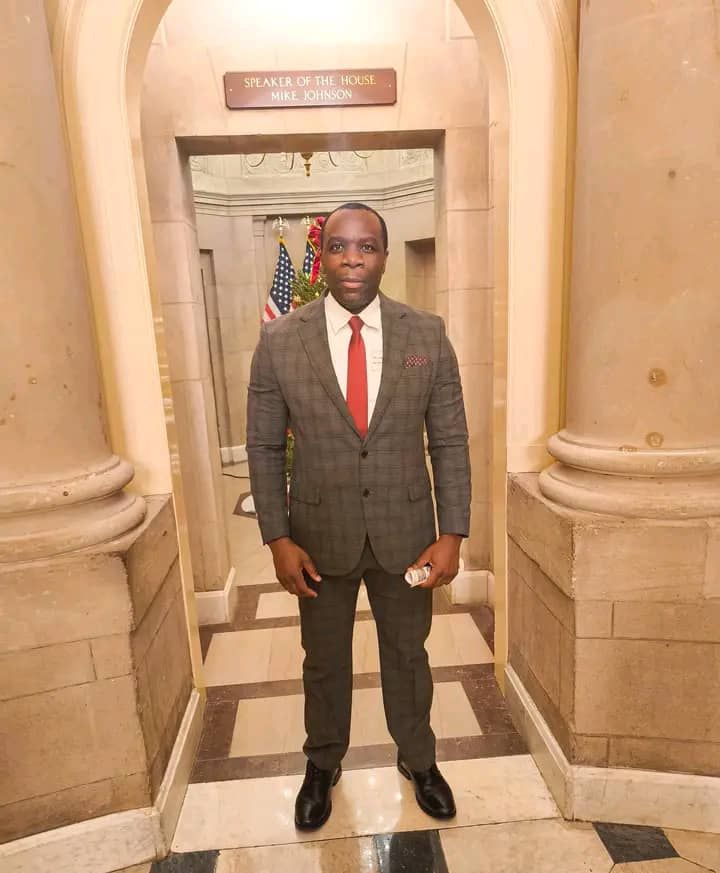
Chalo Mvula recently took time to tour the iconic United States Congress building, a landmark that symbolizes the core of American democracy.
His visit offered him a rare opportunity to walk through the halls that house the Senate and the House of Representatives, two chambers that together shape the legislative heartbeat of the United States.
The United States Capitol is more than just a government building; it is a historic testament to the centuries-old political system that has influenced global democratic values.
As Mvula navigated its corridors, he was immersed in the architectural grandeur and political legacy embedded in nearly every corner of the structure.


The Capitol Dome, standing tall and commanding, reminded him of the depth of history and craftsmanship invested in creating a national symbol of unity and governance.
Inside the building, he witnessed how the Senate Chamber and the House Chamber operate as the twin engines of America’s legislative machinery.
The Senate, often referred to as the “upper house,” is known for its deliberative nature, slower pace, and its responsibility to provide oversight, confirm presidential appointments, and ratify international treaties.
The House of Representatives, on the other hand, serves as the “people’s chamber,” where laws often originate and where the political pulse of the nation can be felt most intensely.
Mvula’s visit highlighted how these two chambers complement each other while maintaining distinct roles within the broader system of checks and balances.
He found it fascinating how every debate, vote, and bill introduced within these chambers contributes to national policy, governance, and the day-to-day lives of millions of Americans.
Walking through the Rotunda, he was surrounded by grand murals, statues, and historical artifacts that tell the story of America’s struggles, triumphs, and evolving identity.
The artwork and architecture serve not only as decorative elements but also as powerful reminders of the country’s long journey toward freedom, justice, and institutional stability.
His tour also provided insight into how Congress integrates public engagement, with spaces designed for visitors, journalists, and citizens seeking to witness legislative activities firsthand.
Mvula observed that transparency and accessibility are crucial components of the American democratic system, allowing citizens to stay informed and hold their leaders accountable.
He was also impressed by the technological systems in place, which support live broadcasts, real-time voting records, and digital transparency tools that keep the public connected to the legislative process.
The experience sparked reflections on how such structures of governance could inspire improvements in parliamentary systems across the world, especially in developing democracies.
He noted that the level of organization and institutional pride reflected in the Capitol could serve as a model for countries seeking to strengthen their legislative frameworks.
His tour also reminded him that leadership and policy formulation require both historical awareness and structural support, elements that are visibly embedded in the American Congress.
In speaking about his experience, Mvula expressed admiration for the dedication of the staff working behind the scenes to maintain the operations, security, and historical preservation of the Capitol.
He acknowledged that such institutions thrive because of their commitment to professionalism, continuity, and respect for democratic traditions.
His visit to the Capitol also deepened his appreciation for the importance of civic education, especially in Malawi and Africa, where many citizens remain detached from parliamentary processes.
He believes that exposing young people and professionals to global democratic practices can help nurture informed leadership and inspire long-term institutional development.
Chalo Mvula’s visit, therefore, was not just a tour but a learning experience that connected him with the foundational principles of modern governance.
It offered him a firsthand understanding of how robust legislative structures contribute to national progress, stability, and accountability.
The U.S. Congress stands not only as a political institution but as a historic monument that reflects the nation’s resilience, adaptability, and commitment to democracy.
Mvula left the building with a renewed sense of appreciation for the role of legislatures worldwide and the crucial importance of safeguarding their integrity.
His tour reinforces the idea that democracy grows stronger when citizens engage, learn, and draw lessons from global institutions that have withstood the test of time.