

By Rahim Abdul
The Malawi National Council of Sports (MNCS) has signaled a renewed focus on infrastructure development, with the Kamuzu Institute for Sports in Lilongwe emerging as a top priority for renovation.
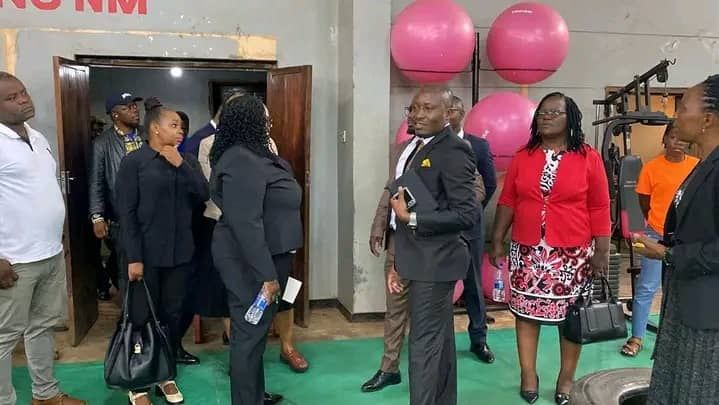
MNCS Board Chairperson Jim Kalua made this clear on Tuesday when he led his first official inspection tour of the institute since assuming office, accompanied by newly appointed board members.
Rather than a routine visit, the tour exposed deep rooted challenges at the facility, with Kalua describing the state of key infrastructure as worrying and in urgent need of attention.
He pointed out that faulty electricity connections, aging buildings, worn out courts and poorly maintained surroundings have significantly reduced the institute’s ability to serve athletes and the general public effectively.

Kalua stressed that leaving the situation unattended would not only undermine sports development but also limit the council’s capacity to maximize the facility’s economic potential.
According to the MNCS chairperson, a properly renovated Kamuzu Institute for Sports could become a major revenue-generating hub through increased usage by athletes, institutions and the wider community.
He noted that improved infrastructure would attract more sporting activities, training programs and events, ultimately easing the council’s dependence on limited funding sources.
Kalua further revealed that the board intends to engage the Minister of Youth, Culture and Sports, Alfred Gangata, to lobby for increased government support.
He said the planned meeting will focus on securing adequate funding for the rehabilitation of sports facilities nationwide as preparations for the forthcoming national budget gain momentum.
With the budget expected to be presented in April, Kalua emphasized that timely engagement with government is critical to ensure sports infrastructure is not sidelined.
During the inspection, the board toured several sections of the institute, including administrative offices, basketball and volleyball courts, gym centers and other training facilities.
Board members used the visit to assess firsthand the scale of work required and to begin shaping a practical roadmap for restoring the institute to acceptable standards.
Kalua concluded by reaffirming the board’s commitment to transforming sports facilities into safe, functional and economically viable spaces that support Malawi’s sporting ambitions.