A 16-year-old form-four student at Lunzu Secondary School Martin Master is the overral best performer in this year’s Old Mutual Mathematics Olympiad.
Master was announced the overall best performer during a prize presentation ceremony held at Mzuzu University (MZUNI) main Campus on Saturday.
He since received a prize of K300, 000 for his impressive performance.
On the other hand,a 15-year-old Faith Ng’ambi of Likuni Girls Secondary School emerged as the best female winner.
Ng’ambi pocketed K250,000 for the feat.
On school level, Dedza Secondary School were announced the first winners after beating other 118 schools with 271 points.
Marist Secondary School scooped second position with a score of 208 points followed by Chaminade Marianist Secondary School which came third after amassing 118 points.
The winning schools will get various amounts of mathematics writing and teaching materials.
Old Mutual has been bankrolling the competition since 2014.
The Anti-Corruption Bureau (ACB) claims that inadequate money is the challenge that has made it to fail to establish ACB offices in each and every district across the country though 25 years of existence in Malawi.
Principal Public Relations Officer for ACB Eglita Ndala made the sentiments as the community in Mulanje district bemoans the absence of ACB office in the district makes the fight against corruption harder.
Mdala
Group village head Namputu of Senior Chief Chikumbu in the district says their communities decides not to report Corruption practice cases to ACB because they feels that ACB deals with government issues only not the communities.
“We could love if ACB opens other offices in the districts so that corruption cases in our districts may handled in our locality.” Said GVH Namputu.
In response, ACB spokesperson Eglita Ndala says the Bureau has the plans to have other offices in the districts but its financial muscle does not allow them to have offices at a min time.
“We really want to have many offices that will help in fight against corruption in the country but our money is very small that can not manage to pay the employees in all those offices we may open, but we will open as the time goes.” Said Ndala.
Ndala also revealed that the bureau is ta an advanced stage of opening four ACB offices in Mchinji, Karonga, Machinga and Chikwawa.
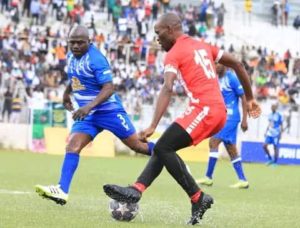
Mighty Mukuru Wanderers Legends are the champions of the Legends Game after beating FCB Nyasa Big Bullets Legends 3-2 on post match penalties in an entertaining match played at Kamuzu Stadium on Monday afternoon.
Wanderers goalkeeper Simplex Nthala saved three penalties from captain Fisher Kondowe, Kondwani Kumwenda and Jimmy Zakazaka while James Sangala scored the decisive spot kick to win the cup for the Nomads Legends.
Nomads and Bullets legends in action
Captain Joseph Kamwendo, Wachimwa Sadick also scored their spot kicks for Nomads while Flames coach Patrick Mabedi and Chisomo Kamulanje scored for Bullets Legends.
Allan Kamanga and Gerald Chimbaka for Wanderers had their spot kicks saved by Bullets goalkeeper Vincent Gona.
Heston Munthali had put Bullets ahead in 85th minute with a simple tap-in but Victor Nyirenda equalised for the Nomads Legends with a brilliant header in the stoppage time to force the match into sadden death.
A good leader takes responsibility for their leadership. They understand that everything they do directly affects the people they lead. In other words, the best leaders lead with their followers in mind. And one of the most important leadership traits is engaging your followers.
People who are critics perform the action of critiquing things (remember, critique means to identify both positive and negative aspects), but sometimes the word critic is also used to describe a person who only says negative things, a person who criticizes.
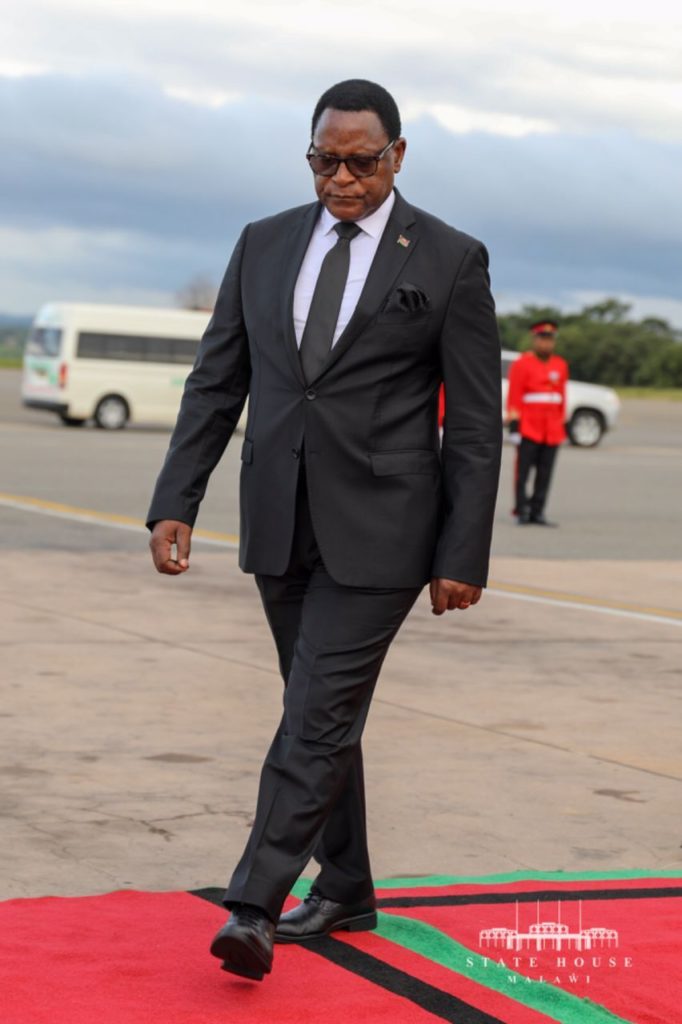
President Chakwera
A critique evaluates a resource. It requires both critical reading and analysis in order to present the strengths and weaknesses of a partic.
Seeking and giving advice are central to effective leadership and decision making. Yet managers seldom view them as practical skills they can learn and improve. Receiving guidance is often seen as the passive consumption of wisdom. And advising is typically treated as a matter of “good judgment” you either have it or you don’t rather than a competency to be mastered.
When the exchange is done well, people on both sides of the table benefit. Those who are truly open to guidance (and not just looking for validation) develop better solutions to problems than they would have on their own. They add nuance and texture to their thinking and, research shows, they can overcome cognitive biases, self-serving rationales, and other flaws in their logic. Those who give advice effectively wield soft influence they shape important decisions while empowering others to act. As engaged listeners, they can also learn a lot from the problems that people bring them. And the rule of reciprocity is a powerful binding force: Providing expert advice often creates an implicit debt that recipients will want to repay.
The term ‘public opinion was coined by philosopher John Locke in the 17th century. However, the concept itself predates Locke. Vox populi or ‘voice of the people’ is a similar Latin concept. Today, public opinion is defined in the following way: collective evaluations expressed by people on politico-social-economical issues, policies, institutions, and individuals.
Importance of public opinion in a democracy
Listening is essential in a democracy. People have a right to be heard by their representatives. That is what legitimises democracy in the public eye and builds trust in government and its institutions. The functioning of a stable society is impossible without the means of free-flowing two-way communication, talking and listening with an openness to the other’s point of view.
Public opinion can act as a check on leadership, as the members of the public can express their dissatisfaction with politicians who refuse to take their opinions into account and vote them out of office.
Finally, presenting the views of the mass public to government leaders who are making decisions that will affect society. Leaders often monitor the public pulse when making policy decisions, especially when they face an election campaign.
The recent heavy rains in Nkhotakota central ward in Malawi have left many families devastated, as houses, livestock, and fields have been washed away. In the midst of this humanitarian crisis, one local councillor’s response has come under fire, sparking outrage and criticism from social commentators and community members.
Wanangwa Harawa, a councillor for the ruling Malawi Congress Party (MCP), visited the affected area to assess the damage and provide support to those in need. However, his actions during this visit have raised eyebrows and caused a stir amongst the local population.
Upon arriving at the muddy and waterlogged area, Harawa refused to walk through the mud and asked one of the flood victims to carry him on their back. The victim, a married man with five children who had lost everything in the floods, reluctantly agreed to carry the councillor through the muck and debris.
Harawa being carried by flood victim
The image of a politician being carried on the back of a struggling flood victim has been widely shared on social media, with many condemning Harawa’s lack of empathy and compassion towards those who are suffering. Critics have pointed out that this incident is emblematic of a larger issue within the MCP, where the needs and concerns of the people are consistently overlooked in favor of political gain.
The incident has reignited fears among the Malawian population that a potential return to power for the MCP in the upcoming elections could lead to a regression to the dictatorial rule that the party was known for during its previous tenure in office. Many believe that the party’s actions in times of crisis, such as this current flood emergency, are indicative of a larger trend of neglect and indifference towards the plight of ordinary citizens.
In response to the backlash, Harawa has defended his actions, stating that he was simply trying to avoid getting his shoes dirty in the muddy terrain. He has expressed regret for his behavior and apologized to the victim who was forced to carry him, acknowledging that his actions were inappropriate and offensive. However, many remain unconvinced of his sincerity and believe that this incident reflects a deeper problem within the party and its leadership.
The outcry over Harawa’s actions has underscored the importance of empathy and compassion in times of crisis, particularly for those in positions of power and influence. The incident has served as a stark reminder of the power dynamics at play within the political landscape of Malawi, where the actions of elected officials can have far-reaching consequences for the well-being and livelihoods of the population.
Moving forward, many are calling for greater accountability and transparency within the MCP, as well as a renewed commitment to serving the best interests of the Malawian people. The upcoming elections will be a crucial test for the party, as voters will have the opportunity to hold their leaders accountable for their actions and decisions.
In the meantime, the people of Nkhotakota central ward continue to grapple with the aftermath of the devastating floods, rebuilding their lives and communities in the face of immense challenges. As they work to recover and heal from the trauma of the disaster, they are looking to their elected officials for support, understanding, and leadership in their time of need.
The actions of Wanangwa Harawa have left a lasting impact on the community, serving as a reminder of the importance of humility, compassion, and integrity in times of crisis. As the people of Malawi come together to rebuild and recover, they are hoping for a brighter future guided by principles of empathy, solidarity, and justice for all.