
Sunday, March 29, 2026
No menu items!
spot_img
Home Blog Page 1461

First Lady’s charity donates to patients at QECH

0

By Glory Msowoya

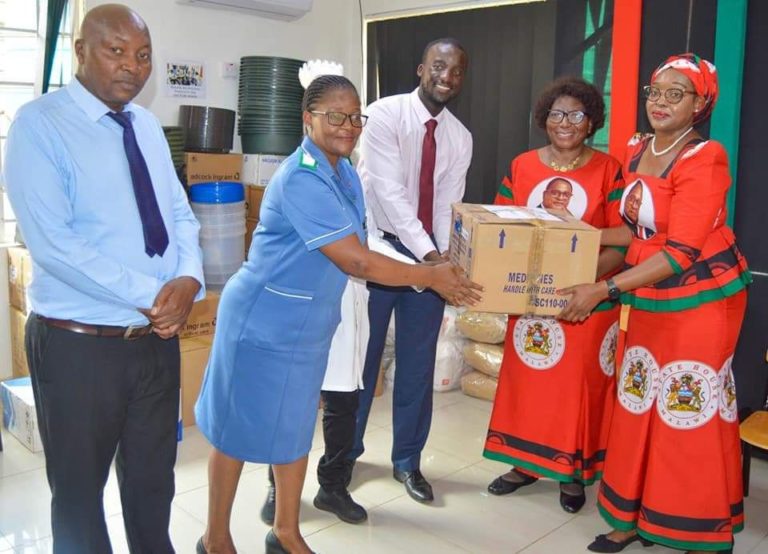
The presidential advisor on safe motherhood, Dorothy Ngoma on Saturday donated food, assorted essential medical supplies and equipment to Queen Elizabeth Central Hospital’s children and maternity wards amounting to over K10 million on behalf of First Lady Madame Monica Chakwera.

Confirming the development on Saturday, Ngoma said the First Lady’s charitable gesture was a testament to a humane commitment towards promoting health care.
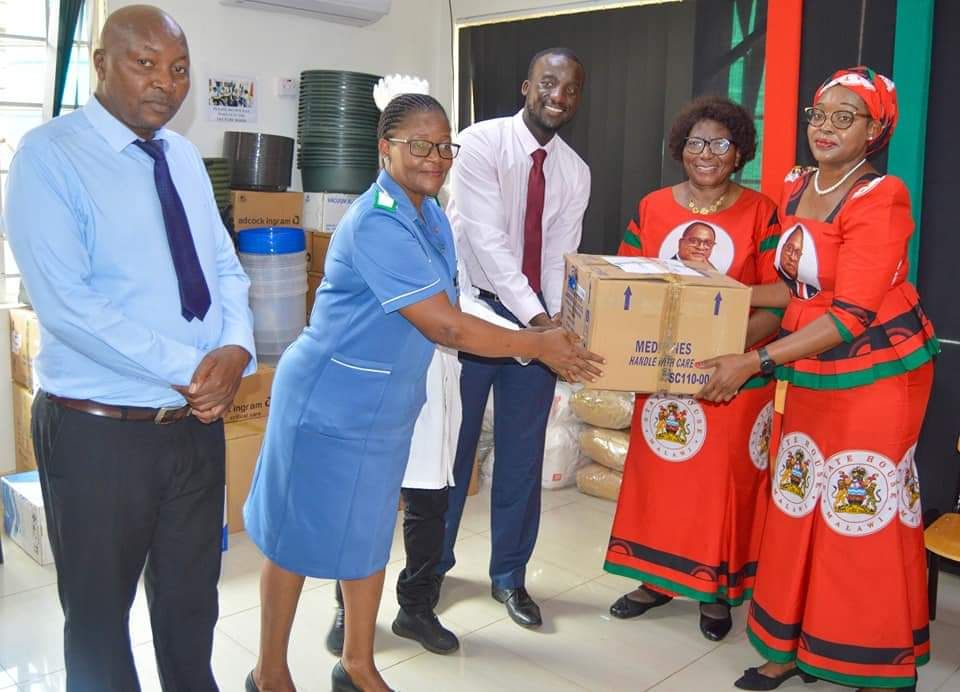

The donated items included medicines, cotton wool, surgical masks, digital thermometers, plastic basins, blankets, water purifiers and bags of maize flour.

“The message from the first lady was one of support and care to mothers and sick babies. Their needs are quite heavy as congestion in all childrens’ wards cannot go unnoticeable. All the challenges that l have noted from this hospital will be presented to the First Lady for consideration,” Ngoma said.

Ngoma said the First Lady will continue to mobilize resources from various partners to improve the situation in hospitals across the country.

The presidential advisor then appealed to the hospital staff to make sure that the donation be used for its intended purpose.

“This donation is intended to alleviate some of the challenges faced by patients. Please ensure its effective use. I don’t want to hear that patients have not received help,” said Ngoma.

In his remarks, Controller of Hospital Administrative Services at Queen Elizabeth Central Hospital, Sipho Nyasulu hailed the First Lady for the donation, saying it was timely done as it would contribute to a positive impact within the health care.

Nyasulu added that the visit of the Presidential Advisor on Safe Motherhood not only left a tangible mark on Queen Elizabeth Central Hospital but also served as a beacon of hope, illustrating the positive outcomes that can be achieved through collaborative efforts and a steadfast commitment to the well-being of patients as well as health workers.

“We are very thankful to Madame Monica Chakwera for this donation. Our work is very huge and resources which government provides are not enough because of the number of patients we receive at this hospital,” Nyasulu said.

During the visit, the presidential advisor on safe motherhood visited patients in the pediatric, children’s, and maternity wards.
Unveiling the dark shadows: Exploring the disturbing world of bestiality in Malawi


By Twink Jones Gadama

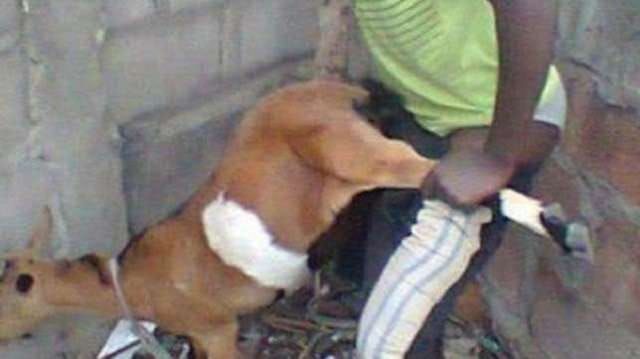
In a small village nestled deep within the beautiful district of Ntchisi, Malawi, a shocking incident has left the community in disbelief and horror.

Vincent Mwale, a 26-year-old man, has been arrested for engaging in the abhorrent act of bestiality, having sexual relations with a goat.

This despicable act has shed light on a taboo subject that lurks within society’s darkest corners.

As we dive deeper into this shocking incident, we unravel the psychological complexities, social stigma, and legal implications surrounding such acts in Malawi.

The Incident and Its Aftermath

On the fateful day of 25th January 2024, the peaceful serenity of Galang’ande village was shattered when Vincent Mwale was caught in the act of bestiality.

The locals, who could not believe their eyes, immediately reported the incident to the authorities, leading to Mwale’s subsequent arrest.

However, what shocked the community even more was the revelation that this was not Mwale’s first offense; he had previously engaged in such behavior.

As the news spread like wildfire, the villagers, already grappling with fresh trauma, demanded justice.


Delving Into the Psychopathology of Bestiality

To truly comprehend the mindset behind such an inhumane act, it is crucial to delve into the psychological depths of the individuals involved.

Psychologists and experts in the field explain the complexities involved, citing various theories such as the manifestation of latent fantasies, abnormal sexual preferences, and the presence of deep-seated psychopathological factors.

While a majority of society cringes at the thought of bestiality, examination of the underlying psychological motivations allows us to better understand the inherent darkness that fuels such acts.

A Moral Quandary: Cultural and Social Perceptions

In a conservative society like Malawi, bestiality is seen as a gross violation of cultural and social norms.

The deeply rooted beliefs regarding the sanctity and dignity of both human beings and animals lead to a vehement rejection of such practices.

However, societal perceptions drive individuals like Mwale further into the shadows, forcing them to partake in these unthinkable acts shrouded in secrecy and shame.

Unraveling the complexities of cultural stigmas, we explore the challenges faced by individuals grappling with suppressed desires and the consequences of their actions.

The Legal Landscape of Malawi: Outlawing Bestiality

In Malawi, both bestiality and homosexuality are considered criminal offenses.

The laws in place reflect the prevailing moralistic values of the society, aiming to safeguard societal and moral order.

The penal code not only condemns such acts but also details severe punishment for the perpetrators.

However, as we examine the legal landscape, questions arise regarding the efficacy of the punitive approach.

Advocates argue that there should be a greater focus on rehabilitation, psychological intervention, and education to address the root causes of such deviant behavior.

Conclusion

As the shocking incident in Galang’ande village illuminates the dark practice of bestiality within Malawi, it demands introspection and a reevaluation of societal attitudes and legal frameworks.

The spotlight now shines on this repugnant act, unraveling the psychological complexities, social stigma, and legal implications surrounding it.

It is imperative that we confront these uncomfortable truths and engage in a frank discourse, not only to protect our communities but also to understand and address the underlying factors that drive individuals toward such abhorrent behavior.

Only then can we hope to protect the sanctity of life, whether human or animal, and seek solutions to help those who may be trapped in the shadows of their own desires.

MRA awards partners on lnternational Customs Day

0

By Robert Katuli

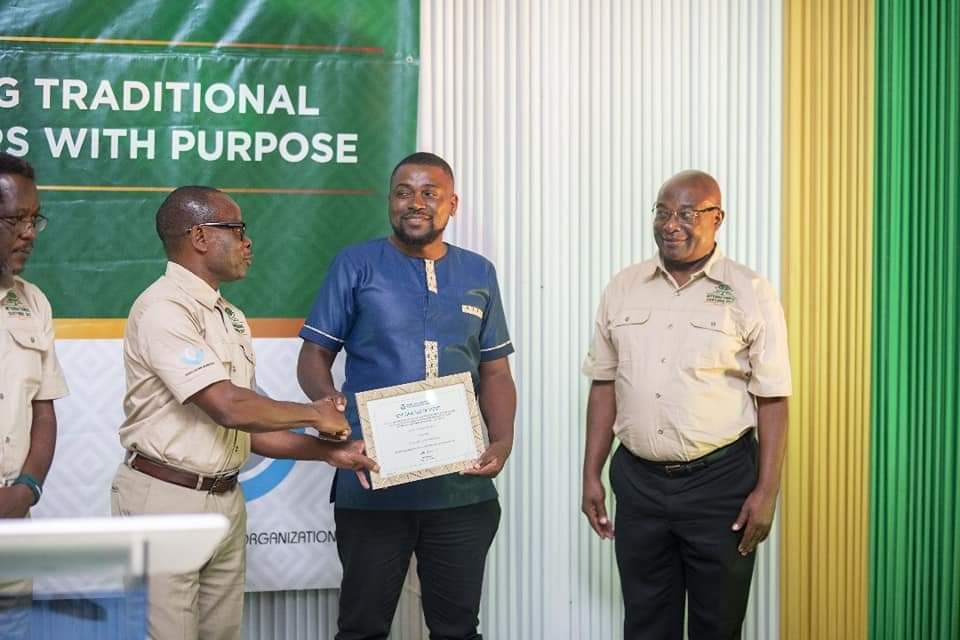
The Malawi Revenue Authority (MRA) on Friday commemorated the International Customs Day in Lilongwe and presented awards to some of its partners.

Speaking at the event, MRA board chairperson, Vizenge Kumwenda said apart from celebrating the day, the Authority also took time to reflect on its overall agenda and responsibility, citing revenue collection and trade facilitation roles as examples.

“MRA took that responsibility seriously in the sense that it listened to what the stakeholders said and put in place a programme to make sure that MRA officers behave or conduct in a manner that best serves stakeholders,” Kumwenda said.


The programme, under the banner MRA4Change, involves MRA engaging its staff and other stakeholders in the development of policy, processes and procedures for operational excellence.

“I’m glad that this programme management has done very well. It’s an ongoing programme and will be a never-ending journey because improving service is a continuous process,” added Kumwenda.

Kumwenda also appealed to MRA officers never to be satisfied with their remarkable feat of meeting set revenue collection targets, saying government needs more resources to fund various social services needed in the country.

“They should not become complacent. There is a lot more they can do. If they work hard and be dedicated, patriotic and honest, they can actually collect much more than what they have collected.

“But they should do it in a manner that our tax payers don’t feel harassed but feel fairly treated. At the end of the day, our taxpayers feel obliged to pay the taxes willingly,” explained Kumwenda.

He also said customs will introduce drones, which will be used for surveillance purposes along the borders to eliminate smuggling.

An awardee at the function, Malawi Bureau of Standards (MBS), hailed MRA for implementing the ASYCUDA WORLD, a system that is used for customs management and clearance and processes over 180,000 transactions annually.

In his remarks, MBS Deputy Director General, Thomas Senganimalunje who received an award on behalf of MBS, said the system enables MRA and MBS to work together.

“The implication is that all the products that are coming into the country are checked for tax purposes and at the same time checked for quality purposes,” said Senganimalunje.

Senganimalunje further said this has improved speed as, in the past, documents had to physically move from one office to another whereas, in the current system, information reaches MRA and MBS at the same time, thereby reducing clearance time.

This year, the day was celebrated under the theme ‘Customs Engaging Traditional and New Partners with Purpose’, and World Customs Organisation funded the MRA awards as part of the celebrations.

Driemo’s ‘Trailer’ becomes Malawi’s quickest video to reach a million views on YouTube

By Staff Reporter

Driemo’s latest song ‘Trailer’ has now become Malawi’s quickest video to hit 1 million views on YouTube.

On Saturday, ‘Trailer’ hit 1 million views in just 12 days beating the record set by Eli Njuchi and Yo Maps’ song ‘Yabaya’ which hit a million views in a space of 3 weeks and 3 days.

Reacting to the development on Facebook, Driemo, real name Shaffie Phiri said he was very excited with development and had a few words to his fans “Thank you fam for 1 million views in 12 days, you guys are the best,” reads the post on his official Facebook page.

The song was produced by his longtime producers Taktic and Nyanda and the video was directed by Twice P who also produced music video for his popular song ‘Popo’.

Sign Language training to achieve inclusive education

0

By Levison Lester

The Ministry of Education has expressed hope that sign language training, which is currently rolling out across the country, will help to bridge the communication gap between learners with hearing impairments and their teachers in schools.

Speaking on Friday during a progress inspection of the training at Mchinji Teacher’s Training College, Public Relations Officer for the Ministry of Education, Mphatso Nkuonera called upon teachers to utilize the skills and knowledge gained to promote inclusive education.

Public Relations Officer for the Ministry of Education, Mphatso Nkuonera


“This training has been organized by the ministry with support from UNICEF and is targeting 500 specialist teachers in selected districts like Mchinji, Lilongwe, Kasungu, Salima, Dowa, Dedza, Machinga, Mangochi, Chikwawa, Nsanje and Chiradzulu.

Our hope is that these specialist teachers will fully support learners with hearing impairments so that they also excel in their studies. Once learners are equipped with necessary skills, the country will be able to achieve inclusive education,” Nkuonera said.

Nkuonera said sign language training was essential in fostering the Malawi 2063 Agenda, as the knowledge which learners will acquire in various schools will help to address the communication barrier, thereby fostering national development.

In her remarks, one of the instructors at the training, Edna Chigwenembe from Soche Hill Secondary School called upon teachers to establish Sign Language Clubs in their respective schools to equip each other with knowledge on sign language.

“We have asked teachers to incorporate all learners in the formation of these clubs so that they have knowledge on the subject. Such interactions will enable teachers to perform well,” said Chigwenembe.

Speaking on behalf of specialist teachers, Gift Kaunda from Nkhwazi Primary School hailed the ministry for the training, saying amongst other things, they had gained knowledge on sign letters, numerals and words which they will use in their tutorials.