NBS Bank Plc has committed K5 billion to support Beautify Malawi (BEAM) Trust in promoting sanitation and hygiene over the next five years.
The sponsorship will focus on promoting safe hygiene practices in 6,942 primary schools across Malawi between 2026 and 2030.
The announcement was made during the launch of BEAM’s 2026–2030 Strategic Plan at Kamuzu Palace in Lilongwe.
Speaking during the ceremony on Friday, NBS Bank Chief Executive Officer, Temwani Simwaka, said the bank proudly sponsors BEAM because it recognizes that sanitation and hygiene are essential for good health.
“Supporting BEAM reflects our core values and puts community development at the heart of everything we do,” she said.
Speaking during the launch, President Professor Arthur Peter Mutharika said his government remains committed to creating the right environment for NGOs to operate.
He added that Malawi needs strong partners to achieve national goals, including improving access to safe water, sanitation, and hygiene, as well as promoting girls’ education.
“To achieve anything in life, one needs partners and a strategy and not just a strategy, but a good strategy like the one we are launching tonight,” he said.
He said he is pleased that BEAM continues to play a meaningful role and has stood the test of time.
“I am confident that with this strategy, BEAM will achieve even more. I encourage more NGOs to partner with the government in delivering essential services. Together, we can make our vision of becoming an upper-middle-income country by 2063 a reality. For NGOs, it is vital to uphold principles of good governance. This builds trust within the communities you serve and confidence among those who support your work,” said the President.
Commenting on the initiative, First Lady Gertrude Mutharika said BEAM will work with corporate partners, city councils, and heritage groups to achieve its goal of making Malawi cleaner and healthier. “Thank you, NBS Bank, for committing K5 billion in support of the Next Gen Hygiene Campaign to improve hygiene and sanitation in primary schools across the country,” she said.
She said investing in cleanliness and proper sanitation helps save lives as well as save resources spent on treating preventable diseases in hospitals.
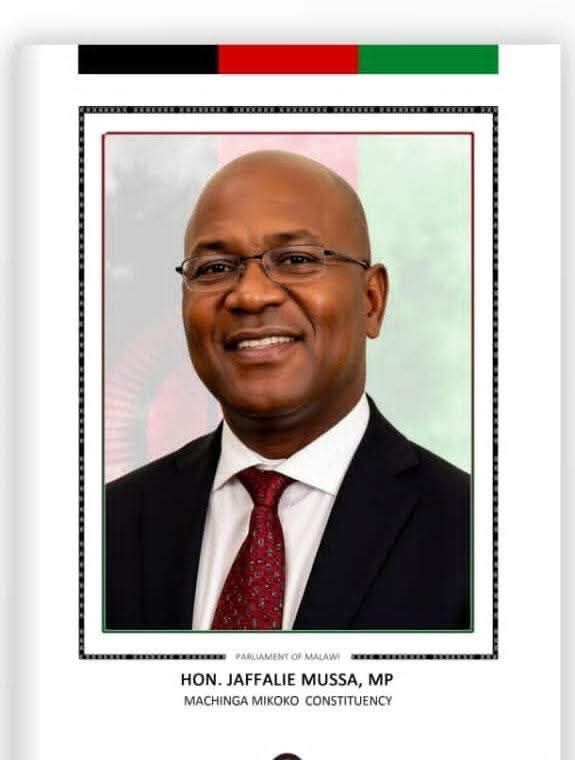
Blantyre, Malawi – In a development that has sent shockwaves through the political landscape, Jafali Mussa, the Member of Parliament for Machinga Mikoko, has passed away.
According to reports reaching this newsroom, the legislator collapsed unexpectedly earlier today while in Blantyre. Emergency services were promptly alerted, and Mussa was rushed to a nearby medical facility. However, upon arrival at the hospital, medical personnel tragically pronounced him dead.
The exact cause of his collapse has not yet been officially disclosed, and details surrounding the incident remain sketchy as authorities are expected to release a formal statement.
Colleagues from across the political aisle have begun to express their shock and grief, remembering Mussa as a dedicated public servant. His death creates a significant void in the representation of the Machinga Mikoko constituency.
This is a developing story. More details regarding the circumstances of his death and funeral arrangements are expected to emerge in the coming hours. We will continue to provide updates as they become available.
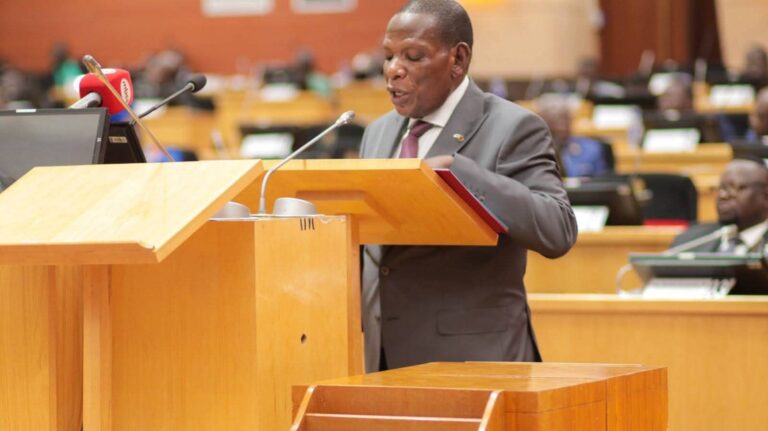
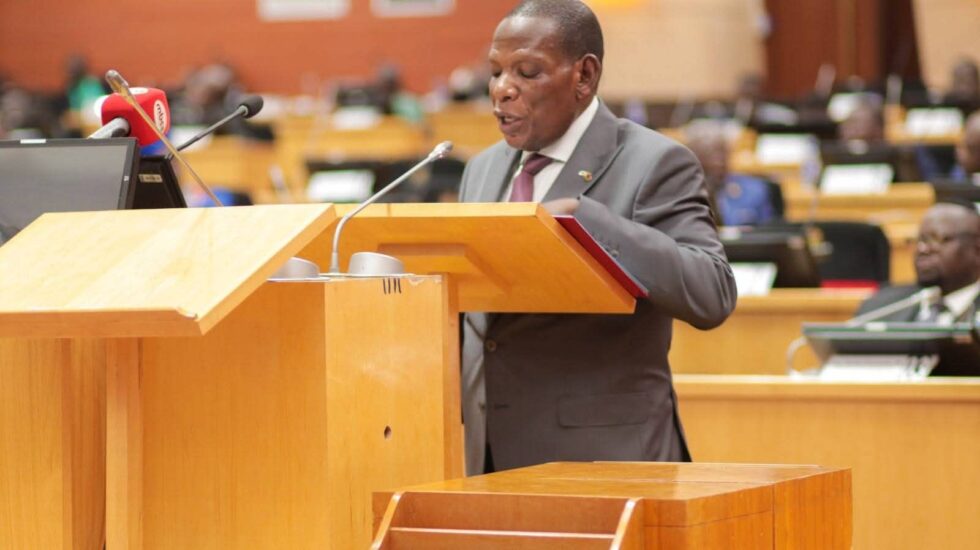
Minister of Finance , economic Planning and decentralisation, Joseph Mwanamvekha on Friday, presented 2026/ 27 budget describing it as pro – poor and development.
The 2026-27 Budget has been framed and formulated under the theme “Driving Economic Recovery and Sustainable Growth through Impactful Reforms and Fiscal Consolidation.”
This according to the Minister reflects Government commitment to restore macroeconomic stability, rebuild confidence, and lay the foundation for inclusive and resilient growth.
Mwanamvekha said , the 2026-27 Budget provides the fiscal context to this theme and creates an opportunity for the new administration to strategically articulate its policy direction and implement its commitments.
Mwanamveka
On Expenditure ,
On the expenditure, Mwanamvekha said Government will continue to implement austerity measures to eliminate waste, reduce non-essential spending.
“Government will continue to implement austerity measures to eliminate waste, reduce non-essential spending and improve efficiency in public service delivery. Resources will be redirected towards high economic impact sectors that drive productivity, create jobs, promote and support growth,” he said.
He said the Budget being presented is people-centered, pro-poor, developmental and transformative.
“In view of this , our immediate priority is macroeconomic stabilization. Let me emphasize from the onset that this Administration is geared to pursue prudent fiscal policies aimed at reducing the budget deficit and consequently public debt stock,” he said.
He said s Government will strengthen domestic revenue mobilization efforts including broadening the tax base, enhancing compliance, and modernizing tax administration, while protecting low income households and productive sectors.
ATMM
On Agricultural, Tourism and Mining the Minister said Government registered significant progress in irrigation development under the Shire Valley Transformation Project (STVP), including expansion of irrigation schemes covering 4,194 hectares. In addition, matching grants were provided to farmer’s cooperatives under Agriculture Commercialization (AGCOM) and Malawi Watershed Services improvement Project (MWASIP) and currently K1,3 trillion has been budgeted.
Preparations for the inaugural Dr. Saulos Klaus Chilima Foundation Charity Golf Tournament, are gaining momentum, with the corporate world showing significant interest in the event.
Scheduled to take place on March 28th, 2026, at the Lilongwe Golf Club, the tournament is being organized in keeping up the charity spirit of Vice President of Malawi, Dr. Saulos Klaus Chilima, who tragically lost his life in a military plane crash on June 10, 2024 along with eight others.
Dr. Chilima, a renowned corporate icon, philanthropist, and politician, left behind a legacy of service to the needy, and the golf tournament aims to continue his mission.
Boyd Luwe, Chairperson of the fundraising committee of the memorial golf tournament, expressed delight with the responses received so far from the corporate world and business sector.
“As a committee steering the fundraising aspect of the golf tournament are delighted with the responses so far. We are on the right track,” said Luwe.
The Foundation plans to utilize the funds raised from the tournament to benefit kidney failure patients by acquiring dialysis machines for strategic district hospitals across the country.
The SKC Foundation Trustee, Sean Chilima, son to the late Chilima, appealed to the corporate world and the general public to participate in the event, emphasizing that government alone cannot provide for everyone.
Chilima
“The late Dr. Chilima believed in our ability as a people to assist government in uplifting the poor. Government alone cannot manage to provide for each and every one of us. But through efforts like these, with your financial and material donations and encouragement, a lot of people with kidney challenges and needing dialysis treatment will be assisted,” said Sean.
The golf event has categorized sponsors ranging from Diamond, pegged at K25 million as headline partner, to Bronze Category, pegged at K5 million.
“We trust that companies, organizations, and individuals who believe in Malawi as the late SKC did, will come forward and be part of this life-changing event for the underprivileged,” said Luwe.
The launch of the Beautify Malawi (BEAM) Trust’s new five-year strategic plan at Kamuzu Palace today is a familiar spectacle. We see the gleaming smiles, the handshakes with donors, and the flowery speeches about transforming lives . But for many observant Malawians, this event triggers a question that is as uncomfortable as it is unavoidable: where was BEAM when its founder and patron, Madam Gertrude Mutharika, was out of power?
The silence from 2020 to 2025 was deafening. During the years of the Tonse administration, BEAM retreated from the headlines, operating at a fraction of the visibility it enjoyed when Professor Mutharika was First Lady. Now, with the Democratic Progressive Party (DPP) back in State House, BEAM has miraculously been resurrected, complete with a K40 million cheque from the Chinese business community and a strategic roadmap for the next five years . Coincidence? Or is the Trust merely a shadow that follows the sunlight of political power?
This is not a partisan attack on Madam Mutharika. It is an observation of a disturbing pattern in our body politic. One must ask the same question of the Shaping Our Future Foundation, the charity associated with former First Lady Madam Monica Chakwera. During her husband’s tenure from 2020 to 2025, the foundation was a prominent feature of the civic landscape, championing youth and women empowerment. Now that the Chakweras have left Kamuzu Palace, the organisation has seemingly vanished into thin air. Why does the compassion of a First Lady appear to expire the moment her husband loses an election?
This cyclical hibernation and revival of presidential charities leaves a bitter taste, and it fuels a deeply cynical, yet plausible, argument: these organisations are merely instruments for the extraction of public and private resources, only operational when they have direct access to the levers of government.
The concern is not unique to Malawi; it is a global phenomenon that exposes the dangers of informal influence. When a First Lady—an unelected official—heads a charitable trust, the lines between private goodwill and public power become dangerously blurred. As documented in a report by the Cyprus Audit Office regarding a similar fund chaired by the president’s wife, such structures create “a relationship—or there appears to be a relationship—of influence and/or the expectation of benefit” . This is the crux of the matter. When corporations or well-heeled donors pour money into these foundations, can we be certain they are acting out of pure altruism? Or are they seeking favour, access, or government contracts from the spouse who holds the President’s ear? In Cyprus, the Auditor-General noted that a company which donated nearly €700,000 had simultaneously “negotiated and signed with the state a long-term contract of a high value” . This is the “pay-to-play” politics that erodes public trust.
The temptation to use state resources is equally potent. The history of presidential families is littered with examples of the misuse of public funds. A POLITICO investigation revealed how former US President Bill Clinton’s office used taxpayer funds designated for ex-presidents to subsidize the Clinton Foundation’s operations and staff, blurring the line between his non-profit, his wife’s State Department, and private business dealings . Closer to home, in Ghana, the Alliance for Social Equity and Public Accountability (ASEPA) criticised the state oil company for funnelling millions of Ghanaian cedis to the Rebecca Foundation—belonging to the First Lady—labelling it a “clear example of nepotism and cronyism,” as there was no competitive process for other independent foundations to access those public funds .
This is the slippery slope Malawi finds itself on. When the Chinese Chambers of Commerce injects K40 million into BEAM on the eve of its strategic plan launch, it is a welcome donation . However, in the absence of rigorous transparency, the public is left to wonder: does this generosity grease the wheels for future business permits, tax waivers, or government approvals? Where are the audited financial statements for these trusts? Who are the donors, and what do they want from the state?
If BEAM, the Shaping Our Future Foundation, and others like them were genuinely independent charitable entities, their work would continue regardless of which party holds the presidency. They would have institutionalized their fundraising and programming to survive changes in government. That they do not, that they flare up and fizzle out based on election results, reveals their true nature. They are not charities; they are political accessories. They are vehicles designed to attract resources from those seeking to ingratiate themselves with the sitting President, operating under the convenient veil of “charity.”
The Constitution grants the President immense power. It is precisely because of this that we must scrutinise the entities orbiting the presidency. If we fail to question why Madam Mutharika’s Trust is active only when her husband is in power, or why Madam Chakwera’s foundation went quiet the moment he lost the election, we are complicit in normalizing the privatization of public influence. These organisations are not just helping the needy; they are helping themselves to the perks of power. It is time we demanded that our First Ladies’ compassion be consistent—whether in government or in opposition. Otherwise, the public will continue to see these launches not as acts of charity, but as the opening of a shop for political patronage.