Monday, March 30, 2026
No menu items!
spot_img
Home Blog Page 44

Opinion of NEEF’s fire-sale fiasco: A case of poor planning and corruption?


By Burnett Munthali

The National Economic Empowerment Fund (NEEF) is facing backlash over its plan to auction off farm inputs, which are allegedly deteriorating by the day.

The Public Accounts Committee (PAC) of parliament has raised concerns that the auction would lead to significant losses, as the inputs would be sold at throwaway prices.

This would not only deprive farmers and the general public of the opportunity to access the inputs but also benefit a select few who may collude to buy the items at cheap prices.

The PAC’s concerns are valid, given the history of corruption and mismanagement in Malawi’s public sector.



Auctioning off the inputs without proper oversight and transparency could indeed lead to a repeat of past scandals, where public assets are sold off to cronies at bargain prices.

The committee’s decision to summon the Minister of Finance and public procurement officials is a step in the right direction, as it will help to shed light on the circumstances surrounding the procurement of the inputs and the proposed auction.

However, NEEF officials also have a point when they argue that the inputs are deteriorating by the day, and that delaying the sale could result in further losses.

It is a classic case of being stuck between a rock and a hard place. But this raises questions about the competence and planning of NEEF officials, who should have anticipated the risks of procuring inputs that are prone to deterioration.

This brings us to the larger issue of why NEEF departed from its initial agenda when it was established.

Was it meant to be a vehicle for economic empowerment or a conduit for corruption and mismanagement?

The organization’s mandate is to provide loans and support to Malawians, not to engage in fire-sales of public assets.

Let’s look at why the farm inputs were procured at a higher price from suppliers. Is this an insight into business by employees, where NEEF officials are using their positions to enrich themselves and their cronies?

The fact that the inputs are being sold at a loss suggests that there may be more to this story than meets the eye.

In my opinion, NEEF should reconsider its plan to auction off the inputs and instead explore alternative options, such as providing them to farmers on loan or through other affordable means.

The organization should also conduct a thorough investigation into the procurement process and take disciplinary action against those responsible for any wrongdoing.

Ultimately, the people of Malawi deserve better than to be fleeced by corrupt officials who are supposed to serve them.

Why did NEEF depart from its initial agenda, and what can be done to prevent such abuses of power in the future?


Close Tax Loopholes, Not Citizens’ Pockets  Kamangila Urges Government

0


By Rahim Abdul

Renowned lawyer Alexious Kamangila has challenged authorities to rethink Malawi’s tax strategy, warning that introducing new taxes could worsen the financial strain already facing households and businesses across the country.

Kamangila argues that instead of piling fresh levies on citizens, government should concentrate on tightening revenue collection systems and maximizing funds that are already legally due.

He points to inefficiencies within the Malawi Revenue Authority (MRA), saying the institution has the potential to generate sufficient public revenue if loopholes are sealed and compliance is strengthened.

According to the legal expert, billions of kwacha are lost each year through tax evasion, weak enforcement and gaps in administration  money that could otherwise fund essential public services.

Kamangila


He stresses that widening the existing tax base would be more sustainable than targeting the same compliant taxpayers who already carry the bulk of the burden.

Kamangila believes that enhancing monitoring systems and curbing illicit financial practices would restore confidence in the tax system while protecting citizens’ livelihoods.

“Maximizing what is currently due to government can stabilize the economy without suffocating struggling families,” he maintains.

Backing his remarks, governance expert George Chaima has raised concerns about deliberate weaknesses within the system.

Dr. Chaima alleges that some loopholes in revenue administration were intentionally created to enable corrupt practices and unlawful sharing of tax proceeds.

He warns that without confronting corruption within revenue structures, any new taxes would simply feed inefficiencies rather than strengthen the economy.

The experts’ remarks come at a time when Malawians are increasingly vocal about the rising cost of living and the pressure of existing taxes.

Together, Kamangila and Chaima send a strong message, Malawi’s fiscal future depends not on introducing new taxes, but on transparency, accountability and smarter management of the resources already within reach.

Dr George Chaima

GVH jailed 21 years for having sexual intercourse, impregnating girl, 16

0

By Rahim Abdul

The Senior Resident Magistrate court sitting at Lilongwe has convicted and sentenced Group Village Headman Chimalizeni, whose real name is Yohane Thokozani, 26 years old for having sexual intercourse with and impregnating a 16-year-old girl in Lilongwe.

The court heard from the Lilongwe Police based Public Prosecutor, Sub Inspector Jean Chirombo, that Thokozani (convict) committed the offence between the months of September and October of 2025.

Prosecutor Chirombo further said that the girl, who is eight months pregnant, dropped out of school last year while in Form 1.

The convict, having realised that the girl was pregnant, decided to elope with her and stay with the girl as a wife.

Chimalizeni


In court, the convict lacked remorse for all that he did. He continued to argue that the girl was his wife.

Even up to the mitigation stage, he saw nothing wrong with his behavior. However, he asked for leniency of the court, saying he is a first-time offender and that he has dependants who look up to him.

In submission, the State asked for a meaningful sentence since the offence committed was serious in nature.

Prosecutor Chirombo further submitted that, as a chief, the convict was supposed to be the one protecting the girl child and not bringing psychological trauma upon her.

Passing his sentence, Senior Resident Magistrate Bracious Kondowe, concurred with the State that the convict breached the trust the victim had in him as a chef, the offence was premeditated and planned as he had sexual intercourse with the girl multiple times.

Kondowe further said that being a Group Village Headman is a respectable position in society. He continued to say that chiefs ought to be exemplary in how they conduct and carry out themselves.

He said that a chief is expected to be a safe haven for the downtrodden like the girl herein.
But the convict chose to turn a vulnerable girl into his sexual prey, seeing no problem with relieving his unbridled sexual desires on an innocent girl he was supposed to protect.

Kondowe then said that he was convinced that the convict deserved a custodial sentence and that this case warranted the exhaustion of the Court’s sentencing threshold of 21 years imprisonment to serve as a deterrent to other would-be offenders.

Yohane Thokozani (convict) hails from Chiunjiza village, Traditional Authority Masula in Lilongwe District.

Malawi, Tanzania sign STR deal to boost trade and economic growth

0


By Dean Chisambo

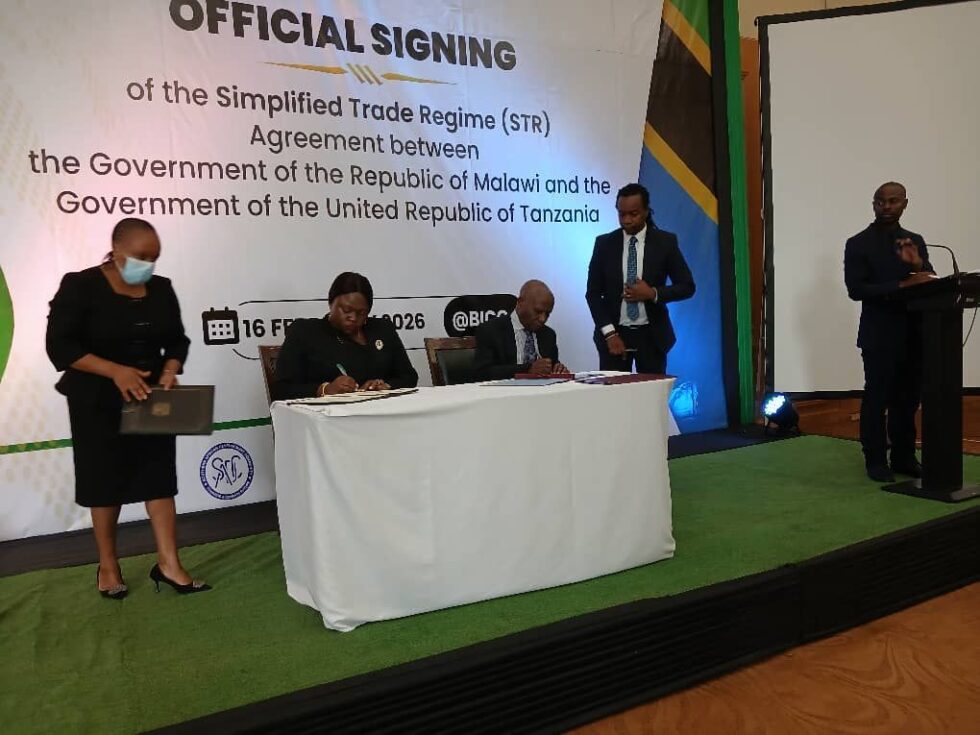
The Government of Malawi, in collaboration with the Government of Tanzania, has signed a Simplified Trade Regime (STR) agreement in Lilongwe.

Minister of Industrialization, Business, Trade and Tourism Simeon Itaye says the agreement reflects strengthening economic status and improving livelihoods of the people between Malawi and Tanzania.

The agreement is expected to reduce transportation barriers and promote transparency on the movement of goods, Itaye adds.

Itaye emphasises that the STR will promote trade and advance value chain between the two countries, leading to job creation and poverty alleviation among the people of Malawi and Tanzania.


Tanzanian Minister of Industry and Trade Judith Kapinga says her government is looking forward to the implementation of the STR agreement, which will benefit Small and Medium Enterprises (SMEs) and border traders between the two countries.

Kapinga describes the STR deal as a game-changer that will unlock trade barriers among border traders and facilitate legitimate trade.

The Tanzanian Trade minister highlights that many women and youth are involved in border trade, but face challenges in transporting their goods, leading them to use shortcuts.

She adds that the agreement will enhance food security, as more agricultural commodities will be easily exported and imported between the two countries.

According to officials from both countries, many women and youth are engaged in cross-border trade between Malawi and Tanzania, and the STR agreement is expected to boost their economic activities.

Frustration boils over as Lilongwe’s power wills away

0


By Burnett Munthali

Residents of Kawale and Chilinde areas in Lilongwe are fed up with the frequent electricity blackouts that have become a daily occurrence, with some areas going without power for hours on end.

The latest incident occurred on Tuesday, when Chilinde residents were plunged into darkness, sparking widespread complaints and concerns about the reliability of the power supply.

But what’s even more infuriating is that ESCOM personnel seem unresponsive to reported faults, leaving residents to wonder if the utility company is waiting for a tragedy to strike before taking action.

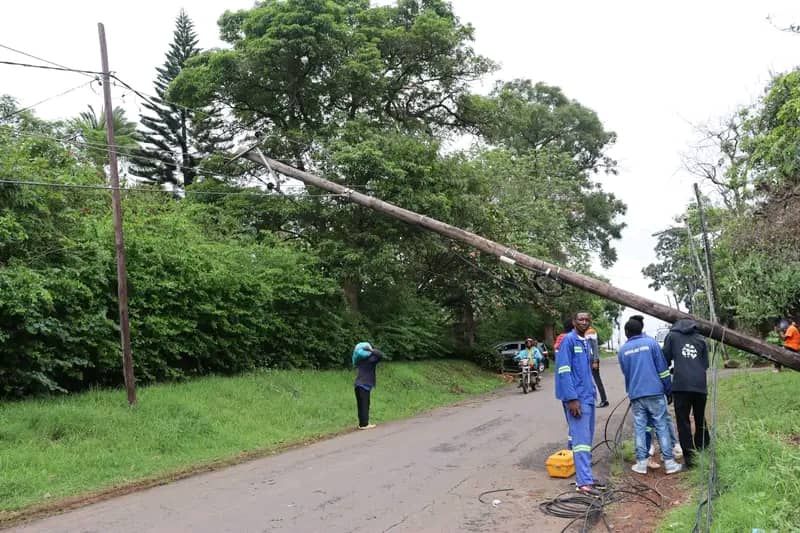
Take, for example, the case of an electric pole near Gogo Munkhondia ground in Chilinde 2, which has been reported to ESCOM faults weeks ago but remains a ticking time bomb, posing a danger to unsuspecting residents.

The pole, which is reportedly on the verge of collapse, has sparked fears of a major accident waiting to happen, with some residents accusing ESCOM of negligence and lack of concern for public safety.


One resident, who wished to remain anonymous, expressed frustration and anger at the situation, saying “It’s like they are waiting for someone to get hurt or killed before they do something.”

ESCOM’s poor response to reported faults has become a major concern for residents, who feel that the utility company is not taking their complaints seriously.

The frequent blackouts have also had a significant impact on businesses and households, with many small enterprises reporting losses due to interrupted operations.

As the situation continues to deteriorate, residents are calling on ESCOM to take immediate action to address the power woes and ensure a reliable supply of electricity to the affected areas.

The people of Kawale and Chilinde demand answers and action from ESCOM – before it’s too late.