The sacred month of Ramadan has officially begun in Malawi following the sighting of the crescent moon, marking the start of a spiritually significant period for Muslims across the country.
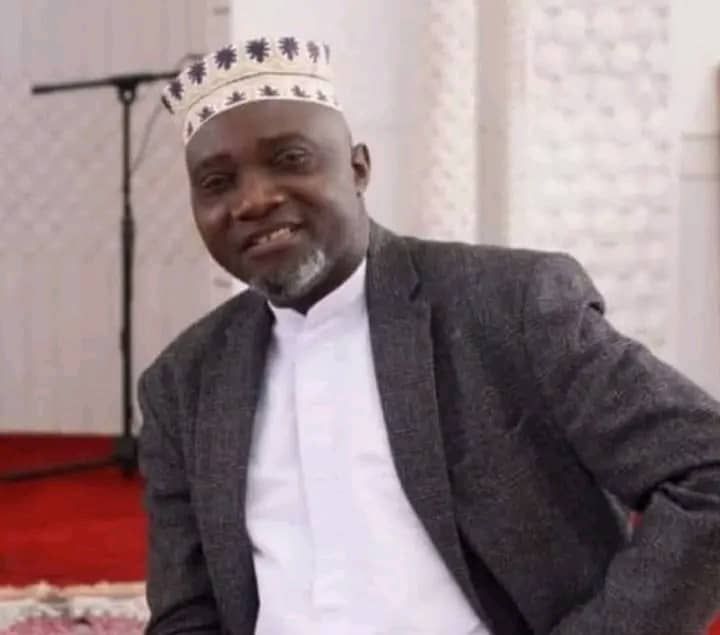
Spokesperson for the National Moon Sighting Committee, Sheikh Dinala Chabulika, announced that the new moon has been observed, confirming the beginning of 1st Ramadan.
According to Sheikh Chabulika, Muslims will commence fasting tomorrow, Thursday, 19 February, in line with the confirmed moon sighting.
He emphasized that the declaration follows careful observation and verification by the committee, in keeping with Islamic tradition which determines the start of Ramadan based on the appearance of the crescent moon.
Chabulika
Sheikh Chabulika extended heartfelt wishes to all Muslims in Malawi, encouraging them to observe the holy month with devotion, discipline, and sincerity.
He further urged believers to uphold peace and unity during Ramadan, stressing the importance of avoiding conflict and misunderstandings within communities.
“Let us remain peaceful, respect one another and use this holy month to strengthen our faith and character,” he said.
The Sheikh also called on Muslims to show compassion by sharing food and support with those who are less fortunate, especially during this sacred season of fasting and reflection.
Ramadan is observed through daily fasting from dawn to sunset, prayer and acts of charity, fostering spiritual growth and self discipline among believers.
In Malawi, Muslims traditionally fast for either 29 or 30 days, depending on the sighting of the moon that will determine the end of Ramadan and the celebration of Eid.
The Centre for Democracy and Economic Development Initiatives (CDEDI) has written a letter to the country’s Attorney General Frank Mbeta requesting him to step down pending a logical conclusion of his corruption case.
The CDEDI said the immediate challenge before the Attorney General in his capacity is to address rampant corruption in the country saying Malawians have taken it upon themselves to fight corruption at the Judiciary.
The organization said Lawyer and Human Rights Defender Counsel Alexious Kamangila has brought to light a matter that was almost forgotten reminding Malawians that Mbeta obtained an order stopping the Anti- Corruption Bureau (ACB) from executing a warrant of arrest obtained after it had concluded its investigations over his involvement in corruption dealings.
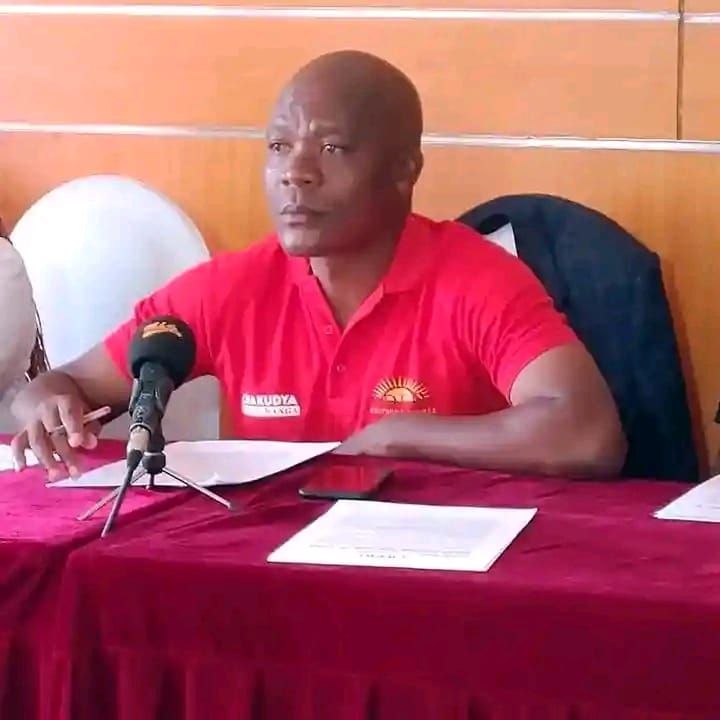
Namiwa
In the letter to Attorney General Frank Mbeta signed by its Executive Director Sylvester Namiwa, the CDEDI said Malawians have taken over the corruption fight by themselves observing that politicians obtain court orders stopping their arrest and investigations.
The CDEDI said more recently, the nation has been awakened by the ruling of the Malawi Supreme Court of Appeal awarding trillions of Kwachas to the dead Finance Bank which voluntarily closed its businesses in Malawi in 2005.
The organization said while Malawians are joining hands to fight endemic corruption at the Judiciary, they are faced with harsh reality that the head of the bar himself is an alleged beneficiary of the very system Malawians have vowed to address, saying they are not sure how the matter involving Mbeta on his alleged corruption case was concluded.
“Now that you are no longer a private lawyer and by extension, you are the Chief Legal Advisor to the Executive arm of government including the President, the Speaker and Parliament and even the Judiciary, it is imperative that you should mind your own integrity and that of the Attorney General’s office, ‘” reads CDEDI’s letter to Mbeta in part.
The CDEDI said Malawians are expecting his immediate reaction from Counsel Kamangila’s accusations that he has levelled against him warning him that his assumed silence can be construed as an indirect admission of those allegations.
For many years, renowned musician Lawrence Mbenjela has remained silent on matters concerning the late musician Israel Chatama. However, following recent social media discussions that have pointed fingers at him, Mbenjela has broken his silence to set the record straight regarding their professional and personal relationship. In a detailed statement, Mbenjela explained that he had chosen to walk away from any discussions about the late artist immediately after the funeral due to misunderstandings with the family, opting for peace by parting ways at that point.
Mbenjela made a startling revelation about the true nature of their collaboration, disclosing that the late Chatama did not write any of the songs on his two albums. According to Mbenjela, he was the sole writer of every track, including the lyrics for both verses and choruses. He further explained that he would record the lead and backing vocals himself, after which Chatama’s voice would be placed over the track to create the final version where he appeared to be the lead singer. In short, Mbenjela described the late Chatama as a “Mbenjere wamkabisila” (a hidden Mbenjela), emphasizing the extent of his involvement behind the scenes.
The musician also shed light on the contractual agreements that governed their partnership. He revealed that a contract was duly signed in the presence of COSOMA officials, with the late artist’s parents acting as witnesses. Mbenjela alleged that the percentage split and financial arrangements were based on misinformation provided when signing the ownership forms, which were meant to align with COSOMA’s revenue distribution framework. He stressed that this arrangement was unprecedented in the local music industry and required the blessing of the regulatory body to be formalized.
Beyond the music, Mbenjela shared personal details about his efforts to support the young artist. He disclosed that he took it upon himself to provide for Chatama, even building a house for his parents using his own resources. At the time, Mbenjela noted, Chatama was living a life akin to that of a street kid, often sleeping at the Kawale market in Area 23 when he had no place to stay. Mbenjela recounted how Chatama would openly admit to sleeping at the market, and out of concern, he approached the family to allow the young musician to live with him and attend school. He enrolled Chatama at a Seventh Day Adventist private school near Biwi, covering all related expenses through payments made directly to his parents.
On the tragic day of the accident, Mbenjela explained that they were returning from a show at Mtiti in Dowa. He noted that the show was not his own gate collection event but a paid booking, meaning all organization, including security, was handled by the event organizers. According to Mbenjela, Chatama had been drinking and smoking marijuana and, knowing that Mbenjela had a strict policy against performing under the influence, refused to ride in the same vehicle with him. Instead, he chose to ride at the back of the truck with other boys. Due to intoxication, Chatama struggled to maintain balance as the vehicle sped along, eventually losing control and falling off. Despite efforts by the other boys to save him, it was too late. Mbenjela further noted that approximately four to five police officers, whose vehicle had broken down, were also aboard the same truck, having requested a lift back from the show venue.
Mbenjela concluded by emphasizing that since the accident, there has been no communication between him and Chatama’s family. He expressed regret that the goodwill he extended has brought him personal turmoil, as the secret of their true working relationship, known only to the family, has been exploited by ill-intentioned individuals seeking to benefit from his troubles.
Renowned medical doctor Hagai Magai has raised serious concerns over a controversial executive order targeting health workers, warning that its implementation could lead to chaos in the health system.
In a Facebook post, Magai describes the order as ‘unreasonable and practically impossible to implement’, saying it appears to have been made either out of emotion or as a purely political maneuver.
“It may already be part of a plan that will be reversed within weeks,” he says.
According to Magai, an injunction is likely within the next two weeks.
Hagai Magai
“It may not actually come from doctors, but it will be presented as such to save face. The injunction will pass, and it will not be challenged.The political score has already been bagged,” he predicts.
The medical doctor highlights the crucial role of consultants in Malawi’s hospitals.
“Almost 95 percent of consultants work in private clinics. If they are all fired, who will remain in hospitals to care for patients needing consultant-level expertise?,” he asks.
He warns of serious consequences if the order is enforced.
“Chaos would ensue, followed by claims of unfair dismissal. Doctors would likely win these cases, resulting in massive compensation payouts. Ultimately, the government would have no option but to rehire the same consultants it fired, because hospitals cannot operate without them unless patients are sent abroad or treated privately,” he says.
Magai notes that the order could only be realistically applied at the level of medical officers, not consultants.
He however says, targeting only one group would be unfair and impractical.
“This executive order appears to be purely a political score.Unless you understand how the health system operates and the vital role of consultants, you cannot appreciate the consequences. Removing consultants would be catastrophic,” he says.
He paints a stark picture of the human cost.
“A woman bleeding after delivery needing a hysterectomy, a man with twisted intestines, or a child with a broken leg — where would they go? The only way this could work is if the number of consultants in private practice were minimal. People who think this order makes sense simply do not understand how the health system functions,” he says.
Magai concludes that, without proper planning, enforcing the order would be a suicide mission for the hospitals and the patients who depend on them.
President Arthur Peter Mutharika made the executive older on Tuesday February 17 , 2026, in reaction to a recent joint media investigation by several news outlets which exposed a corruption syndicate operating in some public health facilities.
The investigation revealed that certain health workers have been soliciting money from patients seeking services that are legally supposed to be free, raising public outrage and concern over accountability in the sector.
A wave of shock and sorrow has swept through Chilomoni Township in Blantyre following the death of a child who reportedly succumbed to cholera after his parents allegedly refused to take him to hospital due to religious beliefs.
The heartbreaking incident has ignited a fierce debate about parental responsibility, religious freedom and the fundamental rights of children to access life-saving medical care.
Child rights advocate Memory Chisenga says she is deeply saddened by the development, describing it as a clear violation of a child’s right to proper healthcare.
According to her, the tragedy highlights the urgent need to protect children from decisions that place their lives at risk.
Chisenga stressed that while parents have the constitutional right to practice their religion, that right must not override a child’s right to survival. She said denying a sick child medical attention amounts to neglect and undermines national child protection laws.
She further argued that Malawi’s legal framework places a clear duty on parents to safeguard the wellbeing of their children, including ensuring access to medical services when needed. Adding his voice to the matter, John Makwinja, bishop of Miracles of Jesus Outreach International Ministries, condemned the alleged refusal to seek treatment, calling it an act of cruelty rather than faith.
Makwinja stated that preventing a child from receiving medical help when seriously ill should be considered abuse. He said the parents involved must answer to the law in connection with the child’s death.
The tragedy comes as Malawi continues to face recurring outbreaks of cholera, a disease that health experts say is treatable if patients receive timely medical care.
In a troubling turn of events, the child’s mother has also reportedly tested positive for cholera and is currently at Chilomoni Hospital, but is said to be refusing treatment as well.
As the community mourns, the case has triggered renewed calls for authorities to intervene more decisively in situations where children’s lives are endangered, reinforcing the message that no belief system should come before a child’s right to live.