By Chisomo Phiri
The Minister of Finance , Economic Planning and Decentralisation Joseph Mwanamveka has assured Malawians that the country’s economy is now gradually stabilising, with signs of improvement already emerging, despite the continued implementation of tough fiscal measures under the proposed national budget.
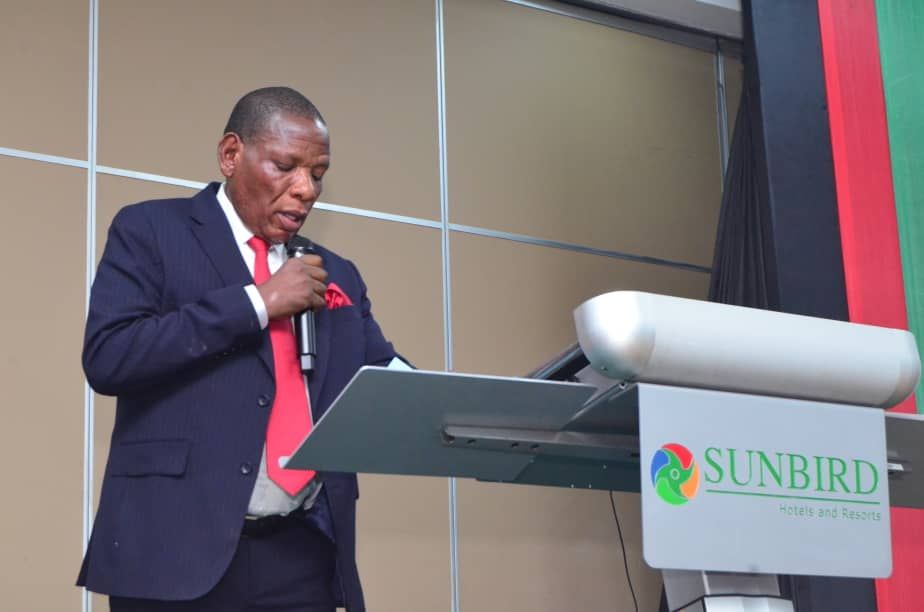
Mwanamveka said this on Wednesday at the closing of the 2026-2027 pre-budget consultations in Blantyre.
The minister described the consultations also held in Lilongwe and Mzuzu as constructive and instrumental in shaping government policy.
“I want to thank all stakeholders who participated in the consultations. They made very useful suggestions, particularly on taxation. Some of the proposals will be considered immediately, while others will be addressed as part of an ongoing policy process,” said Mwanamveka.
He acknowledged that Malawi is undergoing a difficult economic period marked by high public debt, elevated interest payments and a widening fiscal deficit.
However,the minister emphasised that the government’s policy direction is aimed at restoring macroeconomic stability and safeguarding long-term economic growth.
“We are in a very challenging situation as a country, but these measures are necessary to correct structural imbalances in the economy,” he said.
Mwanamveka explained that reduced donor support has compelled government to strengthen domestic revenue mobilisation, resulting in some unpopular tax measures.
He however, stressed that several of the measures are temporary and will be reviewed once economic conditions improve.
“I have previously reduced taxes when macroeconomic fundamentals were strong. The same will happen again when the economy stabilises,” he said.
According to the minister, early indicators suggest that government efforts are beginning to yield results, particularly in the area of foreign exchange availability.
“Our foreign exchange reserves have started improving, which is why we are seeing better availability of fuel and food on the market.
“As reserves strengthen further, pressure on parallel markets will reduce and more foreign exchange will be accessible through banks,” said Mwanamveka.
He declined to give a fixed timeline for full economic recovery, noting that economic performance depends on both domestic and global factors.
“It could take one, two or three years. In economics, many outcomes depend on variables beyond our control,” he said.
On governance reforms, Mwanamveka revealed that government is considering the introduction of electronic payment systems for traffic fines to curb corruption among traffic police officers.
“We have engaged the Inspector General of Police and his deputy, and there is agreement that digital payment systems can help reduce malpractice,” he said.
The minister also urged motorists to refrain from offering bribes, stressing that corruption thrives through the actions of both givers and receivers.
Commenting on inflation and interest rates, Mwanamveka expressed optimism that inflation will continue to ease, driven largely by improved food production.
“Food prices dominate the inflation index. If we manage food inflation, interest rates will eventually decline as well,” he said.
The minister added that government is hopeful of a good agricultural season, which would further support price stability and economic recovery.
“With good rains and strong harvests, the economy will continue on a recovery path,” he said.
On her part ,Malawi Confederation of Chambers of Commerce and Industry (MCCCI) Chief Executive Officer (CEO ) Daisy Kambalame,proposed the digitisation of revenue collection to reduce spillage, corruption, manual errors and evasion.
She said the initiative would also enhance efficiency in revenue generation and revenue growth.
Kambalame also proposed the introduction of taxes on motorcycles ( Kabaza) operators to help address financial pressures in health budgets and support improved services delivery.