By Rahim Abdul
The killing of three journalists and nine paramedics in southern Lebanon on Saturday has shifted attention beyond battlefield developments to the growing risks faced by civilians working on the frontlines of information and healthcare.
The incident comes as tensions linked to the wider US-Israel confrontation with Iran continue to spill across the region, with southern Lebanon increasingly becoming an active and dangerous theatre.
According to reports, the journalists were traveling in a clearly marked press vehicle along Jezzine Road when it was struck by four precision missiles.
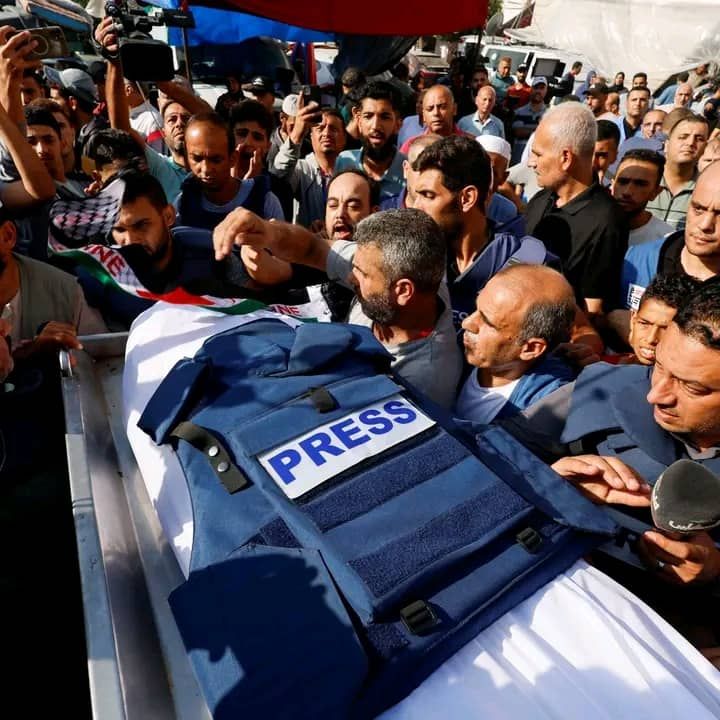
The attack killed Fatima Ftouni, her brother Mohammed Ftouni, and Ali Shuaib figures known in regional media circles.
Their deaths highlight a troubling pattern in modern conflict zones, where even clearly identified press personnel are no longer guaranteed protection under international norms.
Several other journalists were wounded in the same strike, suggesting the attack had a wider human impact than initially reported.
Around the same time, emergency responders also came under fire.
Ambulances were reportedly targeted, resulting in the death of one paramedic at the scene.
The World Health Organization later confirmed that eight additional paramedics were killed in separate incidents across southern Lebanon that same day.
In total, five different attacks on healthcare services were recorded, leaving seven more medical workers injured further stretching an already fragile emergency response system in the region.
The Israeli military acknowledged responsibility for the strike on the journalists but defended the action, alleging that one of the victims, Ali Shuaib, had ties to Hezbollah intelligence operations.
According to Israel, Shuaib was not only gathering information on troop movements but also actively involved in disseminating Hezbollah-linked propaganda claims that remain contested.
Al-Manar, the network he worked for, rejected the allegations and described Shuaib as a veteran war correspondent who had spent decades documenting conflict in Lebanon.
This dispute underscores a recurring challenge in conflict reporting where accusations of affiliation are often made after deadly strikes, but independent verification remains difficult.
Media organizations have consistently pushed back against such claims, warning that labeling journalists as combatants without clear evidence risks normalizing attacks on the press.
The broader context adds further weight to these concerns, as Israel has previously been accused of targeting journalists in Gaza, with hundreds reported killed since the escalation of that conflict.
Saturday’s events in Lebanon now raise urgent questions about accountability, the protection of non combatants and whether international humanitarian laws are being upheld in increasingly complex war environments.