By Our Reporter
Zambia has had a rich presidential history since gaining independence in 1964, with seven official presidents and one acting president leading the nation.
The first president was Kenneth Kaunda, who led the country from October 24, 1964, until November 2, 1991, playing a crucial role in Zambia’s struggle for independence from British rule. Kaunda’s leadership and charm rallied the people, leading to Zambia gaining its freedom.
Kaunda’s government allowed multiple political parties initially, but he later declared Zambia a one-party state in 1973, citing unity and stability as reasons. During his time in office, Zambia faced economic struggles due to its reliance on copper exports and foreign aid.
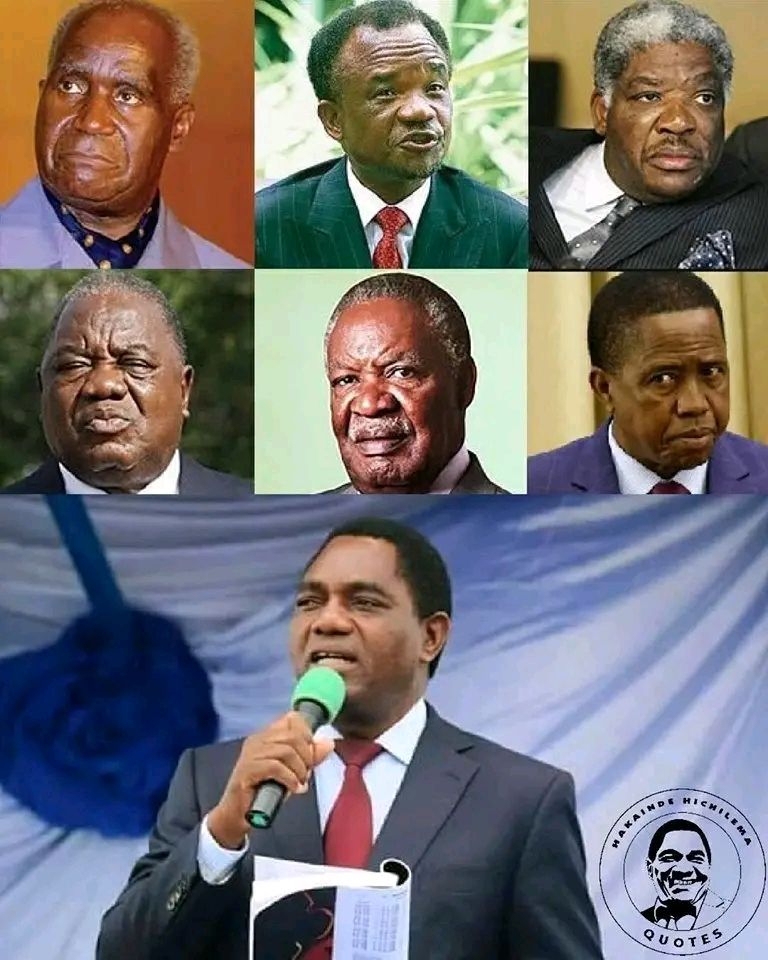
In 1991, Frederick Chiluba succeeded Kaunda, introducing multi-party democracy and serving until January 2, 2002. Chiluba’s presidency marked a significant shift towards democratic governance.
Levy Mwanawasa took office on January 2, 2002, focusing on anti-corruption efforts and improving living standards. He served until his death on August 19, 2008.
Rupiah Banda assumed the presidency after Mwanawasa’s death, serving until September 23, 2011. Banda emphasized economic growth and development.
Michael Sata became president on September 23, 2011, initiating infrastructure development projects. Unfortunately, he passed away on October 28, 2014.
Guy Scott briefly served as acting president after Sata’s death, before Edgar Lungu took office on January 20, 2015. Lungu served two terms, focusing on infrastructure expansion.
Hakainde Hichilema, the current president, assumed office on August 24, 2021, prioritizing economic revival and anti-corruption efforts.
*The Office of the Vice President*
The Office of the Vice President supports the President and assumes the presidency if the President is unable to serve. Notable vice presidents include Reuben Kamanga, Simon Kapwepwe, and Mutale Nalumango, the current Vice President.