By Rick Dzida
In September 2025, Malawians voted for a change in government, choosing Professor Peter Mutharika over former President Chakwera by a significant margin. This is a widely acknowledged fact.
Indeed, there was a strong belief that President Peter Mutharika would fulfill the hopes and aspirations of Malawians.
Despite the decrease in the cost of Maize per bag, numerous individuals continue to face financial difficulties due to the continuously increasing prices of essential items and services.
It is disheartening to see that when individuals express dissatisfaction with the Mutharika administration’s lack of action on economic issues, they are directed to the former president, Chakwera, as if he is still in charge.
To put
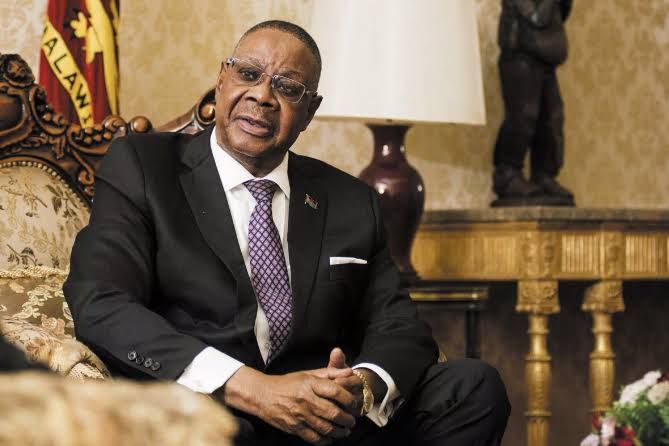
it simply, President Mutharika is currently the leader of Malawi.
As the leader of the country, Mutharika bears the duty of addressing all the economic challenges that are affecting the people.
I urge the people of Malawi to also alter their way of thinking too.
For instance, while there were numerous cases of corruption under the Chakwera administration, this does not give the Mutharika government a reason to condone corruption once again.
Despite the economic struggles experienced by individuals under Chakwera’s leadership, this should not serve as justification for the current Mutharika government to also allow people to suffer financially.
It should be recognized that the citizens of Malawi brought about a change in their government in September 2025 because they desired a transformation in the provision of public services and improvement in their personal lives.
Regrettably, after five months of APM’s leadership, there has been no improvement in the delivery of public services. In fact, these services continue to decline and there are no concrete plans from the current government to improve them.
We urge the DPP government to develop strategies for enhancing public services, such as public health services, infrastructure development, education services, and other social amenities.
It is true that the people of Malawi had confidence in the DPP administration, believing that it would effectively address corruption and resolve various socio-economic issues.
Regrettably, even after five months, corruption is still widespread as government officials continue to seek out opportunities for corrupt activities.
The Amaryllis Hotel scandal is a highly notable case involving accusations of government officials participating in financial fraud.
It is extremely revolting that President Mutharika has failed to take action against the officials implicated in this scandal. According to government protocol, when a government official is suspected of committing a grave offense such as corruption, they must be suspended or put on leave to allow for a comprehensive and unbiased investigation.
During the initial period of Peter Mutharika’s term, we observed an occurrence where the Minister of Agriculture, George Chaponda, was implicated in a corruption scandal involving the procurement of maize. As a result, APM suspended him from his ministerial position. However, upon Chaponda’s exoneration of any wrongdoing, he was subsequently reinstated.
It appears that APM is currently toterating corruption. This has been observed multiple times when individuals with corruption allegations, like Norman Chisale and Enoch Chihana, were appointed and subsequently had their charges dismissed.
Being a law professor, APM was presumed to have knowledge of the laws, regulations, and protocols of Malawi. However, citizens have observed several irregularities in regards to the implementation of the rule of law.
At one point, APM chose Henry Mathanga to serve as the deputy Governor of the Reserve Bank of Malawi, even though he was not working for the bank at that time. Later on, they attempted to deceive the Malawian people by claiming that he was an employee of the bank at the time of his appointment. This goes against the Reserve Bank act in Malawi which outlines the proper procedure for appointing a Reserve Bank Governor.
It has been observed that certain CEOs and directors are being hired without undergoing a fair interview process, as seen in the case of Brian Banda and numerous others.
Despite claims that he is a skilled journalist, strict adherence to the rule of law and proper procedures was necessary in order to select the most qualified candidate through a thorough interview process.
The dpp administration is urged to avoid using nepotism, tribalism, ethnicity, and regionalism as factors in selecting individuals for public positions, as was done by the previous chakwera government.
During the previous administration, we observed that the Chakwera Government primarily selected individuals from the central region with a Chewa background for public positions. Similarly, the current DPP government is following suit by appointing individuals from the Lhomwe belt. It is crucial that public appointments prioritize merit rather than political affiliations.
Although we acknowledge the significance of taxes in the progress of our nation, numerous Malawians have voiced their worries about their excessive amount and the fact that they are applied to every purchase. As a result, the cost of living has become unaffordable and overwhelming for many Malawians.
We are thus urging the DPP administration to decrease taxes in order to improve the quality of life for Malawians.
It is often said in the realm of politics that even as things may change, they ultimately end up remaining similar.
Prior to the 2025 September elections, there was widespread dissatisfaction with Lazarus Chakwera’s government due to the constant rise in prices.
Therefore, they chose to switch the ruling party in Malawi from the Malawi Congress party to the Democratic Progressive Party, which is headed by Professor Peter Arthur Mutharika.
Regrettably, after five months under the Mutharika administration, there has been a sharp increase in the prices of goods and services, causing high inflation. Despite this, people’s salaries have not seen any growth.
There is a strong argument that President Peter Mutharika has only been in power for five months during his second term, leading people to believe that it is too early to hold him responsible for not fulfilling his campaign pledges.
Despite initial indications of achievement, the expected results have not materialized. While we acknowledge that the cost of a bag of maize has decreased and is still declining, taxes remain burdensome and the cost of goods and services remains high.
It is crucial for President Mutharika and his government to present a detailed plan outlining how they will fulfill their campaign promises within the next five years.
Hence, we urge the dpp administration to classify the campaign pledges into those that can be realized immediately, within a year, and within three years. Additionally, there should be a separate category for long-term promises that can only be fulfilled by the end of APM’s term.
The implementation of austerity economic policies should not be treated as a mere melody that can be easily recited without any tangible efforts being made.
When funds saved through economic austerity measures are directed towards corruption rather than the development of our nation, it becomes a significant issue.
We are asking the DPP government to adopt a well-rounded strategy in handling the economy.
We urge the present DPP government to promptly pursue legal action against individuals facing corruption allegations, regardless of their political ties.
This will ensure that if they are proven guilty of engaging in corrupt activities, their ill-gotten funds and assets will be seized and returned to the government’s primary account for the purpose of advancing the country’s development.
In conclusion, we respectfully ask for State President Mutharika to assert himself as the leader of the nation.
Pointing fingers at ex-president Chakwera will not resolve the issues at hand. It is clear that leadership entails finding solutions, and thus the problems mentioned in this piece must be dealt with promptly.