By Staff Reporter
The name Dr. Saulos Klaus Chilima remains etched in Malawi’s political and civic consciousness as a symbol of energy, reform, and possibility.
As former Vice President, Chilima brought a technocratic approach to public service that challenged the conventional norms of Malawian governance.
His tenure was marked by a relentless push for efficiency in the civil service, encapsulated in his “Public Service Reforms” agenda.
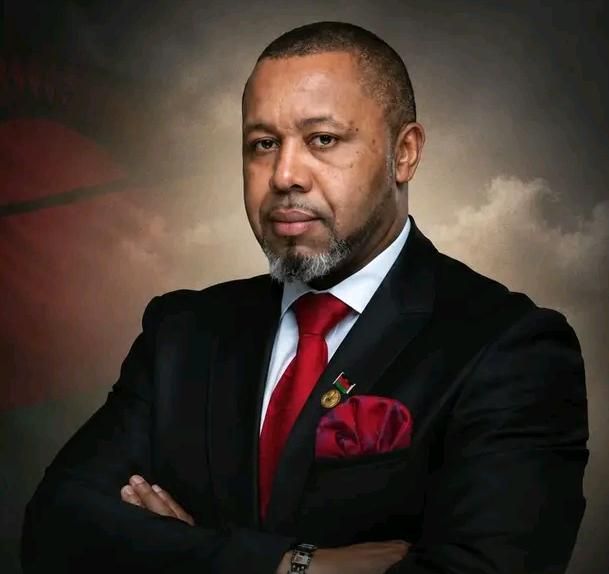
Chilima sought to reduce bureaucracy, digitize government processes, and hold public officials accountable for service delivery.
One of his most visible achievements was the championing of the electronic passport and driver’s license system, which cut down on corruption and delays.
He also spearheaded efforts to streamline the procurement process, aiming to eliminate waste and improve transparency in government spending.
Beyond policy, Chilima connected with Malawians through his use of digital platforms, making political communication more direct and accessible.
His ability to communicate in both English and Chichewa, with clarity and empathy, broadened his appeal across urban and rural divides.
Chilima’s leadership style was characterized by decisiveness, a willingness to challenge the status quo, and an insistence on merit over patronage.
He became a rare example of a political leader who framed public service as a professional duty rather than a path to personal enrichment.
From his achievements, several lessons emerge that are relevant not only to Malawi but to leadership contexts across Africa.
The first lesson is the power of framing leadership as problem-solving rather than power preservation.
Chilima consistently presented governance challenges as technical problems that could be solved with data, innovation, and discipline.
This approach helped depoliticize service delivery and shifted public expectations toward performance-based leadership.
A second lesson is the importance of authenticity in public communication.
By speaking directly to citizens through social media and public forums, Chilima built trust in an environment often marked by political cynicism.
His accessibility demonstrated that leaders do not have to be distant to be respected.
A third lesson lies in the value of resilience and consistency in the face of institutional resistance.
Despite facing pushback from entrenched interests, Chilima maintained focus on reforms, showing that incremental change is possible with persistence.
His career also illustrates the importance of preparation and intellectual depth in leadership.
With a background in economics and public policy, Chilima brought evidence and analysis into spaces often dominated by rhetoric.
This underscores a broader lesson: effective leadership requires both vision and the technical capacity to implement it.
Equally important is the lesson of intergenerational appeal.
Chilima’s ability to inspire young Malawians showed how leaders can mobilize new constituencies without alienating older ones.
His legacy reminds us that leadership is not only about holding office but about expanding the political imagination of a nation.
The importance of focusing on the strengths of leaders and other role models in life cannot be overstated in a country like Malawi.
In societies grappling with governance deficits, highlighting constructive examples provides a counter-narrative to cynicism and apathy.
When citizens focus on the strengths of leaders like Chilima, they reinforce the idea that ethical, competent leadership is achievable.
Role models serve as reference points for behavior, aspiration, and civic responsibility, particularly for the youth.
Focusing on strengths does not mean ignoring flaws, but it does mean refusing to let imperfections erase the value of positive contributions.
It allows societies to extract transferable lessons that can be applied in business, civil society, and public institutions.
In Chilima’s case, his emphasis on results, accountability, and innovation offers a practical model for public servants at all levels.
His life also demonstrates that leadership is ultimately about impact, not titles.
For Malawi, the task now is to institutionalize the values Chilima embodied so that they outlast any single individual.
This requires civic education, policy continuity, and a political culture that rewards competence over loyalty.
Internationally, Chilima’s story adds to the growing body of evidence that Africa’s governance challenges are not immutable.
It shows that with the right combination of vision, communication, and reformist courage, public trust can be rebuilt.
As Malawi continues to navigate its democratic journey, the legacy of Saulos Klaus Chilima offers both inspiration and instruction.
His achievements remind us what is possible, his lessons show us how to get there, and his example urges us to focus on the strengths that can move a nation forward.