


By Linda Kwanjana
Legal experts have cautioned against conflating economic hardship with constitutional incapacity, questioning the legal basis of some of the Public Affairs Committee’s (PAC) demands.
PAC reignited debate over President Arthur Peter Mutharika’s health, leadership visibility and the constitutional role of First Vice-President Justice Jane Ansah in a statement issued on November 24, 2026, signed by Chairperson Monsignor Dr Patrick Thawale and Publicity Secretary Bishop Gilford Emmanuel Matonga.
PAC expressed concern over an alleged leadership vacuum amid persistent fuel and foreign exchange shortages. It demanded a live presidential address and called for Ansah to preside over State functions instead of other government officials, arguing that prevailing circumstances point towards presidential incapacity.
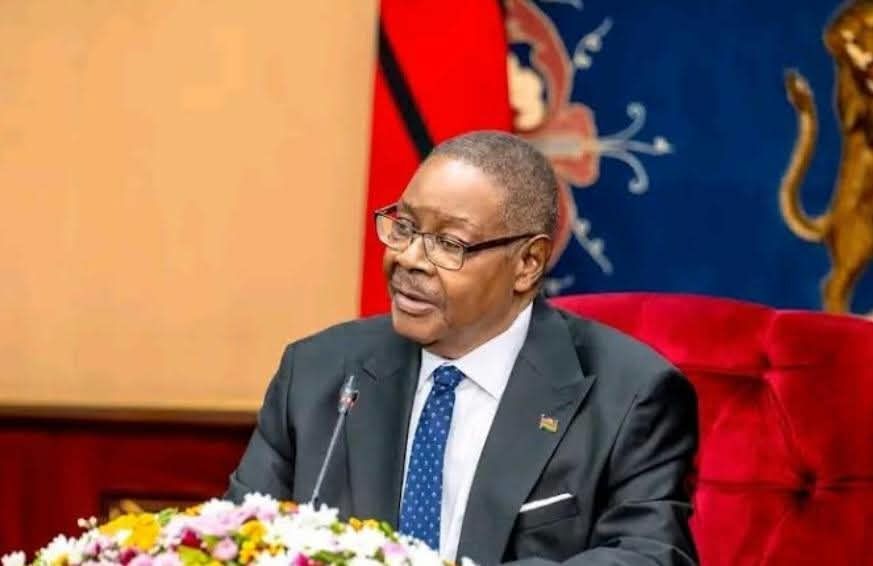
However, legal and governance commentators have questioned the constitutional basis of these assertions.
International constitutional and governance commentator Dr Kelsen Moreson argued that while PAC raises legitimate governance concerns, economic hardship and limited presidential visibility do not establish constitutional incapacity.
“The missing link is evidence that these conditions result from an inability of the President to perform his constitutional functions.
Poor policy outcomes, administrative failures and structural economic constraints are not medical findings,” he said.
Moreson also questioned PAC’s reliance on the absence of public cheering during Mutharika’s return from South Africa and its demand for a live national address, arguing that neither constitutes a constitutional test of presidential capacity.
He cited Section 87 of the Constitution, which requires a written declaration certified by independent medical practitioners, signed by the First Vice-President and a majority of Cabinet members, and submitted to the Speaker of the National Assembly. Upon submission, the First Vice-President immediately assumes presidential powers as Acting President.
Similar legal observations were made by Senior Counsel Allan Chinula and legal practitioner Benedicto Kondowe in interviews published by The Nation on October 23, 2026.
Chinula emphasised that presidential absence does not automatically trigger incapacity and that the mandatory procedure under Section 87 must be followed before the First Vice-President assumes presidential powers on those grounds.
Kondowe, citing Section 79, explained that the Vice-President’s mandate is to assist the President and exercise constitutionally, statutorily or presidentially conferred functions. He further cited Section 92(3), which requires the First Vice-President to preside over Cabinet meetings during the President’s temporary absence.
He maintained that Ansah could reassure Malawians about government interventions on fuel and forex shortages without assuming presidential powers.
Moreson questioned PAC’s demand that Ansah preside over State functions instead of other government officials.
While Section 79 requires the Vice-President to assist the President, Section 89(6) permits the President to delegate powers in writing to Cabinet members or government officials, subject to constitutional restrictions.
Moreson distinguished discretionary delegation from mandatory constitutional functions, including the First Vice-President’s duty under Section 92(3)(b) to preside over Cabinet meetings during the President’s temporary absence. “If the First Vice-President has been denied a function expressly vested in her by law, that specific breach should be identified,” he said. He added that underutilisation of the First Vice-President may constitute a governance concern without necessarily amounting to a constitutional violation.
Another commentary questioned whether expectations of presidential visibility adequately reflect Mutharika’s age and established leadership style.
At 86, Mutharika cannot reasonably be expected to maintain the same level of physical activity as considerably younger leaders, the commentary argues, noting that Malawians elected him in September 2025 with knowledge of his age and leadership style.
While advanced age does not diminish constitutional responsibilities, the debate offers important lessons about electoral choices and realistic public expectations.
Questions surrounding Mutharika’s health have periodically resurfaced since 2014, including during his extended visit to the United States in 2016.
Moreson cautioned against exploiting presidential health for political convenience, emphasising the need for consistent evidential and constitutional standards.
PAC’s disclosure that its requests for a presidential audience in March and September 2026 were unsuccessful also highlights the importance of stakeholder engagement.
Sections 88(2) and 12(1)(c) of the Constitution provide the basis for executive leadership and public accountability without prescribing the frequency of presidential appearances or live national addresses.
The Constitution provides mechanisms for continuity of government through lawful delegation and clearly defined institutional responsibilities.
Ultimately, executive performance should be assessed against the effectiveness of government interventions and measurable outcomes rather than the frequency of presidential appearances.
Equally, questions of presidential incapacity must be determined through evidence and prescribed constitutional processes, not conjecture or political expectations.