By Durell Namasani
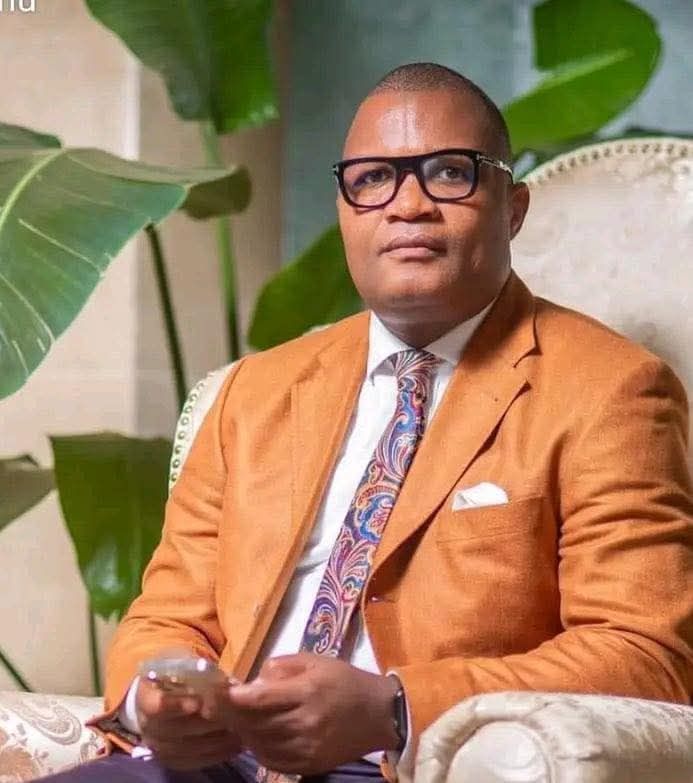
The recent appointment of Brian Banda as Director General of the Malawi Broadcasting Corporation (MBC) should raise serious concern on the direction of journalism in this country . It represents yet another troubling episode in what is becoming a sad state of Malawian journalism—where professional integrity is sacrificed at the altar of political patronage, and where the line between reporting on power and serving power becomes dangerously blurred.
My view is that appointing Brian Banda risks politicizing the media space further than we have already witnessed under this administration. Bringing in politically aligned “media gurus” to head public institutions does not strengthen institutional leadership, as the MBC board claimed in its announcement . Rather, it undermines media independence and weakens public trust in the very institutions meant to inform citizens objectively. When journalists are perceived as extensions of the ruling party’s communication machinery, the public loses faith that what they hear, read, and watch represents anything other than government propaganda.
This rewarding behaviour will only breed a new wave of hyper-partisan journalists—young reporters watching these appointments carefully and learning the wrong lesson. They will calculate that loyalty to the party in power, rather than commitment to ethical journalism, is the path to career advancement. They will shape their coverage not around truth and public interest, but around the hope that they too should be rewarded if a new party wins the next election. We are cultivating a generation of journalists who see themselves as prospective government spokespersons rather than watchdogs of democracy.
The list of journalists rewarded with government positions since the DPP returned to power is staggering. From Times TV alone, we have witnessed Brian Banda’s appointment as MBC DG, Cathy Maulidi as Presidential Press Secretary, Deogratias Mmana as Director of Information, Leah Malekano as Deputy Director of Information, David Gadama as PRO in the Office of the Second Vice President, Sam Bond Kaimira as PRO at the Ministry of Transport, Henry Mchulu as State House Videographer, and Emmanuel Simpokolwe as State House Photographer. This is not a coincidence—it is a systematic co-opting of the Fourth Estate.
If these were activists accepting government positions, Malawians would be shouting “adya chibanzi”—just as they did with Timothy Mtambo and others when they crossed from civil society to government. The public rightly calls out activists who abandon their advocacy roles for the comfort of government payrolls. Why should journalists be held to a different standard? When a journalist becomes a government appointee, particularly one whose job previously involved holding that same government accountable, the phrase “adya chibanzi” applies with equal force. They have eaten the spoils, and in doing so, they have compromised the institution they once served.

The DPP government is proving to be among the worst in terms of rewarding friends and relatives, a trend so dangerous to Malawi and so dangerous to the integrity of journalism. Renowned commentator Alexious Kamangila has described Banda’s appointment as “corruption of the media” and “political paralysation of the media space.” This assessment is spot on. When media houses become feeder teams for government appointments, when the most ambitious journalists aspire not to win awards for investigative reporting but to secure positions in State House, journalism itself dies a slow death.
Banda’s appointment is particularly concerning given the circumstances surrounding his departure from Times Group. Reports suggest he was asked to resign following what was described as “a catalogue of professional misconduct and serious errors of judgment” . Yet such a individual is now entrusted with leading the national broadcaster. Questions have also emerged regarding his academic qualifications, with the appointment reportedly thrown into uncertainty after Banda allegedly failed to produce education certificates required for the position .
Malawi deserves better. We deserve a public broadcaster led by qualified professionals whose primary allegiance is to the public, not to the politicians who appointed them. We deserve journalists who understand that their power comes from serving citizens, not from currying favour with those in power. Until we begin shouting “adya chibanzi” at compromised journalists with the same vigour we direct at compromised activists, this dangerous trend will continue—and Malawian journalism will remain held hostage by political patronage.