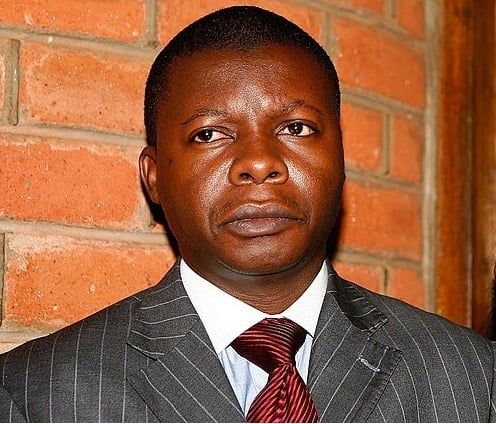
Lilongwe University of Agriculture and Natural Resources (LUANAR) students have written to Chief Justice Rizine Mzikamanda to reassign a judge for a case currently handled by Judge Ken Manda, alleging misuse of judicial powers.
According to a letter signed by LUANAR student union representative council president Overton Jere, the students have requested that a new judge be reassigned within seven days from October 11, 2024 .
Manda
They claim that reassigning another judge will ensure fairness.
The letter reads, in part:”Luanar awarded a contract to Fargo Limited for the construction of a much-needed teaching complex at the NRC Campus. However, despite receiving a substantial sum of money, Fargo failed to fulfill the terms of the contract.
“As a result, Luanar rightfully terminated the agreement and sought to recover the funds by cashing out security and performance bonds with FDH Bank. Before Luanar could recover the funds, Fargo approached the Commercial Division of the High Court and was granted an ex-parte injunction preventing the University from accessing the money.”
In the letter, the students claim that the injunction was issued without LUANAR being given an opportunity to present its case and that Manda has since never scheduled any hearings, leaving the matter unresolved.
When reached for a statement, acting registrar of the High Court of Malawi and Malawi Supreme Court of Appeal Innocent Nebi was unavailable and had not responded to our messages.
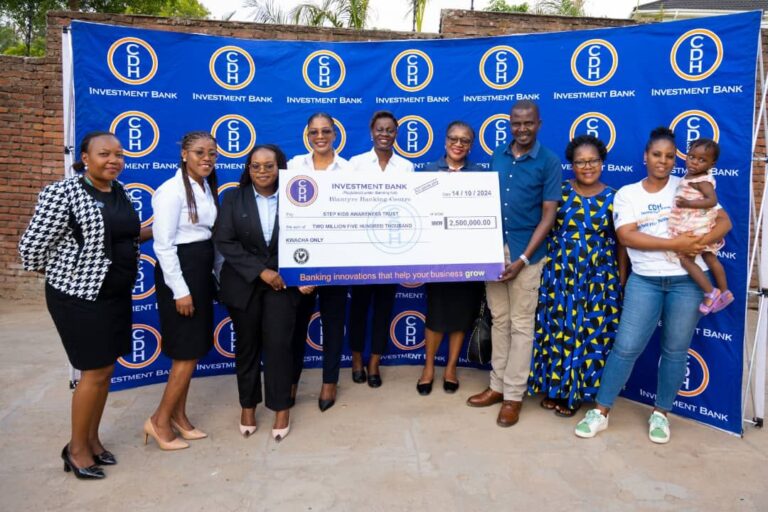
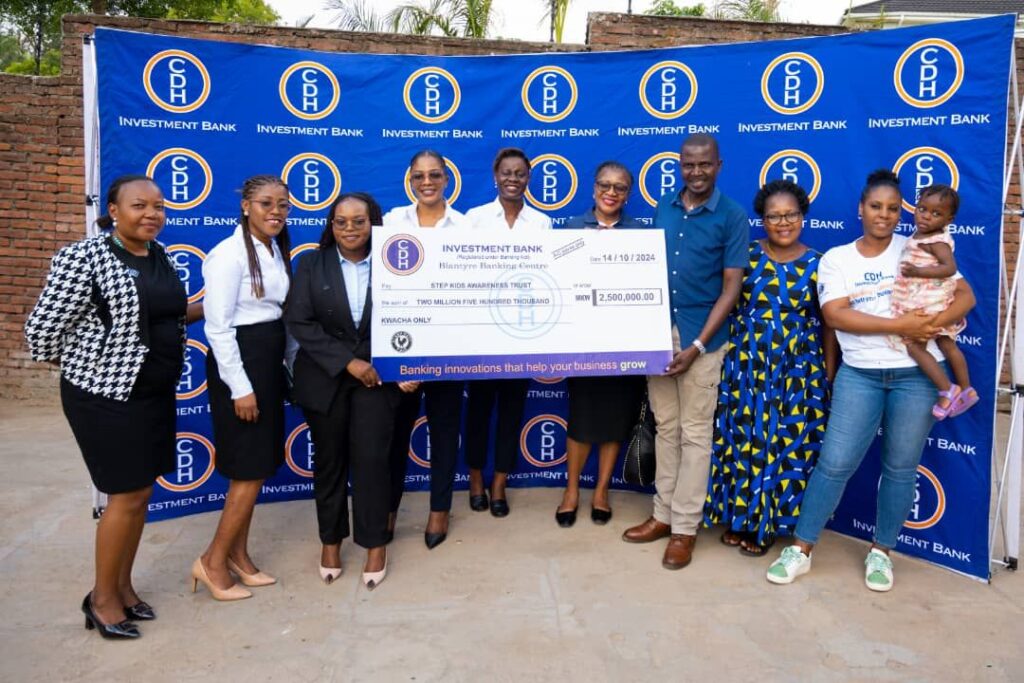
As part of celebrating Mother’s Day, which falls on October 15 every year in Malawi, the women of CDH Investment Bank on Monday October 14, 2024,donated assorted items and funds totaling K2.5 million each to Step Kids Awareness Trust (STEKA) in Nyambadwe, Blantyre, and Mama Berna Foundation in Area 23, Lilongwe.
The CDH Investment Bank women, being mothers themselves, understood the significance of supporting these orphanages during the Mother’s Day period.
They said their donations will help improve the lives of the children by paying their school fees and developing their futures.
The donations brought immense joy and laughter to the children, and the founders of the orphanages expressed heartfelt gratitude.
In an interview with journalists, founder and director of STEKA, Godknows Maseko, thanked CDH Investment Bank ladies for the timely donation, which will help pay fees for some children and develop their futures.
In Lilongwe, founder of Mama Berna Foundation, Bertha Kapalanga, appreciated the donation, mentioning that the funds will be used to buy cement for the orphanage’s dwelling project.
They both acknowledged that this was the largest donation they had received.
FINCA Malawi has donated K3 million to the Malawi Microfinance Network(MMN) in support of their annual lakeshore conference scheduled for October 17 to 19,2024 at MogFords in Mangochi.
The conference will focus on promoting financial inclusion and independence.
Speaking during the cheque handover ceremony on Monday, FINCA Malawi’s Chief Finance Officer, Esther Sikelo, expressed her institution’s commitment to transforming lives through sustainable financial solutions.
Esther Sikelo handing over the cheque
She highlighted that FINCA’s purpose is to support all business segments in achieving financial independence.
Sikelo also commended the MMN for their efforts in fostering collaboration and promoting the financial sector.
On his part, the MMN Executive Director Duncan Phulusa, thanked FINCA Malawi for their support.
The conference will be held under the theme ‘Inclusive and sustainable financing for micro, small and medium enterprises: Catalysing agricultural commercialisation in Malawi’.
Malawi’s top Afro-Pop musician Onesimus real name Armstrong Kalua has thanked his fans for supporting him with massive YouTube views.
On Monday, the artist released the long-awaited video for the song “Controller Remix,” which features Nigeria’s Joe Boy.
In a span of only 12 hours, the song garnered over 240,000 views.
Onesimus
Writing on his Facebook page, the “Mr. Nobody” hitmaker expressed his gratitude to his fans for their overwhelming support.
“My country people are showing me some love. My name is Onesimus, aka African Butter, and I am from Malawi,” he said.
A few weeks ago, African Butter, as he is also commonly known, revealed on Times Radio’s BombaBomba program that the song is already enjoying airplay across the world and has earned him several awards.
Golf, often perceived as an elite sport, has an intriguing connection with charity in Malawi.
This association is deeply rooted in the country’s history and cultural context, as well as the sport’s unique dynamics.
As we explore the intersection of golf and philanthropy in Malawi, we uncover a narrative of compassion, community, and collective impact.
Golf was introduced to Malawi during the colonial era, with the first course established in 1927 at the Blantyre Sports Club.
Initially, the sport catered to the country’s expatriate community and affluent locals.
However, as independence dawned in 1964, golf began to transcend its exclusive reputation, and local business leaders, politicians, and entrepreneurs adopted the sport, recognizing its potential for networking and community engagement.
Consequently, Malawi’s golfing community started organizing charity tournaments in the 1980s, leveraging the sport’s exclusivity to raise funds for social causes.
These events attracted high-profile attendees, including politicians, business leaders, and international donors.
The inaugural President’s Charity Golf Tournament in 1985 set the stage for this fusion of golf and philanthropy.
Several factors contribute to golf’s enduring charity legacy in Malawi.
Firstly, golf provides a unique platform for business leaders, politicians, and influencers to connect, fostering partnerships and collaborations that extend beyond the course.
Moreover, golf’s elite reputation attracts high-end sponsors and donors, leveraging the sport’s prestige to secure funding for social causes.
Additionally, golf clubs and events serve as hubs for community outreach, promoting social responsibility and volunteerism among members.
Meanwhile, Malawi’s golfing community maintains strong ties with international organizations, facilitating access to global funding and expertise.
Notably, charity golf initiatives have made a significant impact in Malawi, with the Presidential Charity Golf Tournament raising millions of kwachas for various causes, including education, healthcare, and disaster relief.
Furthermore, the Malawi Open, an international golf tournament, has attracted global attention, generating funds for local charities and promoting tourism.
Similarly, Golfers Against Poverty, a local organization, uses golf to support economic empowerment programs and community development projects.
Despite these successes, challenges persist.
Golf remains an exclusive sport, limiting participation and engagement from marginalized communities.
Moreover, charity golf initiatives often rely on international donors, creating sustainability concerns.
Some argue that charity golf focuses too heavily on mainstream causes, neglecting lesser-known issues.
To address these challenges, Malawi’s golfing community must increase inclusivity by implementing programs to make golf more accessible to diverse demographics.
It is also crucial to diversify funding streams by developing local fundraising initiatives and partnerships to reduce dependence on external donors.
Furthermore, broadening the charitable focus to support a wider range of causes, including grassroots initiatives and marginalized communities, is essential.
In conclusion, golf’s charity legacy in Malawi serves as a testament to the sport’s transformative power.
By understanding the historical context and complexities surrounding charity golf, we can foster a more inclusive, sustainable, and impactful philanthropic landscape.
As Malawi’s golfing community continues to tee off for a cause, the ripple effects of compassion and community will resonate far beyond the course.