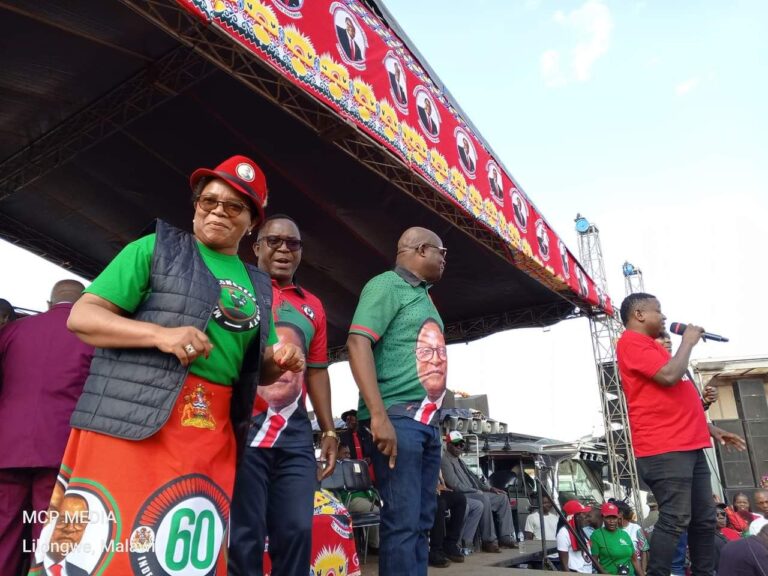
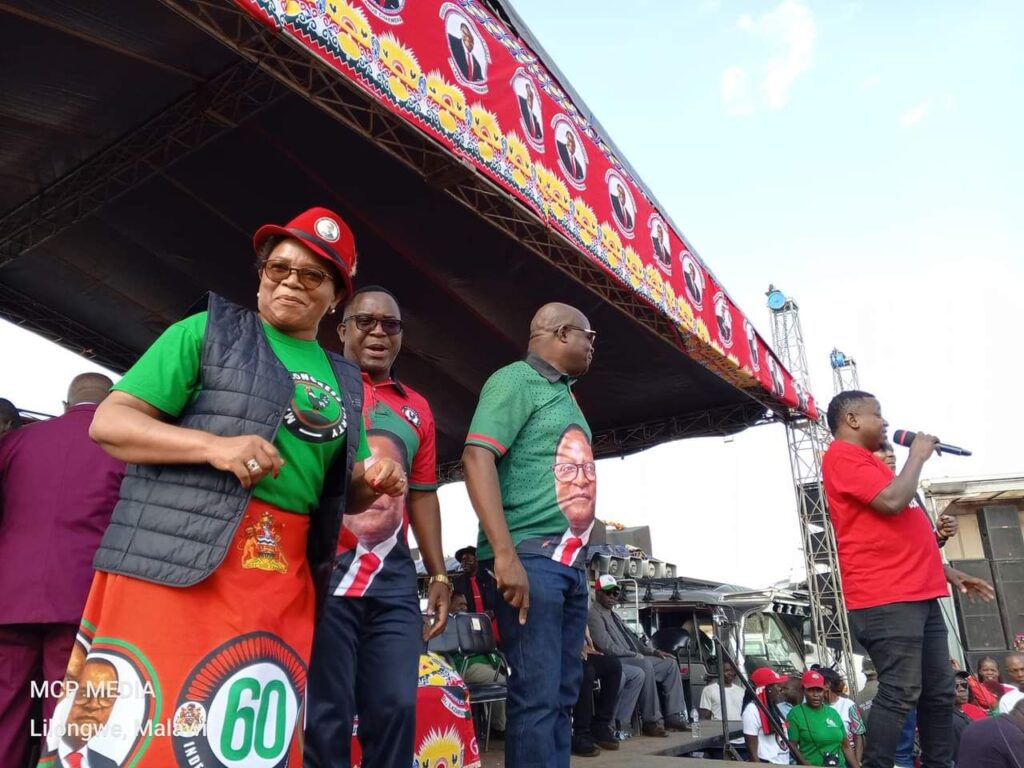
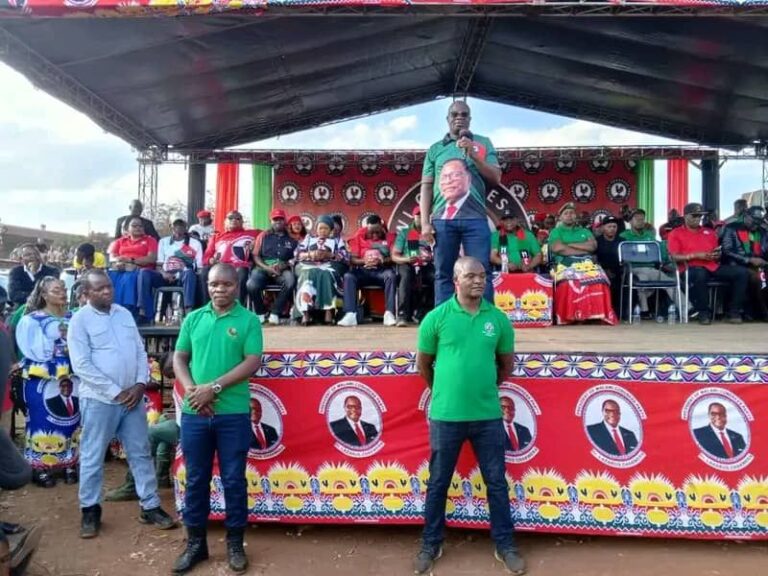
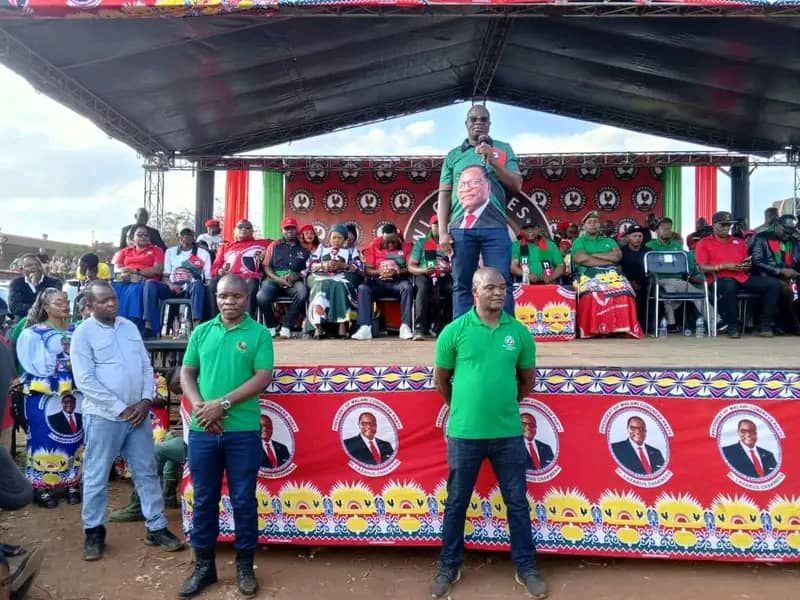
Maxwell Thyolera, a prominent political figure in the Malawi Congress Party (MCP), has voiced strong concerns over the actions of other political parties, claiming they are undermining the democratic principles of the nation. He made these remarks during an MCP rally held in Mgona, Lilongwe.
Thyolera’s comments come amidst increasing political tension as the country approaches the upcoming elections. He stated that some opposition parties have resorted to “political trickery” that disrupts the democratic process. Thyolera emphasized the importance of integrity and respect in politics, urging citizens to remain vigilant against the misleading narratives propagated by these parties.
Mgona rally
Ken Msonda, another senior member of the MCP, echoed Thyolera’s sentiments, urging supporters to stay alert and not to be swayed by the claims made by opposition leaders who, he suggested, have no genuine intentions of aiding the country’s development. Msonda underscored the historical context, recalling how former President Dr. Bakili Muluzi faced significant challenges from opposition factions, and expressed disbelief at how those same parties now seek alliances with the United Democratic Front (UDF) as the nation gears up for elections.
The MCP leaders’ remarks highlight the party’s commitment to transparency and accountability in governance while criticizing the tactics employed by rival parties. As they rally support for their platform, Thyolera and Msonda are encouraging Malawians to critically assess the political landscape and choose leaders who prioritize the nation’s welfare over self-interest.
The MCP rally at Mgona served as a reminder of the importance of active participation in the democratic process, and the leaders’ call to action aims to mobilize supporters ahead of the crucial electoral period. As the political climate continues to evolve, the MCP remains steadfast in its mission to uphold the values of democracy and foster a prosperous future for Malawi.
The Malawi Congress Party (MCP) rally held at Mgona in Lilongwe was enlivened by the vibrant performance of renowned musician Joseph Nkasa. The event, which brought together party supporters and local leaders, showcased Nkasa’s popular songs that resonate with the aspirations and struggles of Malawians.
Nkasa, known for his ability to blend traditional melodies with contemporary sounds, captivated the audience with his energetic performance. His music, often laced with social commentary, not only entertained but also inspired the crowd, emphasizing themes of unity, resilience, and hope amidst the challenges faced by the nation.
Phungu Joseph Nkasa performing at MCP rally
The rally provided a platform for political leaders to address pressing issues while Nkasa’s performance offered a moment of joy and celebration for attendees. The combination of politics and music created a lively atmosphere, highlighting the cultural richness of Malawi and the importance of music in uniting people.
In between songs, Nkasa expressed his support for the MCP and its leadership under President Lazarus Chakwera, praising the government’s efforts to bring development and positive change to the country. His remarks resonated with many in attendance, as they rallied together to show their support for the party and its vision for a better Malawi.
As the event concluded, Nkasa’s performance remained a highlight, reminding everyone of the power of music to uplift spirits and foster a sense of community. The MCP Mgona Rally, featuring Nkasa, was not just a political gathering but a celebration of Malawian culture and unity, reinforcing the bond among the people as they look toward the future.
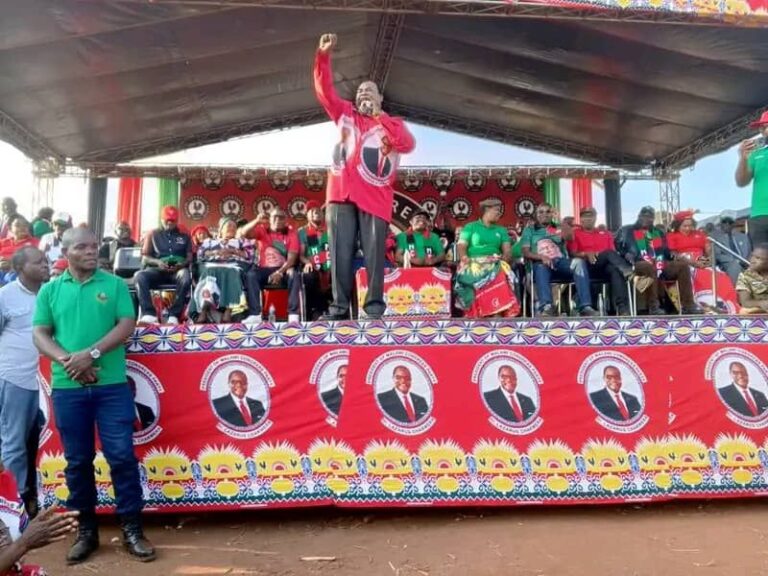
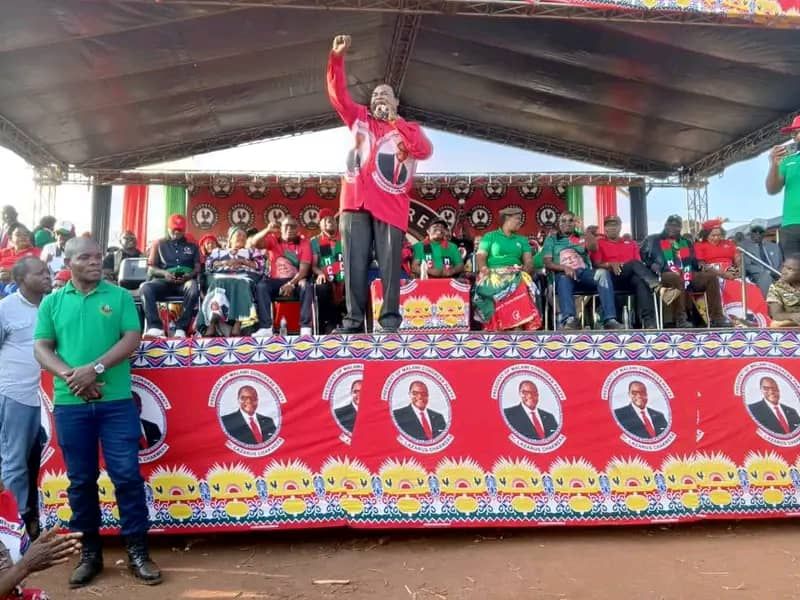
Maxwell Thyolera, a prominent leader in the Malawi Congress Party (MCP), has expressed confidence in the party’s ability to secure victory in the upcoming elections, attributing this optimism to the positive impact of President Lazarus Chakwera’s leadership. Speaking at the MCP Mgona Rally, Thyolera emphasized that the government under the DPP has struggled to meet the needs of the citizens, indicating that voters are ready for a change.
“We will win because the government of our party is focused on development that uplifts the people,” Thyolera declared, rallying supporters around the achievements and promises of the MCP. His statements reflect the party’s commitment to addressing the pressing challenges faced by Malawians, particularly in light of the ongoing economic hardships.
Thyolera speaking at the Mgona rally
In his speech, Thyolera also called on Richard Chimwendo Banda, the Minister of Local Government, to ensure that the government expands its food assistance programs. He highlighted the urgent need for increased support for vulnerable communities, especially in urban areas where many people are suffering from food insecurity.
“The government must increase the number of beneficiaries for food assistance, as many people in urban areas are struggling with hunger,” he urged, stressing the importance of addressing the immediate needs of the population.
Thyolera’s comments resonate with the sentiments of many Malawians who are grappling with the challenges of poverty and hunger. His call for action emphasizes the MCP’s intention to prioritize the welfare of citizens and ensure that government resources are allocated effectively to those in need.
As the country approaches the election period, Thyolera’s words at the Mgona Rally serve as a rallying cry for MCP supporters, reinforcing their belief in the party’s vision for a better Malawi. With a focus on development and social welfare, the MCP is positioning itself as a viable alternative to the DPP, aiming to bring meaningful change to the lives of ordinary Malawians.
In a recent statement, Uladi Mussa, a senior member of the Malawi Congress Party (MCP), has called on the public to refrain from blaming President Lazarus Chakwera for the escalating prices of goods in the country. Mussa emphasized that the surge in prices is not solely attributable to the President’s leadership but is influenced by various external factors impacting the global economy.
Mussa explained that many of the price increases in Malawi are linked to global supply chain issues and the country’s reliance on imported goods. He pointed out that Malawi depends heavily on purchasing items from other countries, and any fluctuations in global markets inevitably affect local prices. According to him, these external economic challenges contribute significantly to the rising cost of living in Malawi.
Uladi Mussa
Furthermore, Mussa expressed confidence in the MCP’s performance in the upcoming elections, asserting that the party has been actively working to support the government despite being in opposition. He stated, “We have been doing well as a party in supporting the government, and we are confident that we will perform well in next year’s elections. We will not lose; we will win again.”
Mussa’s remarks come at a time when many Malawians are expressing frustration over the rising costs of essential goods and services. The MCP leader’s plea for understanding underscores the complexity of the economic challenges faced by the nation and highlights the need for collective effort in addressing these issues.
The call to action from Mussa aims to shift the narrative away from placing blame on President Chakwera and towards recognizing the broader economic dynamics at play. As the country approaches the election period, Mussa’s comments may resonate with voters seeking solutions rather than scapegoats for the difficulties they face.
In summary, Uladi Mussa’s message is a reminder that economic challenges often have multiple causes and that the focus should be on collaboration and constructive solutions as Malawi navigates its path forward.
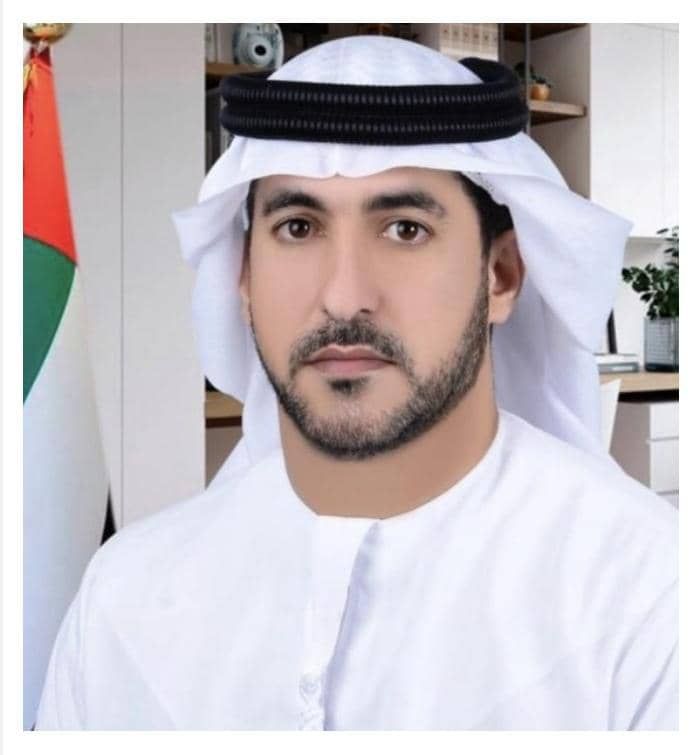
The recent declaration by His Highness Sheikh Ahmed Al Qassimi—“I have no business in Malawi”—has sent shockwaves through the political and business landscapes of Malawi. His statement, coupled with the rejection of any contracts or partnerships purportedly involving his office, raises significant questions about the integrity of dealings within the Malawian government. This analysis delves into the implications of this statement, the broader context of corruption, and the legacy of President Lazarus Chakwera amid growing allegations of misconduct.
His Highness Sheikh Ahmed Al Qassimi
In a detailed response, Sheikh Al Qassimi’s office categorically denied any involvement in business transactions within Malawi, particularly relating to fuel and fertilizer supplies. The unequivocal assertion by Public Relations Manager Ali Ahmed Alhamed—that they operate solely in Dubai and partially in China—highlights the disconnection between legitimate international business and the fraudulent contracts allegedly signed under false pretenses. The emergence of documents claiming to represent the Sheikh’s interests points to a troubling pattern of impersonation, fraud, and corruption within the Malawian government, specifically implicating Secretary to the President and Cabinet Colleen Zamba.
Zamba’s signing of a Memorandum of Understanding (MoU) with a purported “fake Sheikh” not only raises questions about her judgment but also places the government at risk of significant reputational damage. The potential for legal action from Sheikh Al Qassimi’s office over the unauthorized use of his name for fraudulent contracts cannot be understated. Such legal ramifications could result in further scrutiny of the administration’s dealings, underscoring the need for accountability and transparency in government operations.
The situation surrounding the “fake Sheikh” extends beyond mere allegations; it exemplifies a deeper malaise afflicting Malawian governance. The skepticism surrounding contracts for fuel and fertilizer—totaling over K1 trillion—brings to light a series of fraudulent activities that may surpass previous corruption scandals, including the infamous “Cashgate.” This highlights an alarming trend where public funds are at risk of being siphoned off through illusory deals that compromise the country’s economic stability.
Moreover, the lack of action from the Anti-Corruption Bureau and other oversight bodies in the face of these revelations raises concerns about their effectiveness and independence. The apparent inaction against what could be the most significant attempt to defraud the Malawian government since 1994 reflects a failure of governance that undermines public trust in institutions designed to safeguard the public interest.
President Lazarus Chakwera’s leadership has come under fire as critics argue that his administration’s failure to address rampant corruption could define his legacy. The pattern of fraudulent activities, coupled with a lack of decisive action to hold those responsible accountable, paints a picture of a government more focused on personal enrichment than public service.
Chakwera’s continued endorsement of Zamba and others implicated in these schemes suggests a complicity that could tarnish his legacy irreparably. As history has shown, public figures are often remembered not just for their policies but also for their failures to act against wrongdoing. The shadow of corruption, if unaddressed, will linger long after his presidency, impacting how future generations perceive his tenure.
In conclusion, the statement by Sheikh Ahmed Al Qassimi serves as a clarion call for reform in Malawi’s governance structures. The rejection of fraudulent contracts attributed to his office is not merely a personal affront; it symbolizes the urgent need for accountability within the Malawian government. As Malawians await a response from their leadership, the opportunity for genuine reform remains. President Chakwera’s response to this scandal will ultimately shape his legacy, highlighting the critical intersection between governance, accountability, and public trust. Without immediate and effective action, the consequences of inaction could resonate throughout Malawi for years to come.