
Saturday, April 4, 2026
No menu items!
spot_img
Home Blog Page 1004

Malawi Seeks Sustainable Food Systems Amidst El Niño Crisis

0

By Twink Jones Gadama

Malawi’s Commissioner for Disaster Management Affairs, Charles Kalemba, has made a passionate appeal to donors to support the country in building sustainable food systems.

This call to action comes as Malawi faces a severe food insecurity crisis, exacerbated by the El Niño phenomenon.

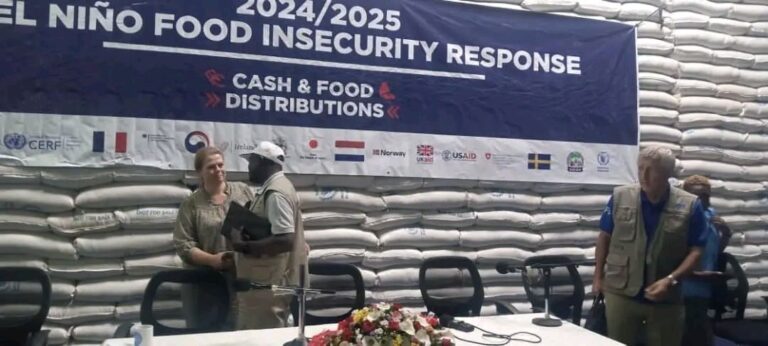
Speaking in Blantyre during a joint media briefing with the World Food Program (WFP) Malawi and other donors, Kalemba emphasized that handouts are not a viable long-term solution to the current challenges.

“We need sustainable food systems that can produce enough food at all times,” he stressed.

The numbers are staggering: over 5.7 million people are currently facing food insecurity, according to projections by the Malawi Vulnerability Assessment Committee (MVAC).

Kalemba warned that this situation will persist unless sustainable measures are implemented.

In response to the crisis, the WFP has launched an emergency response program, securing funding to purchase 33,000 metric tons of maize and 317 metric tons of Super Cereal Plus, a corn-soya blend distributed to children.

Paul Turnbull, WFP Malawi Country Director, highlighted the importance of collaborative efforts in addressing the crisis.

“We are committed to supporting Malawi in building resilient food systems,” he said.

Siri Frette Allsted, Head of Cooperation at the Embassy of Norway, echoed this sentiment, emphasizing the need for unity among the international community in responding to the crisis.

Norway has pledged increased support for both immediate and sustainable initiatives.

Malawi’s food systems face numerous challenges, including climate change, environmental degradation, and demographic pressures.

To address these issues, experts recommend promoting production of nutrient-rich foods, ensuring sustainable agricultural practices, and supporting farmers with inputs and extension services.

The Malawi government has shown commitment to transforming the country’s food systems, recognizing the importance of sustainable agriculture and food production.

However, more support is needed from the international community to ensure the success of these initiatives.

As Malawi struggles to cope with the El Niño crisis, the need for sustainable food systems has never been more pressing.

The international community must come together to support Malawi in building resilient food systems that can withstand future challenges.

As Malawi works towards building sustainable food systems, the international community must stand in solidarity with the country. Together, we can ensure that MaPartnerd more resilient from this crisis
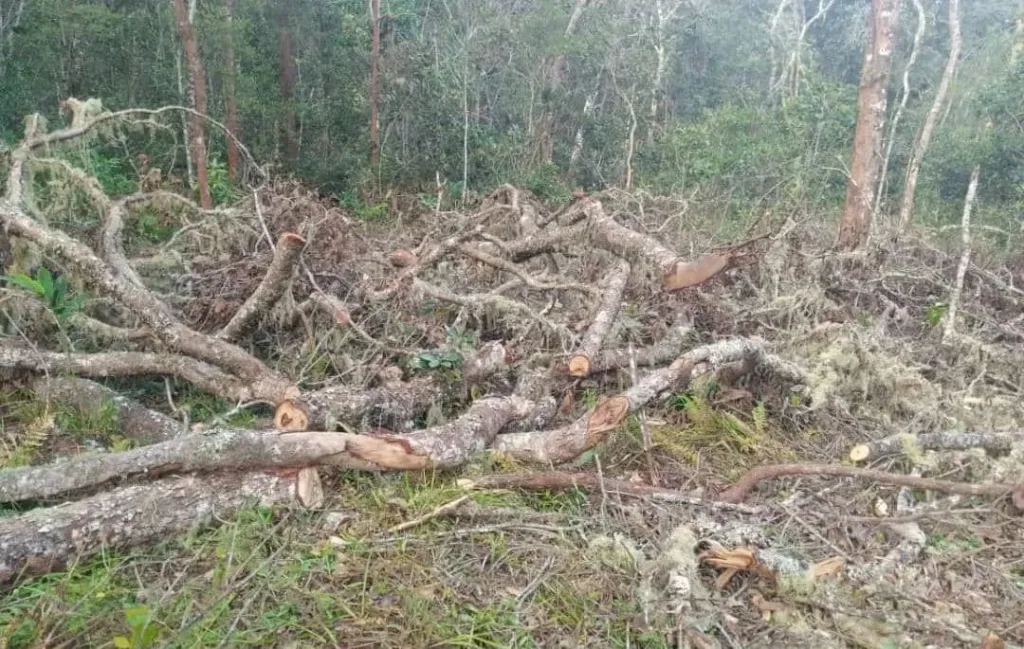
Nkhatabay District Council Blocks Sale of Kaning’ina Forest Reserve Land

0

By Twink Jones Gadama

In a bold move to protect Malawi’s natural resources, the Nkhatabay District Council has stopped Traditional Authority (T/A) Thula from selling a portion of the Kaning’ina Forest Reserve to Shepherd Bushiri’s Goshen Trust.

The council’s decision comes after it was revealed that T/A Thula and his subordinates were attempting to sell off the land, which is designated as public property.

The council emphasized that the land belongs to the Kaning’ina forest reserve and, as such, cannot be sold by chiefs.


Designated as a forest reserve in 1935, the Kaning’ina Forest Reserve covers an area of 143.02 km² and is managed by the government.

The reserve is crucial for maintaining biodiversity and supporting local ecosystems.

The council’s actions have been praised by environmentalists and local communities, who recognize the importance of preserving Malawi’s natural resources.

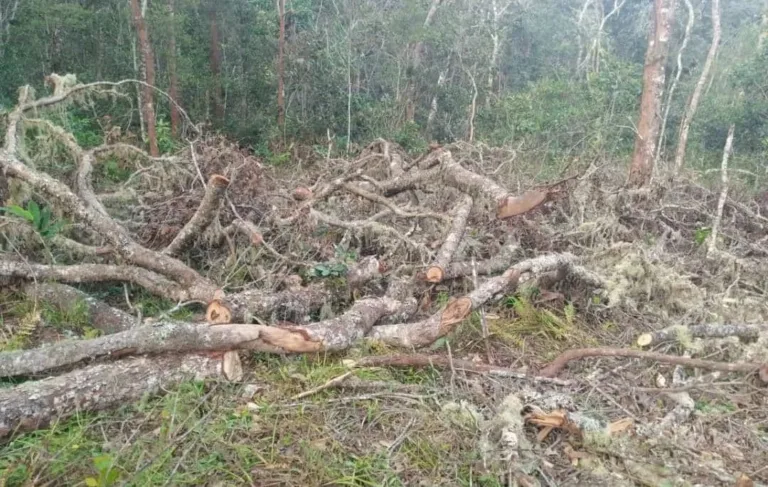
Deforestation and land degradation are significant concerns in Malawi, with Nkhata Bay losing 8.49 kha of natural forest in recent years.

The move to block the sale of the land is seen as a significant step towards protecting Malawi’s forests and promoting sustainable development.

The government has made efforts to conserve forest biodiversity, including initiatives to engage local communities in forest management.

The Nkhatabay District Council’s decision sets a precedent for protecting Malawi’s natural resources and promoting sustainable development. As the country continues to grapple with environmental challenges, bold actions like these are crucial for preserving its rich biodiversity.

Women Caucus of Parliament Facilitates Girl Child Education in Bwanje North Constituency

0


By Elywin Chighali Mhango

In a groundbreaking initiative aimed at empowering young girls through education, the Women Caucus of Parliament, led by Chairperson Honourable Rachael Zulu, embarked on a mission to promote girl child education in various constituencies. One notable stop on their journey was Bwanje North Constituency, overseen by the dedicated Member of Parliament, Honourable Nancy Chaola Mdooko, who also serves as the Deputy Minister of Education.

During their visit to Bwanje Community Day Secondary School, the esteemed Senior Chief Ganya took the opportunity to commend the Honourable Minister for her efforts in constructing a hostel facility. This pivotal infrastructure development is set to alleviate the challenges faced by girls who previously had to travel long distances to attend school. Chief Ganya expressed gratitude for the initiative, highlighting how the hostel would enable girls to focus on their education without the burden of strenuous daily journeys.

Honourable Rachel Zulu

The senior chief also praised the Women Caucus of Parliament for their unwavering support and commitment in facilitating such projects. He emphasized the crucial role that initiatives like these play in fostering an environment where young girls can thrive academically, ultimately enabling them to realize their full potential.

The event at Bwanje Community Day Secondary School served as a testament to the collective efforts of dedicated parliamentarians and community leaders in advancing the cause of girl child education. Through collaborative action and investment in education infrastructure, these initiatives are poised to empower a new generation of young girls, providing them with the tools and resources necessary to succeed in their academic pursuits and beyond.

Who is fooling Madam Chilima?  Bird’s Eye View
Column Every Wednesday


If there is one person who cannot be stopped from mourning the death of late Vice President Saulos Chilima, it is his wife, Mary Chilima.

Her devastation cannot be overstated, and it is clear from her public appearances and demeanor that she is experiencing immeasurable grief.

Losing a spouse in such tragic and sudden circumstances is unimaginable, and any criticism of her personal mourning process would be insensitive and unjust.

However, there is a disturbing development that, if not nipped in the bud, could lead Madam Chilima to not only tarnish her own image but also ruin the lasting legacy her late husband left behind.

The signs are there, glaring and undeniable: Madam Chilima appears to be embarking on a path of political manipulation, using the plane crash in Chikangawa Forest that claimed her husband’s life as a springboard for political sympathy.

This is a dangerous trajectoryone fraught with unforgiving consequences.
Going by her social media posts, one is left wondering whether Madam Chilima is genuinely seeking answers about the circumstances surrounding the crash or if she is merely fishing for public pity.

A tragic death should not be used as fodder for political gain and Madam Chilima’s recent behaviour suggests that someone is whispering bad advice in her ear, urging her to enter the political arena. Big and Monumental mistake.

Let us start with the facts: After the crash, the Chilima family requested an autopsy, and the government did not object. They even permitted a family-chosen pathologist to conduct it.

While the family has chosen not to release the autopsy findings publicly, one thing was clear: Saulos Chilima, along with the other eight, died on impact. This means that even if the rescue team had arrived within minutes of the crash, no lives could have been saved.

Yet, despite the clarity of this fact, Madam Chilima continues to play the blame game, alluding to conspiracies and cover-ups as if there are secrets still left to be uncovered.

The second key point: During the late Vice President’s funeral, the Chilima family requested an independent investigation into the circumstances that brought down the Malawi Defence Force plane.

This was an entirely fair request, given the magnitude of the tragedy. President Lazarus Chakwera wasted no time in appealing to the international community for assistance in the investigation.

Germany, the manufacturers of the Dornier plane involved in the crash, promptly responded and investigators from the Federal Bureau of Aircraft Accident Investigation (BFU) arrived in Malawi to conduct a thorough inquiry.

Preliminary reports from BFU ruled out foul play and reaffirmed that all passengers and crew died from the impact. So, what exactly is Madam Chilima looking for?

The nation mourned alongside her, but the persistence with which she publicly questions the circumstances of the crash, even after these comprehensive investigations, starts to feel less like a search for truth and more like a play for political relevance.

It is disheartening, then, to see her posting on Facebook a picture of herself at the crash sitenothing wrong with that, of course.
But the caption? Mobilizing Malawians to join her in seeking answers to her husband’s death, whom she would have been celebrating an anniversary with on September 29?

The sentiment may be touching, but the subtext is loud: She is fueling a narrative that there are still untold secrets about the crash, a strategy aimed at keeping herself in the public eye.

Her mourning is understandable, but exploiting the tragedy in a manner that suggests political ambition is a dangerous game. This kind of politicization comes with risk, not just to her, but to the very legacy of her late husband.

Saulos Chilima was a man who, despite his flaws, built a reputation as a no-nonsense politician, willing to challenge the status quo and stand for what he believed in.

It would be a great disservice to that legacy for Mary to turn the tragedy of his death into a political tool.

Whoever is advising herwhether it is the inner circle or self-styled political strategistsshould take a step back. The Malawian political landscape is not for the faint of heart.

One misstep, one wrong maneuver and a potential political career can be over before it begins. Worse still, it could bring down the goodwill her husband worked hard to build.

This is not the time to play politics; it is the time for healing and reflection.

Madam Chilima should tread carefully. She must not allow herself to be fooled into thinking that political gain can be built on the back of her husbands tragedy.

Grief and politics make a volatile mix and in the long run, the only people who suffer are those who venture into this dangerous territory with reckless abandon.

Mary Chilima

Govt urged to prioritize project funding security amid MABCATA dispute

0

By Twink Jones Gadama

A governance activist, George Chaima, is sounding the alarm on the Malawi government’s project funding approach, emphasizing the need for secured funding sources before embarking on new initiatives.

The caution comes on the heels of the Malawi Building and Civil Allied Traders Association (MABCATA) threatening to take over tollgates due to unpaid arrears of 15 billion kwacha from various road maintenance and rehabilitation works.


Chaima stresses that conducting thorough due diligence is crucial to avoid potential pitfalls.

“The government must ensure that funding sources are identified and approved before starting any project,” he says.

The activist says this would prevent unnecessary delays, financial losses, and disputes with contractors.

The recent dispute between MABCATA and the Roads Fund Administration (RFA) highlights the importance of secure funding.

The government’s failure to settle outstanding arrears led to MABCATA’s drastic measure, which was only halted by a court injunction.

This issue is not isolated, as community organizations and social services face similar challenges due to project-based funding regimes.

Research has shown that such funding models can lead to limited service capacity, growing waiting lists, declining volunteer numbers, and staff burnout

In Malawi, where infrastructure development is critical, ensuring stable funding is vital.

Chaima’s call to action echoes concerns raised by experts, who advocate for long-term funding solutions to support community-based services.

By adopting  a more secure and transparent funding approach, the Malawi government can mitigate risks, ensure successful project delivery, and promote sustainable development.

As the government moves forward, it must heed Chaima’s warning and prioritize funding security to avoid similar disputes and ensure the success of its projects.