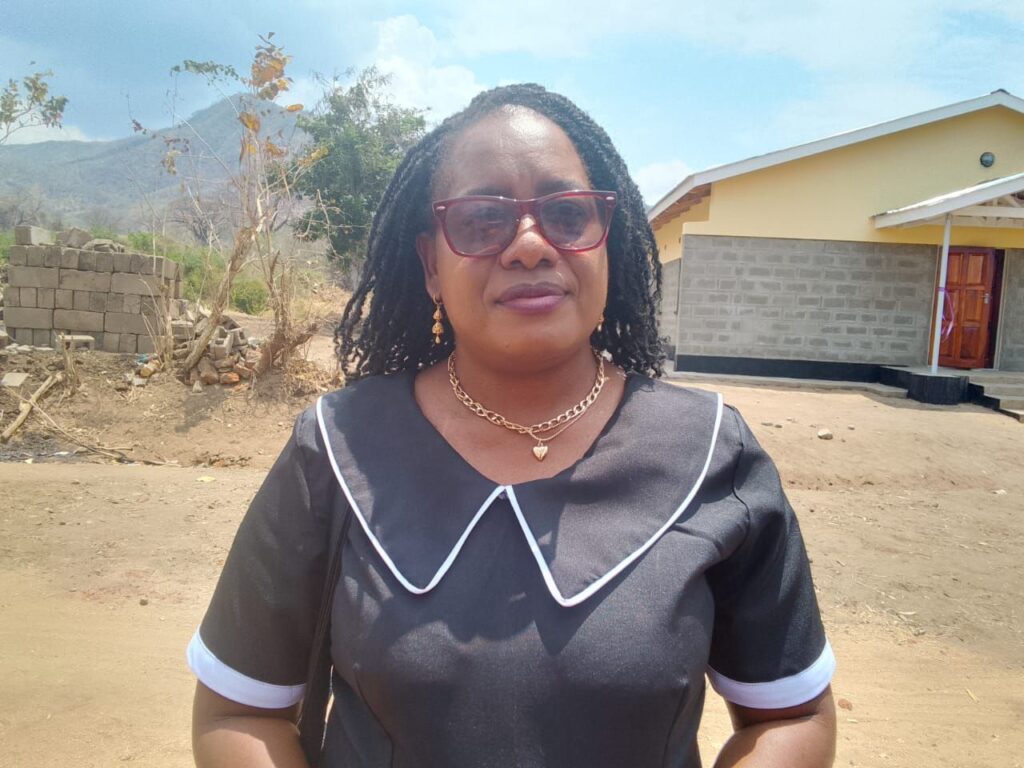
Blantyre, Malawi — Lilian Patel, the former leader of the United Democratic Front (UDF), has been appointed as the Chairperson of the party during the ongoing UDF National Convention at COMESA Hall in Blantyre. Patel succeeds Bakili Muluzi, the former President of Malawi, who has held the position of UDF Chairperson for many years.
In her new role, Patel is expected to guide the party as it prepares for the 2025 general elections. Her appointment is seen as a strategic move to ensure the continuity of leadership and a smooth transition within the party.
As Patel steps into her new role, Bakili Muluzi has now been named the Patron of the UDF, a symbolic and advisory position that acknowledges his longstanding contribution to the party. Muluzi, who founded the UDF and served as its first president, remains a key figure within the party, and his role as Patron will allow him to continue offering guidance and support.
The appointment of Patel marks a significant moment in the UDF’s history, as the party seeks to strengthen its position and appeal to a broader base of voters ahead of the next elections.
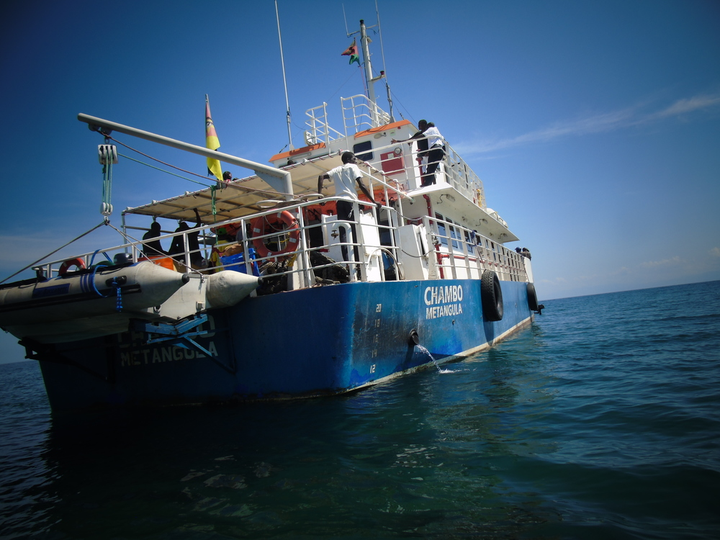
After a three-year hiatus due to the COVID-19 pandemic, the Mozambican vessel, MV Chambo, has resumed its operations on Lake Malawi, bringing relief to travelers and businesspeople from Likoma and Chizumulu Islands.
The vessel’s return was initially scheduled for September 25 but was delayed due to the expiry of its life rafts.
However, following necessary maintenance and safety checks, MV Chambo set sail once again, reinstating its vital transportation link between Mozambique, Likoma, Chizumulu, and the mainland.
MV Chambo
According to Watson Maingo, spokesperson for the Ministry of Transport, the resumption of MV Chambo’s services will significantly alleviate congestion faced by travelers from the islands.
“The vessel will provide an alternative route for people traveling to and from Likoma and Chizumulu, reducing reliance on the Illala, which only docks once a week,” Maingo explained.
MV Chambo’s revised schedule will see it sail from Mozambique to Nkhatabay via Likoma and Chizumulu on Wednesdays and return to Mozambique via the same route on Thursdays.
This regular service will enable islanders to access the mainland more efficiently, facilitating trade, commerce, and social interactions.
Emmanuel Saidi, a Likoma-based businessperson, welcomed the vessel’s return, citing the challenges faced during its absence. “Traveling was difficult, as the Illala only comes once a week.
With MV Chambo operating again, things will be easier for us to reach the mainland with our businesses on time,” Saidi remarked.
The resumption of MV Chambo’s operations is expected to boost economic activity in the region.
Island-based entrepreneurs will now have more opportunities to transport goods and services to the mainland, enhancing trade and commerce.
Likoma District Commissioner, Emmanuel Bambe, expressed gratitude to the Mozambican government for reinstating the vessel’s services.
“This development will improve the lives of our people, facilitating travel, trade, and access to essential services,” Bambe said.
The return of MV Chambo also underscores the strengthening bilateral relations between Malawi and Mozambique.
The vessel’s operations demonstrate the two countries’ commitment to enhancing regional cooperation and economic integration.
Passengers and cargo will benefit from competitive pricing and flexible scheduling.
MV Chambo’s capacity to transport both people and goods will alleviate pressure on existing transportation infrastructure, promoting economic growth and social development.
As MV Chambo sets sail once again on Lake Malawi, the people of Likoma and Chizumulu Islands look forward to improved connectivity, enhanced economic opportunities, and a brighter future.
Malawi’s Commissioner for Disaster Management Affairs, Charles Kalemba, has made a passionate appeal to donors to support the country in building sustainable food systems.
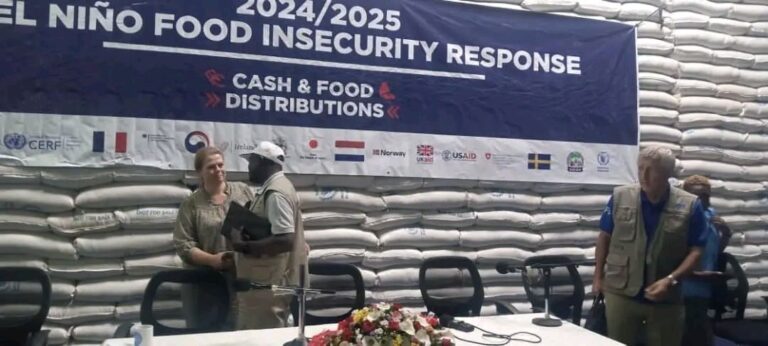
This call to action comes as Malawi faces a severe food insecurity crisis, exacerbated by the El Niño phenomenon.
Speaking in Blantyre during a joint media briefing with the World Food Program (WFP) Malawi and other donors, Kalemba emphasized that handouts are not a viable long-term solution to the current challenges.
“We need sustainable food systems that can produce enough food at all times,” he stressed.
The numbers are staggering: over 5.7 million people are currently facing food insecurity, according to projections by the Malawi Vulnerability Assessment Committee (MVAC).
Kalemba warned that this situation will persist unless sustainable measures are implemented.
In response to the crisis, the WFP has launched an emergency response program, securing funding to purchase 33,000 metric tons of maize and 317 metric tons of Super Cereal Plus, a corn-soya blend distributed to children.
Paul Turnbull, WFP Malawi Country Director, highlighted the importance of collaborative efforts in addressing the crisis.
“We are committed to supporting Malawi in building resilient food systems,” he said.
Siri Frette Allsted, Head of Cooperation at the Embassy of Norway, echoed this sentiment, emphasizing the need for unity among the international community in responding to the crisis.
Norway has pledged increased support for both immediate and sustainable initiatives.
Malawi’s food systems face numerous challenges, including climate change, environmental degradation, and demographic pressures.
To address these issues, experts recommend promoting production of nutrient-rich foods, ensuring sustainable agricultural practices, and supporting farmers with inputs and extension services.
The Malawi government has shown commitment to transforming the country’s food systems, recognizing the importance of sustainable agriculture and food production.
However, more support is needed from the international community to ensure the success of these initiatives.
As Malawi struggles to cope with the El Niño crisis, the need for sustainable food systems has never been more pressing.
The international community must come together to support Malawi in building resilient food systems that can withstand future challenges.
As Malawi works towards building sustainable food systems, the international community must stand in solidarity with the country. Together, we can ensure that MaPartnerd more resilient from this crisis
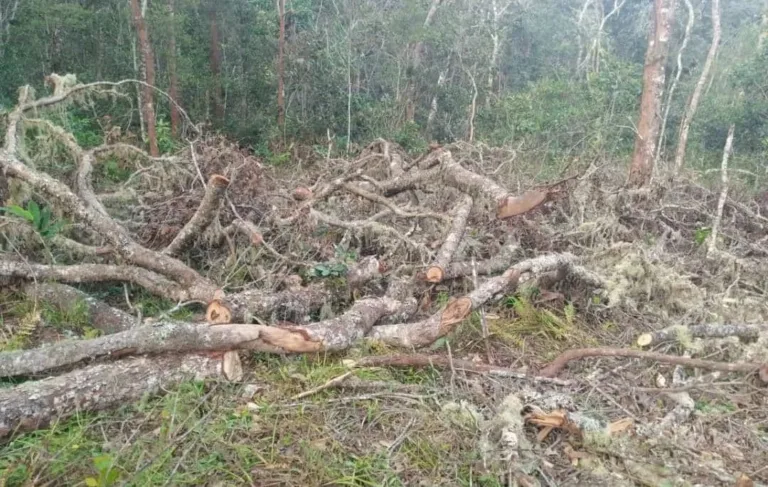
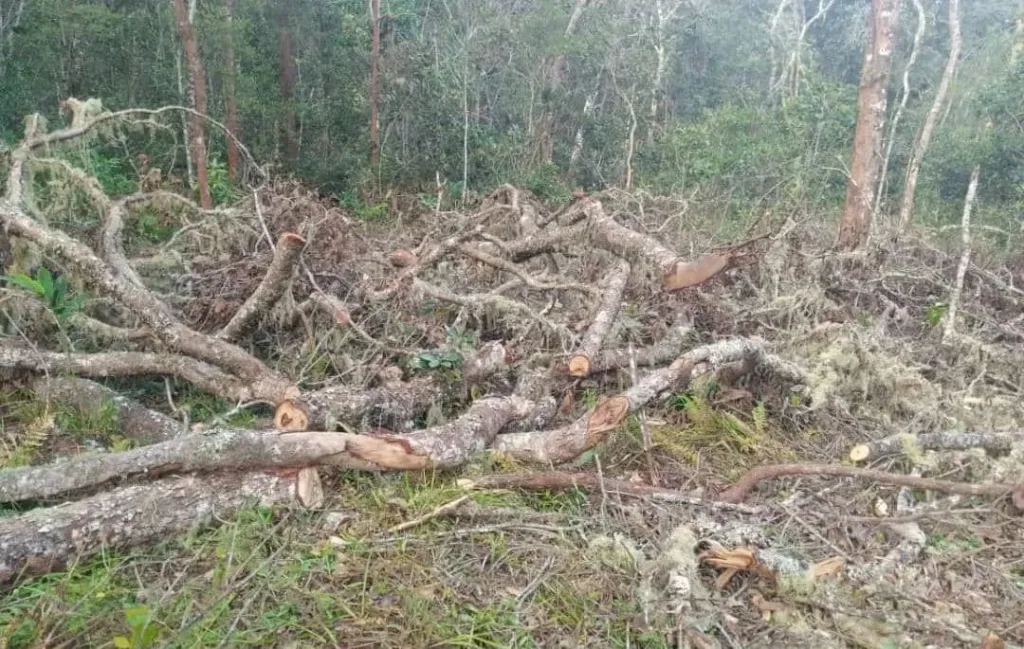
In a bold move to protect Malawi’s natural resources, the Nkhatabay District Council has stopped Traditional Authority (T/A) Thula from selling a portion of the Kaning’ina Forest Reserve to Shepherd Bushiri’s Goshen Trust.
The council’s decision comes after it was revealed that T/A Thula and his subordinates were attempting to sell off the land, which is designated as public property.
The council emphasized that the land belongs to the Kaning’ina forest reserve and, as such, cannot be sold by chiefs.
Designated as a forest reserve in 1935, the Kaning’ina Forest Reserve covers an area of 143.02 km² and is managed by the government.
The reserve is crucial for maintaining biodiversity and supporting local ecosystems.
The council’s actions have been praised by environmentalists and local communities, who recognize the importance of preserving Malawi’s natural resources.
Deforestation and land degradation are significant concerns in Malawi, with Nkhata Bay losing 8.49 kha of natural forest in recent years.
The move to block the sale of the land is seen as a significant step towards protecting Malawi’s forests and promoting sustainable development.
The government has made efforts to conserve forest biodiversity, including initiatives to engage local communities in forest management.
The Nkhatabay District Council’s decision sets a precedent for protecting Malawi’s natural resources and promoting sustainable development. As the country continues to grapple with environmental challenges, bold actions like these are crucial for preserving its rich biodiversity.
In a groundbreaking initiative aimed at empowering young girls through education, the Women Caucus of Parliament, led by Chairperson Honourable Rachael Zulu, embarked on a mission to promote girl child education in various constituencies. One notable stop on their journey was Bwanje North Constituency, overseen by the dedicated Member of Parliament, Honourable Nancy Chaola Mdooko, who also serves as the Deputy Minister of Education.
During their visit to Bwanje Community Day Secondary School, the esteemed Senior Chief Ganya took the opportunity to commend the Honourable Minister for her efforts in constructing a hostel facility. This pivotal infrastructure development is set to alleviate the challenges faced by girls who previously had to travel long distances to attend school. Chief Ganya expressed gratitude for the initiative, highlighting how the hostel would enable girls to focus on their education without the burden of strenuous daily journeys.
Honourable Rachel Zulu
The senior chief also praised the Women Caucus of Parliament for their unwavering support and commitment in facilitating such projects. He emphasized the crucial role that initiatives like these play in fostering an environment where young girls can thrive academically, ultimately enabling them to realize their full potential.
The event at Bwanje Community Day Secondary School served as a testament to the collective efforts of dedicated parliamentarians and community leaders in advancing the cause of girl child education. Through collaborative action and investment in education infrastructure, these initiatives are poised to empower a new generation of young girls, providing them with the tools and resources necessary to succeed in their academic pursuits and beyond.