Monday, April 6, 2026
No menu items!
spot_img
Home Blog Page 1021

SPAESHA Project to Influence New SHNHA Policy Development for Improved Learner Health and Nutrition”

0


By Elywin Chighali Mhango

In a bid to enhance the quality of education and address critical health and nutrition needs among learners, the Ministry of Education in Malawi is set to embark on the development of a new comprehensive School Health Nutrition HIV and AIDS (SHNHA) policy. The Deputy Director for SHNHA, Maureen Maguza Tembo, highlighted the pivotal role played by the Strategic Planning Advisors for Education and School Health in Africa (SPAESHA) project in shaping this upcoming policy revision.

The recent closeout meeting in Mponela, Dowa marked the conclusion of the SPAESHA project, a two-year initiative spanning from 2022 to 2024. Through qualitative research and detailed analysis, the project has provided valuable recommendations aimed at improving learner health and nutrition within the educational system.
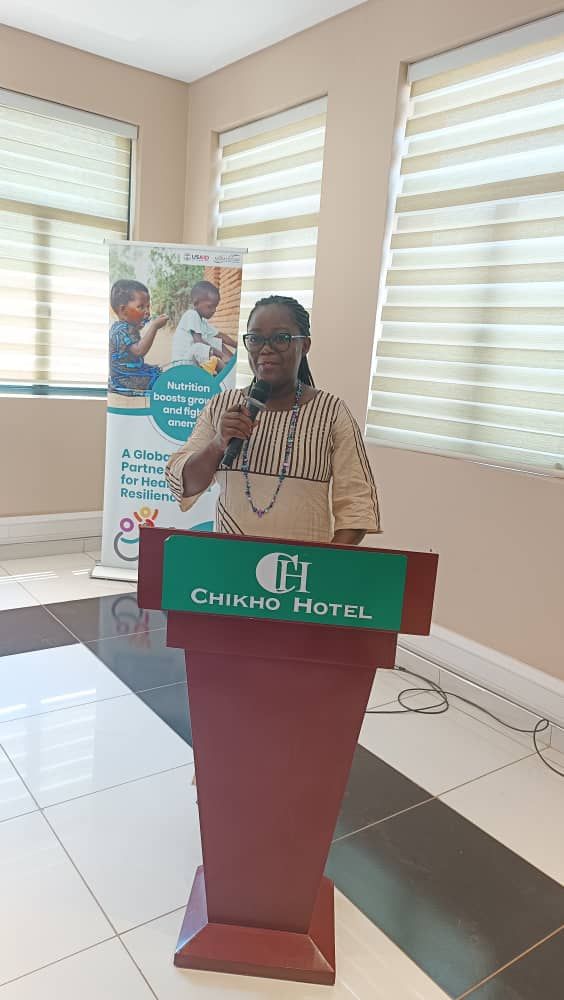
Deputy Director Maureen Maguza Tembo


Maguza-Tembo emphasized the importance of considering various crucial factors in policy development, such as ensuring equal access to Water, Sanitation, and Hygiene (WASH) facilities for learners with special needs and addressing disparities in school meal programs across different institutions. These key areas are to be thoroughly reviewed and addressed in the upcoming policy revision process.

The SPAESHA recommendations encompass a wide range of initiatives, including the training of education staff on pandemic and epidemic preparedness, standardization of healthcare services in schools, bolstering school meal programs in food-insecure regions, and enhancing the capabilities of district School Health Nutrition coordinators.

In acknowledgment of the collaborative efforts involved, Dr. Chakufwa Munthali, Director of Programs Operations, Partnerships, and Awards Management at Save the Children International, commended the Ministry of Education for their dedication and support throughout the project’s implementation. He expressed gratitude for the ministry’s commitment to integrating the SPAESHA recommendations into the revised SHN policy and reiterated Save the Children’s unwavering support towards addressing identified gaps.

The gathering at the closeout meeting included strategic partners from various sectors, including the Ministries of Gender, Agriculture, and Health, alongside SAVE the Children International, USAID, and representatives from academia. The collective commitment displayed underscores a shared goal of fostering a healthier and more conducive learning environment for students across Malawi.

As Malawi redefines its approach to school health, nutrition, and overall well-being, the SPAESHA project stands out as a collaborative effort paving the way for a more holistic and inclusive educational experience.
Ministry develops IMS to improve trade

0

By Kondwani Kandiado

In a bid to promote trade between Malawi and other neighboring countries, the Ministry of Agriculture is developing a single software solution to help the ministry develop and install a modern Sanitary and PhytoSanitary information management system(SPSIS).

The project is being done by Southern African Trade and Connectivity Project (SATCP) with Mauritius Network Services (MNS) as the consultants.


Among other things, the project seeks to help the ministry install a fully functional and modern information management system to improve processes associated with management of import and export of plant and animal goods at the department of agriculture research and department of animal health and livestock.

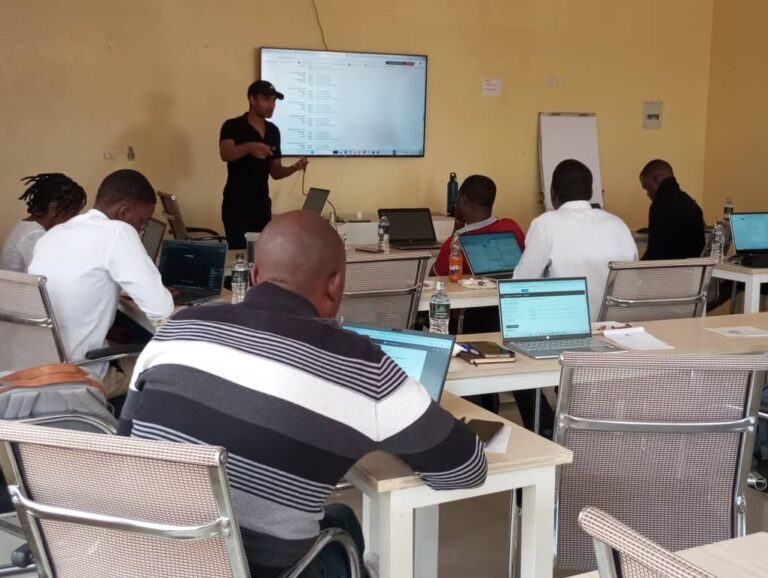
Speaking in an interview in Mponela – Dowa during the SPSIS Malawi Java training, Chief Systems Analyst in the ministry of Agriculture, Gift Kalilangwe said the training will help speed up the processes of issuing permits and improve  trade between Malawi and neighbouring Tanzania and Mozambique.

He said: “The time it takes for a common man to get a certificate from institutions takes long and this project aims at streamlining the processes that will be undertaken so that less time is taken to access them. It will eliminate the need for traders to visit department of research and animal health.”

He said improved access to permits will help promote import and exports for the country which he said will eventually help boost revenue for the country.

One of the participants, Wongani Gwazayani who is also Principal ICT officer from department of Agriculture Services said the training will help them manage the SPS system better.

“When the system is handed over to us we should be able to manage and sustain it to help Malawians do trade and get permits and certificates online,” she said.

Technical Architect from Mauritius Network Services Limited, Yoven Ayassamy said in an interview that the training would help them work together with African countries including Malawi as partners to help implement the project.

“We would like to work together with Malawi because we see a lot of opportunities in Africa and a lot of projects that need to be developed,” he said.

The SPS system is a web-enabled application that allows traders to access a single portal to prepare and submit applications to various regulatory certificates and permit institutions and support the approval  and processing of business operations.

The system also helps in protection against falsification of trade  documents.

Pic: Some ICT experts during the java training session.
END

MCP invitation to UDF Convention angers UDF members

0

By Vincent Gunde

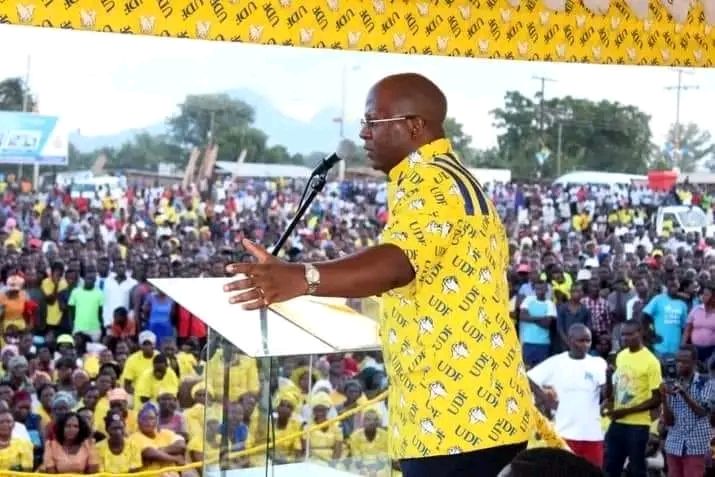
United Democratic Front’s (UDF) members have expressed their deepest shock and dismay over a decision reached by their National Executive Committee (NEC) members to invite MCP as visitors at the party’s Elective conference on 3rd October, 2024.

The members have claimed that the UDF has a good history of championing democracy in Malawi ousting the party of darkness out of government in 1994 and the same darkness has fallen on the faces of UDF NEC members to invite darkness to its convention.

Muluzi

Many of the UDF supporters are suspecting that the decision to invite the MCP to the UDF convention was influenced by the party’s President Lilian Patel arguing that Atupele Muluzi is outside of the country in Dubai.

Showing anger in various social media platforms, some UTM members have warned the party’s NEC to rescind the decision for the MCP not to attend UDF Convention saying if the party insists on their earlier invitation to the MCP, they risk to be stoned.

The members have vowed never and ever shall the UDF be a partner of the MCP observing that the MCP is not a reformed party besides having the new leadership of President Dr. Lazarus Chakwera saying its activities are always done in darkness.

They have asked the UDF NEC to return the money they have pocketed from the MCP or eat the money in silence and this should be in a no way be a trap to the UDF supporters to follow the decision reached by its NEC to invite MCP as their invited guests.

“Malawians voted the MCP out of government for committing various atrocities including throwing those speaking against it into the Shire River as crocodile meat, today, we don’t want to be crocodile meat to them,” said one in a vocal voice.

Speaking through an audio clip circulating in various social media platforms, political activist Bon Kalindo, has called on the UDF leadership to think twice on the decision reached for the party and Dr. Bakili Muluzi-the Founder of the UDF to be respected.

Kalindo has asked UDF diehards to put their house to order claiming that MCP money is exchanging hands at the time that Malawians are in pain and suffering under the MCP and President Chakwera reminding Malawians of Atupele Muluzi’s words that President Chakwera has no experience in government.

He has again invited Malawians who wants to receive free money to join the MCP claiming that 9 DPP MPs are on their way to join the MCP, activists and musicians have been attracted in a quest to silence all for a one-party state and dictatorship.

The mystification of Tonse “Alliance”: An alliance or coalition?

By Al Bashir bin Abdul Aziz

In the framework of a stable and effective democracy, it is generally anticipated that a governing party must garner the support of a majority legislature to form a government. This expectation serves as the basis for political parties to either form alliances or coalitions.

An alliance denotes a long-term partnership characterized by shared interests and objectives. Conversely, a coalition signifies a temporary union created to achieve a specific goal, without necessitating long-term commitments from the involved parties.

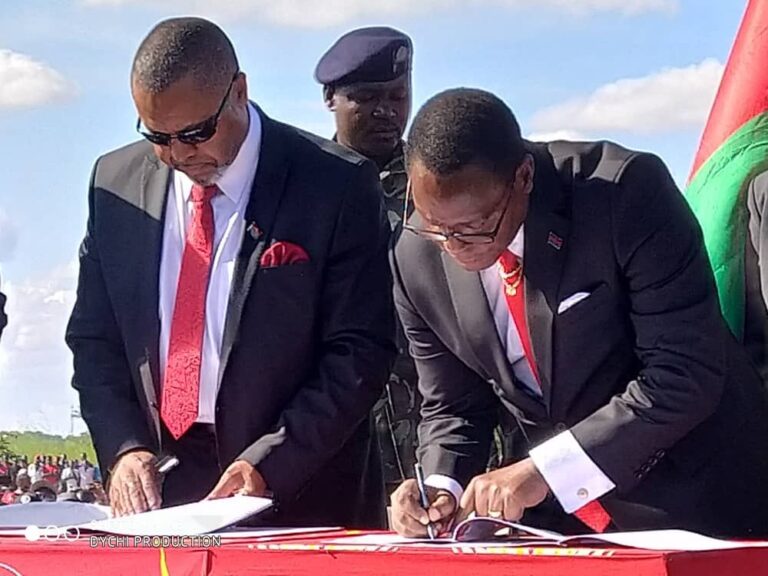
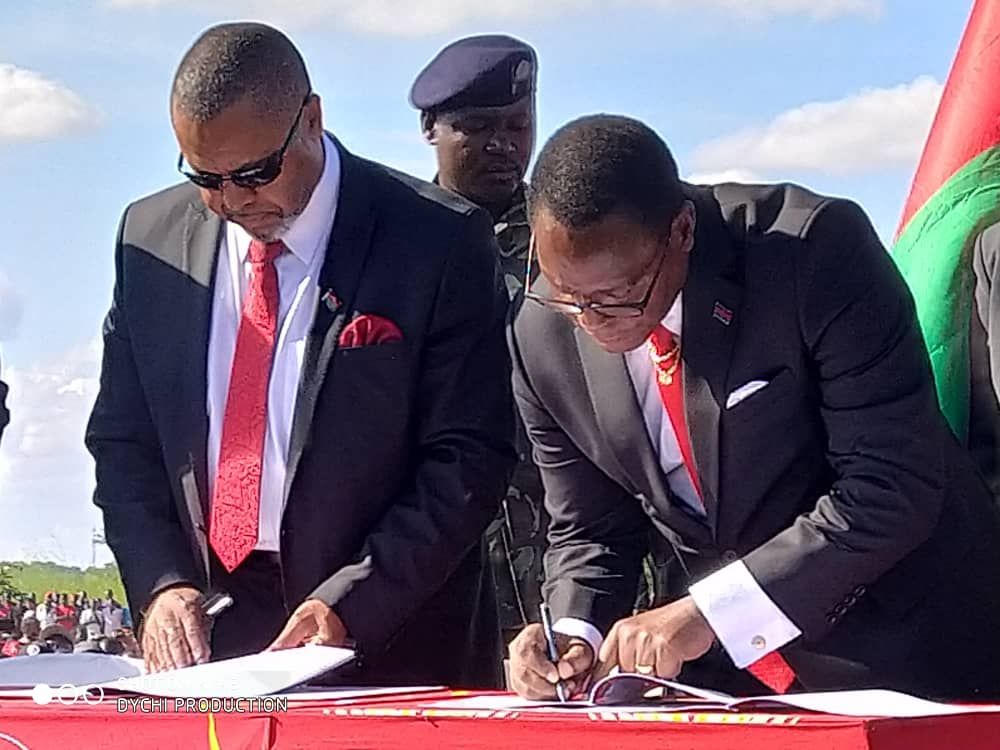
Signing of Tonse Alliance


While both alliances and coalitions involve cooperation, the critical distinction lies in their longevity: alliances are enduring, while coalitions are typically short-term, dissolving once their shared objective is achieved. Understanding this distinction is vital for comprehending the dynamics of both international relations and domestic politics.

Malawi’s sixth tripartite elections took place in May 2019, but the presidential results were nullified by the Constitutional Court in February 2020. Fresh elections on June 23, 2020, resulted in Lazarus Chakwera of the Malawi Congress Party and Saulos Chilima of the UTM Party being elected as president and vice president, respectively, after receiving 58.6% of the votes. They triumphed over Peter Mutharika of the Democratic Progressive Party (DPP) and the United Democratic Front coalition, which secured 39.4%. Chakwera and Chilima subsequently led a coalition of several political parties known as the Tonse Alliance.

A lingering question among the electorate is whether the 2020 elections produced an “alliance” or a “coalition” government.

While the literature on alliances and coalitions is abundant with definitions and typologies, this discussion will focus on the essential understanding of both terms as agreements for joint cooperation and a common agenda among at least two political parties.

The timing and basis of the agreement are fundamental to differentiating between an alliance and a coalition. An alliance is typically formed prior to elections based on an agreed ideology aimed at maximizing votes, whereas a coalition refers to the post-election formation of political parties in Parliament or government based on their respective electoral outcomes (Wyatt, 1999).

The nullification of the 2019 election results reshaped the political landscape, leading parties to consider entering a power-sharing arrangement. As a result, the 2020 elections saw various parties coming together to form what they described as either “coalitions” or “alliances.”

However, an effective alliance relies on the capacity of individuals on both sides to collaborate as if they were members of the same party. Such collaboration requires team members to understand how their counterparts operate, including decision-making processes, resource allocation, and information sharing.

Given the conflicts emerging among the Tonse parties, it is questionable to conclude that their formation constituted an alliance. As previously mentioned, alliances are established prior to elections to allow parties to understand each other’s ideologies. The rushed formation of the Tonse “alliance” suggests it was more accurately a coalition.

A coalition government arises in a democratic system when no single political party secures a majority of votes or seats in Parliament. The political landscape following the 2019 elections made it evident that coalition formation was necessary for parties to achieve a majority. The primary objective of the Tonse coalition was to oust the DPP administration, reflecting a short-term goal that complicates long-term unity post-victory.

As Malawi navigates its complex political landscape, observing the evolution and effectiveness of coalition governments will be critical. It is essential for political parties to strive for alliances rather than mere coalitions, as the goals of alliances extend beyond just winning elections.

Alliances provide a mechanism for pooling resources, facilitating the development of joint capabilities that individual members cannot achieve alone. Scholars continue to investigate the intricate relationship between regime type and alliance formation. Gibler and Wolford (2006) and Gibler and Sewell (2006) argue that while democracies may not be more likely to form alliances, they are more likely to be allied. They propose a reversal of causality: it is not democracy that leads to alliances but rather that alliances can lead to democracy.

In conclusion, the discourse surrounding the Tonse Alliance reflects a broader narrative in Malawi’s political context. Distinguishing between alliances and coalitions is not merely academic; it is essential for understanding how political partnerships can influence governance, accountability, and the future of democracy in Malawi.

Waxy Kay Shifts Musical Direction with New Release “Bwera”

By Burnett Munthali

Malawi’s beloved artist Waxy Kay, whose real name is Wonderful Kapenga, is making waves in the music scene with his latest single “Bwera,” marking a significant shift in his artistic direction. Known for his previous association with hip-hop and cannabis-themed songs, Waxy Kay is now embracing a fresh sound within the Afropop genre.

In a recent interview, Waxy Kay expressed his desire to evolve musically. He stated, “Now my music has changed, and I want to focus on creating significant songs. At first, I took a break because I realized there was no real benefit in continuing with my previous style.” This evolution signals Waxy’s intention to produce music that resonates more deeply with his audience and reflects broader themes beyond just entertainment.

Waxy


The new track “Bwera” is accompanied by a visually captivating music video shot by Staffa from Bangwe, while the audio production was handled by Swibzy, a renowned producer from South Africa. This collaboration showcases Waxy’s commitment to high-quality music production and a polished sound.

In “Bwera,” Waxy Kay celebrates love and encourages his listeners, particularly young women, to embrace their worth and potential in relationships. The song’s lyrical content is empowering, emphasizing the importance of self-confidence and resilience in matters of the heart.

As Waxy Kay embarks on this new chapter in his musical journey, fans and followers are encouraged to embrace the changes and look forward to more profound and inspiring music from the artist. His transformation not only highlights personal growth but also reflects a broader trend among artists seeking to create meaningful connections with their audiences through music.