
Monday, April 6, 2026
No menu items!
spot_img
Home Blog Page 1029

The Minister of education advocates  political accountability for enhanced learning in Africa

0

By Elywin Chighali Mhango

The Honorable Minister of Education from Malawi, Madalitso Kambauwa-Wirima, MP, delivered an impassioned address on the imperative of political accountability in advancing foundational learning in Africa. This address took place as a part of the Foundation Learning side-event on the margins of the United Nations General Assembly (UNGA).

Minister Kambauwa-Wirima’s speech reverberated with a resounding call for collaborative efforts and innovative partnerships to scale success in foundational learning programs across the continent. The Minister expressed delight in showcasing Malawi’s strides toward prioritizing foundational learning, underscoring a comprehensive 5-pillar strategy that is transforming the educational landscape within the country.
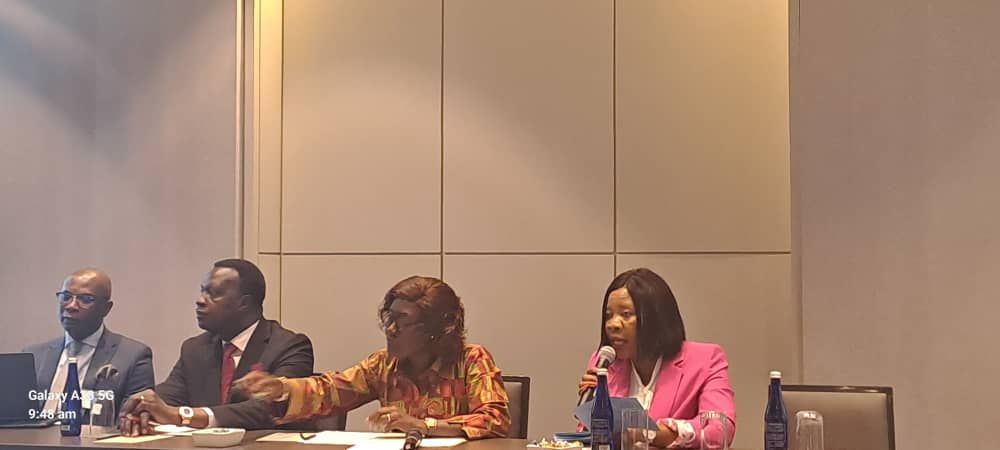
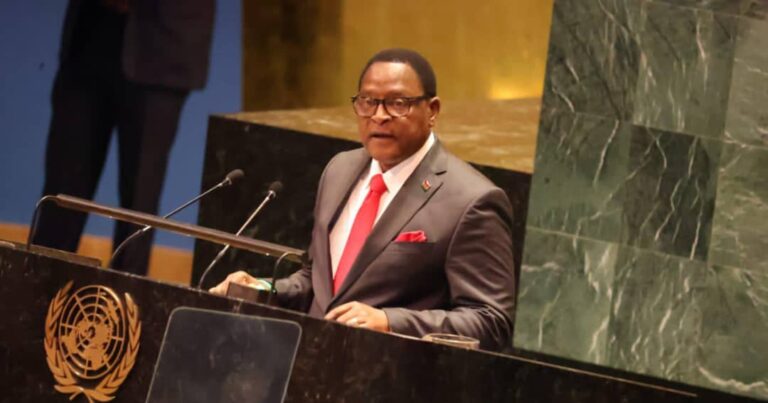
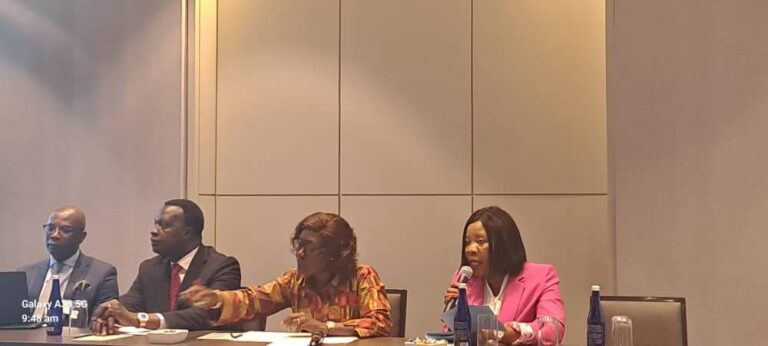
Education Minister Kambauwa delivering a speech

The pillars include a focus on strengthening primary education through tailored teacher training programs, the introduction of preparatory classes for Early Childhood Education (ECE), improved curriculum design and resourcing, expansion of school feeding programs, and the integration of digital learning solutions to enhance accessibility and adaptability.

With an unwavering commitment to nurturing essential skills among Malawian children, Minister Kambauwa-Wirima emphasized the critical role of addressing the needs of marginalized learners—those struggling in schools, at risk of dropping out, or who have already left the education system.

Furthermore, Minister Kambauwa-Wirima stressed the pivotal role of political leaders in fostering a conducive learning environment. She highlighted the necessity of inclusive, safe, and stimulating educational spaces that cater to diverse learning needs, alongside advocating for empowering and dignified working conditions for teachers. Calling for a revitalization of the teaching profession to attract younger generations, she emphasized the transformative potential of the digital revolution in revolutionizing education delivery and enhancing educational quality.

Expanding her discourse to underscore the importance of increased, equitable, and efficient investments in education, Minister Kambauwa-Wirima urged stakeholders to adopt a comprehensive program-based approach, emphasizing sustainable financing mechanisms to drive educational initiatives forward. She underlined the magnitude of the collective impact of investing in education, emphasizing the substantial costs associated with neglecting educational funding.

As Minister Kambauwa-Wirima’s powerful address concluded, the audience was left with a resounding call to action, echoing her profound belief in the transformative power of foundational learning as a cornerstone for the development and prosperity.
AfDB approves support towards Malawi Agricultural sector

0

By Arkangel Tembo

Minister of Finance and Economic Affairs, Simplex Chithyola Banda has disclosed that the African Development Bank (AfDB) has approved more than 50 million US Dollars towards agriculture productivity and commercialisation including procurement of relief maize.

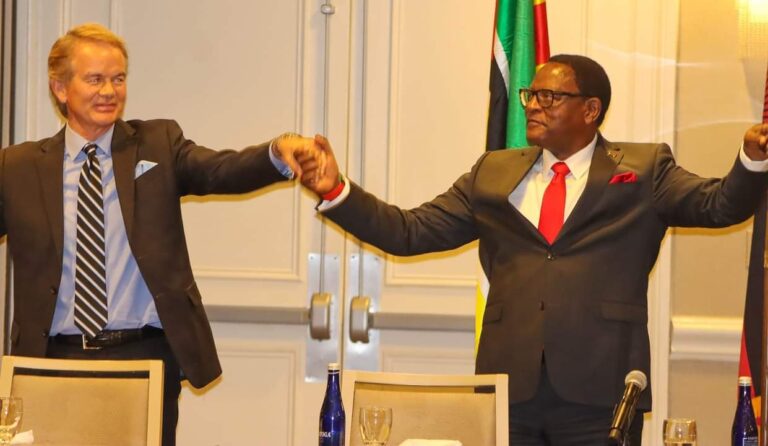
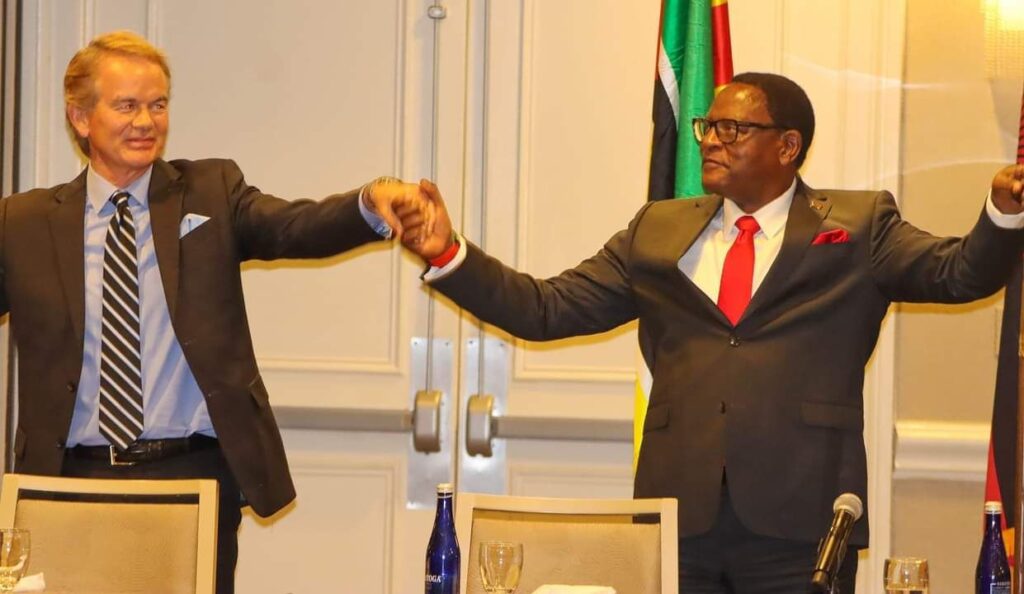
The minister disclosed this in New York, where President Chakwera held the 2024 Malawi Partners Conference on the sidelines of the 79th session of the United Nations General Assembly (UNGA).

Among other high-level dignitaries at the conference, the Malawi leader, met the AfDB Group, President, Dr Akinwumi Adesina, Mozambican President, Filipe Nyusi and a Tanzanian delegation.


“The support includes 30 million US dollars, 23 million Dollars, and 1 million US Dollars. All these are coming separately with different purposes from the African Development Bank. more support is coming from the same bank.

“On food production, the AfDB is more than ready to support the Malawi Government to embark on a programme of pumping water from Lake Malawi for irrigation,” he said.

Chithyola Banda said AfDB interventions will improve Malawi’s economy on top of empowering the young people to venture into the agricultural value chain.

He added that the AfDB assistance to Malawi is a clear demonstration of confidence and trust in the current administration.

“Institutions like African Development Bank have demonstrated degree of confident and trust in the leadership of Dr. Lazarus Chakwera and the reform programme that Malawi is undertaking in various sectors.

“I have liked some aspects in President Chakwera’s speech in which he said Malawi needs to rework in Gross Domestic Product (GDP) to re-estimate the GDP based on green economy of how much is the country worth in terms of carbon financing,” he said, adding that analysing the GDP will give a true picture of Malawi’s economic growth,” he said.

He said going back to the drawing board, Malawi will also work on how natural resources could stimulate the economy.

In 2023, President Chakwera also held another partner conference in New York under the theme; Building Resilience and Sustainable Development in the Face of Shocks.

The Malawi Partners Conference are held on the sidelines of the UNGA in New York, US.
In another interview, Minister of Information and Digitilisation, Moses Kunkuyu said Chakwera’s visit is benefiting Malawians.

“When the president travels, he travels with an agenda. The agenda is to represent Malawians and when he represents his people he carries with him the problem that affects his people,” Kunkuyu added.

Malawi opposition parties unite to express election concerns

0

By Twink Jones Gadama

In a historic show of solidarity, Malawi’s major opposition parties have joined forces to express their dissatisfaction with the Malawi Electoral Commission’s (MEC) handling of the upcoming elections.

The parties, including Malawi Congress Party (MCP), Democratic Progressive Party (DPP), United Democratic Front (UDF), and United Transformation Movement (UTM), have penned a letter to the MEC and the United Nations Resident Coordinator in Malawi, highlighting their concerns regarding the electoral preparation process.


The letter, signed by the secretary-generals of the respective parties, cites several key issues observed during the recent Electronic Management Devices (EMDs) voter registration pilot phase.

Specifically, the parties note that the EMDs appeared inefficient, with estimates suggesting that a single registration process could take approximately 10 minutes.

This raises concerns about the potential for delays and disruptions on election day.

Another significant concern raised by the parties is the lack of an independent ICT auditor, a crucial component that was present during the 2020 fresh elections.

The parties have recommended that an independent ICT auditor be recruited by the UNDP to ensure the integrity of the electoral process.

Regarding vote transmission, the opposition parties have rejected electronic transportation, instead advocating for a manual system with backed-up election data.

This move is seen as a precautionary measure to prevent potential tampering or manipulation of election results.

The Malawi Electoral Commission has yet to respond to the letter, but the concerns raised by the opposition parties are significant.

With elections scheduled for September next year, the stakes are high.

Malawians will head to the polls to elect a president, members of parliament, and ward councilors in what is expected to be a highly contested and closely watched election.

Incumbent President Lazarus Chakwera, who lost twice to President Professor Arthur Peter Mutharika before the nullification of his second election in 2020, is expected to face off against Mutharika for the third time.

Chakwera’s popularity has taken a hit in recent times, with critics accusing him of economic mismanagement and attempting to rig the elections using the National Registration Bureau (NRB) and MEC.

The opposition parties’ united stance on these issues is a significant development, and their concerns warrant attention from the MEC and the international community.

Chakwera Government connects 41, 400 sites  benefitting over 2 million

0

By Linda Kwanjana

In line with the Government of Malawi’s plans to develop domestic sources of electricity generation, the World Bank has been approving alot of money to improve electricity generation in the country but despite the assistance nothing tangible has been happening.

Previous governments turned Electricity Supply Corporation of Malawi (ESCOM) as a cash cow.

Big  funding for an energy sector project that was supposed to in help in  improving the capacity of the systems to transmit and reach consumers using improved technology were injected in but they were all eaten through dubious procurement processes laid down especially by the recent past Government of Democratic Progressive Party (DPP).

Malawi’s current national generation capacity is 286 megawatts (MW), 20 per cent of which is lost in the transmission and distribution processes, yet peak demand is currently estimated at about 330 MW.

Demand has been growing at about five per cent annually, with only 12  per cent of the population having access  to electricity, mostly in urban centres.

NEW LEASE OF LIFE WITH MAREP 9

The sweet news is that under the leadership of Dr Lazarus McCarthy Chakwera  Government through Malawi Rural Electrification Programme (MAREP), phase 9 has already connected 41, 400 households in 207 sites.

According to Deputy Director of Energy,  Francisco Chingoli, MAREP 9 is so far progressing well.

“So far, MAREP 9 is progressing very well we targeted 460 sites but as of now, we have completed and commissioned 207 sites, and we believe that by end of October we will finish all the sites that we targeted,” said Chingoli.

Chingoli said that with MAREP, Malawi will not be the same economically.

He said the good news is that this program is being done in each and every district and that each and every constituency is also benefitting.

Chingoli has since commended President Dr Lazarus McCarthy Chakwera for supporting the programme.

” The President has been going in different areas to commission MAREP 9 sites,” He said.

Chingoli said,  where there is electricity, a lot of developments  follows such as barbarshops, welding shops, maize meals.

Meanwhile , Chingoli has assured Malawians and the general public that MAREP 9 will be completed by October this year, ready commerce MAREP Ten.

Initially, Marep 9 was estimated to cost K40 billion in 2022, but due to devaluation of the kwacha and other factors, it was revised to K70 billion.

President Chakwera woos investers in New York City

0

By Linda Kwanjana

Malawi President Dr. Lazarus McCarthy Chakwera has told potential investors in the United States of America (USA) that his country is best investment destination under his watch as the country is offering competitive investors’ tax and non-tax incentives packages; is easy to access with daily flights; has a resilient economic growth, and is stable and peaceful.

President Chakwera said this on Sunday evening at Martinique Hotel in New York during a second edition of the Malawi-Partners Conference, held on the margins of the 79th Session of the United Nations General Assembly (UNGA).

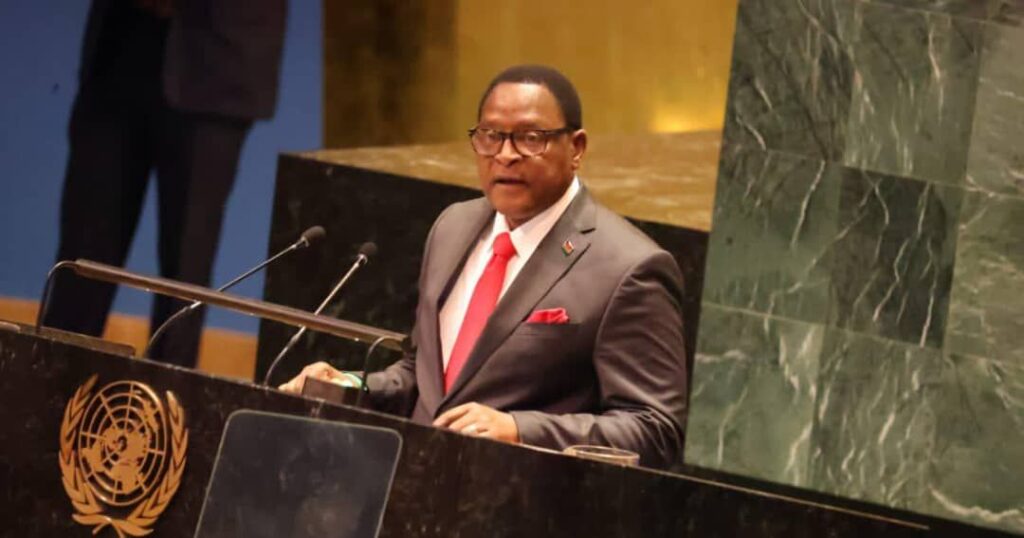
Chakwera

Addressing a wide range of potential investors, President Chakwera said Malawi boasts of 5.3 million hectares of arable land, representing 45 percent of its total land area; adding that the country has abundant water resources, including Lake Malawi, Africa’s third-largest freshwater lake, coupled with several major river systems.

President Chakwera also told the would-be investors that Malawi has access to a market of over 100 million people in the SADC and COMESA region, adding that the country also has visionary, stable, democratic political leadership which are all key to creating an enabling environment for public and private funding and investments in an open economy.

The President said Malawi has also recently developed a One-Stop Service Centre for investment and trade Promotion through Malawi Investment and Trade Centre (MITC), adding that Malawi has a large, highly educated, skilled, hardworking, trainable workforce.

He continued that the country is also a gold mine of agricultural experience, flooded with untapped specific projects and economic opportunities waiting to be explored.

In the midst of catastrophic climate and health-related shocks, Chakwera said his government continues to lay a solid foundation for Malawi’s prosperity.

“Malawi is not only a land of opportunities, but also a nation ready to meet the global demand for high quality products. We have a web of rivers and lakes, and arable land that is fit-for-purpose and ready to be spurred into high-value agricultural production zones,” he added.

Speaking separately, Mozambican President Filipe Nyusi who attended the conference echoed his counterpart’s sentiment by assuring potential investors that Malawi is endowed with so many natural resources which he said are conducive for investment.

He said just like in Malawi, agriculture also plays a critical role in Mozambique and Africa as a whole in terms of providing primary source of livelihood, income to the majority of the population.

The first edition of the Malawi-Partners Conference was also held at the same venue and some of the fruits of the conference include the ongoing construction of the Magwero Industrial Park near Kamuzu International Airport (KIA) whose resources were committed by the Afreximbank at that time.

Other commitments from last year’s conference that have materialized include the World Bank-financed Regional Climate Resilience Program, IFAD-funded Sustainable Agriculture Productivity Program, and the Building Education Foundation Project that the Global Partnership for Education is financing.

The 2024 edition of Malawi-Partners conference was held under the theme “Securing Our Future: Enhancing Investment in Agriculture for Sustainable Food Security.”