

Sunday, April 5, 2026
No menu items!
spot_img
Home Blog Page 1071

Kasiya Graphite: A Potential Game-Changer for Malawi’s Economy and the Global Battery Industry

0

By Burnett Munthali

The recent discovery of high-quality battery-grade graphite at the Kasiya project in Malawi has sparked excitement, not only for the country’s economic prospects but also for the global battery industry. As the demand for sustainable energy storage solutions grows, graphite, a key component in lithium-ion batteries, has become a critical mineral. Analysts believe this development could be transformative for both Malawi and the international market.

Graphite plays a crucial role in the production of batteries, particularly for electric vehicles (EVs) and renewable energy storage systems. The global shift toward greener technologies has seen an exponential rise in demand for materials that support energy storage, and graphite is essential for battery anodes. With the electric vehicle market projected to grow rapidly over the next decade, the demand for high-quality graphite is expected to surge.

Kasiya’s discovery places Malawi in a strategic position to become a key player in supplying this vital resource. The quality of the graphite found at Kasiya is reportedly suitable for use in lithium-ion batteries, making it highly sought after by manufacturers globally.

For Malawi, the Kasiya graphite project represents an opportunity to diversify its economy and reduce reliance on traditional exports like tobacco. The mining sector, which is relatively underdeveloped in the country, could experience significant growth, with graphite potentially becoming one of the nation’s leading exports. Increased mining activities at Kasiya could lead to job creation, improved infrastructure, and investment inflows, boosting the country’s overall economic development.

Moreover, Malawi could establish itself as a reliable supplier of a critical mineral for the global energy transition, enhancing its geopolitical relevance. This shift could attract foreign direct investment and lead to the development of complementary industries, including processing plants and technology-related infrastructure.

While the economic benefits of the Kasiya graphite project are promising, there are concerns about the environmental and social impacts of large-scale mining. The mining industry has been historically linked to environmental degradation, and the extraction of minerals like graphite could disrupt local ecosystems if not managed responsibly. However, with the growing emphasis on sustainable mining practices, Malawi has an opportunity to implement strict environmental regulations that ensure the project’s long-term viability.

From a social perspective, the influx of investment and job opportunities could improve the livelihoods of many Malawians, particularly in regions near the mining site. However, there is also the potential for displacement of communities and disruptions to local farming activities, which need to be carefully managed.

The Kasiya graphite discovery could position Malawi as a major player in the global green energy supply chain. As countries transition to electric vehicles and renewable energy, the demand for reliable sources of battery materials will continue to grow. If managed effectively, the Kasiya project could make Malawi a key supplier of battery-grade graphite, increasing its influence in international markets.

The timing of this discovery is particularly significant as nations worldwide are prioritizing the localization of battery production and the development of renewable energy systems. By leveraging this opportunity, Malawi could strengthen trade partnerships and build alliances with major economies invested in the energy transition.

In conclusion, the high-quality battery graphite found at Kasiya is a potential game-changer for both Malawi and the global battery industry. For Malawi, the project offers a chance to diversify its economy, create jobs, and strengthen its position on the global stage. For the battery industry, it represents a new, reliable source of a critical mineral essential for the transition to green energy. However, the environmental and social implications must be carefully managed to ensure that the benefits of this project are maximized for all stakeholders. If executed properly, Kasiya could play a pivotal role in powering the global shift towards a more sustainable future.

Analysis: The Political and Personal Dimensions of Sergeant Manda’s Family Seeking Refuge at a Mosque


By Burnett Munthali

The incident involving Sergeant Cassim Manda’s children, who sought refuge at a mosque following the storming of their residence by heavily armed police officers, is more than a mere eviction. It touches on deeper political, personal, and institutional issues within Malawi. The narrative raises serious concerns about political interference in state institutions, the welfare of police officers, and the growing tension between the state and its agents.

The claim that Sergeant Manda’s transfer from Lilongwe to the Fort Maguire border post was politically motivated underscores the intersection of politics and policing in Malawi. If true, this suggests that police officers, who should ideally serve the state impartially, are increasingly vulnerable to political manipulations.

Manda


Transfers in civil service are typically seen as routine administrative processes, but when done improperly or perceived as punitive, they become highly contentious. In Manda’s case, the family asserts that the transfer was executed outside of proper procedure, raising questions about transparency in the system. The timing of the transfer, coinciding with rumors of Manda’s attendance at a political convention, deepens suspicions of political retaliation.

The forced refuge of Manda’s children at the Area 18 Mosque is a disturbing aspect of the incident. While the police presence at the family’s home is concerning enough, the fact that the children were compelled to flee for safety reveals a significant failure in protecting the welfare of officers’ families. In any lawful democracy, the family of a public servant should not face intimidation or fear for their safety, let alone be subjected to threats of eviction. The situation not only violates the rights of Sergeant Manda’s children but also paints a grim picture of the state’s handling of internal disputes.

Institutional Autonomy in Question

Another critical dimension of this incident is the use of force by police officers against one of their own. The police force is meant to uphold law and order, and when officers use their powers to intimidate fellow officers, it signals a troubling collapse in institutional cohesion and autonomy. The involvement of armed units from A and C divisions in such a sensitive family matter raises concerns about internal discipline and the politicization of Malawi’s law enforcement system.

The family’s decision to file a complaint with the Ombudsman reflects a strong stand for justice, but it also highlights a worrying reality: that such grievances need to be addressed by external bodies because they may not be handled fairly within the police force itself. This reliance on external avenues for justice underscores the perception that Malawi’s police institutions may be compromised.

Religious Institutions as Safe Havens

The decision by Manda’s children to seek refuge at a mosque also speaks volumes about the role of religious institutions as sanctuaries in times of conflict. Mosques, churches, and other places of worship have long been seen as neutral, safe spaces in Malawi. The Area 18 Mosque provided protection not only physically but also spiritually, with the children spending their time in prayer. This incident reflects the continued trust that communities place in religious institutions as places of refuge, even when other societal structures, like the police, fail them.

Conclusion: A Need for Reform and Accountability

Sergeant Manda’s situation highlights urgent issues within Malawi’s police force, particularly regarding transparency, political interference, and institutional cohesion. If transfers continue to be seen as tools for political retribution, it will lead to further demoralization within the force and an erosion of trust in public institutions. This incident also brings into focus the importance of safeguarding the rights and well-being of officers and their families, who should not be collateral damage in political conflicts.

Moving forward, there is a need for greater accountability and transparency in how decisions are made within the police force. The involvement of the Ombudsman is a positive step, but broader reforms are needed to ensure that political considerations do not interfere with the duties of law enforcement. Lastly, the protection and welfare of police officers’ families must become a priority to prevent incidents like these from recurring.

Chakwera returns from China

0

By Chisomo Phiri

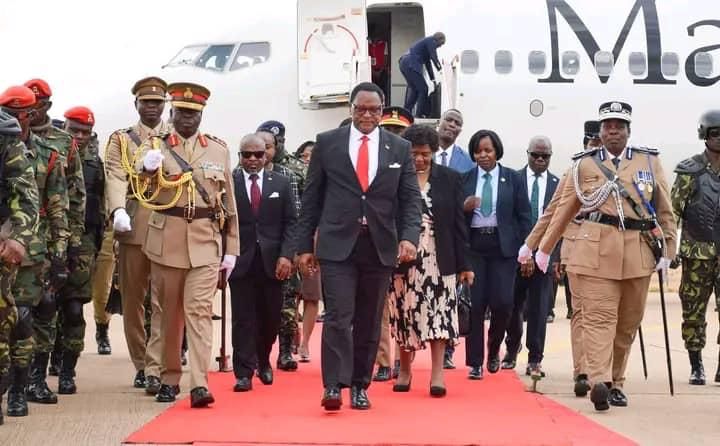
President Dr. Lazarus Chakwera has arrived in the country from China, where he attended the Forum on China-Africa Cooperation Summit in Beijing.

Addressing the media at Chileka International Airport in Blantyre, Chakwera expressed satisfaction with the outcomes of his visit, highlighting the negotiation of several trade deals with China and other participating countries.

Chakwera back from China


The President revealed that the trip yielded significant benefits for Malawi, including the signing of a $200 million agreement for the construction of a judicial complex in Lilongwe and the reduction of export duty on agricultural produce.

“I am pleased to announce that we have secured two major deals: a grant for the construction of a court complex in Lilongwe and the exemption of most crop produce from export duty.

“This milestone is crucial for our farmers, who now have access to a readily available market in China, aligning with the Malawi 2063 Agenda’s focus on agriculture, tourism, and manufacturing,” said Chakwera.

Upon arrival at the airport, the Malawi leader was warmly welcomed by senior government officials, traditional leaders, and political leaders.

Notable dignitaries included Vice President Dr. Michael Usi, Deputy SPC Janet Banda, Army Commander Major Valentino Phiri, Inspector General of Malawi Police Service Marylene Yolamu, and Minister of Education Madalitso Kambauwa Wirima.

During his stay in the southern region, President Chakwera is scheduled to inspect development projects in Nsanje and Chikwawa districts, among other engagements.

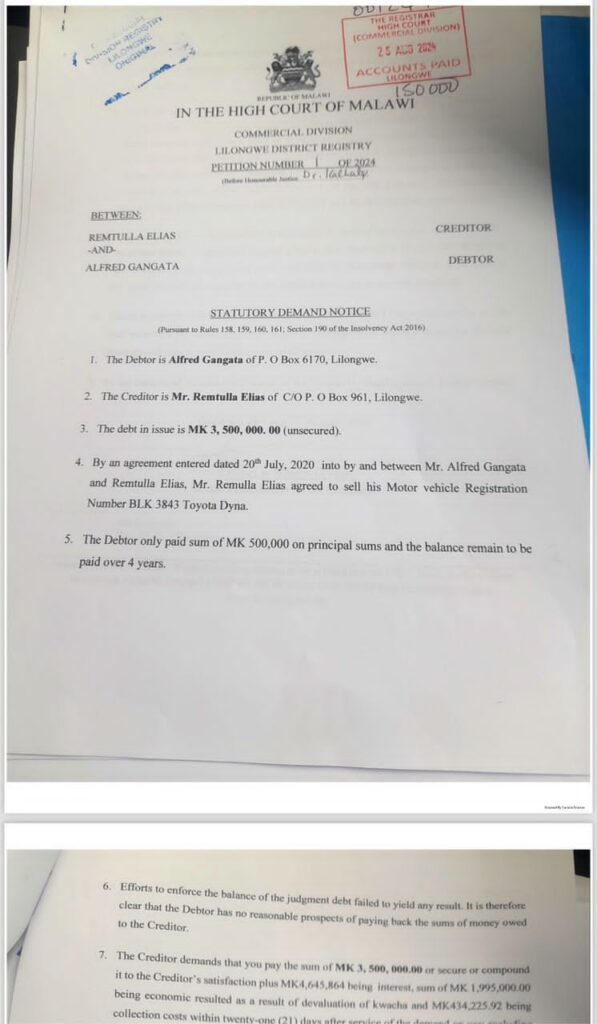
DPP Vice President for Centre, Alfred Gangata taken to court over MK3.5m car debt

0

By Staff Reporter

The political future of the newly elected vice president for Democratic Progressive Party (DPP) for the center Alfred Gangata is hanging in the balance as the dark shadow of bankruptcy charges is hovering on his head.

Gangata has been taken to court by Taulo and Associates on behalf of Mr Rumtulla Ellias over a K3 500 000 debt which Gangata is said to have incurred after failing to pay in full the money which he got after selling Ellias’ vehicle in 2020.

Gangata


A document in our possession by Taulo and Associates has advised Gangata to pay back the money in full, including interests within 21 days or risk being declared bankrupt.

The documents further indicates that Gangata has been failing to pay the money to Ellias after several reminders hence the court action.

Due to his delay in payment, the summons show that the money has now accumulated to over K10Million due to devaluation, interest rate and collection fees.

Gangata, who owned several businesses at one point, was in the news lately for confiscating a filling station of an unsuspecting client.

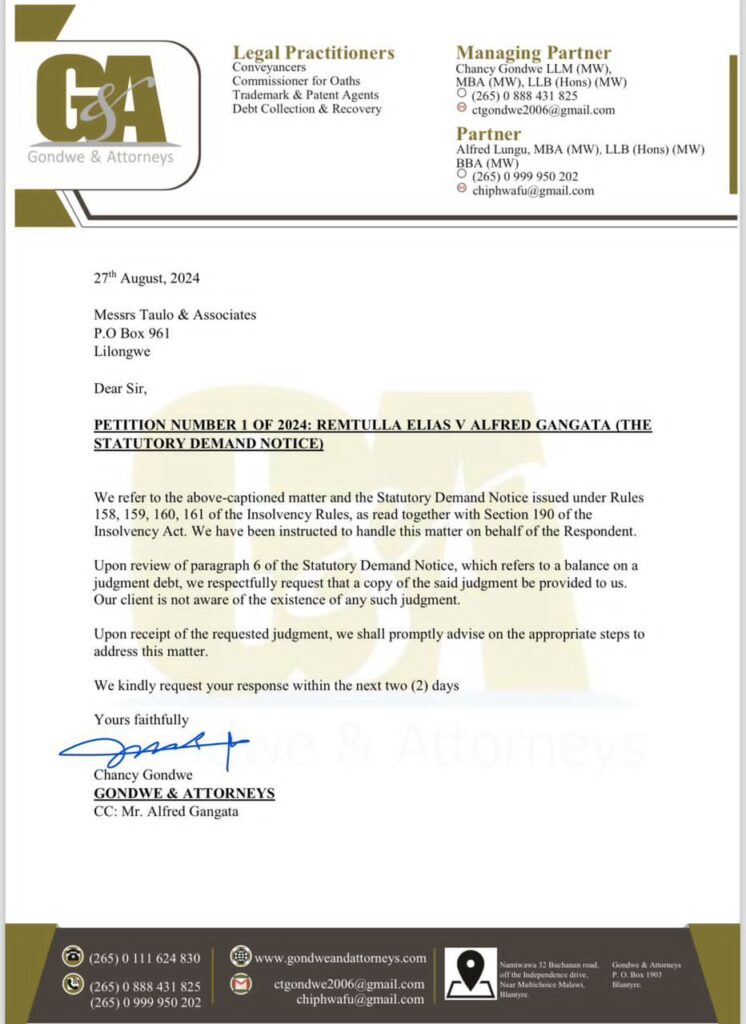
His lawyer Chancy Gondwe has challenged the claim of bankruptcy. He says his client is not aware of some judgement/s leading to the bankruptcy charges.

Gangata denied to be served the legal documents physically and had managed to suppress the story from appearing in some reputable media houses.

In an interview Ellias’ Lawyer Oscar Taulo confirmed that the DPP vice president has been taken to court and has three weeks to respond.

Taulo said they are waiting for Gangata to respond to their demands before proceeding with other legal action.

“The matter is being handled by Justice Chifundo Kachale at Lilongwe High Court Commercial Division. We are waiting for his compliance,” says Taulo.

Joyce Banda Accuses Opposition of Disrupting People’s Party Convention

0

By Burnett Munthali

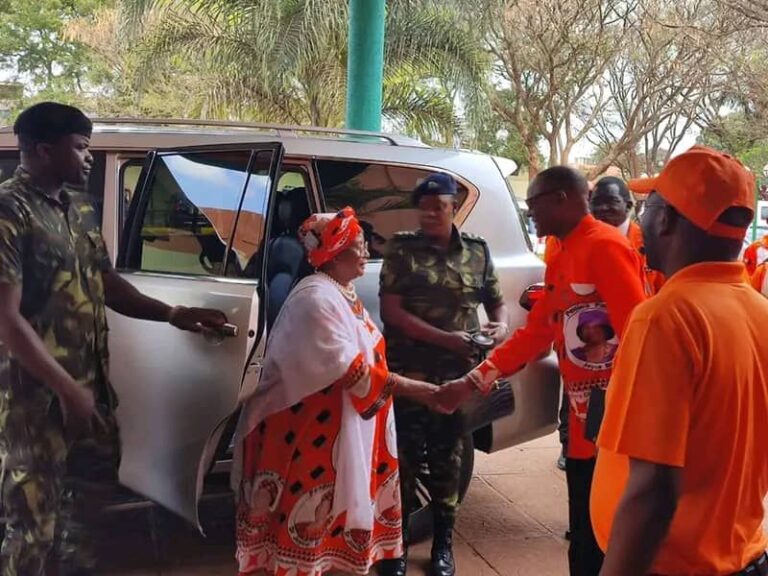
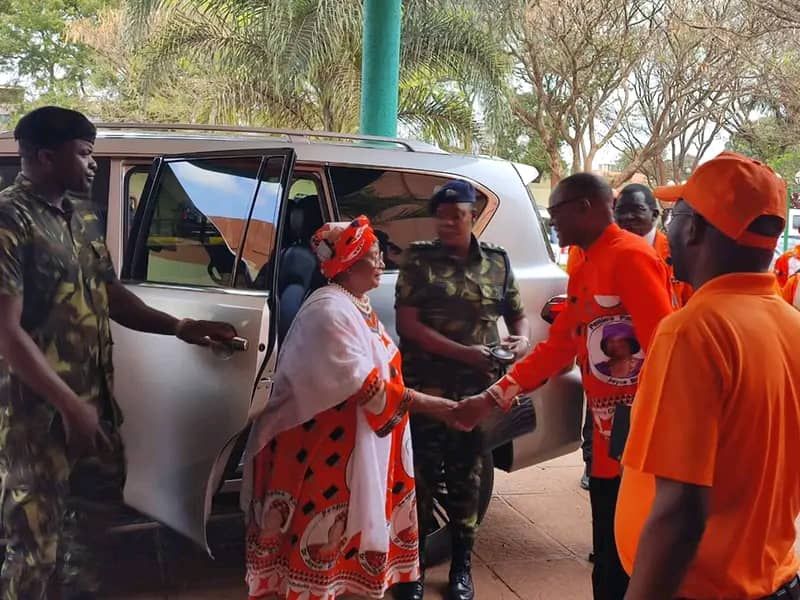
People’s Party (PP) leader Joyce Banda has made a bold claim that members from other political parties attempted to disrupt the ongoing PP convention. Speaking to the press, Banda alleged that her party’s intelligence apparatus had identified these individuals and that she possesses a list of their names.

In her address, Banda urged, “Sangatisokoneze ayi, Ife tayamba ulendo wathu tisiyeni tipange zathu nanu pangani zanu. Sibwino kusokonezana poti aliyense ali ndi zolinga zake,” which translates to, “They can’t disrupt us, we have started our journey, please leave us to do our things while you concentrate on yours. It is not good to create disruptions since everyone has their own goals.”

Dr Joyce Banda


Banda’s remarks reflect a determined stance as she emphasizes the importance of focusing on internal matters and advancing the party’s agenda without external interference. She has also called upon delegates to elect leaders who will effectively guide the party forward and strengthen its position.

The accusations of sabotage come amid a high-stakes convention where the PP is electing its central committee. Banda’s call for unity and concentration on the party’s objectives highlights the critical nature of this leadership selection process and her commitment to ensuring a smooth transition as the party prepares for future political challenges.