
Wednesday, April 1, 2026
No menu items!
spot_img
Home Blog Page 1072

Blantyre Residents face severe shortages amid hoarding allegations

0

By Burnett Munthali

Blantyre, Malawi’s commercial hub, is in the grip of a worsening fuel crisis, leaving residents and businesses scrambling for petrol and diesel. Long queues at fuel stations have become a daily sight, as motorists spend hours—sometimes even days—waiting to fill up their tanks. This scarcity has sparked widespread frustration and panic, with reports of fuel hoarding exacerbating the situation.

The fuel shortages have brought parts of Blantyre to a standstill. With many stations running dry, motorists have resorted to camping overnight at the few that still have fuel, hoping to be among the lucky few to get a rationed supply. For others, public transportation has become unreliable, with minibuses either hiking fares or refusing to operate due to the uncertainty of finding fuel. The result is chaotic traffic conditions, as commuters compete for the limited transport options available.
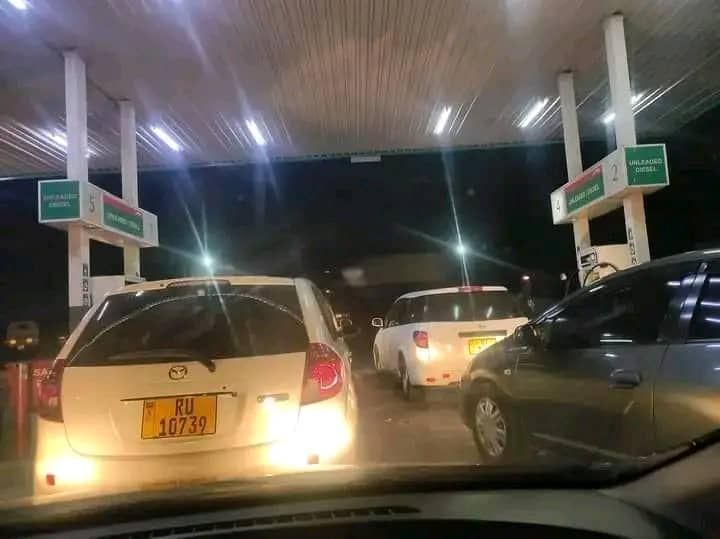
One of the key drivers of the crisis appears to be fuel hoarding. Several fuel station owners and private individuals are being accused of stockpiling fuel, either to sell it at a higher price on the black market or to guarantee their own supplies in case the shortage continues. These allegations have sparked anger among ordinary Malawians, who see this as an opportunistic exploitation of an already dire situation.

Social media has been flooded with the hashtag #FuelHoarding, as frustrated residents share stories of empty pumps while rumors circulate of hidden reserves being kept by unscrupulous dealers. Some videos and pictures have emerged online, allegedly showing people filling up dozens of containers, fueling speculation that hoarding is worsening the crisis.

The fuel shortage is having a crippling effect on Blantyre’s economy. Businesses reliant on transportation are feeling the pinch, with deliveries delayed and operations slowed. The cost of goods and services is beginning to rise as suppliers factor in the additional expense of securing fuel. In addition, sectors such as agriculture and construction, which depend on fuel for machinery, are bracing for disruptions in their work schedules.

Small-scale traders, such as those in the informal sector, are also bearing the brunt. Many rely on minibuses to transport goods to the market, but with fewer vehicles on the road and increased transport costs, their businesses are at risk. The ripple effect is hitting households as well, with rising costs contributing to the overall strain on the average Malawian family.

In response to the fuel crisis, the Malawian government has acknowledged the challenges but has not provided a clear resolution timeline. The Malawi Energy Regulatory Authority (MERA) has attributed the shortages to logistical issues, including delays in imports and a lack of foreign exchange, which has made it difficult to procure adequate supplies of fuel. However, MERA has warned against illegal practices like hoarding, promising to crack down on those caught withholding fuel.

The government has also appealed to the public to remain patient and avoid panic-buying, stating that efforts are being made to stabilize the fuel supply. However, with no immediate relief in sight, the situation continues to escalate, and public trust in the authorities’ ability to manage the crisis is waning.

As Blantyre remains in the grip of this fuel shortage, the situation could worsen unless swift action is taken to increase supply and curb hoarding. The people of Blantyre are demanding accountability and transparency from both the government and fuel suppliers to ensure that this crisis does not continue to spiral out of control.

For now, the #FuelHoarding hashtag continues to trend, as Blantyre’s residents wait anxiously for the pumps to start flowing again.


Tabitha Chawinga: First Malawian nominated for the Ballon d’Or

0

By Burnett Munthali

Malawi’s football scene has received a monumental boost, as Tabitha Chawinga, captain of the Scorchers, has become the first Malawian footballer to be nominated for the prestigious Ballon d’Or award. This marks a significant achievement, not just for Chawinga herself but for Malawian football as a whole. Currently playing for the iconic French club Lyon, Chawinga’s nomination places her among the elite of the footballing world, showcasing her immense talent and dedication to the sport.

Chawinga’s nomination for the Ballon d’Or signifies more than just personal glory—it is a proud moment for Malawi. For years, Malawian athletes have excelled at home and abroad, but recognition on such a grand stage has been elusive. Chawinga’s breakthrough in France represents not only her individual skill but also the rising standard of women’s football in Malawi.

Chawinga

As captain of the Scorchers, Malawi’s national women’s football team, Chawinga has been a beacon of hope and a source of inspiration for young girls across the country. Her leadership on the field has transformed the Scorchers into a formidable team, competing strongly on the African stage. Now, her success with Lyon has earned her the highest level of recognition on a global platform.

Since joining Olympique Lyonnais Féminin, one of the most successful women’s football clubs in the world, Chawinga has continued to elevate her game. Her agility, goal-scoring prowess, and tactical awareness have made her a key player for the French giants. Chawinga’s journey from her humble beginnings in Malawi to playing at Lyon is a testament to her hard work, discipline, and commitment to excellence.

With Lyon, she has competed at the highest level of European football, including the UEFA Women’s Champions League, and her consistent performances have earned her the admiration of both teammates and opponents. The Ballon d’Or nomination is a reflection of her outstanding season in France, where she has proven herself as one of the top players in the world.

The Ballon d’Or is widely regarded as the most prestigious individual award in football, recognizing the best players in the world each year. For Chawinga to be nominated is an immense achievement, given the fierce competition from elite players across Europe, South America, and beyond. Her inclusion on this list places her alongside some of the greatest names in women’s football and highlights her contributions to the sport on a global scale.

This nomination also brings international attention to Malawian football. While Malawi may not yet be considered a football powerhouse, Chawinga’s success shows that the country has the potential to produce world-class talent. Her nomination serves as an inspiration for young Malawians aspiring to make their mark in the sport.

Tabitha Chawinga’s journey serves as a reminder of the untapped potential in Malawian football, particularly in women’s sports. Her success can act as a catalyst for greater investment in grassroots football programs, helping identify and nurture talent from a young age. With better infrastructure, training, and support, more Malawian athletes can aspire to reach the highest levels of international competition.

Moreover, Chawinga’s nomination highlights the importance of providing equal opportunities for women in sports. As Malawi continues to grow its footballing reputation, the rise of players like Chawinga will be crucial in changing perceptions and promoting gender equality in sports.

Tabitha Chawinga’s nomination for the Ballon d’Or is not only a historic moment for her career but also a milestone for Malawi as a whole. She has become a symbol of hope and pride for her nation, demonstrating that with hard work, talent, and determination, it is possible to compete with the best in the world. As the first Malawian to be nominated for this prestigious award, Chawinga has forever cemented her legacy as one of Malawi’s greatest athletes.

Malawi now stands proudly on the global footballing stage, thanks to Chawinga’s achievements. Her story is one of perseverance, skill, and relentless ambition, serving as an inspiration to future generations of Malawian footballers.

Vice-President Usi Vows to Tackle Rampant Corruption Suffocating Malawi’s Development

0

By Twink Jones Gadama

Vice-President Michael Usi has sounded the alarm on the pervasive corruption plaguing the nation, warning that it is stifling Malawi’s progress.

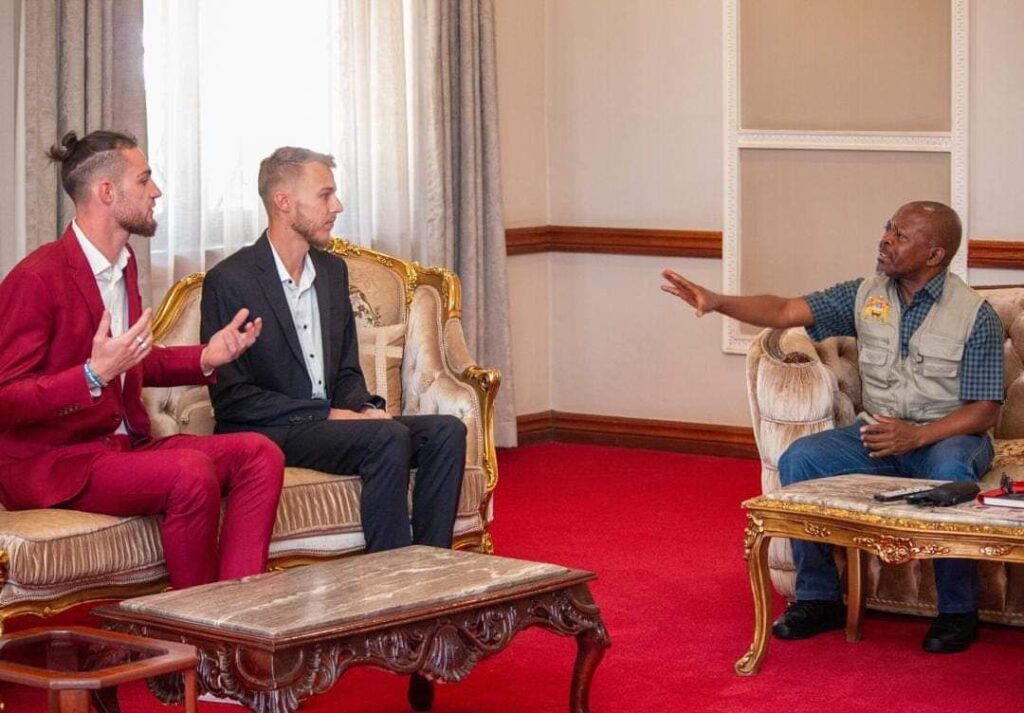
Usi made the remarks during a meeting with German nationals at Mudi Residence in Blantyre, where the visitors expressed frustration over government officials demanding bribes to facilitate their charity work.

Usi with German Nationals

The Vice-President’s stern stance comes as a beacon of hope for a country grappling with the debilitating effects of corruption.

Usi emphasized that the government will take decisive action against corrupt officials, stating, “We don’t want this in our country because corruption is one of the major issues suffocating the development of the country. So we will deal with all the corrupt officers.”

Aaron Landt, CEO of Landt Foundation, revealed in an interview that his organization was on the verge of leaving Malawi due to the entrenched corruption.

“We saw there was no need to give people bribes first for the organization to carry out its work,” Landt lamented.

The foundation’s experience is a stark reminder of the far-reaching consequences of corruption, which can repel vital investment and aid.

The meeting between Usi and the German nationals highlights the urgent need for collective action against corruption.

As Malawi strives to overcome its development challenges, it is clear that tackling corruption must be a top priority.

The Vice-President’s commitment to addressing this scourge is a step in the right direction, and it remains to be seen how the government will translate this pledge into tangible action.

In recent years, Malawi has struggled to shake off the shackles of corruption, which has permeated various sectors, including government, business, and even non-profit organizations.

The consequences are far-reaching, from hindering economic growth to undermining trust in institutions.

As the country navigates this critical juncture, the Vice-President’s resolve to confront corruption head-on is a welcome development.

However, it will require sustained effort and collaboration across all sectors to create a corruption-free Malawi.

The government must prioritize transparency, accountability, and good governance to create an environment conducive to development.

This includes strengthening institutions, enforcing laws, and promoting a culture of integrity.

The private sector and civil society also have a vital role to play in combating corruption.

By promoting ethical business practices and supporting initiatives that foster transparency and accountability, they can help create a groundswell of support for anti-corruption efforts.

As Malawi embarks on this journey, the international community, including organizations like the Landt Foundation, can offer valuable support.

By sharing expertise, resources, and best practices, they can help Malawi build a robust anti-corruption framework.

Vice-President Usi’s vow to tackle corruption is a crucial step towards unlocking Malawi’s development potential.

It is now incumbent upon the government, private sector, civil society, and the international community to work in concert to create a corruption-free Malawi.

Only through collective action can the nation hope to overcome this pervasive challenge and forge a brighter future for its citizens.

Poland Unveils New Long-Range Suicide Drone Capable of Reaching Moscow

By Burnett Munthali

In a significant development that could reshape the dynamics of regional security, Poland today unveiled its latest military innovation—the Warmate-50, a long-range suicide drone. Developed by WB Group, a leading Polish defense contractor, this cutting-edge drone boasts a range of over 1,000 kilometers and can carry a payload exceeding 50 kilograms.

The Warmate-50’s capabilities position it as a formidable asset in modern warfare, with the potential to deliver precision strikes deep into enemy territory. The drone’s range is particularly notable, as it can reach Moscow from Ukrainian soil, a fact that underscores the escalating tensions and the strategic implications for both Eastern Europe and Russia.


LPolish officials have not disclosed the specific operational plans for the Warmate-50, but its unveiling comes at a time of heightened military activity and concerns over the security situation in Eastern Europe. The ability to deploy a drone with such a long range and payload capacity offers new tactical options, potentially altering the balance of power in the region.

WB Group, known for its advanced defense technologies, has highlighted the Warmate-50’s versatility and effectiveness in a variety of combat scenarios. The drone is designed for kamikaze-style missions, where it can be flown directly into high-value targets, delivering its payload with devastating impact.

As the situation in Ukraine continues to unfold, the introduction of the Warmate-50 adds a new dimension to the conflict, potentially raising the stakes for all parties involved. While it remains to be seen how this new capability will be utilized, the mere possibility of a drone strike reaching the heart of Russia from neighboring territory is likely to draw significant attention and concern from global powers.

The unveiling of the Warmate-50 is expected to prompt discussions within NATO and other international defense circles about the implications of such technology on regional stability and the future of warfare.

Water tariffs increase again: Consumers cry foul amid economic struggles

0

By Burnett Munthali

In yet another blow to Malawian households, water tariffs have been increased once more, sparking outrage among consumers already grappling with the rising cost of living. The latest hike, which comes on the heels of previous increments, has been met with strong opposition, particularly from low-income earners and small business owners who argue that the new rates are unaffordable.

Many consumers have expressed frustration and anger over the repeated increases in water tariffs. “We’re already struggling to make ends meet,” said one resident of Blantyre. “With food prices going up, electricity bills soaring, and now water becoming more expensive, it’s getting harder to survive. How are we supposed to manage?”

Small business owners, who rely heavily on water for their daily operations, have also voiced their concerns. “This increase is a big problem for us,” explained a local launderette owner. “We can’t just pass on all these costs to our customers; they’ll go elsewhere. But if we absorb the costs, we might not stay in business.”

In response to the backlash, the government has assured the public that low-income earners will be spared from the full impact of the tariff hike. According to a statement from the Ministry of Water and Sanitation, measures have been put in place to ensure that the most vulnerable households are protected from excessive costs.

“The government recognizes the financial pressures that many Malawians are facing,” the statement read. “That is why we have introduced a tiered tariff system where those in lower-income brackets will not experience the same percentage increase as higher-income households and commercial users.”

The water boards have justified the tariff increase by citing rising operational costs, including the price of chemicals for water treatment, electricity, and the maintenance of aging infrastructure. “These costs have gone up significantly, and in order to maintain the quality and reliability of water supply, we have no choice but to adjust tariffs,” said a spokesperson for one of the water boards.

However, this explanation has done little to calm the fears of ordinary Malawians, who feel that their voices are not being heard. Civil society organizations have also weighed in, calling for greater transparency and accountability in how water tariffs are determined and implemented.

As the debate over water tariffs continues, many Malawians are left wondering what the future holds. With inflation showing no signs of slowing down, and basic necessities becoming increasingly expensive, the burden on households is only set to grow.

For now, consumers are calling on the government to reconsider the latest increase and find alternative solutions that do not further strain already stretched budgets. Whether these calls will be heeded remains to be seen, but one thing is certain: the cost of living in Malawi is becoming a major concern for its citizens.