Monday, April 6, 2026
No menu items!
spot_img
Home Blog Page 1111

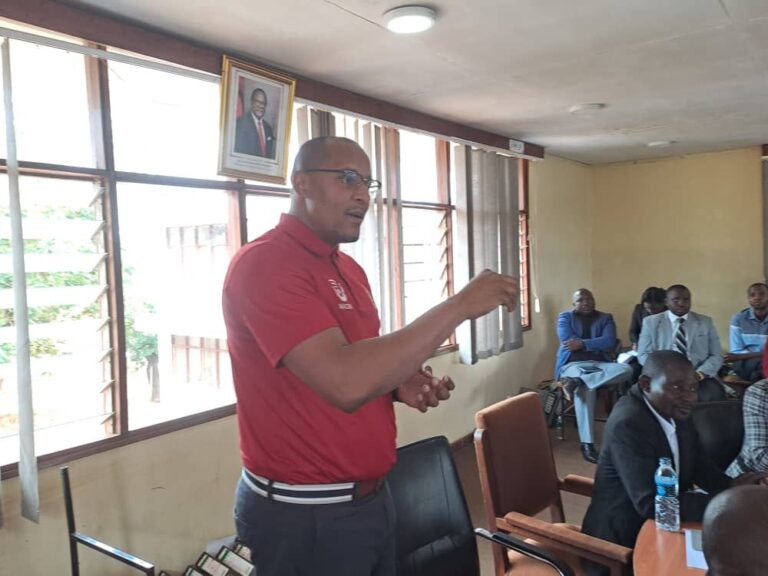
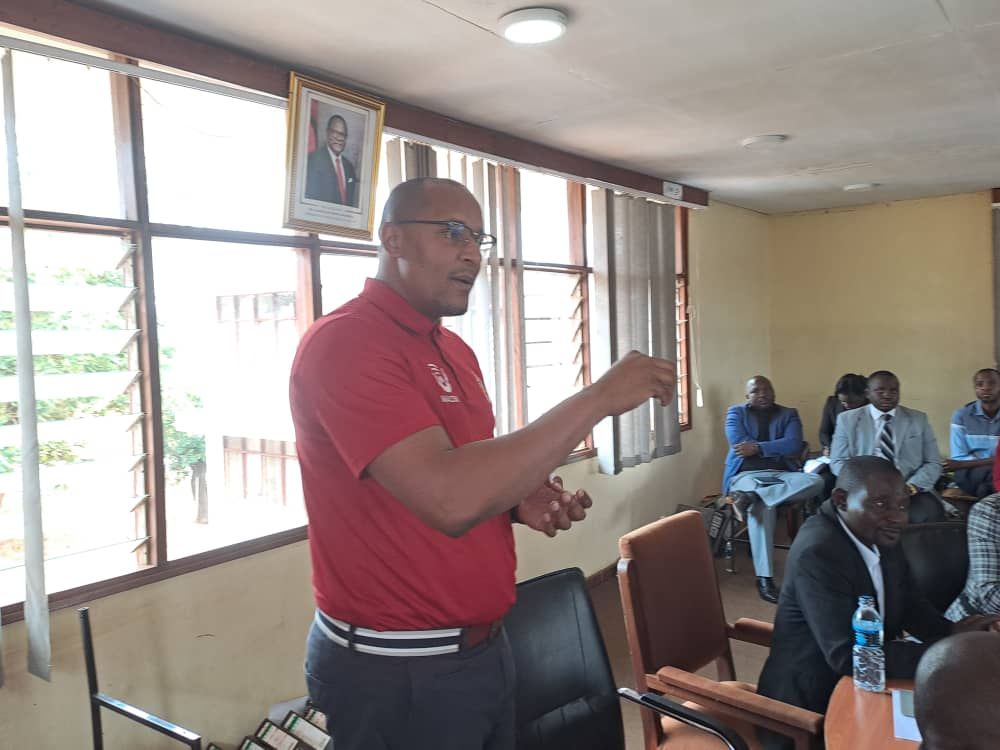
Dr. Dalitso Kabambe’s Facebook Series: A call to reignite Malawi’s vision

By Burnett Munthali

In recent times, Dr. Dalitso Kabambe has used his Facebook platform to share a compelling series that revisits the dreams of Malawi’s past leaders. Reflecting on figures such as Orton Chirwa, Chakufwa Chihana, Dunduzu Chisiza, and Masauko Chipembere, Kabambe’s posts delve into the foundational visions these leaders had for a prosperous Malawi.

Dr. Kabambe’s series prompts a critical examination of whether the democratic ideals fought for by Bakili Muluzi are truly being realized. Is the Malawi we experience today the one envisioned by Bingu wa Mutharika? These questions resonate deeply, revealing the gap between past aspirations and current realities.

The series highlights the disheartening truth that, despite progress in some areas, significant issues remain. The persistent poverty and inadequate access to essential services like healthcare and education underscore a democratic deficit that needs addressing. These challenges are a stark reminder that the dreams of a fair and prosperous Malawi are still distant for many.



However, Kabambe’s reflections are not merely critiques but a call to action. He draws inspiration from the late Dr. Saulos Chilima, who embarked on a visionary journey aimed at transforming Malawi into a nation of opportunity for all. Kabambe urges Malawians to revive these dreams and work collectively towards a future that fulfills the hopes of past leaders.

The series encourages unity and emphasizes the need to strengthen democratic governance and build a solid economic foundation. By doing so, Kabambe believes we can create a Malawi where every citizen has the opportunity to thrive, irrespective of their background.

In essence, Dr. Kabambe’s Facebook series is more than a nostalgic look back; it is a motivational call to reengage with the vision of a united and equitable Malawi. By coming together and reinforcing the values that have guided our leaders, we have the power to achieve the Malawi that our ancestors envisioned—a nation where prosperity and freedom are within reach for all.


Chakufwa Chihana
Bakili Muluzi
Bingu Mutharika
Saulos Chilima

MACRA says NAS is a key pillar of a developed society

0


By Vincent Gunde

The Malawi Communications Regulatory Authority (MACRA) says National Address System-My address is a key pillar of a developed society saying it is the ability of the government to find its people and for the people to find each other in a structured way.

The MACRA said Malawi is establishing a comprehensive addressing system that will have multiple use by many stakeholders bringing about a more organized way of life and this will modernize cities, towns and villages and it will provide an audit of residents and their localities.

Daud Suleman- NAS- My address is for all sectors of the economy

The organization said Malawi does not have a comprehensive addressing system that identifies a person by street, building and house number saying as a result of this, provision of various services is compromised.

Introducing NAS-My address to the district stakeholders in Dowa, MACRA’S Director General Daud Suleman, said according to the Communications Act of 2016 section 124 the authority shall allocate, manage and regulate addresses and postcodes, streets and roads to be identified and given names, houses numbered with big buildings named, marked and mapping.

Suleman said NAS is a multi-sectoral stakeholder driven national project with key components such as addressing standards, National Postcodes System, National Addressing Database, physical infrastructure, Geographical Information System, public awareness and sensitization.

He said NAS has economic benefits such as increased revenue to government through tax collection, improving billing processes for utility bills leading to increased revenue available to expand services, facilitation of home delivery of service, enhanced tourism and increased accuracy in collection of census information, among others.

The Director General said NAS has some social benefits such as effective response to emergency situations by fire, police and Ambulance services, provision of verifiable proof of residence, improved provision of health services, among others.

“The pilot phase of NAS was completed, new addressing standards developed, Postcodes developed GIS mapping and Data extraction is on-going, public awareness and sensitization on-going and the national roll-out is on -going,” said Suleman.

He said NAS is meeting some challenges such as finances, data and vandalism of infrastructure saying MACRA is expecting councils to lead in street naming, active participation in digitalization, physical verification, physical infrastructure placement and data collection.

Suleman said NAS has covered plot areas in Blantyre city, national roll-out in the cities of Blantyre, Lilongwe, Mzuzu and Zomba and all bomas in Northern Region such as Chitipa, Karonga, Rumphi, Mzimba, Nkhatabay and Likoma saying NAS is for all sectors of the economy.

President Chakwera engages  Lubeck University on fight against NCDs

0

By Linda Kwanjana


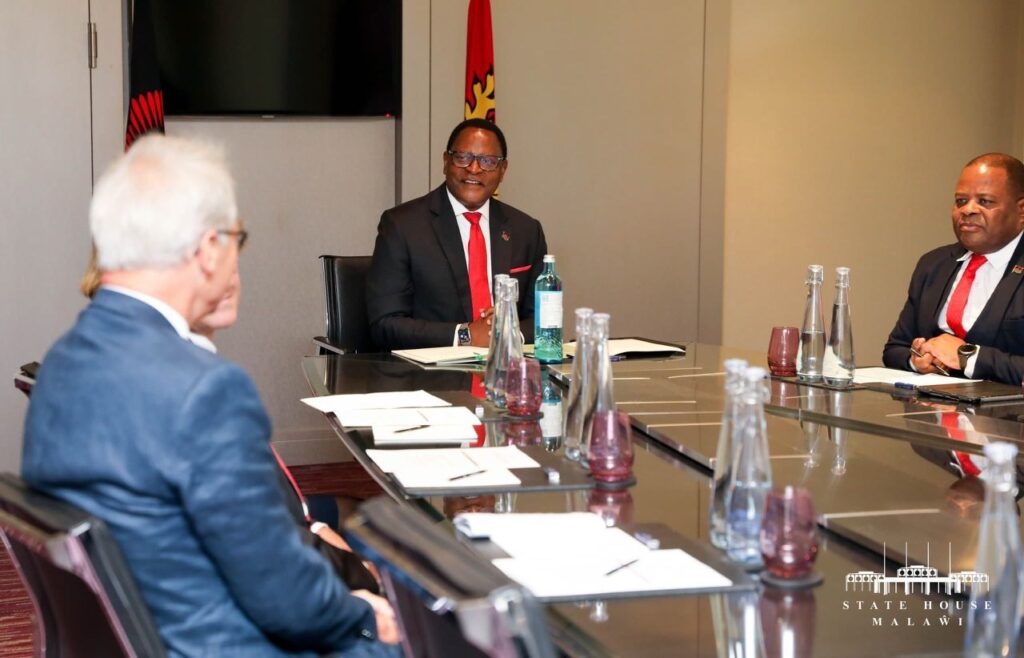
Malawi Leader President LL Dr. Lazarus McCarthy Chakwera, says capacity building of prevention and treatment of non-communicable diseases in Malawi’s health sector is key to building sustainable communities.

He said this during an interface with a delegation from Lübeck University Clinic who have expressed interest to help the country through specialized training of nurses.


Currently, Malawi has one specialized nurse in dialysis while the rest are trained as general nurses. Currently, government is training another lot of specialized nurse in few programmes offered at Kamuzu University of Health and Sciences (KUHES).

In addressing this gap, Lübeck University Clinic and Government of Malawi intend to build collaboration so that most nurses are equipped in NCDs.

Head of delegation of Lubeck University who is also Director, Professor Kristina Kusche-Vihrog, said they are geared to help Malawi adopt new systems and technologies towards a healthier society.

The development aligns with the Health Sector Strategic Plan among other requirements promotes the specialization of the nursing profession for effective service delivery.

Jay Jay Cee quits Mabilinganya Empire after staying 11-years with the music group


By Durell Namasani


Musician Jay Jay Cee has announced that he is no longer a member of  ‘Mabilinganya Empire after staying 11 years with the Lilongwe-based reggae dancehall music group.

The musician made the announcement through his Facebook page and shared his old pictures taken with some of the group members.

“For that effort I will always be grateful, it’s been almost 11 years since I joined Mabilinganya Empire, at some point I was voted a leader, this only shows how much of a family I became.

Unfortunately there is time for everything, I am officially announcing to the public that today I am stepping out of Mabilinganya, there is no bad blood as some may call it, it’s just a necessary step I am supposed to take.” reads the statement in part.

The musician has since thanked his fans for their support during his time with the empire and said he will always  be available whenever the group needs his support.

Meanwhile, another Mabilinganya empire member who helped Jay Jay Cee to join the group in 2013, Mady P, has also announced that he is no longer part of the Area 18 music crew.

Mabilinganya Empire was formed in 2008 by dancehall artist late Patrick Magalasi who was fondly known as ‘Mafunyeta’ and his friend Blac Sta.

Apart from the two, the group had other dancehall stars like Mady P, Mad Doctor, Maovololo, Tamunyata, Macedonia, Flava and the current dancehall king Malinga Mafia.

Successful story of Hope Water in Dowa

0

By Alfred Chauwa

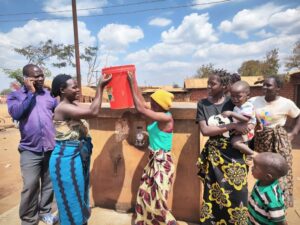
Hope Water Limited says the extension of water projects into Dowa Turn-off has brought significant improvement in reduction of early marriages as well as school drop-outs.

Three years down the line, Director at the Hope Water Malawi Limited Innocent Semu says people at Dowa turn-off are now able to save money as they are spending less in search for the water that has been brought closer to them.

Innocent Semu

“Looking at the development in this community, more people are migrating to Dowa turn-off just because water are now close to them and they have built nice houses bigger ones like the one’s in area 43, so life now is made easier in Dowa turn-off, so we are very happy for the progress of the project and the impact into people’s lives,” Semu highlighted.

He further said they are plans to extend the storage facility to meet people’s demands.

Solomoni Chitsa of Traditional Authority Mkukula conquered with Semu saying that the coming in of the water project has prompted business tycoons to migrate to the area that has also helped in boosting the infrastructure development in the area as these business magnets are building modern houses.

On the other hand residents in the area are able to earn money through selling of cleaning portable water that came in through the project and there has been a reduction of water borne diseases in the area as highlighted by Mrs. Makombe a resident at Dowa turn-off.

Henry Kumwenda who is the building inspector working with Hope Water Malawi Limited said the project is so far pumping water from Nthambwe river with 50, 000 litres reservoirs among which 10,000 liters are situated at Chavala agriculture area and the other 40,000 litres reservoirs are situated at Nthambwe residence to be supplied to the community.

“Initially to be honest they are not enough, because this Nthambwe Dowa turn-off area, there are so many developments that have just come in because this water source, so for us to catch up with the demand we can require at least 100,000 littles of water source,” Kumwenda said.

The project is reaching out to 6,000 people around Dowa turn-off.

On issues of early marriages, it has also been revealed that these cases have drastically reduced while at the same time increasing girls enrollment at Chavala Primary School and other surrounding schools.

As a matter of background, Rhema Institute for Development (RHID) with support from Hope for a Child embarked on the implementation of Dowa Turn-off piped water supply project to help increase access to potable water in Dowa District.

The project aims at supporting
communities in provision of safe drinking water around Dowa Turn-off by way of solar powered water reticulation supply system which will have communal water points (CWPs) in different locations as dispersing points.

For easy monitoring of the production and consumption both the supply and the distribution lines of this piped water system will be metered.

Currently all the dispensing points have prepaid meters to maximize revenue collection efficiency for cost recovery, sustainable operation and maintenance and to allow for further expansion of the scheme as well all construction of other new schemes in equally needy localities.