Organizers of the 2024 Sand Music Festival, Impakt Events Management, have announced the cancellation of the event, which was scheduled to take place from September 27 to 29 at Sunbird Nkopola in Mangochi District.
The decision comes after the sudden passing of Impakt Events Management’s Chief Executive Officer (CEO) and Sand Music Festival Chairman, Lucius Banda, affectionately known as ‘Soldier’.
In a heartfelt statement, the company expressed their grief and explained that Banda’s absence has left an insurmountable void.
Lucius Banda
“His passing has left us heartbroken, and his absence will be deeply felt. Lucius was more than just a leader; he was the driving force behind the Sand Music Festival.His passion, dedication, and commitment to excellence have been the foundation of this festival’s success,” reads part of the statement.
Meanwhile,the organizers have expressed their hope to return next year, stronger and more inspired, to honor late Banda’s legacy in a way that would make him proud.
MISA Malawi has condemned the main opposition Democratic Progressive Party (DPP) for threatening Nation Publications Limited (NPL) journalists at the just ended convention.
According to a statement signed by chairperson Golden Matonga, in the wee hours of Monday, August 19, 2024, some people operating under the banner ‘DPP media team’ threatened and ‘forced’ NPL team to delete a Facebook news update on what was happening at the convention.
The NPL team had to seek special protection from some party officials to safely move themselves and their livestreaming gadgets out of the convention hall.
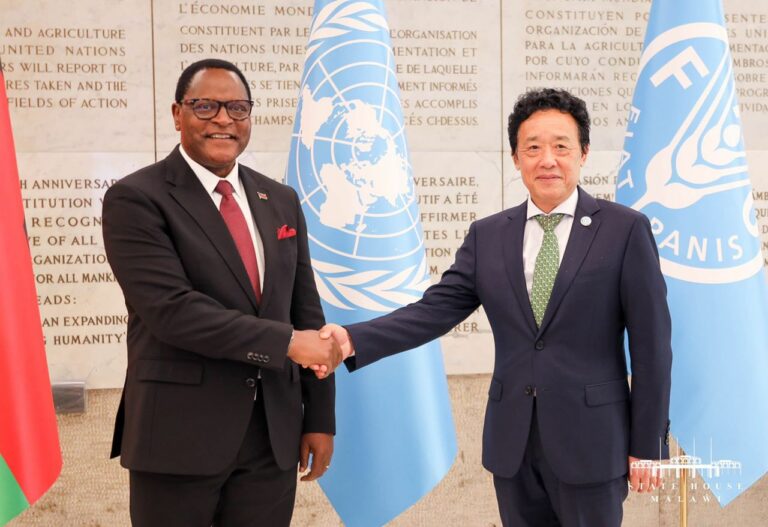
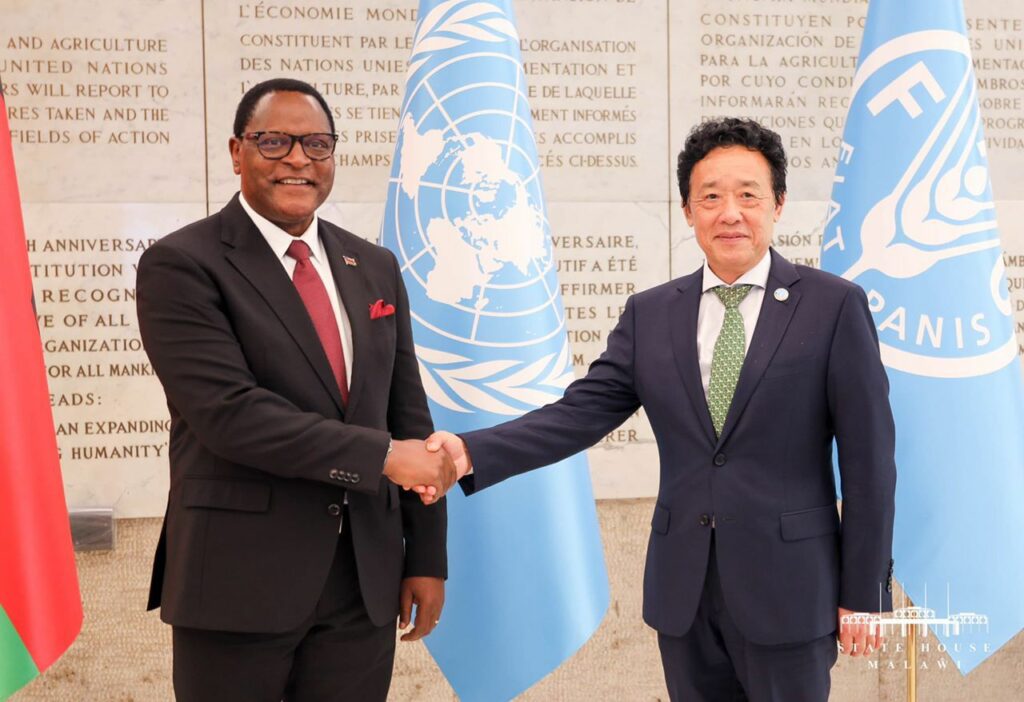
President Dr. Lazarus McCarthy Chakwera’s visionary ATM Strategy (Agriculture, Tourism, Mining) has received a major endorsement from the United Nation’s Food and Agriculture Organization (FAO).
During a meeting with FAO Director General Dr. Qu Dongyu, the President’s innovative approach to transforming Malawi’s economy was hailed as a clear roadmap for long-term growth and development.
The FAO has pledged to intensify its support for Malawi’s agricultural commercialization, mechanization, and industrialization efforts, aligning with the country’s goal of achieving food security and climate resilience.
Dr. Qu expressed enthusiasm for strengthening the partnership, acknowledging the ATM Strategy’s potential to drive Malawi’s journey towards inclusive wealth and digitization by 2063.
This collaboration is set to revolutionize Malawi’s agricultural landscape, empowering smallholder farmers to adopt climate-smart practices and transition to sustainable agriculture.
With FAO’s technical assistance, Malawi is poised to make significant strides in achieving its development aspirations.”
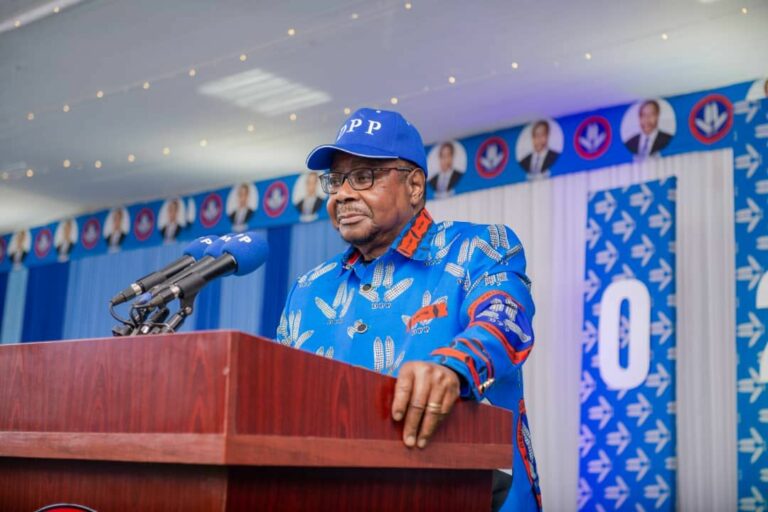
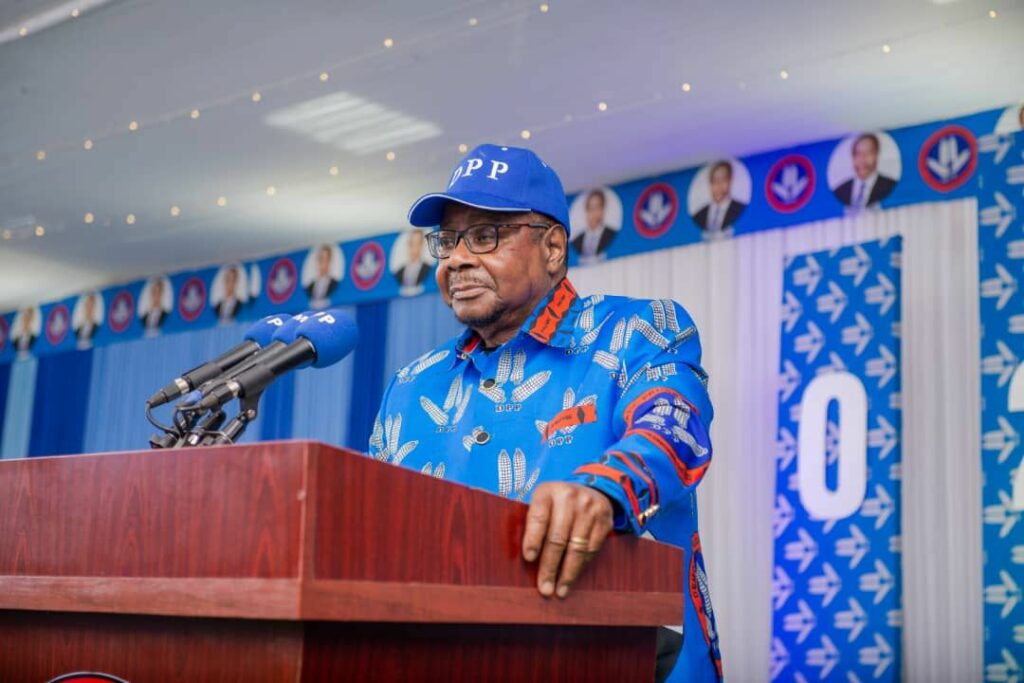
Recent debates have surfaced regarding the absence of Democratic Progressive Party (DPP) President Professor Arthur Peter Mutharika during the concluding stages of the party’s recent convention. Critics have questioned whether his absence undermines his leadership capabilities. However, a closer examination reveals that these concerns might be overstated and do not necessarily reflect on his overall effectiveness as a leader.
One of the primary arguments against criticizing Mutharika’s absence is his decision to delegate responsibilities to Dr. George Chaponda for the final phases of the convention. Delegation is a common and often necessary aspect of leadership, particularly in large and complex events such as party conventions. Mutharika’s choice to assign Dr. Chaponda, a senior and experienced party member, suggests a strategic approach to management rather than a lapse in leadership. It reflects trust in his team and a pragmatic acknowledgment of the demands of the event.
Mutharika
The convention itself was widely recognized as a success. It was described as “the best ever,” showcasing effective planning, execution, and a high level of competitiveness. The positive outcomes of the convention—well-decorated, meticulously organized, and successful in its objectives—indicate that the event met its goals and ran smoothly, regardless of Mutharika’s presence at the end. This achievement speaks to the party’s robust organizational structure and the effective functioning of its members, which mitigates concerns about Mutharika’s leadership based on his absence alone.
Critics who focus on Mutharika’s absence may be overlooking the broader context of his leadership. Leadership is not solely about being present at every moment but also about setting strategic directions, making key decisions, and fostering a capable team. The successful execution of the convention underlines that the leadership and organizational systems within the DPP are resilient and well-coordinated.
Moreover, political analysts should consider that a single event or moment does not encapsulate an entire leadership capability. Mutharika’s absence from the convention’s conclusion might be a point of debate, but it should not overshadow his overall contributions and the party’s accomplishments. Evaluating his leadership should involve a comprehensive assessment of his tenure, policies, and strategic vision rather than focusing narrowly on one event.
The decision to delegate responsibilities can also be viewed as a sign of competent leadership. Effective leaders often rely on their team members to handle various aspects of operations, particularly in large-scale events. Mutharika’s ability to delegate crucial tasks to Dr. Chaponda and ensure the convention’s success demonstrates his leadership by leveraging the strengths of his team members.
In summary, while the absence of Professor Arthur Peter Mutharika during the final stages of the DPP convention might attract some criticism, it is essential to view this issue in a broader context. The successful execution of the convention, the strategic delegation of responsibilities, and the overall effectiveness of the event reflect positively on the leadership structures within the DPP. Thus, it is not necessary to debate Mutharika’s leadership capabilities based on his absence alone. Leadership effectiveness should be judged by the outcomes achieved and the ability to manage and guide a team, both of which are evident in this case.
Deputy Minister of Education Nancy Chaola Mdooko has lauded the impact of the Learner Mentors initiative, introduced through the Malawi Education Reform Programme (MERP), which has significantly bolstered school enrollment in public primary schools across Malawi. This initiative, aimed at reducing school dropouts and encouraging higher attendance rates, is beginning to show promising results.
The Learner Mentors concept involves recruiting young women to serve as role models and mentors in public primary schools. Their primary role is to motivate children who have dropped out of school to return and complete their education. By offering guidance and support, these mentors help address barriers to education and foster a supportive learning environment.
During a recent visit to Benjamini and Mbachundu primary schools in Mchinji District, Mdooko observed firsthand the positive outcomes of the initiative. She reported a notable decrease in absenteeism and a reduction in early pregnancies among students, reflecting the program’s success in addressing critical issues affecting school attendance.
“The introduction of Learner Mentors through MERP has had a substantial impact,” Mdooko said. “We are seeing fewer children dropping out of school, and more are returning to complete their education. The role of these mentors as positive role models is crucial in motivating students and creating an environment conducive to learning.”
Joyce Hamsini, Director of Education, Youth and Sports (DEYS) for Mchinji, confirmed the success of the initiative in her district. She noted that approximately 110 out of 221 primary schools in Mchinji now have Learner Mentors. In these schools, there has been a marked increase in student enrollment, further highlighting the effectiveness of the program.
Emma Kapinga, a Learner Mentor at Mbachundu Primary School, shared her personal success story. Over the past few years, Kapinga has helped approximately 76 children return to school, with 65 of them sitting for the Primary School Leaving Certificate (PSLC) examinations. Her efforts exemplify the positive impact that dedicated mentors can have on students’ educational journeys.
The Learner Mentors initiative represents a significant step towards achieving higher educational attainment and reducing dropout rates in Malawi. By focusing on mentorship and role modeling, the program addresses key factors that contribute to school disengagement, offering a practical solution to longstanding educational challenges.
As the program continues to expand and evolve, it is anticipated that the benefits will be even more pronounced. With strong support from both the government and local communities, the Learner Mentors initiative is poised to make a lasting difference in Malawi’s educational landscape.