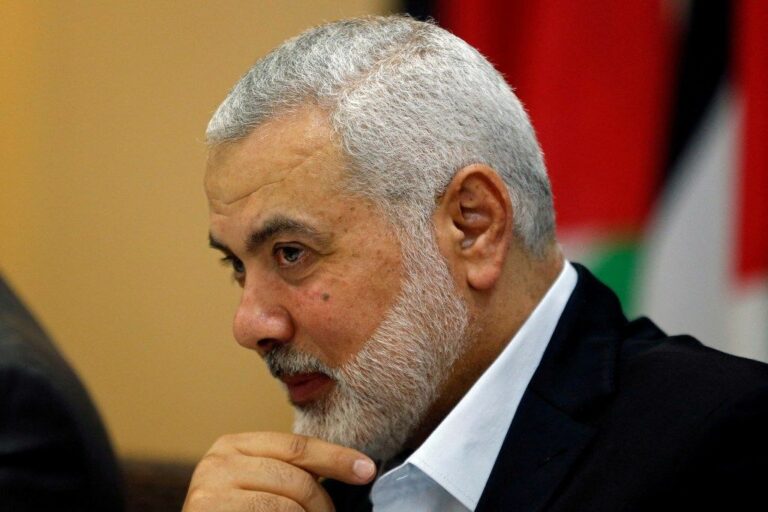
Iranian President Masoud Pezeshkian has vowed that Israel will “regret” the “cowardly” killing of Hamas political leader Ismail Haniyeh, who died in an airstrike in Tehran on July 30, 2024. The strike occurred while Haniyeh was attending Pezeshkian’s presidential inauguration ceremony.
Pezeshkian declared that Iran would “defend its territorial integrity, honour, pride, and dignity” in response to the incident. Israel has not confirmed responsibility for the attack on Haniyeh, who had been based in Qatar before his death.
Ismail Haniyeh
The killing follows an Israeli airstrike in Beirut that targeted Hezbollah’s top military commander. This commander was implicated in a recent attack on Israel that resulted in the deaths of 12 children. Both Hamas and Hezbollah receive significant support from Iran, and their armed wings have been involved in ongoing conflicts with Israel.
In reaction to the heightened tensions, U.S. Defense Secretary Lloyd Austin stated that Washington would work to ease the situation but reiterated that the U.S. would defend Israel if attacked. Currently, Israel is engaged in active conflicts with Hamas in Gaza and is experiencing exchanges of fire with Hezbollah from Lebanon.
The situation remains volatile, with significant implications for regional stability and international diplomatic efforts.
Political defections, such as Vera Kamtukule’s recent shift from the United Transformation Movement (UTM) to the Malawi Congress Party (MCP), are a common occurrence in political landscapes worldwide. These shifts can significantly influence party dynamics and electoral outcomes. Analyzing the impact of such defections involves several key considerations:
Firstly, defections can alter the balance of power within parties, introduce new strategic alignments, or exacerbate internal conflicts.
Vera Kamtukule
Parties may recalibrate their strategies to incorporate or counteract the effects of defections, influencing campaign focus and messaging.
Secondly, defectors might bring new perspectives, resources, or voter bases, potentially strengthening the receiving party.
The effectiveness of a defector often depends on their previous influence and their ability to mobilize support within their new party.
Thirdly, defectors might be seen as opportunistic or untrustworthy, which could tarnish the image of both the defector and the receiving party.
If the defector lacks a strong political base or constituency, their move might not translate into significant electoral gains.
Fourthly, they can forge new alliances and strengthen party coalitions.
Defections often attract media attention, which can boost a party’s visibility.
They may lead to dissatisfaction among existing party members or supporters.
The receiving party may face skepticism regarding the defector’s motives and loyalty.
Fifthly, what are the underlying reasons for the defection? Is it driven by personal gain, ideological alignment, or strategic interests?
How will the defection affect the party’s chances in upcoming elections? Will it attract new voters or alienate existing ones?
How effectively will the receiving party integrate the defector and address any internal concerns?
Sixthly, the way media reports on defections can shape public perception, highlighting either the strategic benefits or ethical concerns.
Public reactions often reflect broader concerns about political integrity and the motivations behind such moves.
In the case of Vera Kamtukule, her defection from UTM to MCP poses questions about her potential influence and the strategic adjustments MCP will need to make. The true impact of her move will become evident as both parties navigate the political landscape and respond to public and media reactions. Understanding these dynamics will be crucial for assessing the overall significance of political defections in shaping electoral outcomes and party strategies.
Renowned gemology expert Yamikani Jimusole has raised concerns about the Reserve Bank’s handling of gold and gemstone purchases, calling for a comprehensive forensic audit to uncover potential discrepancies.
Despite Malawi’s vast mineral wealth, Jimusole questions why forex shortages persist, sparking concerns about transparency and accountability.
Rumors have surfaced that the Reserve Bank may have procured fake gold due to shortages of skilled experts, further fueling concerns about the management of Malawi’s mineral resources
.
Jimusole
Jimusole, also a miner, urges authorities to take immediate action.
“It is unacceptable that our country, rich in gold and gemstones, continues to struggle with forex shortages.
“The rumors of fake gold procurement are alarming and highlight the need for a forensic audit.
“We need transparent purchases and sales, ensuring fair value for our precious resources,” he says.
Discrepancies in the Reserve Bank’s reported gold purchases compound Jimusole’s concerns.
In November 2022, Governor Dr. Wilson Banda reported procuring 200 kgs of gold; however, in July 2024, Dr. Mark Lungu claimed only 208 kgs had been purchased to date, implying only 8 kgs were bought since 2022.
This raises questions about the bank’s procurement processes and the accuracy of its reporting.
Furthermore, during his 2022 address, President Dr. Lazarus Chakwera announced that the Reserve Bank aimed to procure 1.5 tons of gold within three years.
Given the bank’s current reported purchases, it seems unlikely that this target will be met, sparking concerns about the bank’s ability to manage mineral resources effectively.
Jimusole recommends that the Reserve Bank offer a market for Malawians to sell gold and gemstones, but emphasizes proper systems to avoid discrimination.
Currently, individuals with finished gemstones struggle to find a market, while those with rough gemstones can sell to the bank.
“We need a level playing field. If the Reserve Bank is going to offer a market, it must be accessible to all Malawians, regardless of whether they have rough or finished gemstones.Otherwise, it’s discriminatory and will only benefit a select few,” says Jimusole.
Additionally, Jimusole has sent a letter to the Reserve Bank seeking clarification on the Exchange Control Act ahead of gemstone exports.
He advocates for proper grading, certification, and appraisal systems aligned with international standards to reap full benefits from the sector, including increased revenue, job creation, and economic growth.
The Reserve Bank has yet to respond to Jimusole’s demands, but the move highlights the need for urgent action to address forex shortages and ensure transparency in the sector.
Jimusole, a graduate gemologist from the Gemological Institute of America (GIA), has been researching why Malawi remains poor despite its abundant minerals.
One of the reasons he has identified is the absence of standards due to a lack of grading, certification, and appraisal systems.
Jimusole believes that the gem and jewelry industry in Malawi is capable of generating in excess of $1 billion annually, highlighting the significant potential for economic growth and development.
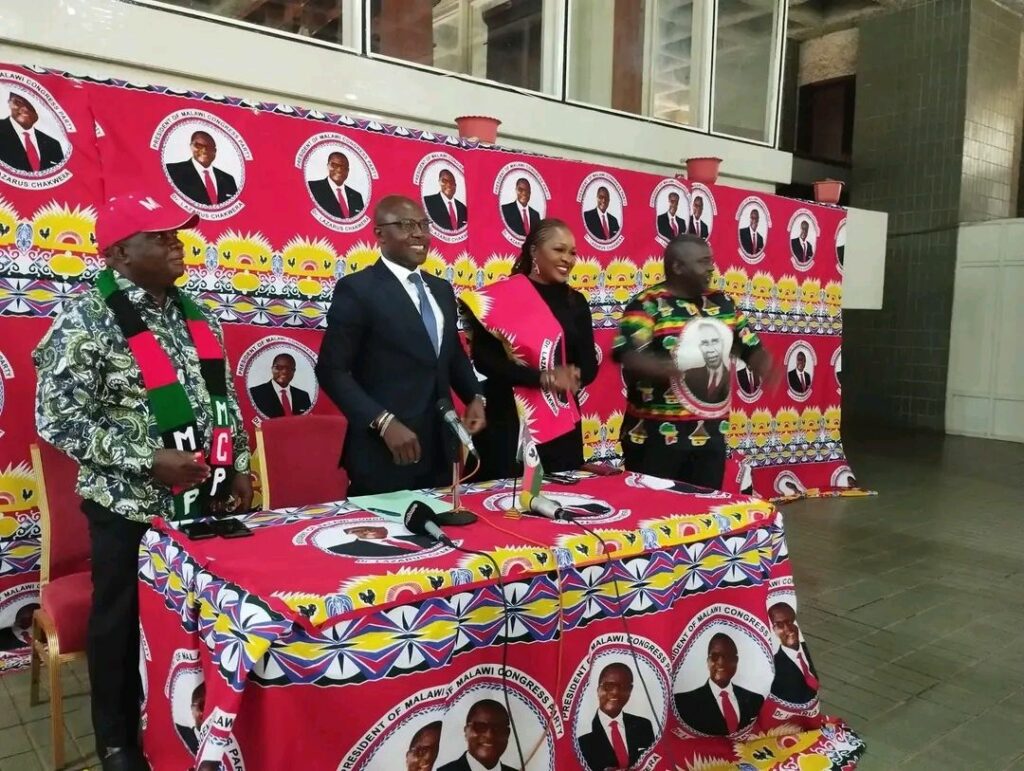
Minister of Tourism Vera Kamtukule has dumped the United Transformation Movement (UTM) and joined the Malawi Congress Party (MCP).
Kamtukule was officially unveiled as an MCP member today at the MCP headquarters in Lilongwe.
Responding to questions from journalists, the minister said she made her decision after moments of reflection and consultation.
“I have been thinking and praying, and that’s why I have arrived at this decision. It is the prerogative of the president to appoint any cabinet minister,” she said.
However, Kamtukule refused to disclose when her decision to join MCP was made.
MCP Secretary General (SG) Eisenhower Mkaka said this only shows how strong the party is, as other parties keep losing their members, while MCP keeps gaining.
Kamtukule’s decision comes barely weeks after UTM withdrew from the Tonse Alliance partnership and a month after the death of the party’s founder, Saulos Chilima, who died in a plane crash.