Sunday, April 5, 2026
No menu items!
spot_img
Home Blog Page 1155

National quiz competition boosts literacy and numeracy skills in Malawi

0

By Burnett Munthali

The Healthwise Organisation, in collaboration with World Vision Malawi (WVM), is celebrating the success of its national quiz competition aimed at enhancing literacy and numeracy among Malawian children. The initiative, which has reached approximately 100,000 learners across 15 districts, is set to expand its impact further.

During the Mchinji district finals, Innocent Uladi, Programme Coordinator at Healthwise Organisation, highlighted the initiative’s success and its goal to produce well-skilled readers and counters. “We have made significant strides in improving literacy and numeracy skills among children in Malawi. Our aim is to extend our reach to 300,000 learners, as the current situation in these areas is less than ideal,” Uladi stated.

Mereena John, WVM Mchinji District Programme Manager, reaffirmed the organization’s dedication to advancing children’s education. “Our commitment to enhancing educational outcomes remains strong, and this competition is a testament to our ongoing efforts.”

The district finals, known as “Maphunziro Mbambande,” featured 21 schools from WVM programme areas. Waliranji Primary School from the Bua Mtete Programme Area emerged victorious, defeating Kalulu Primary School from the Rusa Programme Area with a score of 99 to 91. The winners received a trophy, school bags, drinking bottles, and exercise books.

Rachel Allan, a Standard Five student from Waliranji Primary School, expressed her enthusiasm: “The competition has helped me improve in many ways. Working hard to be the best is always rewarding. Even though our opponents fought hard, it’s clear that dedication pays off.”

The national quiz competition exemplifies a successful partnership in addressing educational challenges and fostering a love for learning among Malawian students.
Analysis of Malawi’s telecenters: From ambitious vision to unfulfilled potential

By Burnett Munthali

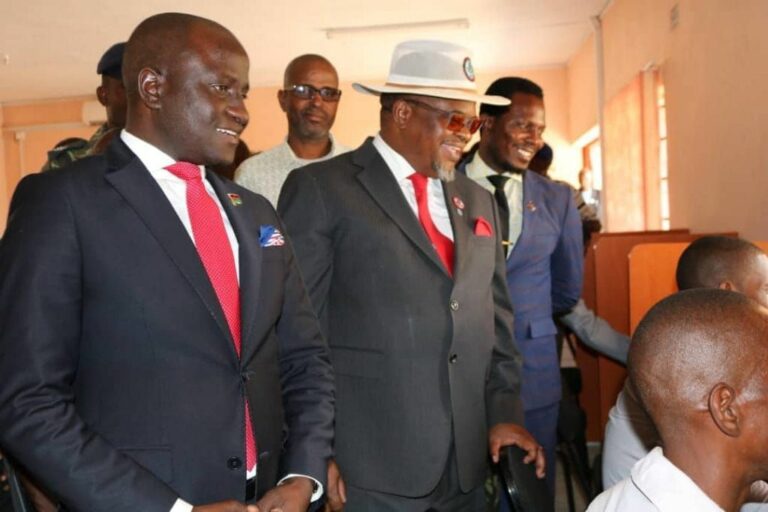
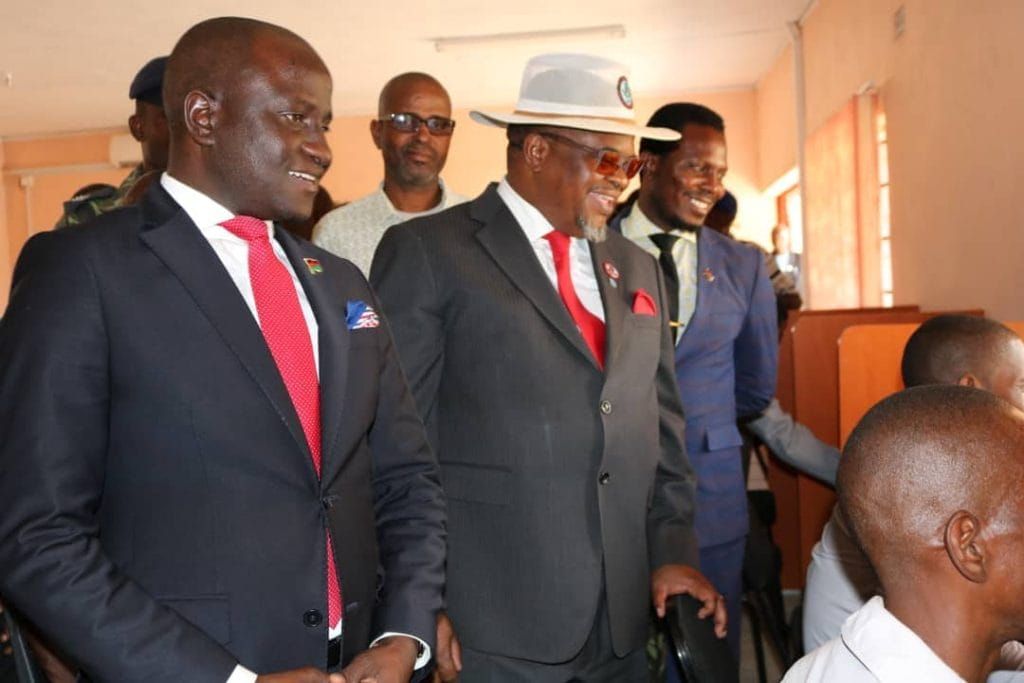
Malawi’s telecenters were launched with high expectations as a transformative digitalization project intended to bridge the technology gap, particularly in rural areas. Designed to provide access to information and digital services, these centers were built under the Connect a Constituency model by the Malawi Communications Regulatory Authority (MACRA). Despite their promising beginnings, the telecenters have largely failed to meet their objectives and are now frequently seen as “white elephants”—facilities that have not lived up to their intended purpose.

In 2019, the Malawian government reported the existence of 31 telecenters across at least 21 districts, highlighting the scale of the initiative. These centers were envisioned to empower local communities by improving access to digital resources and services, thus fostering educational and economic development. The initial enthusiasm surrounding the project suggested a significant leap forward for digital inclusivity in Malawi.

However, the reality has diverged sharply from this vision. Many telecenters now resemble ghost towns, with their facilities often neglected or underutilized. The intended benefits of increased access and usage of information have not materialized as expected. This has led to growing criticism of the project, which was initially celebrated for its innovative approach to rural digitalization.

MACRA’s recent efforts to launch a new digitalization project, the Connect a School initiative, have faced scrutiny in the context of the telecenters’ failures. With many of the original telecenters lying abandoned, there is skepticism about the efficacy and sustainability of new digitalization ventures. The challenge now is to ensure that lessons learned from the telecenters’ shortcomings are applied to future projects to avoid repeating past mistakes.

In summary, while Malawi’s telecenters were built with the goal of revolutionizing access to digital services in rural areas, they have largely fallen short of their objectives. Their decline into obsolescence underscores the need for a more effective and sustainable approach to digital infrastructure development. As MACRA embarks on new initiatives, addressing the issues that led to the telecenters’ failure will be crucial to achieving meaningful progress in digital inclusivity.

DPP Sets Stage for Elective Convention, Calls for Candidates Amidst Renewed Strength

0

By Twink Jones Gadama

The opposition Democratic Progressive Party (DPP) in Malawi has announced its upcoming elective convention, where all positions within the party will be up for grabs.

The convention, slated for August , comes as the party has regrouped and reunited, posing a formidable challenge to the ruling Malawi Congress Party (MCP).

According to a statement released by the DPP, the convention will provide an opportunity for members to elect new leaders, who will steer the party towards the next general elections.

DPP Leader Peter Mutharika

The party has called on interested individuals to submit their candidacies for various positions, including the presidency, regional vice presidencies, secretary general, treasurer general, and other national senior positions.

The nomination fees for the various positions have been set, with presidential aspirants required to pay a whopping K4 million.

Regional vice presidents, secretary general, and treasurer general will pay K3 million, while other national senior positions will pay K2 million.

Aspirants for the three deputy positions will pay K1.5 million.

Young and female candidates will enjoy a 50% discount on the nomination fees.

The nomination fee is to be paid by August 6, 2024, and is non-refundable.

The party has emphasized that the fees are meant to ensure that only serious candidates participate in the convention.

The DPP’s elective convention comes at a time when the party has finally found peace and stability after years of infighting.

The party has expelled all confusionists and is now stronger than ever, posing a significant threat to the ruling MCP.

Political analysts have hailed the DPP’s move, saying it is a sign of the party’s renewed strength and commitment to democracy.

“The DPP’s elective convention is a positive development for Malawi’s democracy,” said one analyst.

“It shows that the party is committed to giving its members a say in the leadership of the party.”

The convention is also expected to bring new blood into the party’s leadership, with many young and female candidates expected to vie for positions.

This, analysts say, will help to inject new ideas and energy into the party.

As the DPP prepares for its elective convention, the ruling MCP will be watching with keen interest.

The MCP has been facing its own internal challenges, and the DPP’s renewed strength will likely put pressure on the ruling party to get its house in order.

The DPP’s elective convention is a significant development in Malawi’s political landscape.

It marks a new chapter for the party, which is now stronger and more united than ever.

As the party prepares to elect new leaders, Malawians will be watching with keen interest, eager to see what the future holds for the country’s politics.

Inflation Crisis: A Symptom of Government’s Misguided Economic Policies

0

By Twink Jones Gadama

The current inflation crisis in Malawi can be squarely blamed on the government’s economic policies.

While external factors such as global economic trends and climate change have contributed to the crisis, the government’s mismanagement of the economy has exacerbated the situation.

Firstly, the government’s fiscal policy has been characterized by excessive borrowing and spending.

The increased money supply has led to a surge in demand for goods and services, driving up prices.

The government’s failure to manage its finances has resulted in a ballooning deficit, which has put pressure on the exchange rate and fueled inflation.

Secondly, the government’s monetary policy has been inconsistent and ineffective.

The Reserve Bank of Malawi has raised interest rates to combat inflation, but this has had little impact on the ground.

The bank’s decision to keep interest rates high has also made borrowing expensive, stifling economic growth and exacerbating the inflation crisis.

Thirdly, the government’s trade policies have been detrimental to the economy.

The imposition of tariffs and other trade barriers has increased the cost of imports, leading to higher prices for consumers.

The government’s failure to promote exports has also resulted in a trade deficit, putting pressure on the exchange rate and fueling inflation.

Fourthly, the government’s agricultural policies have been a disaster.

The failure to invest in irrigation and other agricultural infrastructure has made the country vulnerable to climate change.

The government’s decision to ban maize exports has also led to a shortage of foreign exchange, exacerbating the inflation crisis.

Fifthly, the government’s failure to address the structural issues in the economy has contributed to the inflation crisis.

The country’s over-reliance on agriculture and lack of diversification have made it vulnerable to external shocks.

The government’s failure to invest in human capital and infrastructure has also stifled economic growth and exacerbated the inflation crisis.

Additionally, the government’s failure to address the issue of corruption has also contributed to the inflation crisis.

Corruption has led to the misallocation of resources, with funds meant for development projects being diverted for personal gain.

This has resulted in a lack of investment in critical sectors such as agriculture and infrastructure, exacerbating the inflation crisis.

Furthermore, the government’s failure to promote private sector development has also contributed to the inflation crisis.

The private sector is a key driver of economic growth, but the government’s policies have stifled its development.

The high cost of doing business, coupled with the lack of access to finance, has made it difficult for businesses to operate effectively, leading to higher prices and inflation.

Moreover, the government’s failure to address the issue of inequality has also contributed to the inflation crisis.

The rich have been able to protect themselves from the effects of inflation, while the poor have been left to bear the brunt.

This has led to a decrease in purchasing power, reducing demand and exacerbating the inflation crisis.

Moreover, additional factors related to the inflation crisis in Malawi that could be explored further include the country’s high levels of external debt, which can put pressure on the economy and contribute to inflation.

The burden of debt servicing obligations affects government spending and economic stability, and understanding this relationship can provide valuable insights.

Furthermore, the impact of COVID-19 on Malawi’s economy cannot be overstated.

The pandemic has disrupted supply chains, reduced productivity, and affected government revenue, all of which have contributed to the inflation crisis.

Analyzing these effects can shed light on the pandemic’s role in the crisis.

Moreover, Malawi’s currency devaluation has significant implications for inflation.

A weak exchange rate affects the cost of imports, inflation expectations, and overall economic stability, making it essential to discuss its impact.

Reserve bank Governor Dr Wilson Banda


In addition, high levels of unemployment and poverty can exacerbate inflationary pressures by reducing consumer purchasing power.

Examining the relationship between these socio-economic factors and inflation rates can provide a holistic understanding of Malawi’s economic challenges.

Lastly, the energy crisis, characterized by shortages in energy supply, such as electricity, can constrain productivity and drive up production costs, leading to higher prices for consumers.

Investigating how energy deficits impact inflation dynamics and economic growth can enrich the discussion on the root causes of the crisis.

In conclusion, the current inflation crisis in Malawi can be blamed squarely on the government’s economic policies.

The government’s mismanagement of the economy has exacerbated the situation, and it is time for a change in policy direction.

The government must adopt a more prudent fiscal policy, a more effective monetary policy, and a more sensible trade policy.

It must also invest in agriculture, address the structural issues in the economy, promote private sector development, and address the issues of corruption and inequality.

Only then can Malawi hope to overcome the inflation crisis and achieve sustainable economic growth.

Community Service for Duo Who Assaulted Minor in Balaka

0

By Twink Jones Gadama

In a landmark ruling, the Balaka Senior Resident Magistrate’s Court has sentenced Lilian Matako and Ishmael Chitete to 12 months imprisonment with hard labor, suspended in favor of 480 hours community service each.

The pair pleaded guilty to assaulting a 9-year-old girl in Balaka District.

Senior Resident Magistrate Joshua Nkhono handed down the sentence on Friday, July 26, 2024, taking into account the mitigating circumstances.

Lilian matako and Ishmael

Matako, a single mother, is the sole guardian of the victim, while Chitete, an elderly man, was misled by the victim’s mother to assist in the assault.

The court’s decision to suspend the prison sentence in favor of community service reflects a nuanced approach to justice.

By ordering Matako and Chitete to perform community service at the Balaka Police Station Victim Support Unit and Social Welfare Office, the court ensures they will be closely monitored and supervised.

This ruling sets a precedent for cases involving child abuse and assault.

It highlights the need for a balanced approach, considering both the severity of the crime and the circumstances of the perpetrators.

Matako and Chitete’s case serves as a stark reminder of the vulnerabilities of children in our society.

The fact that a single mother and an elderly man were involved in the assault underscores the need for increased awareness and support for child protection.

The community service sentence also presents an opportunity for Matako and Chitete to make amends and give back to the community.

By working with the Victim Support Unit and Social Welfare Office, they can contribute to the well-being of others and reflect on their actions.

The Balaka Senior Resident Magistrate’s Court has demonstrated a thoughtful and considered approach to justice.

By prioritizing community service over imprisonment, the court has created a chance for rehabilitation and growth, while also emphasizing the importance of accountability for child abuse.