Wednesday, December 17, 2025
No menu items!
spot_img
Home Blog Page 1162

Support the growth transformation of the African continent – African Development Bank

0

By Burnett Munthali

The African Development Bank (AfDB) says there is need for financiers to reform their financial system to support the growth transformation of the African continent.

AfDB president Akinwumi Adesina  was speaking to the press ahead of the official opening of the bank’s annual meetings on Wednesday in Nairobi, Kenya.

He said the current global financial crisis architecture has much disadvantages on Africa  amid insufficient funding gaps for infrastructure development,food security,energy and climate change.

AfDB president Akinwumi Adesina

Adesina further said there are poor ratings and credit downgrades placed on African countries’ sovereign bonds which have higher interest rates compared to their counterparts in other markets.

“This year, African countries are expected to pay at least $74billion in debt service, up from $17billion in 2010.

“One of the key reasons behind Africa’s slow structural transformation has to do with insufficient resource mobilization, both internally and externally. Internally, Africa generates too little fiscal revenues, with tax revenue mobilization largely oil and commodities dependent, volatile and lags other regions,” Adesina said.

The meeting is being held under the theme “Africa’s transformation, African Development Bank Group and reform of the global financial architecture.”

The meeting has brought together high level decision makers from across the African continent and others.

Investment in physical infrastructure and human capital are also crucial. There must be efficient institutions that provide the right set of incentives to farmers and entrepreneurs. Social policies are required to promote health, education, and social capital, as well as to provide safety nets to protect the poor.

Underdevelopment can be overcome in Africa. Empowering individuals, fostering a mindset of innovation and resilience, is key. As Africans, we must invest in education, technology, and leadership development to bridge the gap. Our progress on the global stage is intricately linked to our ability to overcome internal challenges.

We can make Africa better. Our results suggest that domestic investment, net ODA inflows, education, government effectiveness, urban population, and metal prices positively and significantly affect Africa’s economic growth.

The Program for Infrastructure Development in Africa (PIDA) is a continental initiat resources to transform Africa with modern infrastructure. Its cross-border infrastructure projects and programs cover four main sectors: energy, transport, cross-border water and ICT.

Nearly 282 million people in Africa (about 20 percent of the population) are undernourished, an increase of 57 million people since the COVID-19 pandemic began. More than a billion people are unable to afford a healthy diet. Around 30 percent of children are stunted because of malnutrition.

Access to energy will make or break the continent’s effort to adapt against climate change including adverse weather events, water scarcity, and significant threats to livelihoods. However, Africans are getting the short end of the stick in the global race to combat climate change when it comes to energy.


First Lady in Geneva for World Health Summit

0

By Durell Namasani

First Lady, Madame Monica Chakwera, is currently in Geneva, Switzerland, where she is attending the World Health Summit as the Tuberculosis Ambassador for Malawi and the SADC Region.

The First Lady is expected to deliver an official address at the summit on May 29, 2024, and she recently participated in the WHA77 side event focusing on breaking barriers and utilizing digital technology for early action on diseases.

Madam Chakwera

Before travelling to Switzerland, Madame Chakwera recently hosted a luncheon at Kamuzu Palace for TB survivors and partners working towards ending TB in Malawi on March 30, 2024.

Madame Chakwera’s attendance at the event was made possible through an invitation from the Stop TB Partnership, which launched the Coalition of Leaders during the United Nations General Assembly High-Level Week in New York in September 2023 to lead global efforts to end Tuberculosis (TB).

During the same week, the United Nations General Assembly (UNGA) High-Level Meeting on Tuberculosis passed a political Declaration that includes targets and commitments to be achieved by 2027.

The World TB Report (2022) revealed that TB claimed 1.3 million lives, including 167,000 individuals living with HIV, in 2022 alone. In Malawi, there were 26,000 reported TB cases in 2021, resulting in 3,000 deaths. The country had 45% of TB cases undetected, indicating a significant number of undiagnosed cases.

However, Malawi has made significant progress, with the incidence of TB declining from 338 people per 100,000 population in 2010 to 125 people per 100,000 population in 2022.

Chizuma announces decision not to renew her contract at ACB

0

By Chisomo Phiri

The Anti-Corruption Bureau(ACB) Director General (DG) Martha Chizuma, says she will not renew her contract when it expires this coming Friday.

Chizuma has led the bureau since her appointment in 2021 and has been credited with several successes in the fight against corruption, including the establishment of the Anti-Corruption Source Book for primary schools and the enactment of the Whistleblower Protection Act.

However, her tenure has also been marked by challenges and controversy.

Chizuma

In 2022, she became the first ACB Director General to be arrested and detained.

Although she was later discharged, the incident highlighted the challenges she faced in tackling corruption in Malawi.

Despite these challenges, Chizuma has remained committed to the fight against corruption and her decision not to renew her contract has been seen as a surprise by many.

The government  claimed that the bureau is adequately funded, but Chizuma has disputed this, saying that the reality on the ground is different.

“The bureau faced a four-month funding gap in the 2023/2024 financial year, resulting in significant debts and other challenges,” says Chizuma.

Chizuma holds a Masters of Laws in International Economic Law from the University of East London and Bachelor of Laws with Honors (LLB) from University of Malawi(UNIMA).

Her departure from the ACB marks the end of an era in Malawi’s fight against corruption.

USA Govt supports Malawi with $7 million for food assistance, humanitarian aid

0

By Chisomo Phiri

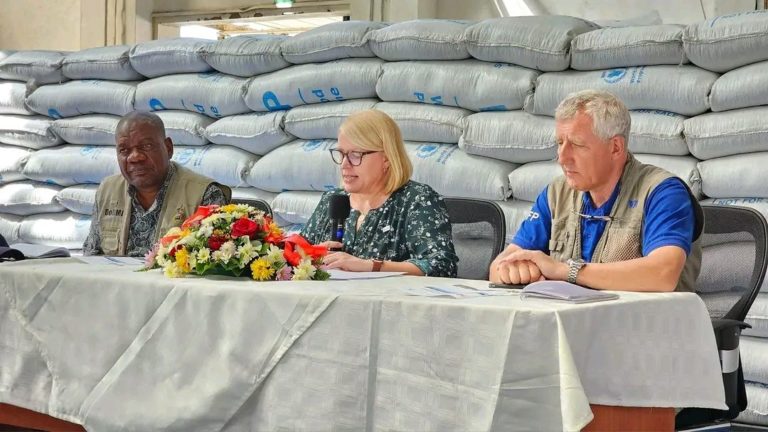
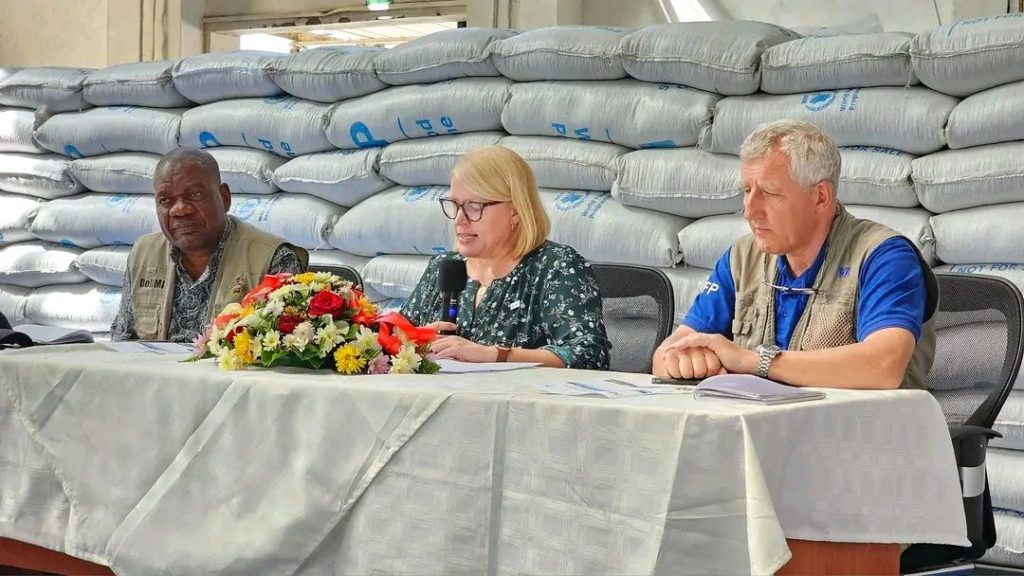
The United States of America (USA) Government through the United States Agency for International Development (USAID) has given Malawi Government $7 million (about K12 billion)  in response to food insecurity and other humanitarian needs as a result of El Nino.

USAID Malawi Mission director Pamela Fessenden made the announcement at a press briefing in Blantyre on Tuesday.

Fessenden said USAID has partnered with the World Food Programme (WFP) and United Nations Children’s Fund (UNICEF).

“This means two million households [nine million people] announced by the Government of Malawi, who have lost their crops due to the El Nino-induced drought during the 2023/24 agriculture season, will receive assistance,” she said.

On his part, the Department of Disaster Management Affairs (DODMA) deputy director responsible for disaster preparedness Fedson Chikuse said the donation will reduce the amount needed to mitigate the impact of El Nino.

Chikuse said that out of a $446 million budget, they have managed to so far source $14 million with well-wishers pledging $64 million.

FAO introduces AMR to beat zoonotic diseases

0

By Patience Longwe

The Food and Agriculture Organisation (FAO) of the United Nations has introduced an Antimicrobial Resistance (AMR) initiative to enhance animal health and one health capacities, aiming to mitigate zoonotic diseases and AMR risks and threats in Malawi.

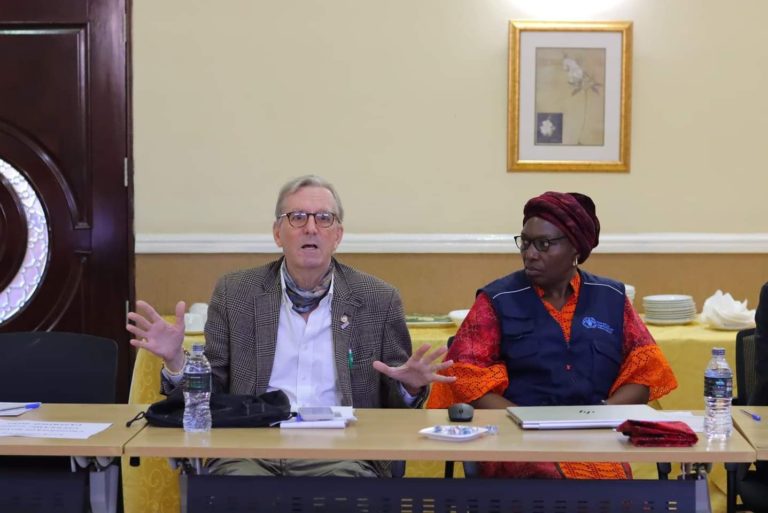
Speaking at a three-day workshop in Lilongwe, FAO’s Emergency Centre for Transboundary Animal Diseases (ECTAD) acting team leader for Malawi Sabenzi Wakesa Nabalayo emphasised that the initial strategy will play a critical role in safeguarding animal, environmental, and public health by establishing surveillance mechanisms for Antimicrobial Use (AMU) and AMR in poultry.

Dr Charles Oliver making a point


Nabalayo said the initiative will also provide valuable data to inform decision-making regarding AMU in animal health.

“The AMR landscape is constantly evolving as the 2022 end date for the initial strategy elapsed, and it’s crucial to assess its effectiveness and plan for the future,” she said.

Nabalayo added that the collaborative discussions will help achieve a revised comprehensive AMR surveillance strategy for animal health and standardize the Standard Operating Procedures (SOPs) for data collection and analysis.

Meanwhile, Global Health Security Advisor Dr. Charles Oliver said they will ensure Malawi follows all SOPs to prevent drug resistance from occurring.