
Tuesday, April 14, 2026
No menu items!
spot_img
Home Blog Page 1167

Inflation Crisis: A Symptom of Government’s Misguided Economic Policies

0

By Twink Jones Gadama

The current inflation crisis in Malawi can be squarely blamed on the government’s economic policies.

While external factors such as global economic trends and climate change have contributed to the crisis, the government’s mismanagement of the economy has exacerbated the situation.

Firstly, the government’s fiscal policy has been characterized by excessive borrowing and spending.

The increased money supply has led to a surge in demand for goods and services, driving up prices.

The government’s failure to manage its finances has resulted in a ballooning deficit, which has put pressure on the exchange rate and fueled inflation.

Secondly, the government’s monetary policy has been inconsistent and ineffective.

The Reserve Bank of Malawi has raised interest rates to combat inflation, but this has had little impact on the ground.

The bank’s decision to keep interest rates high has also made borrowing expensive, stifling economic growth and exacerbating the inflation crisis.

Thirdly, the government’s trade policies have been detrimental to the economy.

The imposition of tariffs and other trade barriers has increased the cost of imports, leading to higher prices for consumers.

The government’s failure to promote exports has also resulted in a trade deficit, putting pressure on the exchange rate and fueling inflation.

Fourthly, the government’s agricultural policies have been a disaster.

The failure to invest in irrigation and other agricultural infrastructure has made the country vulnerable to climate change.

The government’s decision to ban maize exports has also led to a shortage of foreign exchange, exacerbating the inflation crisis.

Fifthly, the government’s failure to address the structural issues in the economy has contributed to the inflation crisis.

The country’s over-reliance on agriculture and lack of diversification have made it vulnerable to external shocks.

The government’s failure to invest in human capital and infrastructure has also stifled economic growth and exacerbated the inflation crisis.

Additionally, the government’s failure to address the issue of corruption has also contributed to the inflation crisis.

Corruption has led to the misallocation of resources, with funds meant for development projects being diverted for personal gain.

This has resulted in a lack of investment in critical sectors such as agriculture and infrastructure, exacerbating the inflation crisis.

Furthermore, the government’s failure to promote private sector development has also contributed to the inflation crisis.

The private sector is a key driver of economic growth, but the government’s policies have stifled its development.

The high cost of doing business, coupled with the lack of access to finance, has made it difficult for businesses to operate effectively, leading to higher prices and inflation.

Moreover, the government’s failure to address the issue of inequality has also contributed to the inflation crisis.

The rich have been able to protect themselves from the effects of inflation, while the poor have been left to bear the brunt.

This has led to a decrease in purchasing power, reducing demand and exacerbating the inflation crisis.

Moreover, additional factors related to the inflation crisis in Malawi that could be explored further include the country’s high levels of external debt, which can put pressure on the economy and contribute to inflation.

The burden of debt servicing obligations affects government spending and economic stability, and understanding this relationship can provide valuable insights.

Furthermore, the impact of COVID-19 on Malawi’s economy cannot be overstated.

The pandemic has disrupted supply chains, reduced productivity, and affected government revenue, all of which have contributed to the inflation crisis.

Analyzing these effects can shed light on the pandemic’s role in the crisis.

Moreover, Malawi’s currency devaluation has significant implications for inflation.

A weak exchange rate affects the cost of imports, inflation expectations, and overall economic stability, making it essential to discuss its impact.
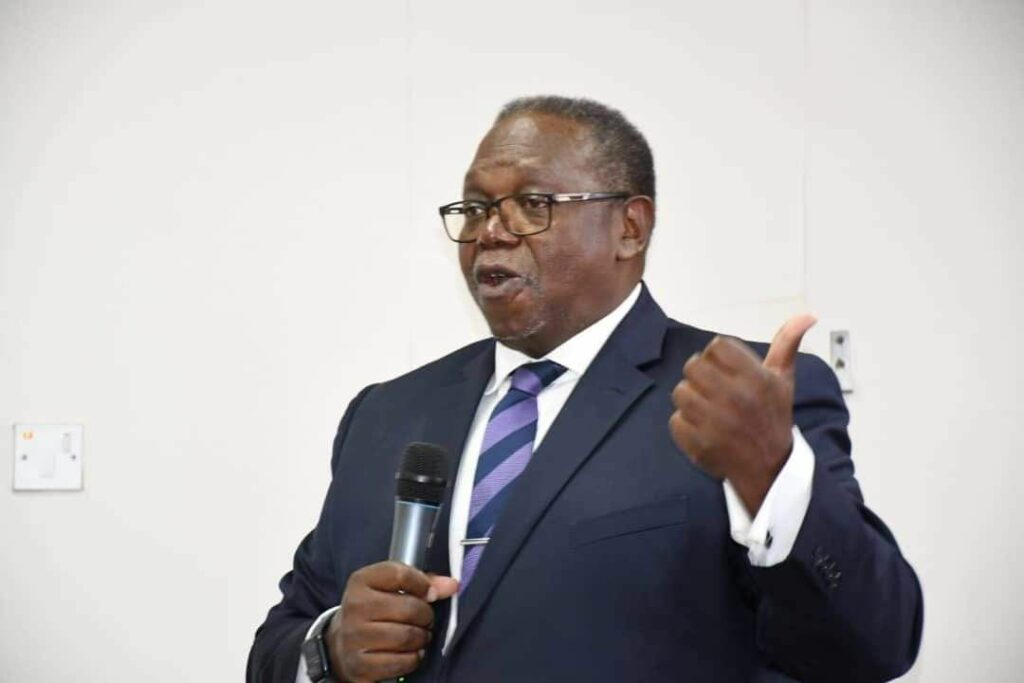
Reserve bank Governor Dr Wilson Banda


In addition, high levels of unemployment and poverty can exacerbate inflationary pressures by reducing consumer purchasing power.

Examining the relationship between these socio-economic factors and inflation rates can provide a holistic understanding of Malawi’s economic challenges.

Lastly, the energy crisis, characterized by shortages in energy supply, such as electricity, can constrain productivity and drive up production costs, leading to higher prices for consumers.

Investigating how energy deficits impact inflation dynamics and economic growth can enrich the discussion on the root causes of the crisis.

In conclusion, the current inflation crisis in Malawi can be blamed squarely on the government’s economic policies.

The government’s mismanagement of the economy has exacerbated the situation, and it is time for a change in policy direction.

The government must adopt a more prudent fiscal policy, a more effective monetary policy, and a more sensible trade policy.

It must also invest in agriculture, address the structural issues in the economy, promote private sector development, and address the issues of corruption and inequality.

Only then can Malawi hope to overcome the inflation crisis and achieve sustainable economic growth.


Community Service for Duo Who Assaulted Minor in Balaka

0

By Twink Jones Gadama

In a landmark ruling, the Balaka Senior Resident Magistrate’s Court has sentenced Lilian Matako and Ishmael Chitete to 12 months imprisonment with hard labor, suspended in favor of 480 hours community service each.

The pair pleaded guilty to assaulting a 9-year-old girl in Balaka District.

Senior Resident Magistrate Joshua Nkhono handed down the sentence on Friday, July 26, 2024, taking into account the mitigating circumstances.

Lilian matako and Ishmael

Matako, a single mother, is the sole guardian of the victim, while Chitete, an elderly man, was misled by the victim’s mother to assist in the assault.

The court’s decision to suspend the prison sentence in favor of community service reflects a nuanced approach to justice.

By ordering Matako and Chitete to perform community service at the Balaka Police Station Victim Support Unit and Social Welfare Office, the court ensures they will be closely monitored and supervised.

This ruling sets a precedent for cases involving child abuse and assault.

It highlights the need for a balanced approach, considering both the severity of the crime and the circumstances of the perpetrators.

Matako and Chitete’s case serves as a stark reminder of the vulnerabilities of children in our society.

The fact that a single mother and an elderly man were involved in the assault underscores the need for increased awareness and support for child protection.

The community service sentence also presents an opportunity for Matako and Chitete to make amends and give back to the community.

By working with the Victim Support Unit and Social Welfare Office, they can contribute to the well-being of others and reflect on their actions.

The Balaka Senior Resident Magistrate’s Court has demonstrated a thoughtful and considered approach to justice.

By prioritizing community service over imprisonment, the court has created a chance for rehabilitation and growth, while also emphasizing the importance of accountability for child abuse.

Law Commission Urges Parliament to Address Enforcement Abuse, Not Just Laws

0

By Twink Jones Gadama

The Malawi Law Commission has emphasized the need for Parliament to focus on addressing the abuse of laws by law enforcement agencies, rather than just amending the laws themselves.

Commissioner Rosemary Kanyuka stressed that the country’s laws are not inherently problematic, but rather, it is their application that often leads to issues.

Speaking before the parliamentary Legal Affairs Committee, Kanyuka highlighted the example of vagrancy laws in the Penal Code, which have been deemed unconstitutional by the Constitutional Court in 2017.

Rosemary Kanyuka

She argued that the law itself is not flawed, but rather, its application by law enforcement agencies has been problematic.

Kanyuka emphasized the importance of understanding the laws and ensuring that both citizens and law enforcers abide by them.

She cautioned that the issue lies not with the laws, but with how they are applied, and urged for a focus on addressing this aspect.

The commission’s director of law reform, Mike Chinoko, added that the Malawi Law Commission had already conducted a comprehensive review of the Penal Code between 2000 and 2001, which tested the provisions against the Constitution.

He noted that the court’s declaration of the police’s actions as illegal was due to the manner in which the law was applied, rather than the law itself.

In response, Legal Affairs Committee chairperson Peter Dimba acknowledged the need to address the archaic laws, which he believed should have been dealt with in 1994.

He emphasized the committee’s commitment to respecting the court’s order and initiating consultations for the review of the vagrancy laws.

The call to address enforcement abuse comes as a crucial reminder of the need for a holistic approach to legal reform.

By focusing on both the laws and their application, Malawi can work towards creating a more just and equitable society.

As the Legal Affairs Committee moves forward with the review process, it is essential that they prioritize addressing the systemic issues that lead to enforcement abuse, rather than just amending the laws themselves.

TNM Plc boosts Umthetho Cultural Festival with K5 million donation

0

By Chisomo Phiri

TNM Plc has made a significant contribution to this year’s Umthetho Cultural Festival, donating K5 million to support the annual celebration of Ngoni culture and traditions.

The event, set to take place on August 3, 2024, at Hora Mountain in Mzimba District, has drawn Ngoni people from three SADC countries: South Africa, Tanzania, and Zambia.

Sobhuza Ngwenya, TNM’s Marketing Director, expressed his pride in supporting the event, emphasizing the vital role of cultural diversity in fostering unity.

“As a truly Malawian company, we take pride in celebrating Malawi’s rich cultural diversity across tribes and ethnic groups.

“We are thrilled to support Umthetho’s mission to preserve Ngoni cultural heritage,” he said.

Ngwenya highlighted TNM’s commitment to empowering communities through connectivity and cultural exchange.

“Our donation demonstrates our dedication to promoting social economic development through culture, tourism, and peace,” he added.

Emma Kaliya, Chairperson of the organizing committee, expressed her gratitude for the donation.

“This generous contribution has given us a significant boost.

“We invite Ngonis and cultural enthusiasts to join us for a spectacular celebration featuring Ingoma dances, meat feasts, and traditional beer shindigs,” she said.

Retired Major General Buxton Titus Namwali to be laid to rest on Sunday

0

By Chisomo Phiri

The nation will bid a final farewell to retired Malawi Defence Force (MDF) Major General Buxton Titus Namwali, whose body will be laid to rest on Sunday in Thyolo.

According to his son, Jeremy, the ceremony will take place at Phodogoma village, Traditional Authority(T/A) Ngolongoliwa.

The late Namwali

Major General Namwali, who passed away at the age of 84, left an indelible mark on Malawi’s history’s.

He was one of the pioneering four Malawian soldiers commissioned as officers in the army and led the daring rescue operation of a hijacked South African plane at Chileka in 1972.

This heroic act earned him a promotion from Brigadier to Major General by former president Dr. Hastings Kamuzu Banda.

Throughout his illustrious career, Major General Namwali served with distinction, holding various esteemed positions, including chair of the Commonwealth Ex-Service League of Malawi, board chair for Malawi Broadcasting Corporation (MBC), and security head at the Reserve Bank of Malawi(RBM) ,Electricity Supply Corporation of Malawi (ESCOM), and Auction Holdings, among others.

He retired in 1979, leaving behind a legacy of bravery, leadership, and dedication to his country.