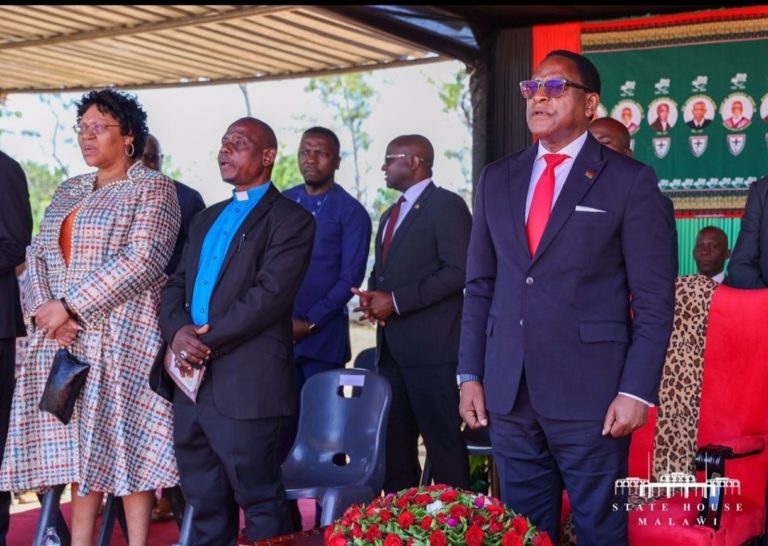
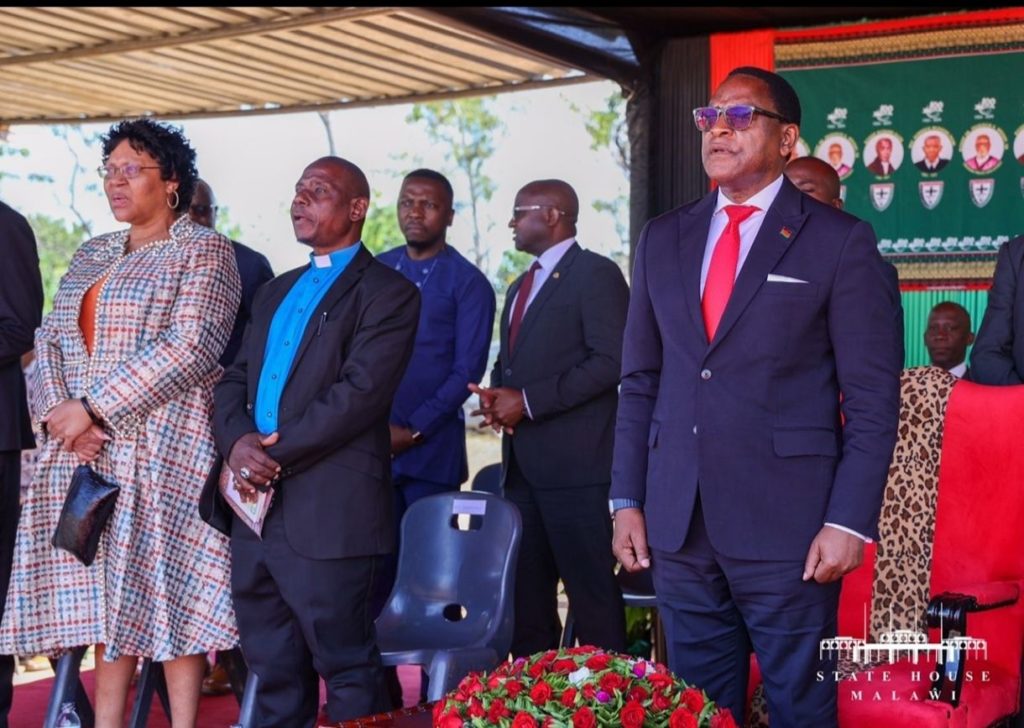
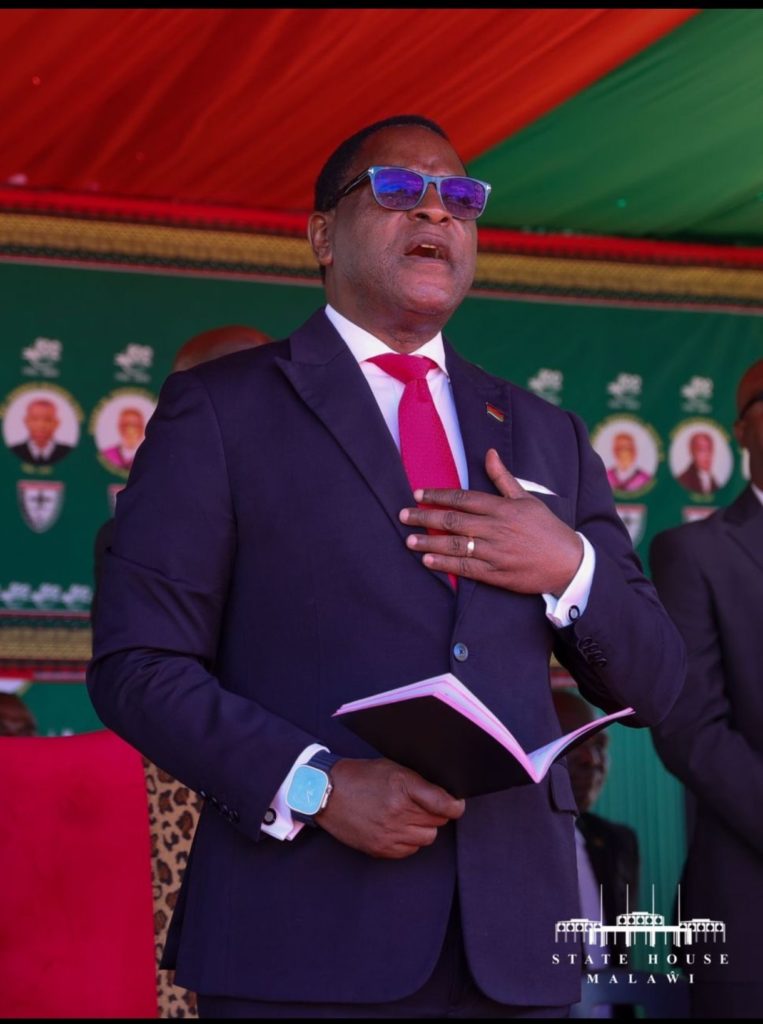
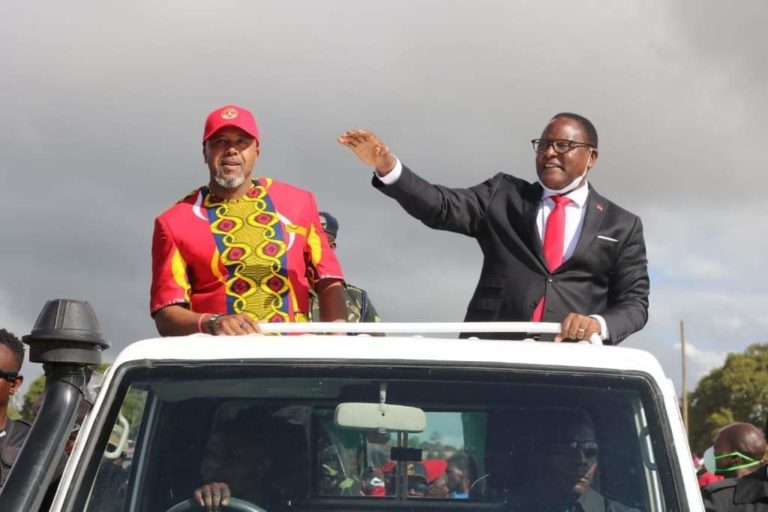
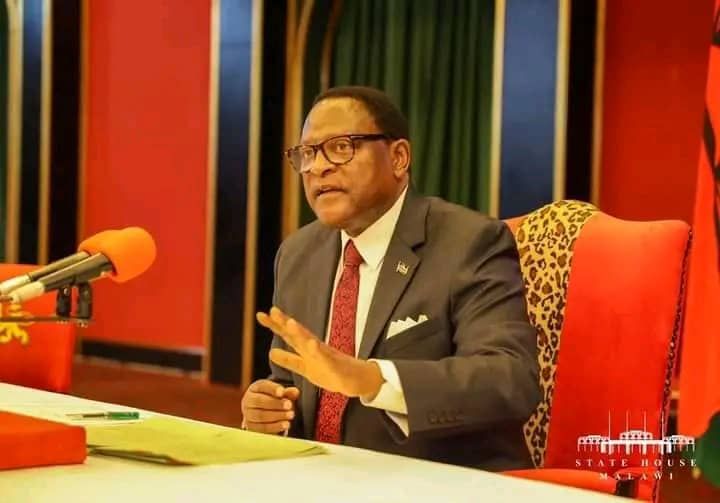
President Dr Lazarus Chakwera is this morning presiding over the African Methodist Episcopal Church Centenary celebrations in Kasungu.
The celebrations are set to be held at Hannock Msokera Primary School Ground Traditional Authority Mwase.
African Methodist Episcopal Church was founded by its first Bishop Richard Allen in 1794 in Philadelphia.
Born out of a desire to right racial inequality, oppression and social injustice, the AME Church is a community of trailblazers that holds the distinction of being the first independent Protestant denomination to be founded by black people.
Chairperson for Parliamentary Committee on Commissions, Statutory Cooperations and State Enterprises, Binton Kumtsaira, said the committee was impressed with progress of the Malawi Rural Electrification Programme 9 (MAREP-9) works.
He was speaking Friday after the Committee’s visit at MAREP warehouse in Mzuzu and Chigwere Trading Centre in the area of Senior Traditional Authority Nyaluwanga in Nkhata Bay.
“What the committee has observed complements sentiments made by the Minister of Energy in Parliament indicating that the programme is at advanced stage. The committee has acquired evidence based information on what is on ground,” Kumtsaira said.
Binton Kuntsaira
He urged continued cooperation between community members and the contractor for smooth implementation of the project at Chigwere.
Director of Electricity in the Ministry of Energy, Million Mafuta said that they expect to complete the programme in all 438 sites across the country by August, 2024.
“So far, we have done almost 35 percent of the work after having resolved challenges that delayed the implementation such as shortage of materials due to shortage of forex,” he disclosed.
Senior Traditional Authority Nyaluwanga hailed government for the programme saying it was a sign of its commitment and determination in developing rural areas.
He said among others, people in the area would be accorded with diverse economic opportunities by opening up businesses that rely on electricity once the programme is completed.
“Dairy farmers will be processing and preserving milk for long, hence promoting dairy industry in the area. They currently sell the milk at giveaway price to avoid it from being wasted,” Nyaluwanga added.
He pointed out that health facility in the area and some schools would be connected with electricity thereby to leading improved service delivery in the health and education sectors in the area.
Malawi Rural Electrification Programme (MAREP) is a government programme which is being implemented by Ministry of Energy with the goal of increasing access to electricity in rural and peri-urban areas to transform rural economies and reduce poverty.
I have identified the leadership style of our President: Corrupt, incompetent, laissez-faire. Anything goes ! Free for all administration approach. You can steal public resources, I will make a speech as if I am fighting against corruption but don’t worry you won’t get prosecuted, just in case you get arrested, we will discontinue your corruption cases. Osawamvera achulewa!
Over the past four years, I have been keenly watching this leadership. The President’s leadership style is the weakest ever and leaves a lot to be desired. The current leadership will not help this nation in any way at all but steal our tax payers money, corrupt the judiciary so that some people are not prosecuted, and bulldoze bills in Parliament. Malawi is as good as a nation without a leader. Very unfortunate!
During campaign period, Chakwera spoke like a transformational leader and made people believe that he was the answer but I am sorry to say that he is not such kind of that leader he appeared to be before he went to State House.
Chakwera
He is a different fake leader who cannot deliver but just entertain us with his beautiful English speeches. When he speaks his English, I just feel like he must go on and on but unfortunately his speeches are empty. They are just full of nothing but rhyming words.
He simply doesn’t have a leadership approach that causes change in individuals and social systems. Malawi stands waiting for empty promises and empty speeches.
Chakwera promised to create valuable and positive change in the way he would run the affairs of government with the goal of developing this land into a better place to live. Change has indeed come to the President himself, his family and friends.
To the dismay of many Malawians the opposite is true today. Malawi has become a classroom where people keep solving simultaneous equations everyday without finding the correct answer and even the wrong answer is also very difficult to find as they continue struggling, solving everyday life challenges. Several men will die of high blood pressure as they keep trying hard to survive. If you can survive in Malawi, then you can live anywhere on this planet earth.
Tonse government is not flexible to move through a range of motion effectively unrestricted and pain free. There are so many challenges in the current government and finding solutions to improve our quality of life is a big struggle.
Corruption, selective justice, nepotism unsatisfactory performance and fake leadership are just some of our greatest challenges. Some neighboring countries are moving forward and have solved a number of issues while our leaders back home continue holding press briefings giving excuses and blaming COVID-19, natural disasters, Ukraine and Russian war. If it was in a football game I would say they keep dribbling and cannot score because they claim the ground is slippery.
Radios and television stations are were shut down by government because of whatever reasons they have. My argument, however is that MACRA is killing jobs and in so doing unemployment, crime rates and poverty levels will be on the rise. This government is not flexible. One day we are going to wake up only to find all private radio and television stations are closed except MBC the mother of all stations operating alone.
Forcing companies such as TVs and radio stations to close because of outstanding bills does not necessarily inspire people to create jobs. There is simply no inspiration but people are being demotivated each day. This government does not believe in negotiating with its people.
Chakwera does not use imagination or original ideas to create something new as he sounded to be in the beginning. Pastors are not good leaders because all they know is to be fed by their churches. They operate in an environment where there is no criticism around them. They are simply bad leaders.
His government lacks inventiveness. Companies are slowly losing business to operate under hostile economic policies.
Our leadership does not have strategic thinking skills. They are failing to use critical thinking to solve complex problems and plan for the future of this nation. Government is failing to accomplish business objectives by denying people MADEF (NEEF) loans.
The National Economic Empowerment Fund Limited (NEEF), formerly Malawi Enterprise Development Fund (MEDF) is a Government owned Microfinance Institution whose mission is to economically empower ordinary and underserved Malawians (particularly women, youth and persons with disability) through the provision of quality, affordable and sustainable microfinance services for improved livelihoods.
However the letter from State House advising those who wait there to apply for the same loan which is meant for the underprivileged is quite disturbing though not surprising when you consider how government is always handling issues.
This government is totally failing to overcome obstacles, and address economic challenges, particularly strengthening the Malawi Kwacha, it will take them years or even the whole five year term to achieve what this country is looking for but they won’t.
This leadership is not strategic. They cannot possibly identify short term, long-term or overall aims and interests of people and they cannot see any means of achieving anything.
It is the responsibility of top leadership to show this country which direction we should take in order to move forward.
Our current leadership does not have any empathy on its people. They do not have the ability to understand and share the feelings of Malawians because they are living in a luxurious life full of tax free so they have forgotten every promise made.
Leadership is unable to demonstrate concern. They lack the ability to show understanding of the economic hardships the population is going and simply have no answers.
All this leadership can have to say is, they have taken us through to Canaan, the promised land of honey and milk, things are much better now than before. This is obviously an insult ! Malawi is obviously in Bagamoyo, where there is no hope at all, the opposite direction of Canaan.
Media has been described as a key partner in the development of Malawi National State of the Environment Outlook Report (NSEOR), which will highlight drivers and pressures of environmental change and provide context for future national plans.
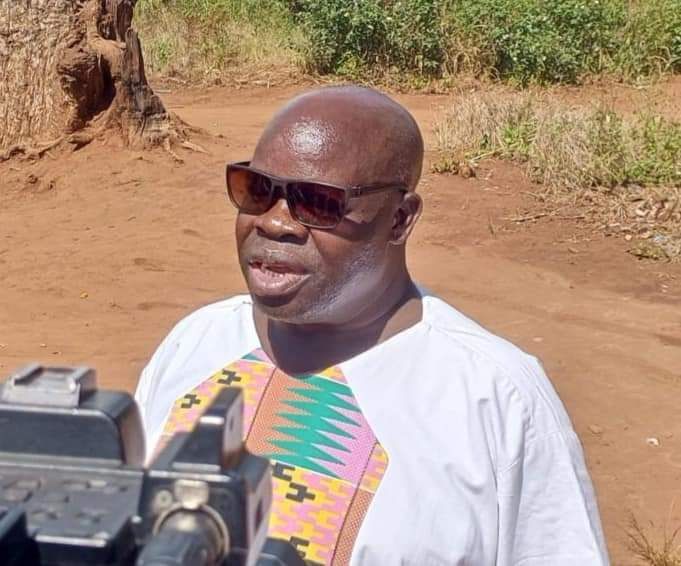
Acting Director General of Malawi Environment Protection Authority, Tawonga Mbale made the remarks Friday during a media orientation aimed at informing journalists on the steps and activities put in place for the successful development of the NSEOR.
She said there has been preparatory activities towards the commencement of developing the NSEOR, therefore reporters have to be part of every step so that they could be developing well-articulated stories to raise awareness to the public.
Tawonga Mbale
“We noted a gap on environmental reporting, hence there’s need for journalists to be well capacitated with enough information for their work. We will further work hand in hand with journalists through Association of Environmental Journalists, to broaden their understanding on environmental reporting,” Mbale said.
She expressed her appreciation to United Nations Environmental Programme (UNEP) for financially supporting the development of the NSEOR which has taken government over thirteen years to update, due to financial constraints.
Mbale said due to changing and emerging environmental issues, the country needs to develop the report that will assist in developing new policies for environmental protection.
“Environmental changes continue affecting every aspect of the economy as there is an increase on the frequency and intensity of disasters, an increase in biodiversity loss. We need to document and see how we will respond to these environmental emerging issues,” she said.
Head of Disasters and Conflicts Branch at UNEP’s Ecosystem Division, Cecilia Aipira said that the country’s social economic development was directly dependent on the environment, hence it was imperative to develop a report that would provide policy response.
She revealed that the report would be launched in September, 2025, adding that it was not just a document that could be finalized within a shortest period of time, therefore having everyone on board would facilitate and provide room for soliciting diverse views.
“We are calling for National Experts by June, 2024, as one way of enriching the type of people that we will have, therefore these people should be nominated by the public to join already identified experts who are on board,” Aipira explained.
Board Member for the Association of Environmental Journalists, Moses Phiri highlighted how important engaging members of the media was when developing important documents such as the NSEOR.
“We are dedicated to collaborating closely with MEPA, UNEP, the Co-Chairs, and the authors. We believe there is much we can contribute, both during the development process and the implementation phase,” he added.
The Malawi Electoral Commission (MEC) has recently come under scrutiny for requiring citizens to have a national ID in order to register for the upcoming elections.
This decision has sparked a debate on whether or not the MEC is justified in making such a demand.
I believe that the MEC is not justified in requiring citizens to have a national ID in order to register for the upcoming elections.
First and foremost, it is important to consider the fact that not all citizens in Malawi have access to a national ID.
Obtaining a national ID can be a lengthy and complicated process for many individuals, especially those living in rural areas or marginalized communities.
By requiring citizens to have a national ID in order to register for the upcoming elections, the MEC is effectively disenfranchising a significant portion of the population who do not have access to this documentation.
Kachale , MEC chair
The requirement for a national ID could disproportionately affect certain groups of people, such as women, the elderly, and people with disabilities.
These groups may face additional barriers to obtaining a national ID, such as lack of mobility, financial constraints, or illiteracy.
By imposing this requirement, the MEC is effectively excluding these vulnerable populations from participating in the democratic process.
Another argument against the MEC’s decision is that it goes against the principles of inclusivity and democracy.
In a truly democratic society, all citizens should have equal access to the electoral process, regardless of their socio-economic status or background.
By imposing a requirement for a national ID, the MEC is creating unnecessary barriers to participation and undermining the fundamental principles of democracy.
Moreover, the MEC’s decision could have serious implications for the credibility and legitimacy of the upcoming elections.
If a significant portion of the population is unable to obtain a national ID and therefore unable to vote, the results of the elections may be called into question.
This could lead to widespread distrust in the electoral process and undermine the stability of the country.
This goes against the fundamental principle of democracy, which is that every citizen has the right to vote and participate in the electoral process.
Furthermore, it is important to consider the potential impact that requiring a national ID could have on voter turnout.
Research has shown that voter turnout is significantly lower in countries where voter ID laws are in place, as these laws often disproportionately affect marginalized communities who are less likely to have access to the required documentation.
By implementing a similar requirement in Malawi, the MEC runs the risk of suppressing voter turnout and undermining the democratic process.
Additionally, it is important to consider the potential implications of requiring a national ID in terms of voter fraud.
While it is important to take precautions to prevent voter fraud, it is equally important to ensure that these precautions do not infringe on people’s rights to vote.
Requiring citizens to have a national ID in order to register for the upcoming elections could potentially create barriers for individuals who do not have access to this documentation, leading to further disenfranchisement and exclusion.
It is possible for make to register potential voters without necessarily asking them to produce a national ID
One possible explanation for MEC’s ability to register voters without a national ID requirement is the use of alternative forms of identification.
In the absence of a national ID system in Malawi, MEC has to develop creative solutions to ensure the integrity of the voter registration process.
This likely involves accepting other forms of identification, such as birth certificates, passports, or driver’s licenses, or using Evidence from local chiefs as proof of identity for voter registration purposes.
Another factor that may contribute to MEC’s success in voter registration without a national ID requirement is the use of biometric technology. Biometric voter registration systems can capture unique physical characteristics, such as fingerprints or iris scans, to verify individuals’ identities and prevent voter fraud.
By leveraging biometric technology, MEC will be able to ensure the accuracy and security of the voter registration process without relying on a national ID system.
Additionally, MEC may have employed community-based voter registration initiatives to reach marginalized or disenfranchised populations who may lack access to formal identification documents. By conducting voter registration drives in local communities and working with grassroots organizations, MEC could have effectively engaged with a broader segment of the population and facilitated voter registration for individuals who may not possess a national ID.
In considering how MEC can build on its success in registering voters without a national ID, it is important to emphasize the importance of inclusivity and accessibility in electoral processes.
Voter registration requirements should not create barriers for eligible individuals to participate in democratic elections.
Moving forward, MEC should continue to prioritize outreach and education efforts to ensure that all Malawians have the opportunity to register and vote, regardless of their access to formal identification.
The Malawi Electoral Commission (MEC) plays a crucial role in ensuring the democratic process in Malawi through the facilitation of free, fair, and credible elections so it’s call for a national ID is a non starter.
As the country gears up for the next elections, it is imperative that MEC trades carefully in order to level the playing field and ensure that the electoral process is transparent and unbiased.
One particular issue that has raised concerns is the alleged favoritism shown by the National Registration Bureau (NRB) towards the central region, particularly in Lilongwe, where registration for IDs is going on smoothly as compared to other areas perceived to be strong holds for opposition DPP.
This has led to accusations of potential vote rigging, as the central region is seen as a stronghold of the Malawi Congress Party (MCP).
The issue of national IDs being used as a requirement for voter registration is a contentious one, especially in the context of allegations of bias in the issuance of these IDs.
The argument against using national IDs as a requirement for voter registration is that it could potentially disenfranchise certain groups of people who may not have easy access to obtaining an ID as already said above, or who may face challenges in doing so.
If certain regions, such as the central region, are seen to benefit disproportionately from the issuance of national IDs, this could create an unfair advantage for certain political parties in those regions.
Hence MEC is wrong in its entirety to call for national IDs as a requirement for voter registration.
MEC must be mindful of these concerns and ensure that the electoral process is conducted in a manner that is perceived to be fair and transparent.
One way to address this issue is to explore alternative forms of identification for voter registration, such as using voter identification cards or allowing for the use of other forms of identification that are more widely accessible.
This could help to mitigate concerns about the potential bias in the issuance of national IDs and ensure that all eligible voters have the opportunity to participate in the electoral process.
In addition to addressing the issue of national IDs, MEC must also take proactive steps to address other potential sources of bias and manipulation in the electoral process.
This could include measures to ensure the independence and impartiality of election officials, the transparency of the voter registration process, and the accountability of political parties and candidates.
By leveling the playing field and creating a conducive environment for free and fair elections, MEC can help to build trust in the electoral process and strengthen democracy in Malawi.
In conclusion, I believe that the Malawi Electoral Commission is not justified in requiring citizens to have a national ID in order to register for the upcoming elections.
This requirement could potentially disenfranchise a significant portion of the population, suppress voter turnout, and infringe on people’s rights to vote.
Instead of implementing barriers to participation, the MEC should focus on creating a more inclusive and accessible electoral process that ensures that all citizens have the opportunity to exercise their democratic rights.