Sunday, April 5, 2026
No menu items!
spot_img
Home Blog Page 1253

Norway Urges Malawi President to Assist in Economic Development

0

By Twink Jones Gadama

In a recent meeting at the residence of Malawi’s former President, Professor Arthur Peter Mutharika, Her Excellency Ingrid Marie Milkesen of Norway has appealed to the former leader to take a more proactive role in leading the country towards economic prosperity.

During the meeting, Milkesen emphasized Norway’s commitment to supporting Malawi in its efforts to improve its economy and address challenges such as poverty and hunger.

She believes that Mutharika, as the country’s former leader, has the potential to drive positive change and uplift the nation.

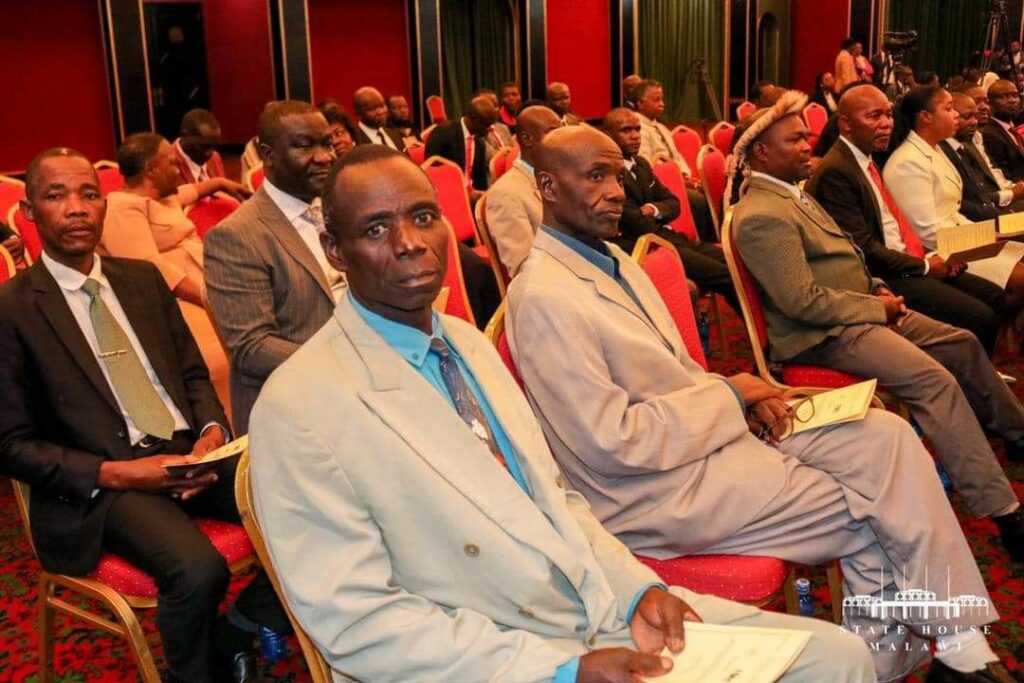
Mutharika and Ingrid Marie Milkesen

Norway, known for its strong focus on development assistance and sustainable growth, sees Malawi as a country with great potential for economic advancement.

Milkesen expressed her admiration for the progress Malawi has made so far and believes that with the right leadership and support, the country can achieve even greater success.

In response, Mutharika assured Milkesen that he is dedicated to fulfilling his responsibilities in promoting economic development, reducing hunger, and empowering the youth.

He acknowledged the important role that Norway plays in supporting Malawi and expressed his commitment to working together towards shared goals.

Mutharika outlined some of the initiatives his government will be undertaking to improve the economic situation in Malawi, including efforts to boost agriculture, create job opportunities, and enhance infrastructure.

He expressed his determination to overcome challenges and steer the country towards a more prosperous future.

As Norway continues to support Malawi’s development efforts, the partnership between the two countries is expected to grow stronger.

Both Milkesen and Mutharika are optimistic about the opportunities for collaboration and the potential for positive change in Malawi.

The meeting between Norway’s representative and Malawi’s former President underscores the importance of international cooperation in promoting sustainable development and economic growth.

It serves as a reminder of the potential that exists when countries work together towards common goals and support each other in achieving shared objectives.

Overall, the appeal from Norway to Malawi’s former President to assist in economic development highlights the importance of leadership, collaboration, and commitment in driving positive change.

With continued support and cooperation, Malawi is poised to make significant strides towards a brighter future for its people.
Understanding Malawi’s Sugar Crisis: Causes and Solutions

By Burnett Munthali


Malawi is currently grappling with a severe sugar shortage, leading to rationing and soaring prices of the commodity. The crisis has been exacerbated by several key factors:

Illovo Sugar Company, Malawi’s primary sugar producer, reported a production deficit. Despite producing 230,000 tonnes of sugar, a shortfall of 20,000 tonnes against the required 250,000 tonnes has contributed to the crisis.

There are allegations that Illovo has been prioritizing exports to neighboring countries such as Mozambique, Zambia, and Tanzania, thereby reducing the availability of sugar in the domestic market.

The government’s delay in issuing import licenses under the Control of Goods Act (COGA) of 2018 has hindered other traders from importing sugar to alleviate the shortage. This bureaucratic bottleneck has significantly contributed to the scarcity.

The recent 44% devaluation of the Malawian kwacha has further strained the economy, causing prices of essential goods, including sugar, to surge. This devaluation has increased production costs, thereby inflating sugar prices.


Impact on the Population


The sugar crisis has led to severe repercussions for Malawians:

The price of sugar has skyrocketed, with a kilogram of brown sugar rising from K1,450 to K2,000, and white sugar reaching K2,250 . This price increase has placed a heavy burden on consumers already struggling with high living costs.

Due to the scarcity, retailers have been forced to ration sugar, limiting the amount consumers can purchase. This has led to long queues and widespread frustration among the population.


The scarcity and high prices of sugar are exacerbating the economic challenges faced by Malawians, contributing to a higher cost of living and increased inflationary pressures.


Proposed Solutions


Addressing the sugar crisis requires a multi-faceted approach involving both short-term and long-term strategies:


Import Licenses and Market Liberalization: The government should expedite the issuance of import licenses to allow other traders to bring in sugar from neighboring countries. This would help alleviate the immediate shortage and stabilize prices.


Increased Production and Efficiency: Illovo and other sugar producers need to ramp up production and improve operational efficiency to meet domestic demand. This may involve investing in better farming practices, infrastructure, and technology.


Diversification of Supply Chains: Encouraging the entry of new players into the sugar market can reduce dependency on a single producer and increase competition, which may lead to better supply and pricing mechanisms.


Government Intervention and Subsidies: The government can consider temporary subsidies or price controls to protect consumers from exorbitant prices during the crisis period. Additionally, regular monitoring and timely interventions can prevent future shortages.


Public-Private Partnerships :Collaboration between the government and private sector can ensure a more coordinated and efficient response to such crises. Joint efforts can focus on boosting production, managing supply chains, and ensuring fair pricing.


By addressing these key areas, Malawi can mitigate the immediate impacts of the sugar crisis and build a more resilient and sustainable supply chain for the future.

Japan commits to improving agriculture sector

0

By Paul Madise

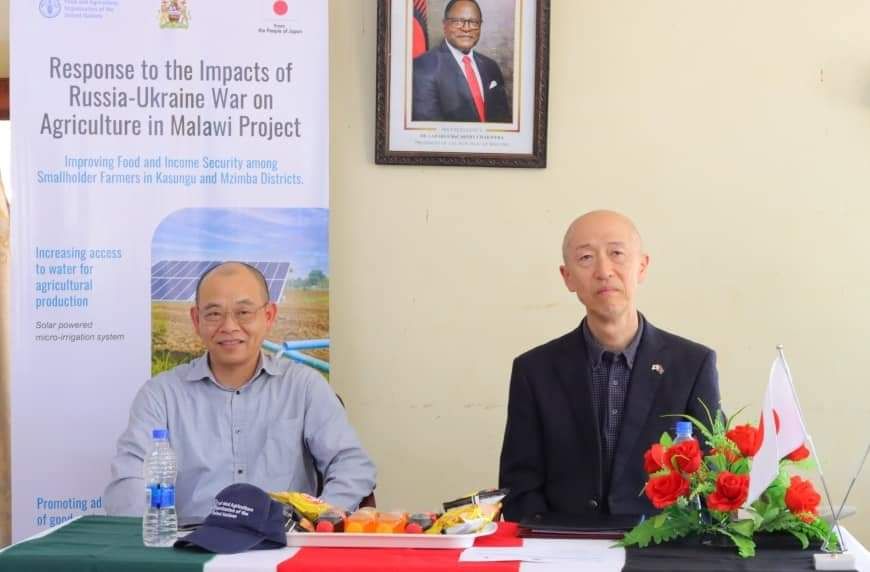
Japanese Ambassador to Malawi, Youichi Oya has said response to impacts of the Russia-Ukraine war on agriculture in Malawi Project would help to ensure food security in the country.

He made the remarks on Friday in Kasungu after handing over solar pumps, seeds and fertilizer to farmers’ groups in the district.

Oya said through the project, the country could mitigate the food insecurity which has come about due to effects of El Nino weather conditions.

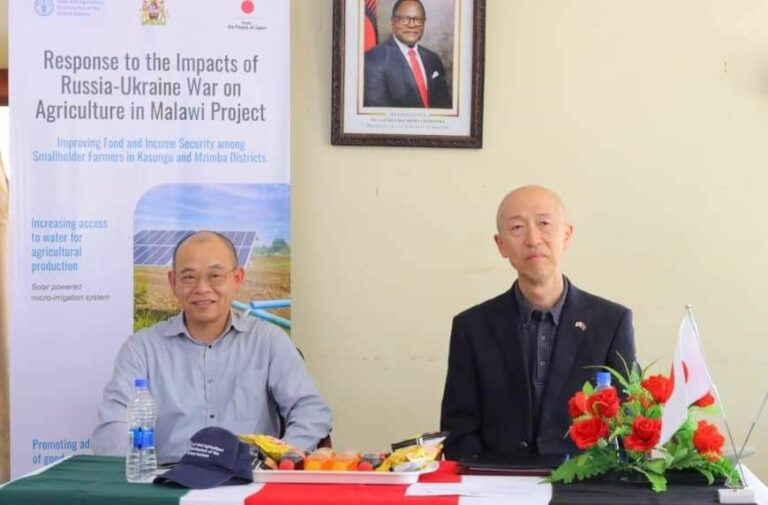
FAO Representative for Malawi, Zhijun Chen and Japanese Ambassador to Malawi, Youichi Oya


“This project was responding to the effects of the Russia-Ukraine war but it will also help to reduce the food insecurity that is there due to the El Nino weather,” Oya said.

The Ambassador pointed out that the country should adopt winter cropping to supplement its food needs in the face of changing climatic patterns.

Oya said the Japanese government was committed to supporting various interventions towards agriculture and help the country achieve food security.

Controller of Agriculture and Technical Services in the Ministry of Agriculture, Alfred Mwenefumbo commended the Japanese Government for supporting Malawi Government’s agriculture sector.

He said the Ministry of Agriculture was promoting adoption of new farming technologies among the farmers so that there is increased production even in the face of climate change-induced shocks.

The Japanese funded project is being implemented by the Food and Agriculture Organization (FAO) in Kasungu and Mzimba South.

FAO Representative for Malawi, Zhijun Chen expressed gratitude to the Japanese Government for supporting the project and entrusting FAO to work with the Government of Malawi and other stakeholders to contribute towards food security and climate change resilience in the two districts.

“The Japanese Government remains a strong and committed partner to FAO and their support symbolizes the confidence they have in the partnership between FAO and government of Malawi,” he said.

Chakwera urges farmers to adopt proper storage, preservation practices

0

By Chisomo Phiri

In an effort to avert food shortages in the country,
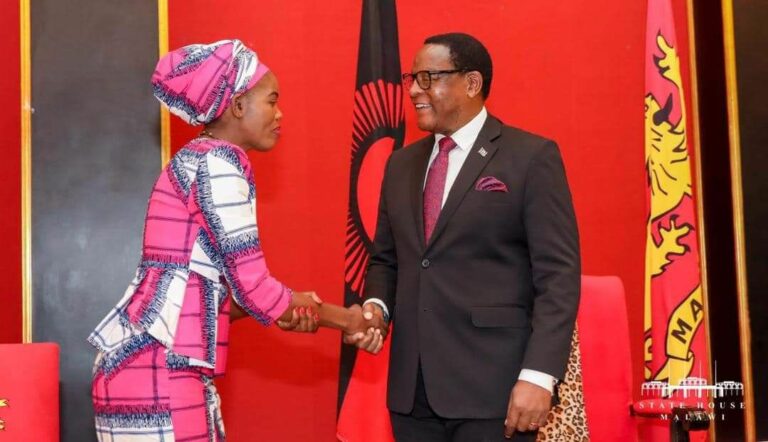
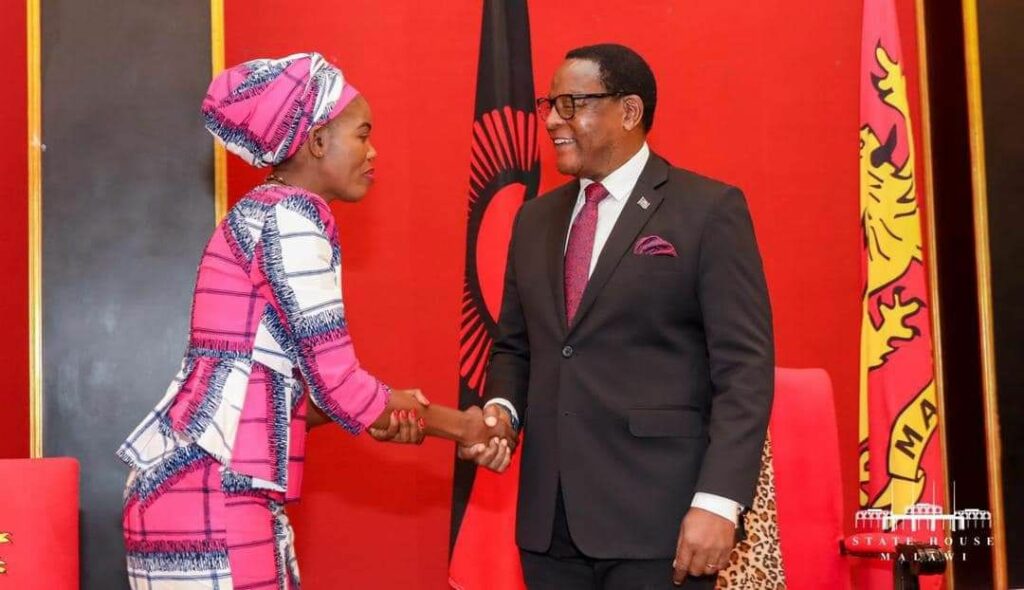
President Dr.Lazarus Chakwera has urged farmers to start adopting proper storage and preservation practices.

Chakwera made the remarks on Friday during a meeting with Farmers Union of Malawi (FUM) leaders and members at Kamuzu palace in Lilongwe.

“I urge you farmers to continue collaborating with the government across all sectors of agriculture to enhance the profitability and productivity of the industry


“As a leader I will do my part in providing you with the necessary support that you need,” Chakwera said.

The President also stressed the need to improve production among farmers and transition from subsistence farming to large-scale, modern equipment-assisted farming for increased productivity aligning with the Malawi 2063 vision.

He further encouraged farmers to invest in the agricultural sector and assured them of government’s steadfast support in improving their livelihoods and fostering a conducive environment for farming nationwide.

The Malawi leader restated his government’s unwavering commitment to supporting the livelihoods of farmers and fortifying the agriculture sector in the country.

In his remarks , Principal Secretary in the Ministry of Agriculture responsible for irrigation, Jeffrey Mamba applauded the collaborative partnership between the government and farmers in advancing agricultural transformation.

FUM President, Maness Nkhata commended government’s dedication to revolutionise the agriculture sector.

“I am well pleased with the cooperative efforts between FUM and Ministry of Agriculture in complementing the President’s vision in achieving agricultural productivity and commercialization goal for 2063,” she said.

Nkhata also commended President Chakwera for various agricultural sector advancement and government’s sustainable initiatives such as the Affordable Input Programme (AIP) which benefits smallholder farmers in the country.

She appealed to the President for equitable distribution of resources to facilitate nationwide farmers access to initiatives such as the Agriculture Commercialisation Project, AIP and the establishment of Farmer’s Day, aimed at propelling the Agricultural sector and positioning Malawi as a food secure nation.

Chief Executive Officer of FUM, Jacob Nyirongo described the meeting as a significant milestone in cementing the relationship between government and farmers in the country.

“FUM members are committed in supporting your Excellency’s vision of making this country a self-reliant nation through initiatives like mega farms and import substitution,” he said.

Chakwera mourns Kasambara

0

By Chisomo Phiri

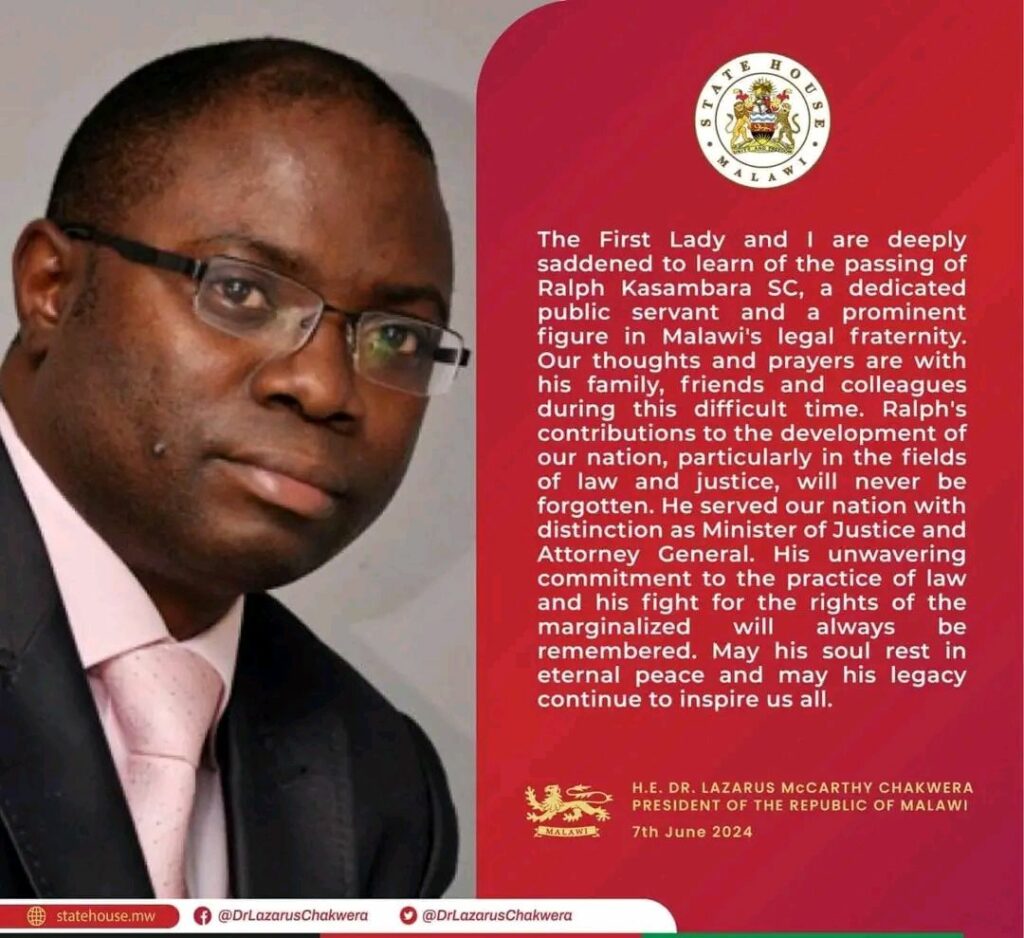
President Dr.Lazarus Chakwera says he is deeply saddened to learn of the passing of Malawi’s prominent lawyer Ralph Kasambara.

In a brief statement, President Chakwera says Kasambara’s contributions to the development of Malawi, particularly in the fields of law and justice, will never be forgotten.

The late Ralphael Kasambara

Reads the brief statement in part:” His unwavering commitment to the practice of law and his fight for the rights of the marginalized will always be remembered.

“May his soul rest in eternal peace and may his legacy continue to inspire us all.”

Kasambara was found dead at a Lodge in Lilongwe’s Area 47 in the evening of Friday June 7,2024.

It is suspected that he died due to hypertension.

Kasambara went to Chancellor college where he got his law degree with distinction before landing a scholarship to study a Masters Degree at University of Notre Dame Law School, South Bend, Indiana in the United States of America.

He served in Malawi government both as Attorney General and Minister of Justice and Constitutional Affairs.