Minister of Agriculture Sam Kawale has commended Gala Macs for using advanced innovative approaches towards mega farm implementation in pursuit of achieving the Malawi 2063 vision.
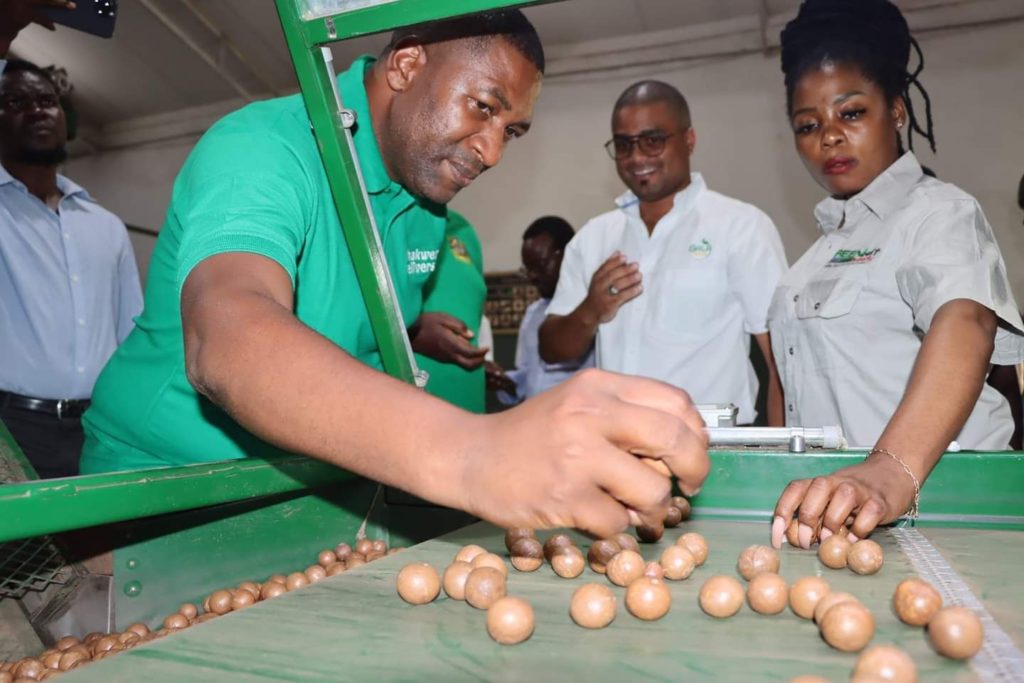
He made the remarks on Wednesday when he toured the 2030 hectares of Gala Macs Macadamia Farm situated at Namitete in Lilongwe.
The Minister expressed satisfaction with Gala Macs for its use of improved agriculture systems, including irrigation, and crop processing systems at the farm, which he said are contributing to the progress of the agriculture sector.
“We all witnessed how agriculture activities are being conducted at the farm, starting from the Nursery to the farm and the processing systems, this truly indicates a strong dedication to agriculture investments by Gala Macs.
During the tour, it was revealed that the company is also producing liquid Bio fertilizer intended for Macadamia a development that Kawale described as agriculture modernization and is complementing the vision of President Dr Lazarus Chakwera of Agriculture, Tourism, and Mining (ATM) strategy.
He said Gala Macs which is also producing honey at the farm whose main aim is for pollination of macadamia trees and business purposes has trained 100 beekeepers and more are expected to be trained to manage 8000 bee hives at the farm.
“I am very impressed with how Gala Macs is using every opportunity at their disposal for the beekeeping business this is not a mean achievement for a local company like Gala Macs. The initiative will also add value to the company’s export earnings and maximise the country’s honey production,” he said.
In his remarks, Chief Executive Officer for Gala Macs Limited Christo Bothma said the company will continue working with government in achieving and solving forex problems through macadamia export.
Bothma commended the minister for the timely visit, saying it served as a platform for the company to address challenges it is facing in the macadamia business.
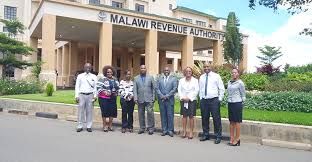
Vendors at Tsoka market in Lilongwe on Wednesday 20 March 2024, stormed the Malawi Revenue Authority (MRA) offices demanding the tax collector to reduce taxes on second-hand clothes bales. The vendors who came in large numbers were marched to the tax collector’s offices carrying placards with different messages demanding MRA to do something about the high taxes.
Tax
Tax is a charge levied by government on property, income. It is a contribution cost duty expense fine levy price rate tariff. A tax is also a mandatory fee or financial charge levied by any government on an individual or an organization to collect revenue for public works providing the best facilities and infrastructure.
Taxes are the primary source of revenue for most governments. Among other things, this money is spent to improve and maintain public infrastructure, including the roads we travel on, and fund public services, such as schools, emergency services, and welfare programs.
Tax And The Laws
When you do not pay your taxes by the due date, you will start to accrue interest and penalties on the outstanding amount. As time passes, you may be subject to liens on your property or garnishment of your wages. In the most extreme tax evasion situations, you may even be subject to up to five years in jail and in fines.
History
The first record of taxation dates back 5,000 years to ancient Egypt. Before they were even using coined currency, the Pharaoh collected a 20 percent tax on all grain harvests. Julius Caesar implemented the first sales tax, and his great nephew slash adopted son, Caesar Augustus, instituted a direct income tax.
During the late Roman empire the level of taxation progressively needed to increase as the Roman empire needed to continue funding the military. Most of the responsibility for taxation fell on the lower classes and especially the farmers.
By the reign of Diocletian 90 per cent of the government’s revenue came from tax on agriculture. This was possibly a major factor in the inability of the empire to adequately man its legions. Bureaucrats used their position of authority to evade taxes, leaving the burden of taxation on the poorer citizens. By now, taxes consumed more than one third of most farmers’ gross income. Emperor Constantine refused to place the empire’s revenue back into circulation, thus hurting the economy, and forced farmers to sell their goods at low prices due to the emperor’s economic policies.
Preventing them from gathering the funds necessary to meet the high tax burden. People who were unable to bear this burden would have agreed to become indebted to landlords in exchange for protection, effectively transforming them from free citizens into serfs. The poor flocked to these estates, and as they grew the usage of money became increasingly rarer. This crippled the economy and the ability of the military to gather the necessary funds. The poverty-stricken lower class often turned towards crime.
Heavy taxation made the Roman government appear as oppressors, possibly contributing to the loss of provinces such as Africa. Germanic incursions forced the emperors to lower tax rates in the year 413. The government of Rome also decreed that for five years, the tax rate of Italy was reduced by 80 per cent. Despite these reductions, the provinces of Rome struggled to pay their taxes, and the Roman government was unable to receive the funding it needed. Increased levels of inflation reduced the value of the money the government received in taxation.
The difficulties in receiving proper tax funds impaired the Roman state’s ability to adequately fund the army. Most Late Roman tax money was used to pay off Germanic peoples. Unfortunately, I don’t think the tax money is being used for the intended purpose in Malawi. Most of the tax payers money is abused by government and that’s why there’s a suggestion that we should shoot a federal government system because we seem to have failed to improve the country from the past 60 years since independence.
Macroeconomic Effects
Increased Government Revenue: A rise in income tax for people on high incomes can increase government revenue, which can be used to finance public goods and services.
The increase in government revenue can provide additional resources for the government to invest in public goods and services, which can have a positive impact on the economy. However, the increase in tax rates can also reduce economic growth, as it reduces the incentives for work, investment, and entrepreneurship.
This is exactly the case with Malawi today. Malawi Revenue Authority (MRA) is given a target for which they must collect tax. The adjustment in tax on second hand clothes sparked a serious debate.
One of the Asian businessman told me yesterday thata bail of second hand clothes (kaunjika, kabwandile, salaula) had risen from MWK250,000 to MWK500,000. That exorbitant enough to kill small businesses in the country.
Reduced Consumer Spending: A rise in income tax for people on high incomes can reduce consumer spending, as people with high incomes will have less disposable income to spend. This can lead to reduced demand for goods and services, which can have a negative impact on the economy.
Conclusion
Finally, Tax rates have a substantial impact on businesses, influencing their profitability, investment decisions, and overall financial health. Tax rates can affect businesses:
Profitability: Tax Expenses: Higher corporate income tax rates directly reduce a company’s profits. A significant portion of a business’s earnings may go toward paying taxes, leaving less available for reinvestment, dividends, or growth. I therefore stand with the vendors in their protest against raising high taxes at this time when everything is at a standstill. Thanks to MRA for reversing new tax measures. Malawians are suffocating with high taxes, they can’t breathe !
If I were Member of Parliament of my community, I would give my constituents help and advice, communicate the needs of their region to the Government, and promote their policies to the community.
I would represent their interests and concerns in Parliament. I would consider and propose new laws as well as raising issues that matter to me in the House. If I were MP I would ask government ministers questions about current issues including those which affect my local area.
I mean if I were MP of my community, I would regularly speak either in support of, or in opposition to, a piece of legislation. In Parliament, I would also address constituent concerns during debates, ask questions of Ministers during Question Time and work to create or amendment of laws.
I would split my time between working in Parliament itself, working in the constituency that elected me and working for my political party.
When Parliament is sitting (meeting), I would generally spend my time working in the House of Assembly. I would raise issues affecting my constituents, attending debates and voting on new laws. I would ask questions to government ministers or support and highlight particular campaigns which local people feel strongly about. That is if I were Member of the August House.
I would look at issues in detail, from government policy and new laws, to wider topics like human rights.
In my constituency, I would often hold a ‘surgery’ in my office, where local people could come along to discuss any matters that concern them.
If I were Member of Parliament, I would attend functions, visit schools and businesses and generally try to meet as many people as possible. This would give me further insight and context into issues I would discuss when I return to .
That is, if the electorates of my community had given me the mandate to represent them in Parliament, I would create Find Your MP website and other social media platforms so that people find out more about my role in Parliament and constituency. Unfortunately, I’m not a Member of Parliament and will never be because I’m not interest in that portfolio. I am simply a political analyst and will always just analyse politicians and other issues affecting this nation and beyond.
A bona-fide citizen of Malawi Rick Dzida, has pleaded with political party leaders including President Dr. Lazarus McCarthy Chakwera and former President Professor Arthur Peter Mutharika to issue a formal statement advising their political adherence to desist from any form of political violence.
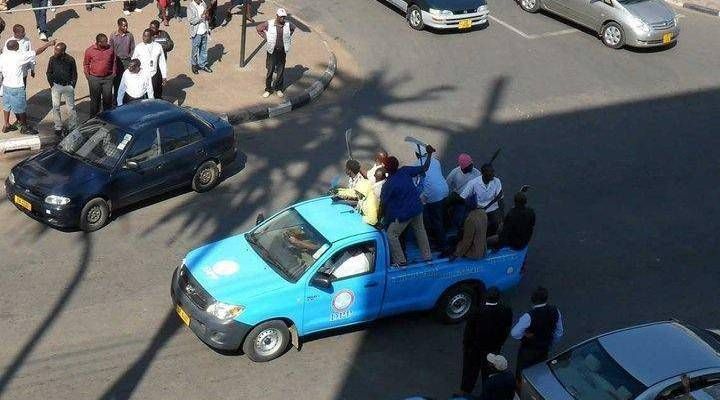
Suspected members of the MCP dressed in DPP attires on 24th February, 2024 ambushed DPP members in Lilongwe when they were about to start their peaceful Blue Convoy Parade to encourage their followers register in their large number in readiness for the 16th September, 2025 General Elections.
Media reports reported that about 21 DPP members were hacked by panga knives and were seen battling for their lives at the Kamuzu Central Hospital in Lilongwe, Police and MCP released their statements that DPP members ambushed themselves as they are in two camps.
Identities of the attackers were made available and their locations and businesses they are plying in Lilongwe City calling on the Malawi Police Service (MPS) to arrest MCP thugs, but to this day, no arrests have been made.
A week before the 24th February, 2024 incident, DPP members from Mtandire Township in Lilongwe were beaten by MCP thugs, whipped with big sticks, had their t-shirts and Zitenje’s torn into pieces at the Kamuzu Mausoleum-City Centre, there have been no word from President Chakwera and the MCP till this day.
In Phalombe, a DPP member Tiaone Hendele, was arrested by Police after handing herself to the Phalombe Police Station for inciting violence where a video clip went viral on 2nd March, 2024 urging DPP members not to allow MCP holding any meeting in the district claiming that Phalombe is a DPP stronghold.
Political Youths carrying Panga Knives. File photo
Within a week after Tiaone Hendere was arrested, a man dressed in MCP regalia was seen in a video clip vowing to chop heads of all those that are against President Chakwera’s leadership as long they are found insulting and castigating him.
Many Malawians including Political activist Bon Elias Kalindo called upon the police to arrest and prosecute the man for Malawians to trust the police for discharging their duties professionally, but to this date, police have made no arrest.
In an open national address to President Chakwera, Professor Mutharika, Dr. Saulosi Chilima, Chief Justice and other state institutions, Rick Dzida says the current political violence that has ensued between the ruling MCP and the DPP supporters are a threat to national security.
Dzida has described the political violence as a very pathetic situation happening when the country is drawing near towards the 2025 Tripartite General Elections claiming that the two major antagonistic parties, MCP and DPP are the ones that are involved in such political fracas.
“I humbly request leaders of all political entity to advise their party members to desist from deliberately provoking each other,” reads part of Dida’s national address.
On a sad note, President Chakwera and his Ministers have chosen to remain silent without condemning their members from inciting violence against members of the opposition parties particularly the DPP a development which is raising fears that 2025 will be a bloody war.
Dzida has finally prayed to all political parties, MCP and DPP to take full responsibility to ensure that 2025 Tripartite General Elections are conducted in a peaceful free, fair, transparent, and credible manner.
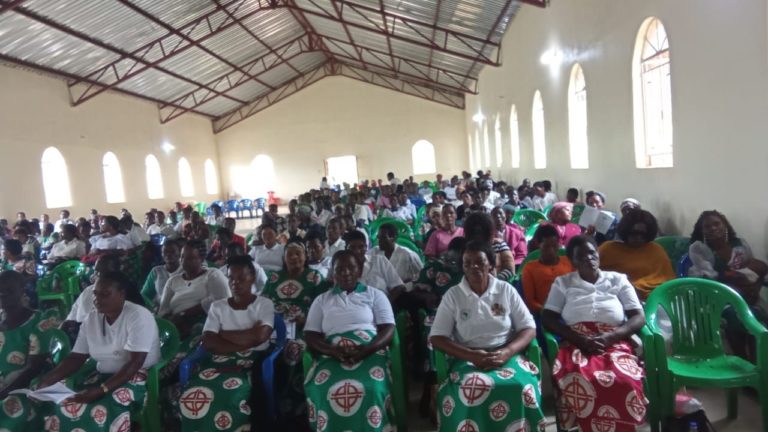
Women from all denominations across Dowa district held a -day long prayers on Friday at the Dowa CCAP Church which is under Nkhoma CCAP Synod with a call for all women to practice tolerance and love in their everyday life situations.
The prayers are following national prayers of worship and praising the Lord which were graced by the First Lady Madam Monica Chakwera on 1st March, 2024 in Blantyre and representatives of the women in Dowa were also in attendance.
Women at Dowa CCAP
Regional Coordinator for the prayers in the centre Mrs. Tracy Massi, said the prayers will strengthen unity among all women regardless of churches they are coming from for unity of purpose and oneness which will in the end lead them to change their hearts.
Massi said the prayers will deepen their relationships as well as bringing them closer to the Lord through praying and singing together as well as listening to the word of God which will change their hearts to become women of true reconciliation, tolerance and love.
She expressed hope that at the end of the prayers, the women will be going back to their denominations to preach to the other women that failed to make it to the district prayers at the Dowa boma for them to walk with the spirit of the Lord.
“These women will change from stage one to another and they will go back home totally different from the way they have come to attend these prayers,” said Massi.
She encouraged women that failed to grace the district prayers at the Dowa boma that there is power in oneness, praying that next year, the Holy Spirit will touch and reminding them to take part in the prayers of the national, district and zones.
In her remarks, Dowa district prayers organizing Chairperson Mirriam Chingayere, said she is happy that God has fulfilled what they planned for by bringing together women from all the denominations across the district to one place to sing and dance while praising the Lord.
Chingayere said from the district prayers, women will go to the 8 zones such as Mtengowanthenga, Madisi, Mponela, Namwiri, Dzaleka, Mtata and Kasatsi for the same prayers and praising the Lord through singing quoting Mathews Chapter 25.
She said every year, the women prayers wound-up their activities visiting prisons and cheering the sick at the hospitals and this year, they have planned to cheer the sick at the Salima District Hospital.
This year’s Dowa district prayer’s services were held under the theme “Tolerance and Love between one and fellow others,”