
Saturday, December 27, 2025
No menu items!
spot_img
Home Blog Page 1301

Southern Malawi Braces for Potentially Devastating Tropical Storm

0

By Twink Jones Gadama

As the Department of Climate Change and Meteorological Services issues a warning about a possible tropical storm headed towards Southern Malawi, residents and authorities are gearing up for what could be a dangerous weather event.

With memories of past cyclones and storms still fresh in their minds, the people of Malawi are taking no chances as they prepare for the potential impact of this new weather system.

The tropical storm is expected to develop in the Indian Ocean and make its way towards Southern Malawi by Sunday, March 10, 2023.

Previous storms have been damaging


The department has indicated that there is a 60 percent chance that the storm will reach or come close to the region, prompting concerns about potential damage and disruption to communities in its path. With a history of devastating cyclones and storms in recent years, including Cyclones Freddy and Idai, Tropical Cyclone Gombe, and Tropical Storm Ana, the threat of a new storm is a cause for alarm for many in the region.

The Mozambique Channel is slated as the location for the storm’s development, with experts predicting that the weather system could intensify and transform into a moderate Tropical Storm or even escalate further into a Tropical Cyclone.

The potential for high winds, heavy rainfall, and flooding in the affected areas has raised fears of widespread destruction and loss of life, prompting authorities to take swift action in preparation for the storm’s arrival.

In response to the looming threat, emergency response teams and disaster management agencies in Malawi are on high alert, ensuring that contingency plans are in place and that resources are ready to be deployed in the event of a crisis.

Evacuation plans, shelter arrangements, and relief supplies are being put into place to support those who may be affected by the storm, with a focus on ensuring the safety and well-being of vulnerable populations in the region.

Communities in the path of the storm are also taking proactive steps to protect themselves and their property, with many residents fortifying their homes, securing loose items, and stocking up on essential supplies in preparation for the inclement weather.

Farmers are safeguarding their crops and livestock, while businesses are making contingency plans to minimize potential losses in the face of the impending storm.

The threat of a tropical storm hitting Southern Malawi is a stark reminder of the ongoing challenges posed by climate change and extreme weather events in the region.

As global temperatures continue to rise and weather patterns become increasingly unpredictable, the need for effective disaster preparedness and response measures becomes more pressing than ever.

The people of Malawi, resilient though they may be, are acutely aware of the risks posed by natural disasters and are working diligently to mitigate those risks and protect their communities from harm.

As the tropical storm approaches, all eyes are on Southern Malawi, waiting anxiously to see how the situation unfolds.

The potential for devastation is real, but so too is the determination and resilience of the people who call this region home.

With careful planning, swift action, and a collective spirit of solidarity, the people of Malawi are poised to weather the storm and emerge stronger on the other side.
The concept of the opposition to the government

By Burnett Munthali

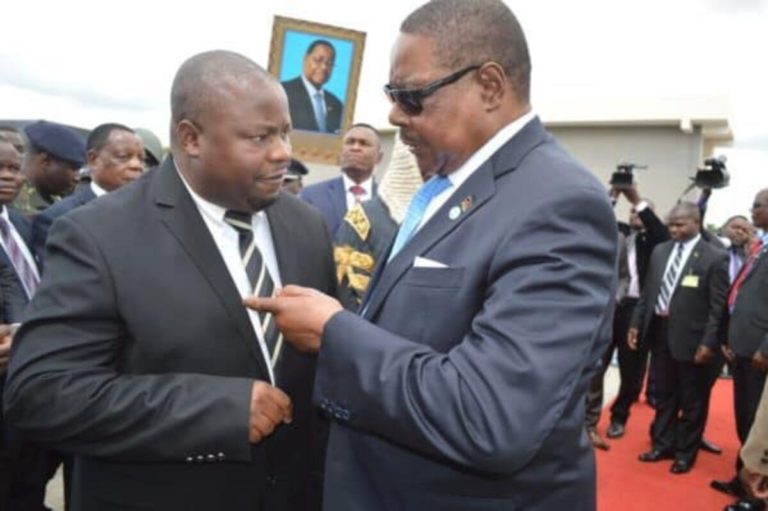
Supporters of Malawi’s main opposition Democratic Progressive Party were hurt and their cars vandalized in February 2024 in the capital, Lilongwe, when suspected armed supporters aligned with the governing Malawi Congress Party attacked their street parade. Democratic Progressive Party, or DPP, officials said the goal of the street parade was to make people aware of the importance of registering for the 2025 election and obtaining national identification.

However, the event was interrupted when, witnesses said, a truck offloaded masked men wielding machetes and other weapons near a gas station where DPP supporters gathered. About 25 supporters sustained injuries and were taken to Kamuzu Central Hospital for treatment. Their conditions were critical but others were treated as out patients.


Opposition

The Opposition is the party or group which has the greatest number of non-government Members in the House of Representatives. It is organised as a body with the officially recognised function of opposing the Government.

The role of opposition is that they have to ensure that the Government does not take any steps, which might have negative effects on the people of the country. The role of the opposition in legislature is basically to check the excesses of the ruling or dominant party, and not to be totally antagonistic.

In politics, the opposition comprises one or more political parties or other organized groups that are opposed, primarily ideologically, to the government (or, in American English, the administration), party or group in political control of a city, region, state, country or other political body.

There’s a difference between opposition and government. The opposition has, as its name suggests, the officially recognised function, established by convention, of opposing the government. It is regarded as the ‘alternative government’—which would form government if the existing government were to lose the confidence of the House, or of the people at an election.

The opposition’s right and duty, if it believes the public interest is at stake, is to oppose the government’s policies and actions by every legitimate parliamentary means. In so doing, oppositions try to convince the electorate that they should change places with the government.

Conclusion

There’s a difference between opposition and government. The opposition has, as its name suggests, the officially recognised function, established by convention, of opposing the government. It is regarded as the ‘alternative government’—which would form government if the existing government were to lose the confidence of the House, or of the people at an election.

Overview. The Opposition aims to hold the government accountable and to present itself to the national electorate as a credible government in waiting. For example, during Question Time, Opposition spokespersons will ask questions of ministers with the aim of highlighting a weakness or embarrassing the government.

JICA for inclusive energy growth for Malawi

0

By Patricia Kapulula

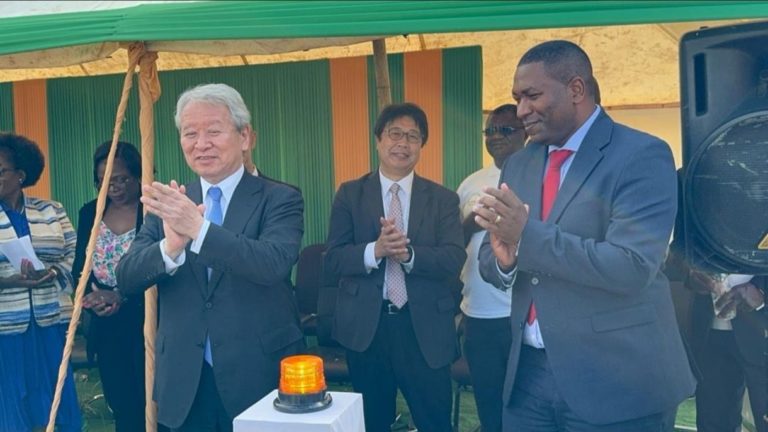
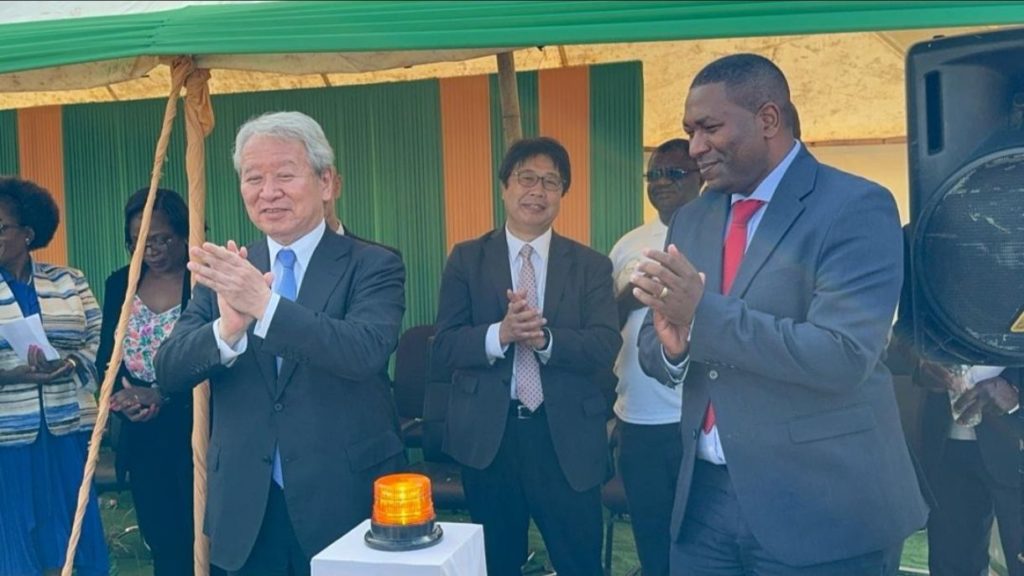
The Japan International Cooperation Agency (JICA) on Wednesday officially handed over the Lilongwe Old Town Substation, which includes expansion of Kanengo Substation, to Malawi Government through the Electricity Supply Corporation of Malawi (ESCOM).

Speaking during the handover, JICA President Dr Akihiko Tanaka expressed commitment to working with Malawi Government and other partners to bring inclusive, sustainable and self-reliant growth for the people of Malawi.

JICA President Dr Akihiko Tanaka and Malawi Minister of Agriculture Sam Kawale

He described the upgraded facility as important for Malawi’s development, saying it contributes to the improvement of power supply in the country thereby improving people’s livelihoods in Lilongwe City and surrounding areas.

“The reconstruction of the facility and related improvements to transformers will ensure it provides the Capital City with a sufficient and reliable supply of electricity for years to come.

This goes a long way in minimising blackouts so that citizens can enjoy a better quality life,” said Tanaka.

Receiving the infrastructure on behalf of government, Minister of Agriculture Sam Kawale said the upgraded substation marks a milestone in ensuring a stable and reliable power supply for Malawi.

“We need to generate enough electricity for us to reach 1,000 megawatts by 2025 and this is one way of doing that. This contributes to the Malawi 2063 through provision of reliable power supply,” he said.

Principal Secretary for Energy, Alfonso Chikuni, said the facility is a huge enhancement to transmission, as it makes the whole backbone reliable.

“Intermittent power supply will be dealt with and power will stabilise. A lot of benefits will come out of these investments,” said Chikuni.

ESCOM Chief Executive Officer Kamkwamba Kumwenda expressed gratitude for the infrastructure, saying it will go a long way in improving power supply in the city and surrounding areas.

The project will connect over 20,000 new customers.

Rita return with brand new single titled ‘Jonah’

By Staff Reporter

Songstress ‘Rita’ has officially released her brand new love song titled ‘Jonah’ which is the first song from her forthcoming album ‘Tempo’ expected to be released later this year.

The song Jonah has been produced by Sispence, Tricky Beats and Stradamus while the video has been directed by TheGhettoFiga

Last month the singer released another song titled ‘Sochera’ in which she joined forces with Piksy.

Songstress 'Rita' has officially released her brand new love song titled 'Jonah' which is the first song from her forthcoming album 'Tempo' expected to be released later this year


Rita, real name Rita Kalonga, is well know for songs like ‘Sugar’ which was released in 2019, ‘Kuwawa’ featuring Piksy in 2020, ‘Wa Ine’ featuring Leslie in 2021, ‘Mundikumbutse’ featuring Gwamba in 2022 and her 2023 single ‘Vows’.

You can watch Rita’s brand new song by following this link Full Video https://youtu.be/MKlSWUBTqjo?si=sk1GhaAQhs8t1-eV

Three Presidents on commitment to being a strong voice for Africa

0


By Burnett Munthali

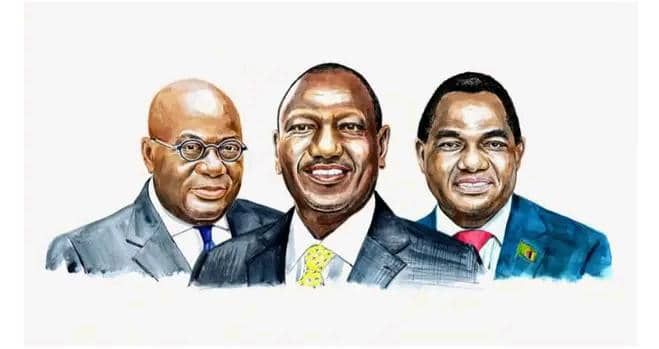
Presidents Nana Akufo-Addo of the Republic of Ghana, William Samoei Ruto of the Republic of Kenya and Hakainde Hichilema of the Republic of Zambia have issued a joint statement in the ‘Economist’ Magazine, on the need to reform the global financial system that must treat Africa fairly.

Below is the statement:

The conversation on reforming the global financial architecture has often felt more like Africa against the rest of the world, but the tide is turning. Governments north and south agree that there is something fundamentally wrong with the system and it must be fixed. As the leaders of Ghana, Kenya and Zambia, we have first-hand experience of the precarious financial situation facing many African countries, especially when it comes to debt and development finance. And we are all too familiar with the flaws in the system that is in place to confront these challenges.

The current system needs more than just adjustment—it needs an overhaul. Africa must be at the centre of these reforms, but our criticisms have for too long fallen on deaf ears. Now that the world is beginning to listen, we must go beyond criticism and do what is needed for our economic development and emancipation. Several things are critical to this agenda.

First, African leaders must be bold in promoting their ideas and participating when decisions are being made that affect the continent. The three of us have made it clear that we will not sign on to global regulations and agreements that are not shaped with our input.

We are committed to being a strong voice for Africa. We need to ensure that lower-income countries have sufficient access to concessional finance through the World Bank’s International Development Association (ida).

To that end, Kenya has agreed to host the ida21 conference in April and we are working hard to drive the fundraising for this critical form of finance. Kenya has also agreed to co-lead two bodies to tackle the climate challenge in developing countries. The first, in conjunction with the African Union (au), Antigua and Barbuda, Barbados, Colombia, the European Commission, France and Spain, looks at opportunities to tax sectors, activities and transactions that could yield billions in climate finance for the countries most affected by climate change, many of which are in Africa. The second is a coalition of experts convened with Colombia, France and Germany, looking at how unsustainable debt is keeping many developing countries from investing in climate and conservation, and what can be done about it, including innovations like “debt-for-nature swaps”: debt relief in exchange for green initiatives.

Presidents Nana Akufo-Addo of the Republic of Ghana, William Samoei Ruto of the Republic of Kenya and Hakainde Hichilema of the Republic of Zambia have issued a joint statement in the 'Economist' Magazine, on the need to reform the global financial system that must treat Africa fairly.


Second, Africa must look within for solutions. We must invest our borrowing in the continent’s growth, job creation and revenue generation rather than in consumption that will not pay us back in the long run; make sure development projects are high-quality, priced correctly and finished on time; and start looking to each other as major trading partners rather than overseas.

It is time for a serious conversation about the high cost of capital that burdens Africa, which is based on unfair risk premiums and inaccurate valuation of our economies. Many African countries have assets that are not reflected on our balance-sheets. We have to strengthen African institutions, and we expect those strengthened institutions to assist in valuing our economies correctly, working with international financial institutions to get this right.

The three of us recently helped to launch the Africa Club, an alliance of African multilateral financial institutions that will serve as a powerful negotiator on behalf of the continent, co-ordinate with global financial institutions and leverage African countries’ balance-sheets to increase investment and jobs. It is critical that these institutions have the full weight of au member states behind them and the appropriate capital to continue serving Africa’s development. To this end, Ghana has proposed that each African country go beyond its existing paid-in capital and invest a minimum of 30% of its sovereign reserves in African multilateral institutions.

Third, we must bring the world to Africa. We have spent the past few years attending summits in a variety of countries that want to do business with our continent. Now it is time for our fellow world leaders to come to us. In that spirit, Ghana has proposed, and we all support, an annual African Economic Summit involving heads of state and government from around the world. Our hope is that this becomes the fulcrum around which we will deal with our major growth and development issues. Kenya will host the first summit in 2025, then Zambia in 2026 and Ghana in 2027.

Finally, we must speak with one voice on our reform agenda. Over the past three years a coalition of African policy institutes, the au, the un, finance ministers and civil society have been working together to define and advocate a collective African agenda for improving the global financial architecture. This coalition has identified key areas for action. They include charting a green growth-and-investment path for the continent; increasing concessional finance; channelling special drawing rights currently held at the imf to African financial institutions so they can be leveraged for development finance; finding a robust solution to the debt crisis, which will require overhauling the Common Framework, a debt-restructuring blueprint introduced by the g20 in 2020; and increasing Africa’s role in global decision-making.

These are ambitious but achievable targets. We have already seen progress, for example in gaining a seat for the au at the G20, making it the G21. It is up to Africa to use that seat wisely and present a clear vision for global reform.

There is a line in scripture: “Faith without works is dead.” You cannot believe in something and do nothing about it. 2024 is the year to move from talk to action, and to insist on a fairer global system that works for Africa.

Nana Akufo-Addo is the President of Ghana. William Samoei Ruto is the President of Kenya. Hakainde Hichilema is the President of Zambia.