Saturday, December 27, 2025
No menu items!
spot_img
Home Blog Page 1304

Job seekers demands answers on ghost workers from interviews

0

By Sarah Gwetsani

Social media forums have been awash with news of ghost names who have made their way in as successful candidates without attending interviews for the position of Health Surveillance Assistants (HSAs] tenable in the Ministry of Health.

The Ministry of health shortlisted some successful candidates earmarked to start employment in the civil service but to the surprise of many who sat for the interviews, ghost names were picked and have formed part of successful candidates a development which is worrisome to many who attended the interviews and have not been successful.



Districts such as Ntchisi, Chiladzulu, Phalombe, Mzimba, Mchinji, Chikwawa, Blantyre, Salima, Chitipa, Mulanje, Lilongwe, Karonga, Dedza, Dowa and Nkhatabay are appearing on the list with some names that have been asked to start work without attending interviews.

The development is similar to the Aptitude Test primary school teachers under went in October, 2022 across the country for PT3, PT2, and PT1 Grades where successful candidates were being invited in secret through phone calls from the offices of the District Education Managers to sign letters of promotions.

President Dr. Lazarus McCarthy Chakwera was voted into office with trust that he will fight corruption in his government but instead of fighting the vice, he has been seen condoning it contributing to rampant corruption which is three times bigger than it was during the reign of the DPP.

Job seekers who attended the HSA’s interviews in Blantyre petitioned the office of the District Commissioner demanding answers and so too, Mchinji where angry youth visited the offices of those who were on the panel of interviewing candidates to explain the criteria used to pick ghost names as successful candidates to start work in the Ministry of Health.

Political activist Bon Elias Kalindo has claimed that only those with names connected to Capital Hill and State House are the ones who are being considered to work in government institutions such as Police, MDF and Immigration, among others.

Kalindo has faulted the ACB for existing on paper while on the ground is zero claiming that its Director General Ms. Martha Chizuma who was entrusted to carryout the mandate of the institution to arrest and prosecute corruption suspects is on holiday with full of scones in her mouth.

Kalindo said if the ACB was alive and kicking, it would have investigated and brought to book many people who have found their way into government payrolls without making formal applications and interviews for various positions in Ministries, Departments and Agencies.

He said this is the time that those without names and connections to Capital Hill and State House to sit down and make informed decisions that never again to vote for President Dr. Lazarus McCarthy Chakwera to bounce back into government in 2025.

He said it is sad that everywhere in government institutions, there are family relations similar to what DPP was doing claiming that the Chewas have dominated the Police, MDF, Immigration and all other departments strategizing to rig the 2025 elections.
“Many Chewas are in all institutions and are heading those institutions to make sure that President Chakwera and his MCP bounce back into government in 2025,” said Kalindo.
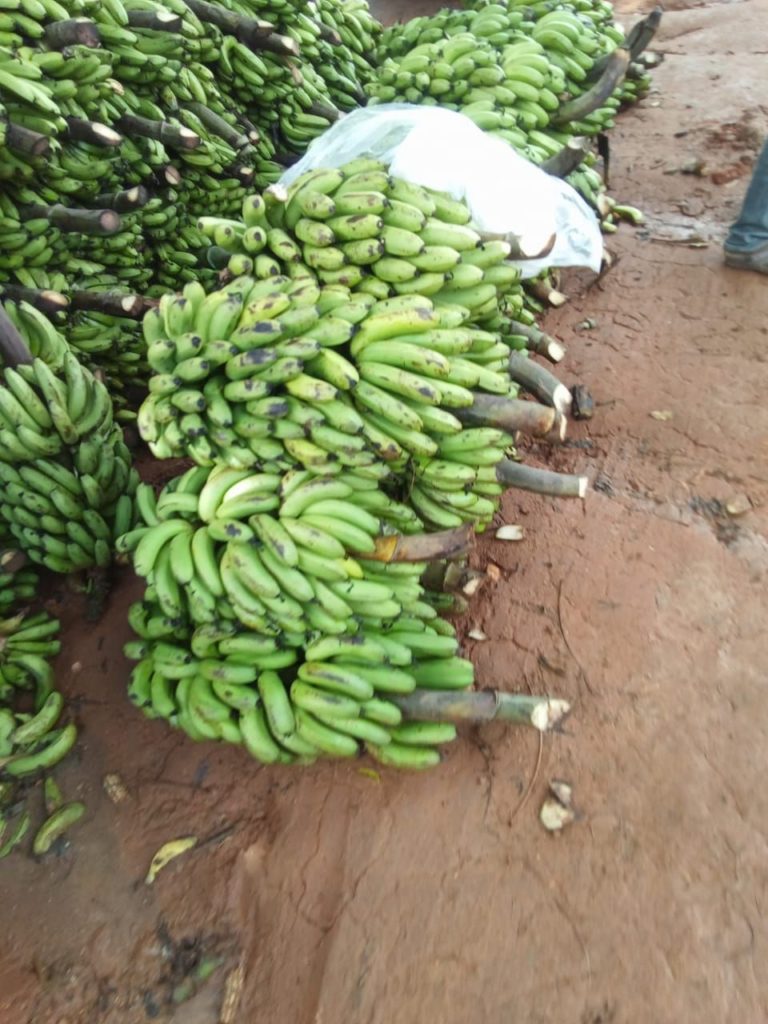

What are the dangers of artificial ripening of fruits and vegetables?

0

By Burnett Munthali

Chemicals used to ripen fruits artificially are toxic and can also affect people’s neurological system

Introduction

I was walking through Mchesi market on Sunday 3 March 2024 when I came across trucks offloading bananas. Then something came to my mind about how safe the chemicals could be to human health as they are openly used in the market. In the beginning, people would apply the liquid chemicals to bananas at night in enclosed areas but that’s not the case today. The application of quick ripening chemicals to bananas is done in the open while everyone looks on but I have always asked myself the danger to this practice. The aim of this article is to highlight the dangers of these chemicals that ripen bananas and other fruits within a short period of time so that we all make an informed choice when buying bananas from Mchesi and Lilongwe City as a whole.

Fruits

Fruits are a good source of vitamins and minerals, and play an important role in preventing vitamin C and vitamin A deficiencies. People who eat fruits as part of an overall healthy diet generally have a reduced risk of chronic diseases. The World Health Organization (WHO) recommends five servings of fruits and vegetables every day for a healthy living.

However, health benefits of fruits depend on how they are ripened. The best course will be to allow them to ripen on the plant itself. After proper maturity, fruits ripen in nature by using many physical and biochemical events. This process is irreversible and leads to senescence.

The fruits become soft, change in colour, and develop characteristic aroma and flavour, with increase in sugar level and reduction in acid content. Many factors influence the process of ripening including temperature and relative humidity.

It is not always possible to wait for the fruit to ripen naturally. More often than not, they need to be transported over long distances and if they had been harvested in a ripe stage, they get spoilt before reaching their destination. For such situations, farmers harvest them much before they get ripe. The traders then ripen them artificially at the destination using certain chemicals.

Most fruits produce a gaseous compound called ethylene that starts the ripening process. Its level in under-ripe fruit is very low, but as the fruits develop, they produce larger amounts of the chemical that speeds up the ripening process or the stage of ripening known as the “climacteric.”

Chemicals

Recent studies have shown ethylene regulates the expression of several genes, which are involved in fruit ripening. These enzymes convert complex polysaccharides into simple sugars and make the skin of the fruits soft. In artificial ripening, this process is mimicked using chemicals.

The most commonly used chemical is called ethephon (2-chloroethylphosphonic acid). It penetrates into the fruit and decomposes ethylene. Another chemical that is regularly used is calcium carbide, which produces acetylene, which is an analogue of ethylene.

It is, however, fraught with several problems. It is explosive in nature and studies have shown that it breaks down the organic composition of vitamins and other micronutrients. Besides, it changes only the skin colour: the fruit remains raw inside.

In addition, industrial grade calcium carbide is often found contaminated with trace amounts of arsenic and phosphorus, which are toxic chemicals.

Symptoms of arsenic and phosphorous poisoning

The symptoms of arsenic and phosphorous poisoning include vomiting, diarrhoea with/without blood, weakness, burning sensation in the chest and abdomen, thirst, problem in swallowing, burning of eyes, permanent eye damage, ulcers on the skin, mouth, nose and throat.

Other symptoms include throat sores, cough, wheezing and shortness of breath. Consumption of artificially ripened mangoes can upset stomach. It damages the mucosal tissue in the stomach and disrupts the intestinal function. If a person is exposed to the chemicals for a long time, they can causes peptic ulcers.

Dangers

According to studies, calcium carbide can also affect the neurological system by inducing prolonged hypoxia. It causes symptoms like headache, dizziness, high sleepiness, memory loss, cerebral oedema, numbness in the legs and hands, general weakness, cold and damp skin, low blood pressure and seizure.

Pregnant women particularly need to be very careful and should not consume such fruits and vegetables.

The Food Safety and Standards Authority of India (FSSAI) has banned calcium carbide under the Prevention of Food Adulteration (PFA) Act, 1954. Anyone using it can be imprisoned for three years along with a fine of Rs 1,000. However, no effective action plan has been devised to implement it.

I’m not sure if Malawi has The Food Safety and Standards Authority but all I know is that we do have Malawi Bureau Of Standards. The Malawi Bureau of Standards (MBS), a member of the International Bureau of Standards, promotes conformity with internationally accepted standards. MBS prescribes and enforces product standardization in Malawi. All products manufactured locally for export must obtain certification before export.

About 100,000 Blantyre residents to benefit from Social Cash Transfer-Chakwera

0


By Chisomo Phiri

President Dr.Lazarus Chakwera says about 100,000 Blantyre residents will soon start benefit from the government’s Social Cash Transfer Programme.

Chakwera  made the announcement on Wednesday during the official opening of the International Blantyre Cancer Centre(IBCC).

According to the President,this is a special programme targeting poor urban households in order to ease their financial challenges.

Chakwera


“We understand the economic challenges Malawians are facing. This is not sparing anyone including those living in ubarn areas and let me announce that now poor  people living in urban areas will be benefiting from Social Cash Transfer, m” said Chakwera.

The Malawi leader said, the Minister of Finance Simplex Chithyola Banda will within a few days jointly officially launch the programme with representatives from the World Bank.

Under the Social Cash Transfer Programme, poor families are provided with hard cash which is used for buying some basic needs, including food and other necessities.

Chakwera hails Mpinganjira for the construction of a cancer centre in Malawi

0

By Chisomo Phiri

President Dr.Lazarus Chakwera has hailed business mogul Thomson Mpinganjira for  putting much of his energy and resources towards the construction of the International Blantyre Cancer Centre (IBCC) in the country.

Speaking on Wednesday when he officially opened the state of the art facility,Chakwera said:” You have turned your personal tragedy to a public triumph.

Mpinganjira and Chakwera

“It is along this national pathway that the newly inaugurated IBCC comes as a timely private sector intervention in complementing government’s capacity in providing comprehensive cancer treatment services.

“The state-of-the-art facility is a significant milestone in Malawi’s healthcare sector for it among primary benefits reduces foreign oncology referrals and relieves affected families of logistical inconveniences that come with medical care away from the home country,” said Chakwera.

He stressed that the fight against cancer can never be won if all responsibility is left in the hands of the government.

The President added that the opening of the facility does not only signify a huge achievement but also a beacon of hope for countless individuals grappling with the disease.

“My government has plans to construct more cancer hospitals in the country to ensure that all cancer patients have access to treatment within our borders.

“Currently, we are implementing the National Cancer Control Plan, intending to ensure that by 2030, every cancer patient receives treatment here in Malawi.

“Reaching this far, the construction of Cancer Centre in Lilongwe is at an advanced stage, with all materials already purchased and by September of this year, the centre will be operational,” he said.

Chakwera, therefore, commended collaborative efforts of government agencies, international partners and other organizations for ensuring that the vision for Malawi to have cancer centres are being fulfilled.

He acknowledged the longstanding challenges Malawi has faced in combating cancer from limited resources to outdated treatment facilities.

The president stressed that the establishment of the modern cancer treatment centre signifies a commitment Malawi has in addressing health-related challenges.

In his remarks, Dr. Thomson Mpinganjira, Chairperson for the Board of Trustees, International Blantyre Cancer Centre emphasised that the centre stands as a pivotal turning point for healthcare in Malawi and it will remove exorbitant costs associated with seeking treatment abroad.

Mpinganjira said the first phase of the facility has already absorbed K9.6 billion and shall soon start second phase of the project.

“Building a cancer hospital is a way for me to help people not to go through what I experienced when my late wife was diagnosed with cancer. Cancer is a very difficult disease and it is recommended that you should access the treatment at home with family.

“I would like to assure patients and their families that they are not alone in their battle against cancer. I am here to ensure that cancer care is not only possible but also readily available to all in need,” Mpinganjira said.

Representing the Minister of Health, Richard Chimwendo Banda, who also oversees the Ministry of Local Government, Unity and Culture said the opening of the facility will provide comprehensive cancer care to Malawians.

“This facility has come at a time when Malawians are starving with cancer with an estimated 17, 000 cases occurring each year and cancer contributes more deaths in Malawi,” he said.

Chakwera says his administration currently implementing National Cancer Control Plan

0

By Chisomo Phiri

President Dr.Lazarus Chakwera says his administration is currently implementing the National Cancer Control Plan that among others,will enable that every cancer patient should be treated within the country by 2030.

Chakwera said this  on Tuesday at the official opening of the International Blantyre Cancer Centre(IBCC).

“Currently, we are implementing the National Cancer Control Plan, intending to ensure that by 2030, every cancer patient receives treatment here in Malawi.

President Chakwera

“Reaching this far, the construction of Cancer Centre in Lilongwe is at an advanced stage, with all materials already purchased and by September of this year, the centre will be operational,” said Chakwera.

The President, therefore, commended collaborative efforts of government agencies, international partners and other organizations for ensuring that the vision for Malawi to have cancer centres are being fulfilled.

He acknowledged the longstanding challenges Malawi has faced in combating cancer from limited resources to outdated treatment facilities.

In Malawi, 17,000 cancer cases are diagnosed every year and about 12,000 people die of the disease every year.