Tuesday, December 16, 2025
No menu items!
spot_img
Home Blog Page 1335

Rule of law Vs standing orders: Malawi’s Parliament struggles to determine legitimate leader of opposition

0

By Twink Jones Gadama

The situation in Parliament regarding the leadership of the opposition  is indeed a complex one, with legal, political, and procedural issues coming into play. The conflict between Kondwani Nankhumwa, George Chaponda, and Mary Navitcha, as well as the role of the speaker of parliament Catherine Gotani Hara, has created a dilemma that needs to be addressed in order to ensure proper governance and adherence to the rule of law.

Firstly, it is important to acknowledge the legitimacy of the democratic process within the Democratic Progressive Party (DPP), which elected George Chaponda as the new leader of the opposition after Kondwani Nankhumwa’s expulsion. According to the standing orders of parliament, the leader of the opposition should come from the party with the largest number of MPs, and the DPP followed this procedure by electing Chaponda. Therefore, on the surface, Chaponda’s appointment seems to be in accordance with parliamentary rules.
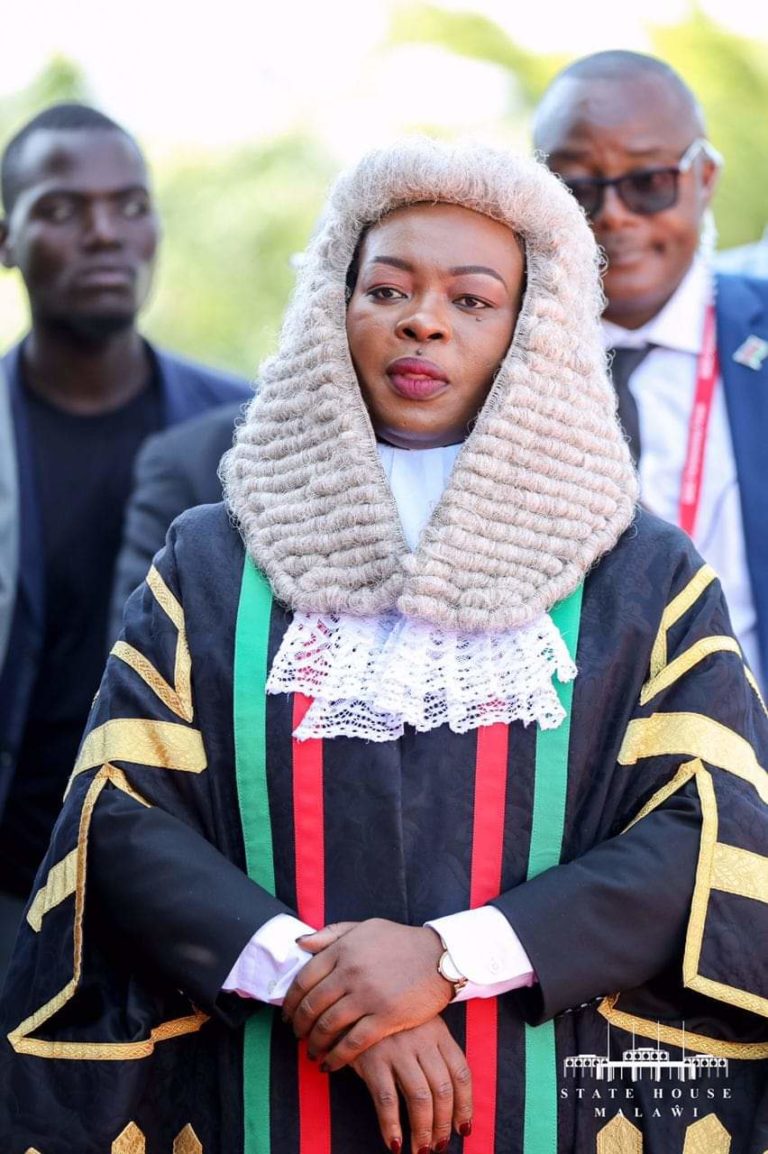
Speaker Gotani Hara.

However, the situation becomes more complicated due to the court injunction obtained by Nankhumwa prior to his expulsion. This injunction restrained the DPP from electing Chaponda as the leader of the opposition, leading to confusion and uncertainty within the parliament. The speaker of the parliament, Catherine Gotani Hara, cited the injunction as the reason for not recognizing Chaponda as the leader of the opposition, despite initially acknowledging his appointment.

The refusal to recognize Chaponda as the leader of the opposition based on the injunction raises questions about the separation of powers between the judiciary and the parliament. While the court has the authority to issue injunctions and enforce legal decisions, it should not undermine the democratic process within the parliament. The standing orders of parliament should be upheld, and the speaker should not be swayed by legal proceedings that impede the functioning of the legislative branch.

Moreover, the issue of Kondwani Nankhumwa being expelled from the DPP and now serving as an independent MP adds another layer of complexity to the situation. Despite no longer being a member of the DPP, Nankhumwa is still laying claim to the position of the leader of the opposition, which goes against the parliamentary standing orders. The fact that he is no longer affiliated with the party with the largest number of MPs raises doubts about his legitimacy as the opposition leader.

In this context, the speaker of the parliament, Catherine Gotani Hara, plays a crucial role in resolving the conflict and ensuring that the parliamentary proceedings are conducted in a fair and transparent manner. Her refusal to recognize Mary Navitcha as the new leader of the opposition, despite her election by the DPP and submission of her name to the speaker, raises concerns about political interference and the impartiality of the speaker.

In conclusion, the situation in Malawi regarding the leadership of the opposition in parliament is a complex one that requires careful consideration and adherence to parliamentary rules and procedures. The refusal to recognize Mary Navitcha as the new leader of the opposition based on legal technicalities and political considerations is a disservice to the democratic process and the functioning of the parliament. It is imperative that the conflict be resolved promptly and fairly, in order to uphold the rule of law and ensure proper governance in Malawi.
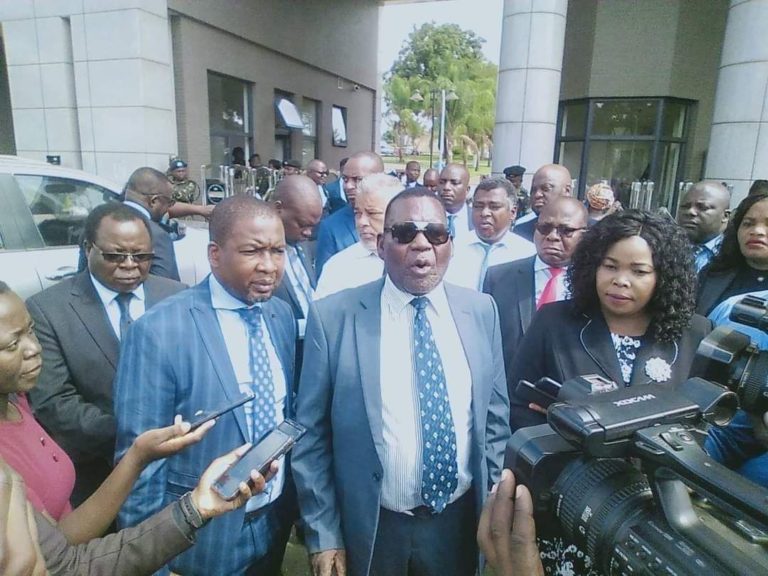
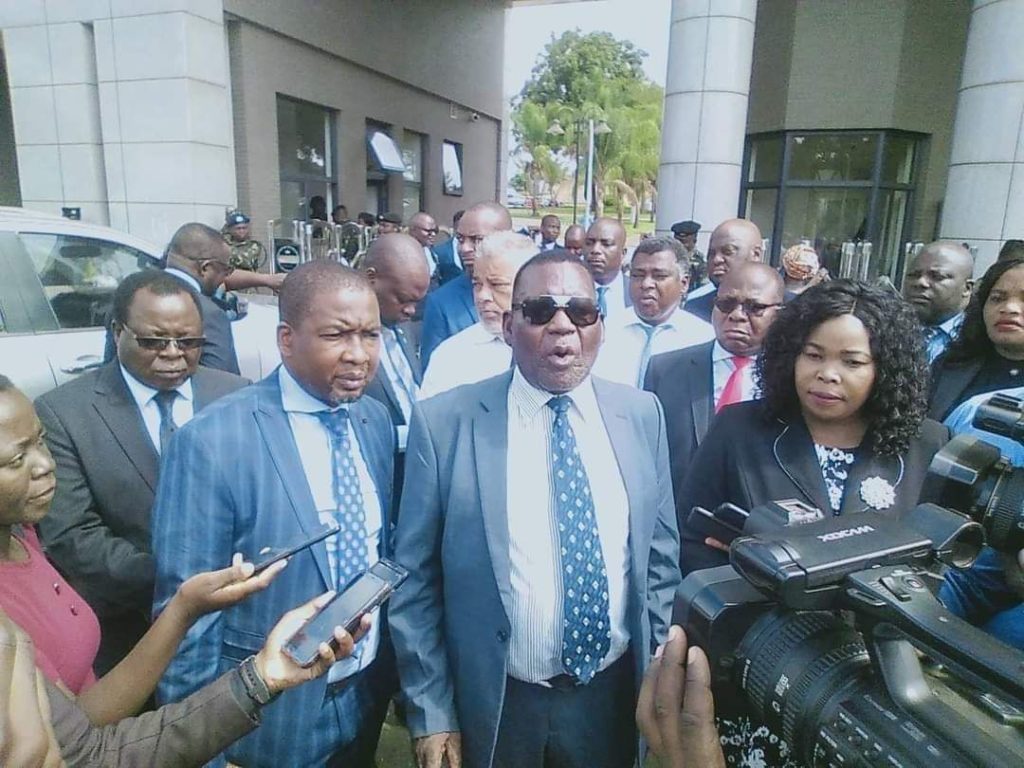
The intrusive judiciary in Malawi’s political maelstrom: A perilous spiel of power

0

By Twink Jones Gadama

In the tumultuous realm of Malawi’s political arena, the judiciary has increasingly found itself at the epicenter of controversy, accused of meddling in politics and stoking tensions that threaten to destabilize the delicate equilibrium of power. The latest episode in this saga revolves around the contentious matter of the ousted DDP presidential advisor and the ensuing power struggle unleashed within parliament.

The crux of the issue lies in the interpretation of Malawi’s parliamentary standing orders, which stipulate that the opposition leader must hail from the opposition party boasting the largest number of MPs. Following the expulsion of Kondwani Nankhumwa, who formerly held the position, the DPP elected Mary Navitcha as the new opposition leader. However, the speaker, with counsel from the attorney general, has rebuffed the recognition of Navitcha’s appointment, resulting in a stalemate that has paralyzed the opposition’s functionality in parliament.

DPP MPs protesting Nankhumwa recognition as Leader of Opposition

Amidst this political impasse, the judiciary has emerged as a pivotal player, issuing injunctions that appear to favor Nankhumwa’s stance, despite the underlying political nature of the crisis. This has only served to further exacerbate the already volatile situation, casting doubt upon the independence and impartiality of the Malawian judiciary.

The judiciary’s intervention in political affairs is a treacherous gambit, one that risks undermining the democratic principles that underpin Malawi’s governance system. By delving into the murky depths of political disputes, the judiciary runs the perilous gauntlet of eroding public confidence in the institution and sowing discord and division among the populace.

At the core of this quandary is the question of separation of powers and the delicate equilibrium that must be preserved between the executive, legislative, and judicial branches of government. In a democracy, each branch is entrusted with specific roles and responsibilities, and the encroachment upon another’s domain can have far-reaching consequences for the functioning of the state.

The judiciary’s involvement in politics not only blurs the boundaries between the branches of government, but also sets a dangerous precedent for future disputes. If the judiciary is perceived as taking sides in political conflicts, it risks being deemed partisan and bereft of impartiality, an impression that can have grave implications for the rule of law and the integrity of the justice system.

Furthermore, the judiciary’s interference in political matters undermines the principle of political accountability, circumventing established processes and mechanisms for resolving disputes within the political sphere. Instead of allowing the political actors to find a solution through negotiation and compromise, the judiciary’s intervention merely serves to prolong the crisis and deepen existing divisions.

In a nation like Malawi, where democratic norms and institutions are still evolving, it is vital that all stakeholders uphold the rule of law and adhere to the principles of democracy. The judiciary, as a pivotal pillar of the justice system, should uphold the constitution and the laws of the land without fear or favor, abstaining from interfering in political matters that lie beyond its purview.

The judiciary’s role in a democracy is to interpret the law and ensure its fair and impartial application, rather than acting as a political referee or arbiter. By overstepping its boundaries and entangling itself in the political melee, the judiciary risks forfeiting the trust and confidence of the public, jeopardizing its own legitimacy as an independent and unbiased institution.

In conclusion, the intrusive judiciary in Malawi’s political turmoil is a treacherous game of power that threatens to destabilize the delicate balance of power and erode the foundations of democracy. It is imperative that all actors, including the judiciary, respect the rule of law and adhere to the principles of democracy, in order to safeguard the integrity of the justice system and uphold the values that form the cornerstone of a free and democratic society. Only by staying true to these principles can Malawi hope to navigate the choppy waters of its political landscape and emerge stronger and more united in the face of adversity.

Red Cross pledges more humanitarian response support to Malawi

0


By Sheminah Nkhoma

President Lazarus Chakwera on Monday met the International Federation of Red Cross (IFRC) delegation at Kamuzu Palace in Lilongwe where the federation pledged more support towards humanitarian response during disasters in the country.

Speaking to the media, IFRC Secretary General Jagannath Chapagain said the meeting with Chakwera was important, adding that IFRC wants to build a strong relationship with the Malawi Government and chart the way forward, regarding how to prepare before a crisis hits.

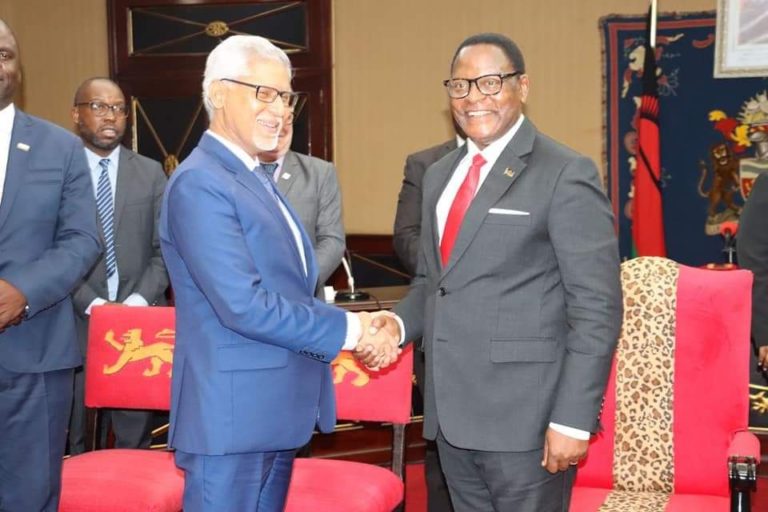
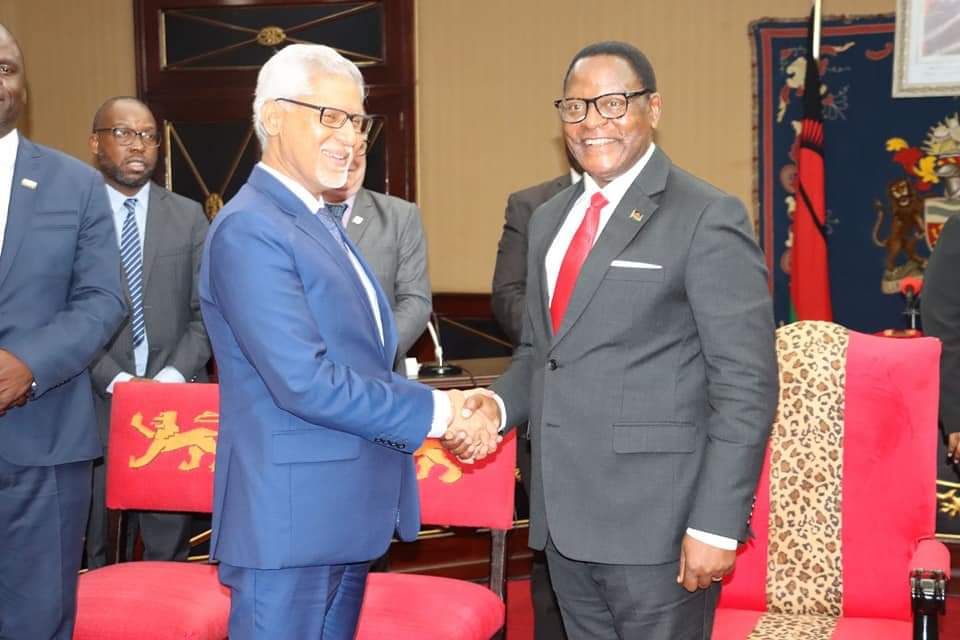
President Chakwera and IFRC Secretary General Jagannath Chapagain

“As Red Cross Society, we want to work together with Malawian communities but before going to those areas, we thought it wise to meet with the President of Malawi, as he is also the patron of the Society, to highlight on how we can continue to support the nation.

“We want to support people who were affected by natural disasters like Cyclone Freddy, which hit thousands of lives in Malawi and also we want to work much on community resilience, particularly focusing on climate crisis,” said Chapagain, who is also IFRC’s Chief Executive Officer.

Commissioner for Department of Disaster Management Affairs (DoDMA), Charles Kalemba, appreciated the effort the Red Cross Society shows when a crisis occurs, citing the managing of camps where the affected people live during disasters.

“As DoDMA, we work very closely with Red Cross in most disaster issues. During crises we depend on them as first responders to such situations; they are a very important partner to DoDMA as well as to the Government of Malawi,” said Kalemba.

Ghana, Malawi strengthen bilateral relations

0

By Rosalia Kapiri

Ghana’s Minister of Foreign Affairs and Regional Integration, Shirley Ayorkor Botchwey, has said her country will continue to maintain and strengthen its long-term bilateral relationship with Malawi.

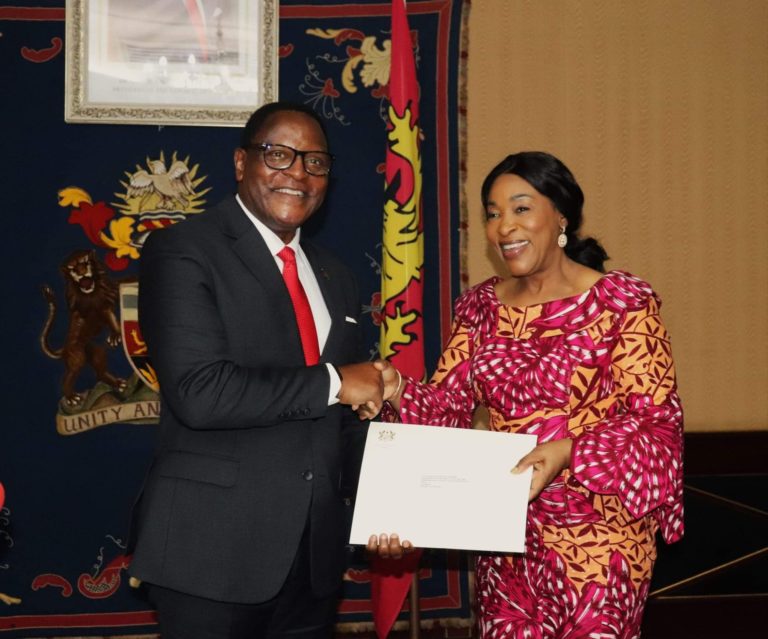
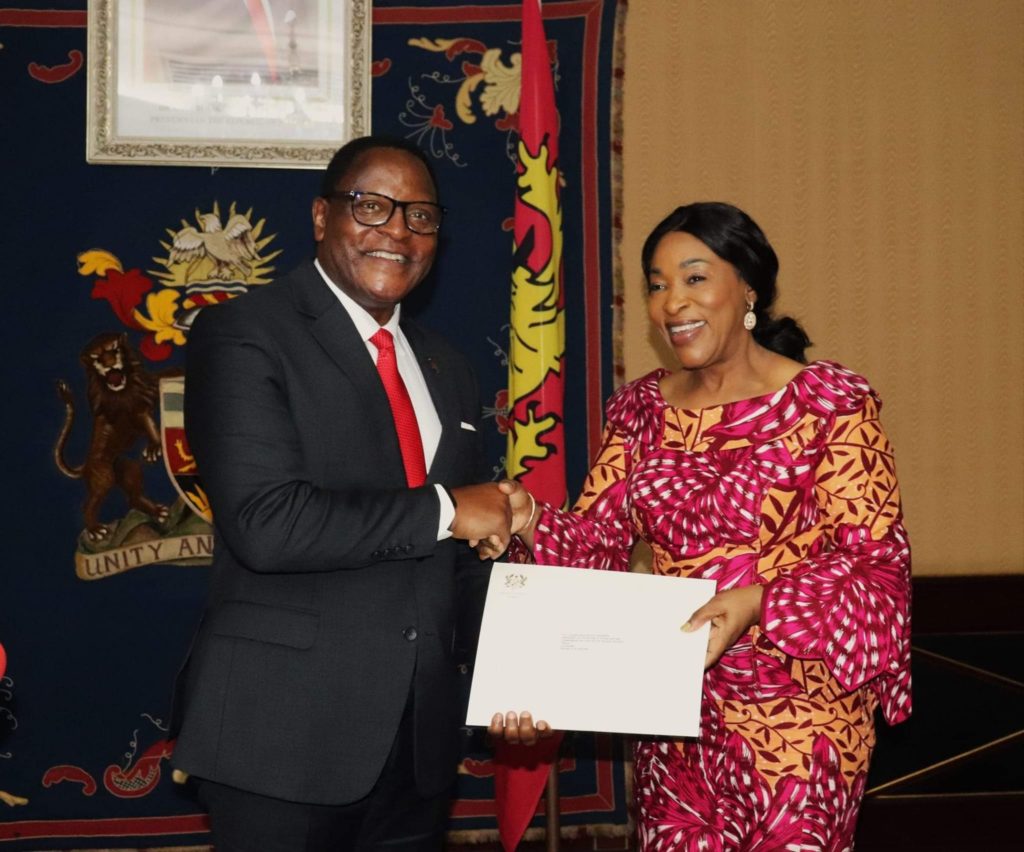
She was speaking at Kamuzu Palace in Lilongwe on Monday soon after presenting letters to President Lazarus Chakwera to renew Ghana’s bilateral relations with Malawi.

Botchwey added that her country will align its priorities with Malawi’s trade and investment sector, saying there is a lot of potential for the two countries to flourish together economically.

President Chakwera and Ghana Foreign Minister Shirley Ayorkor Botchwey

She further said apart from the trade and investment sector, her country will also work with Malawi in other sectors like climate, youth empowerment and innovation startups, labour migration and marketing.

“Commonwealth developed countries and not so developed countries have a lot of potential to trade and invest in each other’s countries and alongside create job opportunities for the youth since we have a very youthful country. We want to see a lot of industrialized countries,” said Botchwey.

She said the countries need to advocate as a block to deal with issues of adaptation, mitigation and climate financing, saying climate is key and relevant among all the member states of the Commonwealth, as it is also affecting most countries’ economies negatively.

Speaking in an interview, Minister of Foreign Affairs Nancy Tembo commended Ghana for the continued relationship it holds with Malawi.

“The Minister from Ghana had talks with President Chakwera where the two countries agreed the need for the two countries to continue working together and strengthen their relationship which spans way back from the Kamuzu Banda era.

“This is something that we need to carry together and there is so much we can do together to economically boost each other’s economy,” said Tembo.

Apart from presenting bilateral letters to Malawi, the Ghanaian Minister also visited the country to ask for support from President Chakwera, as Ghana has decided to field her as candidate for the post of secretary general of the Commonwealth.

President Chakwera’s SONA re-ignites hope – CCAP Nkhoma Synod

0

By Cedric Nkungula

The CCAP Nkhoma Synod has showered praise on President Dr Lazarus McCarthy Chakwera for delivering a silver tongued  State of the Nation Address (SONA) that has re-ignited  hope to the Malawi nation.

Speaking at Kamuzu Palace on Monday 12th February 2024 when the Synod’s new leadership paid a courtesy call on President Chakwera, CCAP Nkhoma Synod Moderator Reverend Masona Tembo Kaluluma said the recent SONA acknowledged all challenges being faced by Malawians and also outlined remedies to correct them.

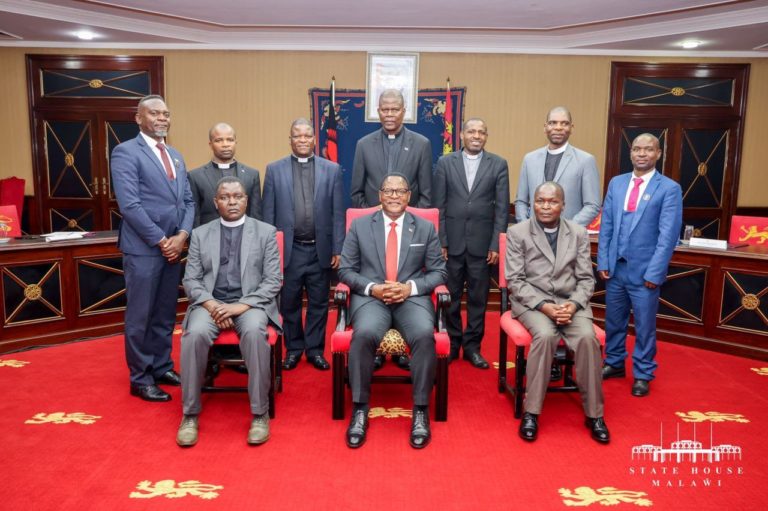
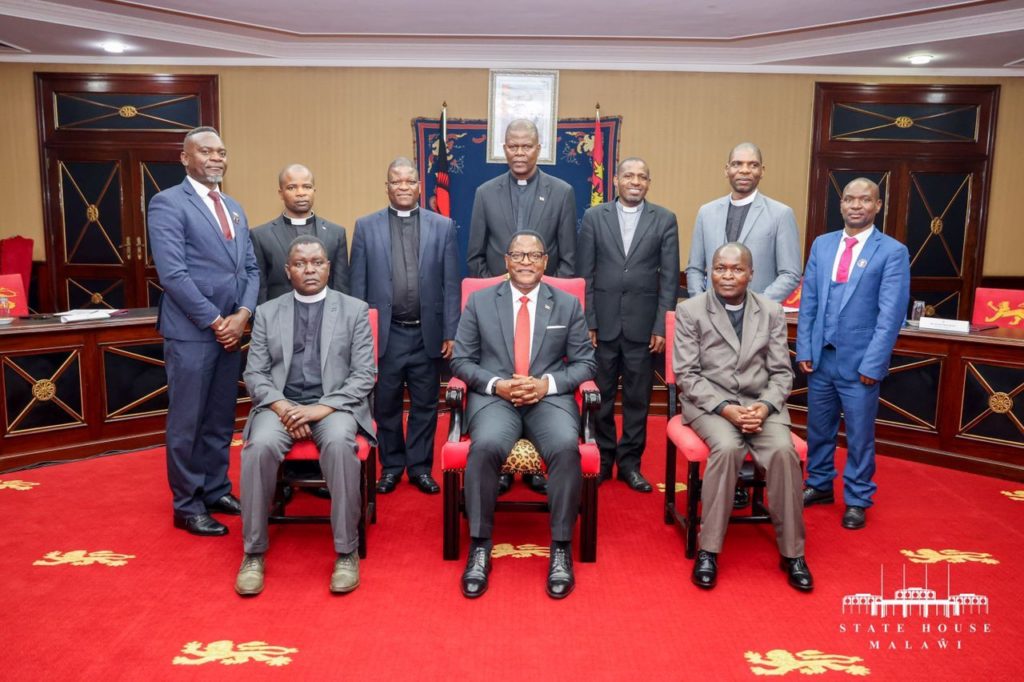
Chakwera and leaders of Nkhoma Synod


Rev Tembo praised President Chakwera for governing Malawi using biblical principles bordering on love and unity.

He also hailed Chakwera for not losing his sight on development despite facing a myriad of challenges from some quarters of the society.

“Those who continue to speak negatively about your administration will continue to do so by choice,” he emphasized.

Reverend Tembo thanked Chakwera for introducing the Mega Farms Initiative which he says will help in eradicating hunger in the country.

He also expressed gratitude to the President for granting the Clergy an opportunity to access loans at National Economic Empowerment Fund (NEEF).

“This has eased pressure when we used to get loans from the banks,” he said.

Reverend Tembo also asked the President to consider re demarcating some constituencies in the central region to ensure fair distribution of development activities.

In his remarks, President Chakwera said government and the church are all servants of God serving his people.

President Chakwera thanked the Synod leadership for deciding to meet him and share notes on various issues affecting Malawi.

“I am always grateful whenever you come like this to see me,” he said.

He then thanked the church for partnering his administration to help realize Malawi Vision 2063 Agenda.

The president also praised the church for calling on people to pray at this time when the country is experiencing erratic rain supply.