Tuesday, December 16, 2025
No menu items!
spot_img
Home Blog Page 1360

Parents of children with albinism call for wider awareness on child rights

0

By Evance Chisiano

Parents of children with albinism in Blantyre have called on Malawi Law Commission to widen child rights education through various ways and means that should help to deepen Malawians’ understanding on Child Care, Protection and Justice Act and other laws that protect children with albinism against crime.

The parents made the call in Lunzu in Blantyre on Saturday when Ujamaa Pamodzi Africa, a non-profiting organization dedicated to child protection, organised a training for parents of children with albinism to discuss laws that protect children against violence and other social ills.

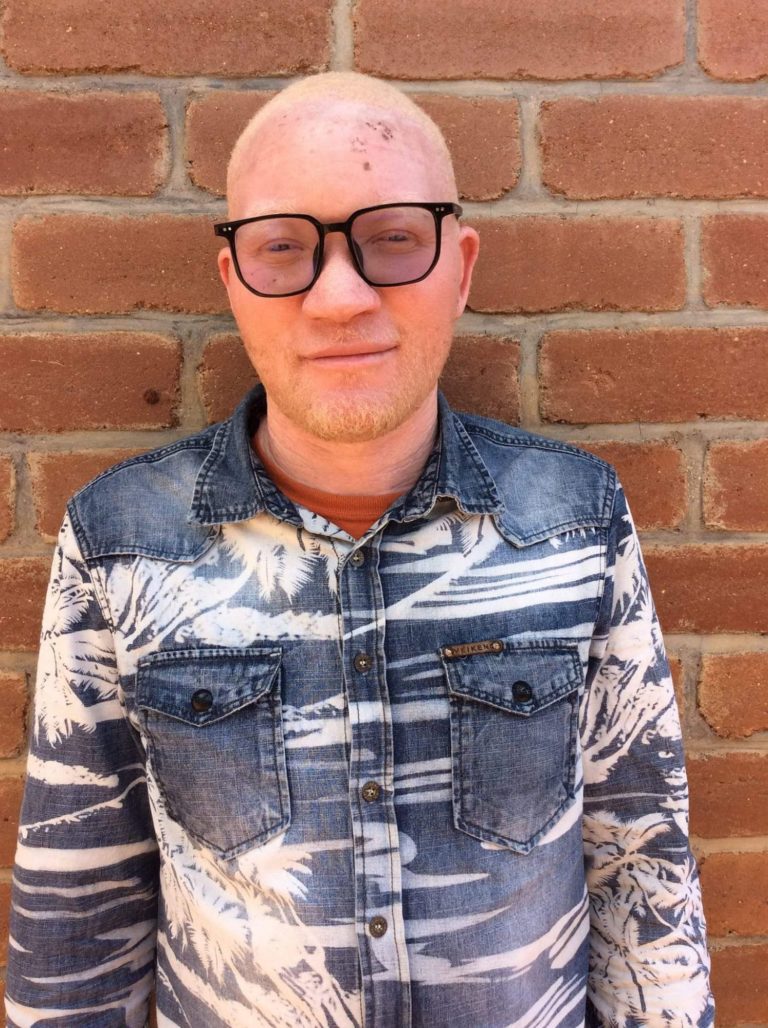
After listening to the Malawi Law Commission presentation, one of the parents, Debora Wind, said Ujamaa Pamodzi Africa, the Malawi Law Commission and partners should widen awareness on Child Care, Just and Protect Act and other laws that shall help citizens to realise that children with albinism were equally entitled to their full rights to live and be protected like other children.
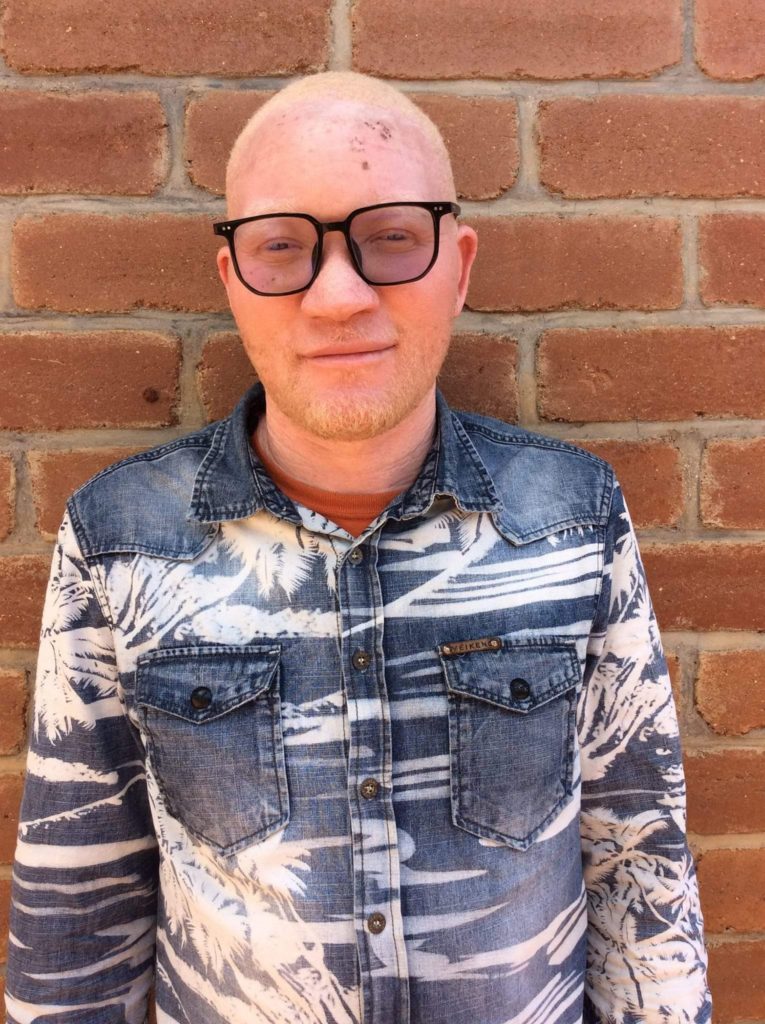


“We wish this awareness could be put across Malawi so that a lot of people can fully understand laws that protect children, including those with albinism. I know ignorance of the law is not defence but I know that some of the crimes against children with albinism are committed out of ignorance of the law,” she added.

Ujamaa Pamodzi Africa engaged the Malawi Law Commission to sensetise parents of children with albinism on laws that protect children against violence, and some areas in the Child Care, Protection and Justice Act were lengthily discussed for better understanding.

Chief Civic Education Officer for Malawi Law Commission, Gills Msiska, said the commission reaches out to Malawians with child rights education through many avenues such as Joint Programme for Girls Education (JPGE) but said this was not enough because Malawians need more understanding on laws that protect children.

“We work with different partners to educate Malawians on laws that protect children but we know there is a lot to be done for people to fully understand to respect rights of children,” he added.

The Malawi Law Commission, in partnership with Ujamaa Pamodzi Africa, has been in Blantyre, Mangochi, Salima, Dedza and Kasungu to raise awareness on child rights through UNICEF supported JPGE programme.

Ujamaa Pamodzi Country Director Martin Ndirangu said the organization is currently implementing a project to do with child rights with focus on children with albinism in Mchinji, Lilongwe and Mzimba, apart from Blantyre.

“We equip children with albinism with knowledge on child rights and skills to protect themselves from violence and we also train parents so that they should have knowledge on child rights,” he added.

National Coordinator for Association of People with Albinism in Malawi (APAM), Maynard Zakariya, hailed Ujamaa Africa, the Malawi Lawi Commission and other partners for reaching out to children with albinism and parents with wider knowledge on child rights.

He, however, said there was need to roll out civic education on child rights, adding that most of the attacks and other forms of crime against people with albinism are done based on myths and misconceptions.

“More need to be done. We are ready to work with partners until rights of people with albinism are fully respected,” Zakariya added and called for more support from law enforcing agents to deal with crimes against people with albinism in Malawi.

District Social Welfare Office in Blantyre, Malawi Police Service through Community Policing sector, and District Education Office made their presentations in Lunzu on issues of child development, parenting, child protection, child education and other areas of child welfare.

Nankhumwa not living in denial, accept DPP Firing and ready to unleash next move

0


By Vincent Gunde

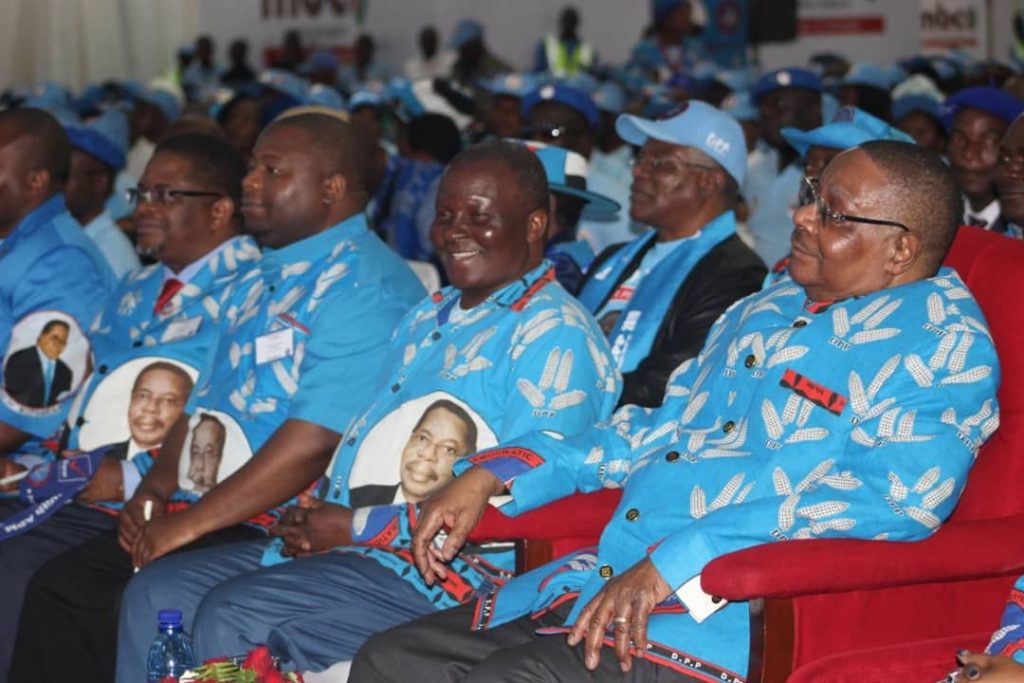
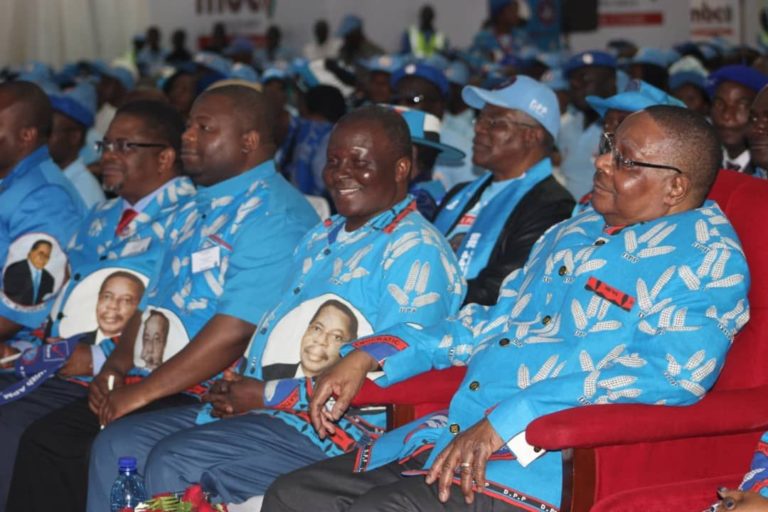
Expelled Democratic Progressive Party (DPP) Vice President for the South Dr. Kondwani Nankhumwa, says he has accepted the decision which was reached by the DPP to fire him from the party advising members not to listen to propagandas that he has joined the MCP.

Nankhumwa said he is surprised to learn that beside of being fired from the party, the DPP is following him with propagandas that today he has joined the MCP, tomorrow he has joined the UDF, PP advising members that he will speak for himself of his next political direction.

He has since assured Malawians that it won’t take time, this week starting from 28th January, 2024, he will open his mouth for the world to listen to his new political direction saying his words will be like a bomb which will explode.

Speaking to a mammoth crowd that was waiting for him in Ndirande Township -Blantyre on Sunday, Nankhumwa said he was expelled from the DPP for his strong wish to contest for a DPP presidential seat at the party’s elective conference so that he becomes DPP presidential candidate in the 2025 elections.

Nankhumwa said by being expelled from the DPP, this does not mean that his desire to stand as a presidential candidate is over, assuring all of his supporters that come the 2025 elections, his face will be on the ballot paper.

“The vision of standing as a presidential candidate is still on, next year, you will see my face on the ballot paper, ‘said Nankhumwa.

During Nankhumwa’s visit to Ndirande, some women were seen burning DPP Zitenjes’s as a sign of anger over Nankhumwa’s expulsion from the DPP.

Democratic Progressive Party (DPP) District Governor for Lilongwe Urban speaking on a strict condition of anonymity has advised DPP women following Nankhumwa’s next political move, never and ever to burn DPP Zitenje’s but to share it to others who are genuine DPP women.

The Governor has assured all that DPP remains a strong party in Malawi with or without expulsions and suspension of Nankhumwa and others, claiming that the party is enjoying grassroot support making it to be proud of bouncing back into government if the elections are held today or tomorrow.

He has dismissed claims which some quarters of the society are making that Nankhumwa will divide DPP votes and reduce chances of DPP winning the 2025 elections advising all Malawians to reflect back to 2018 and from 2020-2024 claiming that Malawians are in pain and suffering today four times than they were in 2018.

“Patriotic Malawians that have seen the pain and suffering in the hands of Chakwera cannot go to vote for Chakwera to bounce back into government in 2025,” he said.

He has encouraged Malawians wishing their country well, backward never and forward ever with Professor Arthur Peter Mutharika claiming that he is the only one among those to contest for the hot seat in 2025 who can defeat Chakwera with or without people casting their votes.

Will the suspensions, expulsions and defections of DPP members weaken the party?

0

By Rick Dzida

Recently,the Central Committee of the main opposition party, the Democratic Progressive Party (DPP) expelled and suspended some of its members due to what was deemed as gross indiscipline and violation of the party’s constitution.

Notable on the list of expulsion were Kondwani Nankhumwa, the mastermind behind the DPP coup d’état and other National Governing Council members such as Gelseder Jeffrey, Ken Msonda, Nicholas Dausi and many others.

As a matter of fact, it is not strange for the party to discipline its members for violating its party constitution.

This has happened before in other political parties too.

It therefore, boggles one’s mind when the whole ruling Malawi Congress Party (MCP) criticises DPP for firing its members. This is hypocrisy at its apex.

It therefore logical to conclude that MCP was the mastermind behind the current internal DPP squabbles.

Just to double-click your memory a bit, in 2016, the then main opposition party, MCP fired 9 Southern region committee members from their positions following violence that erupted in which the Administrative Secretary Potipher Chidaya was beaten.

In 2017, the People’s Party(PP) fired its Vice President, Uladi Mussa for what appeared as a struggle for power.

In 2019, Dr. Lazarus Chakwera engineered the firing of Salima Central legislator Felix Jumbe, Denis Nathumba, Lyton Dzombe, Chatinkha chidzanja Nkhoma and Azam Mwale from the party for brewing divisions in the party.

In the same year, Dr. Lazarus Chakwera also led the charge to suspend its Secretary General (SG) Gustav Kaliwo , Spokesperson Jessie Kabwila and lawmaker Joseph Njobvuyalema while pending disciplinary hearing.

In 2022, MCP fired one of its members, Alex Major, for allegedly undermining party president Lazarus Chakwera and sowing seeds of disunity in the party .

Having substantiated the normalcy of disciplining party members, perhaps one pertinent question is, will the suspensions, expulsions and defections of DPP members weaken the party?

The answer is that it will entirely depend on how DPP will politically strategise itself for 2025 tripartite elections.

Of course, the painful truth is that some of the expelled DPP gurus will go away with a good bunch of gullible followers.

However, by clearing such rubbles from the party, there is room for building the party with remaining loyal and trusted members.

If MCP managed to excommunicate its indispensable members but later went forward to win the 2020 presidential election, then what can prevent DPP from doing the same?

Furthermore, with the current political turbulence, DPP must expect again another massive exodus of its member to other political parties after an elective party convention.

There are some DPP members who are just trying their luck to grab National Executive Committee (NEC) positions.

However, once they lose the election, the disgruntled party members and their followers will most likely seek green pasture in other political parties.

It is against this background that an elective DPP convention should be held as early as possible to give time for political turbulence to stabilise thereafter.

First Lady’s charity donates to patients at QECH

0

By Glory Msowoya

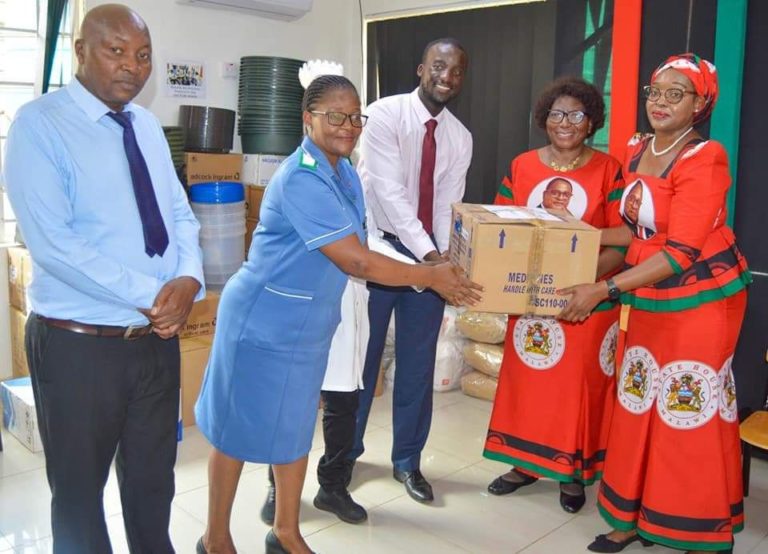
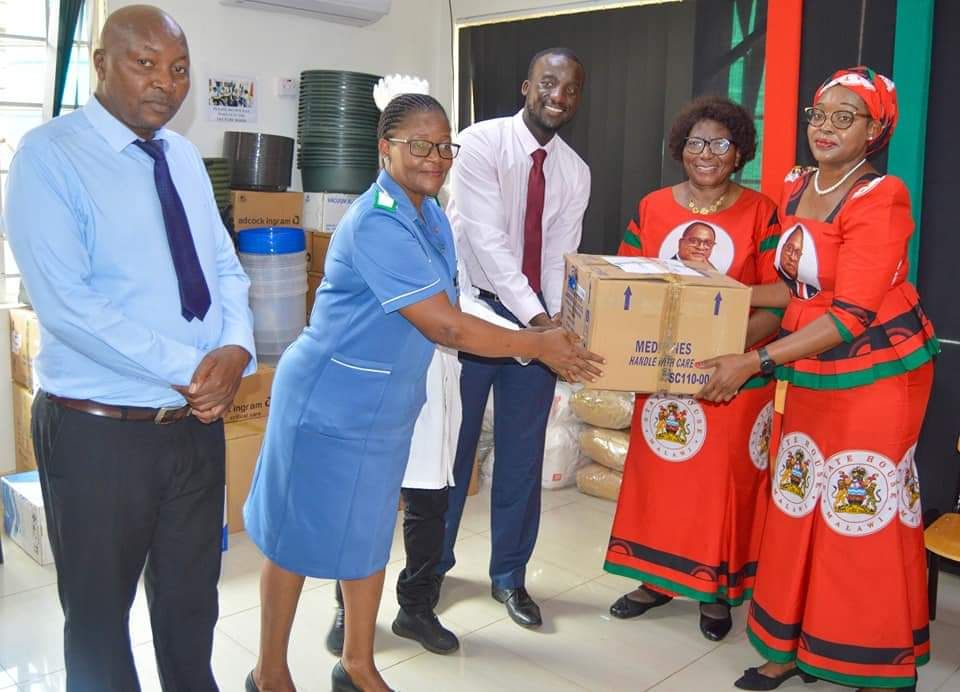
The presidential advisor on safe motherhood, Dorothy Ngoma on Saturday donated food, assorted essential medical supplies and equipment to Queen Elizabeth Central Hospital’s children and maternity wards amounting to over K10 million on behalf of First Lady Madame Monica Chakwera.

Confirming the development on Saturday, Ngoma said the First Lady’s charitable gesture was a testament to a humane commitment towards promoting health care.


The donated items included medicines, cotton wool, surgical masks, digital thermometers, plastic basins, blankets, water purifiers and bags of maize flour.

“The message from the first lady was one of support and care to mothers and sick babies. Their needs are quite heavy as congestion in all childrens’ wards cannot go unnoticeable. All the challenges that l have noted from this hospital will be presented to the First Lady for consideration,” Ngoma said.

Ngoma said the First Lady will continue to mobilize resources from various partners to improve the situation in hospitals across the country.

The presidential advisor then appealed to the hospital staff to make sure that the donation be used for its intended purpose.

“This donation is intended to alleviate some of the challenges faced by patients. Please ensure its effective use. I don’t want to hear that patients have not received help,” said Ngoma.

In his remarks, Controller of Hospital Administrative Services at Queen Elizabeth Central Hospital, Sipho Nyasulu hailed the First Lady for the donation, saying it was timely done as it would contribute to a positive impact within the health care.

Nyasulu added that the visit of the Presidential Advisor on Safe Motherhood not only left a tangible mark on Queen Elizabeth Central Hospital but also served as a beacon of hope, illustrating the positive outcomes that can be achieved through collaborative efforts and a steadfast commitment to the well-being of patients as well as health workers.

“We are very thankful to Madame Monica Chakwera for this donation. Our work is very huge and resources which government provides are not enough because of the number of patients we receive at this hospital,” Nyasulu said.

During the visit, the presidential advisor on safe motherhood visited patients in the pediatric, children’s, and maternity wards.

Unveiling the dark shadows: Exploring the disturbing world of bestiality in Malawi


By Twink Jones Gadama

In a small village nestled deep within the beautiful district of Ntchisi, Malawi, a shocking incident has left the community in disbelief and horror.

Vincent Mwale, a 26-year-old man, has been arrested for engaging in the abhorrent act of bestiality, having sexual relations with a goat.

This despicable act has shed light on a taboo subject that lurks within society’s darkest corners.

As we dive deeper into this shocking incident, we unravel the psychological complexities, social stigma, and legal implications surrounding such acts in Malawi.

The Incident and Its Aftermath

On the fateful day of 25th January 2024, the peaceful serenity of Galang’ande village was shattered when Vincent Mwale was caught in the act of bestiality.

The locals, who could not believe their eyes, immediately reported the incident to the authorities, leading to Mwale’s subsequent arrest.

However, what shocked the community even more was the revelation that this was not Mwale’s first offense; he had previously engaged in such behavior.

As the news spread like wildfire, the villagers, already grappling with fresh trauma, demanded justice.


Delving Into the Psychopathology of Bestiality

To truly comprehend the mindset behind such an inhumane act, it is crucial to delve into the psychological depths of the individuals involved.

Psychologists and experts in the field explain the complexities involved, citing various theories such as the manifestation of latent fantasies, abnormal sexual preferences, and the presence of deep-seated psychopathological factors.

While a majority of society cringes at the thought of bestiality, examination of the underlying psychological motivations allows us to better understand the inherent darkness that fuels such acts.

A Moral Quandary: Cultural and Social Perceptions

In a conservative society like Malawi, bestiality is seen as a gross violation of cultural and social norms.

The deeply rooted beliefs regarding the sanctity and dignity of both human beings and animals lead to a vehement rejection of such practices.

However, societal perceptions drive individuals like Mwale further into the shadows, forcing them to partake in these unthinkable acts shrouded in secrecy and shame.

Unraveling the complexities of cultural stigmas, we explore the challenges faced by individuals grappling with suppressed desires and the consequences of their actions.

The Legal Landscape of Malawi: Outlawing Bestiality

In Malawi, both bestiality and homosexuality are considered criminal offenses.

The laws in place reflect the prevailing moralistic values of the society, aiming to safeguard societal and moral order.

The penal code not only condemns such acts but also details severe punishment for the perpetrators.

However, as we examine the legal landscape, questions arise regarding the efficacy of the punitive approach.

Advocates argue that there should be a greater focus on rehabilitation, psychological intervention, and education to address the root causes of such deviant behavior.

Conclusion

As the shocking incident in Galang’ande village illuminates the dark practice of bestiality within Malawi, it demands introspection and a reevaluation of societal attitudes and legal frameworks.

The spotlight now shines on this repugnant act, unraveling the psychological complexities, social stigma, and legal implications surrounding it.

It is imperative that we confront these uncomfortable truths and engage in a frank discourse, not only to protect our communities but also to understand and address the underlying factors that drive individuals toward such abhorrent behavior.

Only then can we hope to protect the sanctity of life, whether human or animal, and seek solutions to help those who may be trapped in the shadows of their own desires.