
Tuesday, December 16, 2025
No menu items!
spot_img
Home Blog Page 1365

Experts tout agricultural diversification

0

By Robert Katuli

Experts at the 10th Eminent Speaker series event, held on Thursday in Lilongwe, searched for answers on why there is little to show on the country’s agricultural diversification drive when a lot of research has shown that this is a catalyst for growing the economy.

Speaking in an interview at the end of the event at Bingu International Convention Centre (BICC), Director General for National Planning Commission (NPC), Dr Thomas Munthali, said focus is what is needed now to act on what is already known about the importance of diversification.

“In Malawi 2063, we’ve got a pillar of how we inclusively create wealth. And that one of the key pillars is agricultural productivity and commercialisation,” said Munthali, relating to agricultural diversification which, in part, involves transforming traditional agriculture into a dynamic and commercial sector.

He said there are initiatives in place to transform the agricultural sector towards diversification, observing the initiatives just need to be scaled up and accelerated.

“But we have big hope because if you look at the mega farms, it is showing that we are moving towards diversification.

“If we can hold hands and continue what is already showing, we can advance a lot,” added Munthali.

Mwapata Institute Executive Director, William Chadza, concurred with Munthali adding that despite other gray areas, there is always big hope of learning about what is working in agricultural sector and what is not, the challenges being faced and their solutions.

“There are a number of reasons why we are in such a situation. One of them being how we prioritise the resources which we have. We are not looking at it from a holistic point, so we need to look at how we spread and allocate those resources,” Chadza said.

On priorities, key speaker at the event, Professor Sosten Chiotha, who is Regional Director at the Leadership for Environment and Development in Southern and Eastern Africa (Lead), said in an interview that other natural resources also need to be considered when talking of agricultural development.

“Agriculture is directly linked to natural resources; therefore, we need to take the two together in our developments. The natural resource base will provide the water, the soil fertility,” said Chiotha.

He emphasized on the need to diversify the country’s economy so that pressure on the agriculture sector is reduced.

Apart from the keynote speech by Professor Chiotha, the event, whose theme was ‘Enhancing agricultural growth and diversification’, also featured a panel discussion, among others.

NPC, alongside Mwapata Institute and Lilongwe University of Agriculture and Natural Resources, organised the event that brought together key players from government, development partners, the academia and other institutions.
President Chakwera visits developmental projects in Mwanza

0

By Brian Wasili

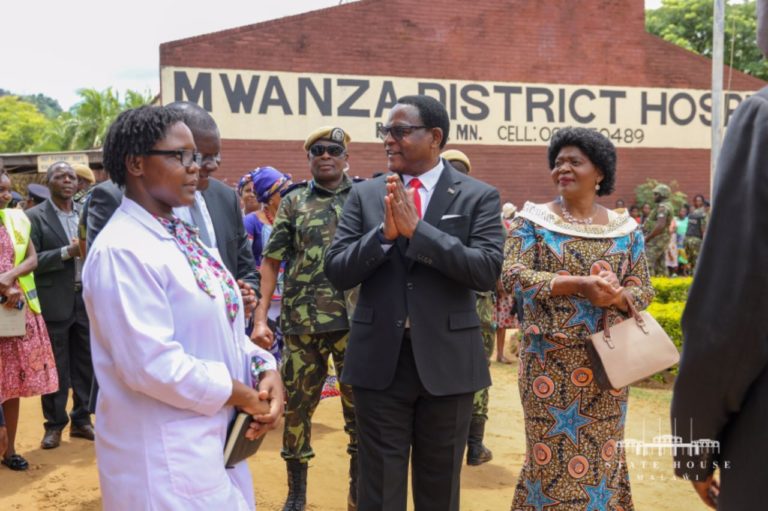
President Dr Lazarus Chakwera on Friday morning visited several development projects in Mwanza district to appreciate challenges the places are facing.

Among others, the President visited Mwanza Secondary School and Mwanza District Hospital before inspecting new police houses and leading scores of people to the ground breaking ceremony for a 5,000 seater state of the art stadium.


Head teacher for Mwanza Secondary School, Henry Saka said the school has a lot of challenges such as absence of resource room for special needs education students, dilapidated multipurpose hall and hostels, broken sewer system and use of firewood at the kitchen, among others.

“Mwanza is the only boarding secondary school in the district with 336 students and there is need to have most things available,” said Saka.

At Mwanza District Hospital, the President toured pediatrics ward where he donated assorted items in the ward.

In his remarks, District Director of Health and Social Services, Dr Misha Sitande told the President that the hospital has an outstanding electricity bill of K60 million, high vacancy rate at 58 percent, lack of power back up and frequent breakdown of X-ray machine, among others.

“The district has only two health centres, namely Thambani and Kunenekude and this affects operations of the hospital as the district also serves people from Mozambique,” said Sitande.

Later the president toured Mwanza Police staff houses which are expected to reduce accommodation challenge of the law enforcers. The 10 houses are now at 73 percent completion rate.

Hit below the belt:Nankhumwa Stripped of Opposition Leadership as Chaponda Rises to Power

0

By Twink Jones Gadama

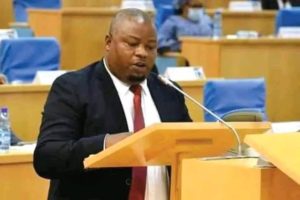
In a momentous turn of events that has sent shockwaves through the political landscape of Malawi, the Democratic Progressive Party (DPP) has unleashed a political earthquake, stripping Kondwani Nankhumwa of his esteemed position as the leader of the opposition. This unexpected move has left tongues wagging, with citizens eagerly awaiting the fallout from this seismic shift in power dynamics.

The thundering drums of change began to reverberate across the nation when George Chaponda, the newly ordained DPP Vice President for the South, ascended the political ladder and seized the opportunity to claim the mantle of opposition leadership. This audacious move, a strategic maneuver by the DPP, has sparked both intrigue and controversy, leaving the public with bated breath as they brace themselves for the inevitable fallout.

DPP keen on removing Nankhumwa as Leader of Opposition

Emblazoned with unwavering confidence, DPP spokesperson Shadric Namalomba unveiled their proposition with an air of dramatic flair. Namalomba declared that Nankhumwa’s expulsion from the party had created a void in leadership, justifying their audacious selection of Chaponda as his successor. With the party’s support firmly behind him, Chaponda stands on the precipice of power, ready to step into the shoes of his predecessor and lead the opposition charge.

As the political tides continue to shift, the DPP also made a bold statement by orchestrating a complete overhaul of their parliamentary team. Enter Jappie Mhango, a seasoned politician with an astute understanding of the Machiavellian nature of politics, as the new DPP chief whip. Mhango’s appointment raises eyebrows and creates a buzz amongst political insiders, as his cunning and strategic prowess are expected to invigorate and elevate the DPP’s approach in the parliamentary arena. Joining forces with Mhango, Mary Navicha, a passionate and charismatic figure, steps into the role of deputy chief whip, replacing the once-influential Julius Mwase and the enigmatic Victoria Kingston Mangochi Central Legislator.

To shed light on the legal ramifications of this power play, we sought the expertise of the eminent legal scholar, Bernadetta Malunga, from the esteemed University of Malawi. In her resolute assessment, Malunga lends her unwavering support to the DPP’s bold stance. According to Malunga, Nankhumwa’s expulsion from the party effectively nullifies his claim to opposition leadership, unless he chooses to mount a legal challenge in the courts. This legal interpretation only adds fuel to the ever-intensifying firestorm, further enflaming the already contentious debate surrounding Nankhumwa’s future.

Amidst this tense political spectacle, one figure remains eerily silent – Kondwani Nankhumwa himself. Largely elusive since the bombshell announcement, Nankhumwa’s silence only fuels the growing aura of mystery surrounding his next move. Will he gather his forces and challenge his expulsion in court, or will he choose to exit the stage gracefully, allowing Chaponda to assume his mantle as the opposition’s new torchbearer? The nation awaits with bated breath for his words to echo through the hallowed halls of power.

As the sun sets on this momentous political chapter, Malawians find themselves embroiled in a thrilling saga of power struggles and calculated moves. With Nankhumwa’s expulsion ripping through the political fabric, the rise of George Chaponda marks a pivotal moment in Malawi’s political history. The echoes of this seismic shift will undoubtedly reverberate long into the future, leaving an indelible mark on the nation’s political landscape. Without a doubt, the relentless dance of politics has once again captured our attention, revealing its unpredictable and captivating nature.

As the dust settles and the political gears continue to turn, one question lingers in the air – what lies ahead for Malawi, and how will this audacious power play shape the destiny of this remarkable nation? Only time will tell, but as keen observers of this gripping saga, we stand ready to bear witness to the next chapter in Malawi’s political tapestry.

Concerns over Favoritism, corruption during relief maize distribution in urban centres

0

By Sarah Gwetsani

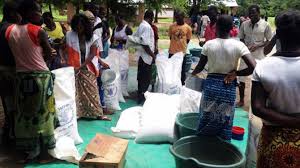
An elderly woman of Chambu village in Lilongwe City Central constituency Mai Rosemary Kaitano, has complained bitterly that hunger-stricken people are not benefiting from the relief maize government is distributing in urban centres.

Kaitano said corruption, favoritism and nepotism have formed part of the successes of relief maize registration of names and distribution in urban centres claiming that those who have no names in the Block leader’s books, are not part and parcel of the beneficiaries.

She said most of the people that are benefiting from relief maize are people who have everything in their houses (well to do people) because their names have made their way to the Block leader’s mind as good people for their areas.

Mai Kaitano has claimed that AIP fertilizer was distributed to the people of Gulliver, Shire, Ng’oma, Dubai, Senti, Chimoka, Areas 50, 51, 18A and B because the incumbent Member of Parliament Alfred Jiya enjoys support of the people in the newly demarcated Lilongwe City Nankhaka constituency.

She said the very same people who have benefited from AIP fertilizer are benefiting from relief maize which government is distributing leaving out many poor households who are starving with hunger a development which is worrisome that these people cannot talk something good for President Dr. Lazarus McCarthy Chakwera.

The woman said in Area 50, landlords were identified as beneficiaries of relief maize leaving out tenants as not important saying this is contrary with what President Chakwera has been saying that he wants relief maize to be distributed to all hunger-stricken people.

She claimed that not even one Block leader in urban centres invited his subjects to a one meeting of identifying beneficiaries of AIP and relief maize, they just sit down to pick-out names of their choice in secret and on the day of receiving bags of maize, messages are sent to the beneficiaries in secret, too.

“I would have loved if President Chakwera intervene to either stop relief maize distribution in urban centres or sending his aides to establish what is on the ground in as far as relief maize distribution is concerned in urban centres,” said Kaitano.

She said many hungry-stricken people that are not benefiting from relief maize distribution are showering insults and castigations to President Chakwera for the sins committed by Block leaders through registering names of beneficiaries in secret.

The Malawian Cocaine Bust: Bangladesh’s Record Seizure of Solid Narcotics

By Twink Jones Gadama

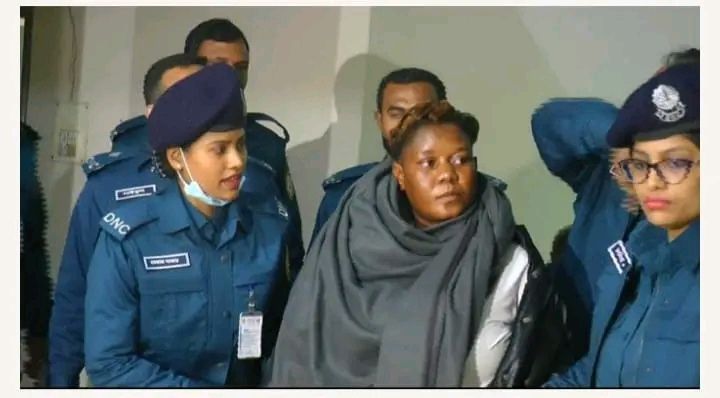
In a groundbreaking operation, Bangladesh’s Department of Narcotics Control (DNC) has made its largest ever seizure of solid cocaine, weighing an astounding 8.5 kilograms. The drugs, estimated to be worth Tk 1 billion, were confiscated from 35-year-old Nomthandazo Towera Soko, a Malawian national. Soko’s arrest came as she attempted to check into a residential hotel in Dhaka after arriving at Hazrat Shahjalal International Airport. This dramatic incident marks a significant milestone in Bangladesh’s battle against drug trafficking, signaling the country’s unwavering commitment to combat the devastating impact of narcotics.

Exploring the Drug Smuggling Epidemic

Bangladesh, like many other countries, has experienced a surge in drug smuggling activities in recent years. Cocaine, in particular, has garnered widespread attention due to its high street value and destructive impact on societies. The incident involving Soko not only highlights the global nature of drug trafficking but also illustrates Bangladesh’s determination to tackle this transnational menace head-on.

Arrested: Towera Soko

Bangladesh’s geographical location, situated between the drug-producing regions of Southeast Asia and the consuming markets of the Middle East, has made it a lucrative transit point for drug traffickers. Authorities estimate that drug cartels smuggle billions of dollars’ worth of narcotics through the country each year. This influx not only fuels addiction and crime but also poses a severe threat to national security and social stability.

Tackling the Drug Epidemic – A Collaborative Approach

While Bangladesh faces significant challenges in combating drug trafficking, the government, along with various international and regional agencies, has taken proactive measures to curb this epidemic. Authorities have intensified efforts to crack down on smuggling networks, strengthen border security, and enhance interagency coordination.

The DNC, as the lead agency responsible for drug control in Bangladesh, operates a series of intelligence-driven operations that target key drug trafficking routes and hotspots. The recent operation leading to Soko’s arrest is a testament to the effectiveness of these efforts. With a focus on Qatar Airways flights arriving from Africa, authorities successfully identified Soko through her suspiciously heavy luggage, leading to the discovery of the record-breaking cocaine haul.

Strict Penalties for Drug Traffickers

Bangladesh possesses a zero-tolerance policy towards drug trafficking, reflecting its commitment to combatting the illegal drug trade. The maximum penalty for drug-related offenses, including the trafficking of cocaine, is death by firing squad. This decisive approach underscores the severity with which Bangladesh views the drug epidemic and serves as a deterrent against potential perpetrators.

However, critics argue that the death penalty alone is not enough to address the root causes of drug trafficking. Addressing socio-economic inequalities, improving rehabilitation facilities, and strengthening cross-border cooperation are equally crucial components of a comprehensive strategy.

The Impact on Society and the Way Forward

The arrival of cocaine in Bangladesh presents an alarming scenario, as it not only threatens national security but also poses an immense risk to public health and social welfare. The consumption of cocaine has devastating effects on individual users, leading to addiction, financial ruin, and broken families. Bangladesh must prioritize awareness campaigns, support rehabilitation programs, and intensify efforts to disrupt drug supply chains to protect its citizens from this deadly menace.

Conclusion

Bangladesh’s biggest-ever seizure of solid cocaine marks a significant victory in the country’s ongoing battle against drug trafficking. The capture of Nomthandazo Towera Soko and the confiscation of her 8.5-kilogram cocaine haul reflect the collective efforts of law enforcement agencies and their commitment to preserving national security and social harmony. However, to achieve a lasting impact, Bangladesh must continue to invest in preventive measures, strengthen rehabilitation programs, and enhance cooperation with international partners. Only through a comprehensive strategy can the nation effectively confront and overcome the challenges posed by the global drug trade.