
Tuesday, December 16, 2025
No menu items!
spot_img
Home Blog Page 1384

Malawi’s golden fruit:The untapped potential of Mangoes and the fight against losses

0

By Twink Jones Gadama

Hidden amid the lush landscapes of Malawi, Africa’s warm heart, lies a hidden treasure – mangoes.

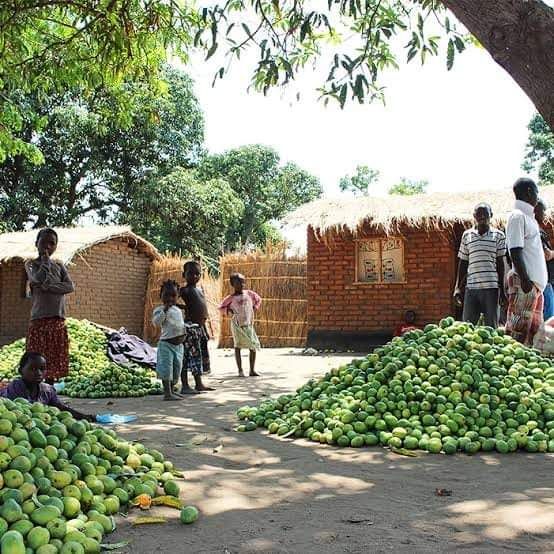
This hidden treasure-mangoes is currently in season and and a number of local markets are ballooned with mangoes.

Malawi’s reputation as Africa’s top producer of mangoes, contributing significantly to the global market.

With an impressive annual production of about 1.7 Million Metric Tons (MTs), the country secures the eighth position worldwide.

However, beneath this sweet success story, a bitter truth prevails – a staggering 60% of these golden fruits are lost due to pre-harvest or post-harvest setbacks.
The Challenge of Losses

Despite Malawi’s abundance in mango production, the country faces substantial losses during every stage of the mango’s journey from tree to table.

Pre-harvest losses, including pests, diseases, and unpredictable weather conditions, take their toll on farmers’ efforts.

On the other hand, post-harvest losses occur during transportation, poor storage facilities, lack of access to markets, and limited processing capacity.

This unfortunate situation not only impacts the income of farmers but also deprives consumers of a nutritious and delicious staple.

Agricultural Potential Beyond Mangoes

While the mango industry in Malawi cries out for attention, the country’s agricultural sector holds untapped potential waiting to be explored.

Blessed with fertile soil, a favorable climate, and a plethora of other tropical fruits, such as pawpaws, bananas, and avocados, Malawi possesses the key ingredients for a diversified agricultural landscape.

Capitalizing on this potential will not only reduce losses but also create new opportunities for economic growth and food security.

Efforts to Stem Losses

The government, in collaboration with international organizations and local agricultural stakeholders, is committed to addressing the issues that plague the mango industry.

Through initiatives like technical training, improved access to affordable fertilizers and pesticides, and the development of post-harvest infrastructure, Malawi is steadily making progress in mitigating losses and empowering mango farmers across the country.

Additionally, promoting value addition through processing and packaging techniques will unlock the export potential of Malawi’s mangoes, adding value to the entire supply chain.

The Path Towards a Golden Future

Malawi’s journey to overcome mango losses is not without its obstacles. However, the potential for growth is immense.

Increasing investments in agricultural research and development, establishing cooperative structures for small-scale farmers, and strengthening market linkages are crucial steps to unlocking the full potential of Malawi’s mango industry.

Moreover, partnering with regional and international markets will open doors for exports, fostering economic growth and elevating Malawi’s position on the global stage.

Conclusion

Malawi, known as the warm heart of Africa, is also the proud producer of mangoes, tantalizingly sweet and ripe with potential.

As the nation grapples with the challenge of reducing losses, it is essential to recognize the need for collective action and sustained support.

By harnessing the bountiful resources within its borders, Malawi can transform its mango industry into a thriving sector that empowers farmers, feeds the nation, and provides a delicious taste of Malawian excellence to the world.

It is time to nurture this golden fruit and unleash its true potential.

Malawi Government increases MRA target as citizens will be pushed farther to the limit*

By Burnett Munthali

Tonse Alliance Government has increased Malawi Revenue Authority target for 2024 financial year and Malawians are expected to be beaten below the belt even harder than before. This article looks at the general impacts of tax increase very closely in order to understand and highlight more about the shocks likely to be felt by every citizen as we go to Canaan.

Changes in the tax codes influence the decisions people make about whether and how much to work, how much to save for retirement, and where to live. Taxation also affects how entrepreneurs organize their businesses, how much to borrow and invest, and where they locate the businesses they create. Tough times are not over yet in Malawi, they are still coming. Tighten your belts !

Taxation

First of all, tax is an increase in the amount of tax that people and companies are obliged to pay. In order to avoid high interest rates substantial tax increases would be needed. Tax changes have very large effects: an exogenous tax increase of 1 percent of GDP lowers real GDP by roughly 2 to 3 percent. Changes in the level of taxation affect the level of economic activity. Reductions in income tax rates affect the behavior of individuals and businesses through both income and substitution effects. The positive effects of tax rate cuts on the size of the economy arise because lower tax rates raise the after-tax reward to working, saving, and investing.

MRA Director General, John Bizwick


Secondly, just to understand something, there are two main economic effects of a tax: a fall in the quantity traded and a diversion of revenue to the government. A tax causes consumer surplus and producer surplus (profit) to fall. Lower tax rates increase the demand for assets as well as the supply of labor. The economy responds with lower interest rates, higher employment, higher investment and faster economic growth.

However, we must all realize that tax is important and Malawi cannot do without it at it is the engine of government in order to function. Taxes provide revenue for central, federal, local, and state governments to fund essential services–defense, highways, police, a justice system–that benefit all citizens, who could not provide such services very effectively for themselves.

Thirdly, the four most used tax bases are individual income tax, corporate income tax, sales tax, and property tax. The two most common types of taxes are: 1) Income tax—A percentage of generated income that is relinquished to the state or federal government. 2) Payroll tax—A percentage withheld from an employee’s pay by an employer, who pays it to the government on the employee’s behalf to fund Medicare and Social Security programs.

Fourthly, there are three biggest sources of tax revenue. About 50 percent of federal revenue comes from individual income taxes, 7 percent from corporate income taxes, and another 36 percent from payroll taxes that fund social insurance programs (figure 1). The rest comes from a mix of sources. Unfortunately, Tax abuse substantially reduces government tax revenues and weakens the integrity of our tax system and the efficiency of our economy. Thus, distinguishing between tax planning and tax abuse is critical.

Conclusion

In conclusion, Malawi Revenue Authority (MRA) is geared to increase its tax collection target as millions of Malawians will be pushed to the extreme edge after a 44% devaluation of the local currency was recently effected in November 2023. Government awarded 10% salary Increment to civil servants which they protested against and were later given 15% while some companies ordered their employees a 30% salary Increment. Other companies have not effected any salary increment and there is nobody to speak nor fight on their behalf. Government has increased MRA revenue collection target by K69 billion for 2023/2024 financial year. But MRA commissioner general John Bizwick says the revenue collectors will meet the target. The revenue is expected to be collected before end of the fiscal year on March 31, 2024. MRA commissioner general John Bizwick disclosed this on Tuesday 10 January 16, 2024 in Salima during presentations of awards to best performing MRA stations. Bizwick said that with the additional revenue, MRA is now expected to collect K245 billion in January 2024 from K218 billion, K174 billion from K155 billion in February and during the the last month of March K199 billion is expected to be collected from K176 billion .

World Bank approves US$240 million towards financing of Regional Climate Resilience Program.

0

By Linda Kwanjana

Malawi leader , President Dr Lazarus McCarthy Chakwera continues attracting both multilateral and bilateral support from various sectors.

This time around World Bank has approved a whooping US$240 million towards Regional Climate Resilience Program.

In a statement which World Bank Malawi country Representative has signed , the Bank approved the financing on 20 December, 2023.

“We are pleased to notify you that the Executive Directors of the International
Development Association approved, on December 20, 2023, a grant of Two Hundred and Forty million United States Dollars (US$240 million) to the Republic of Malawi, for the Regional Climate Resilience Program. Attached is a copy of the related press release for your information.
We look forward to an early signing of the Financing Agreement,” Reads the statement in part.

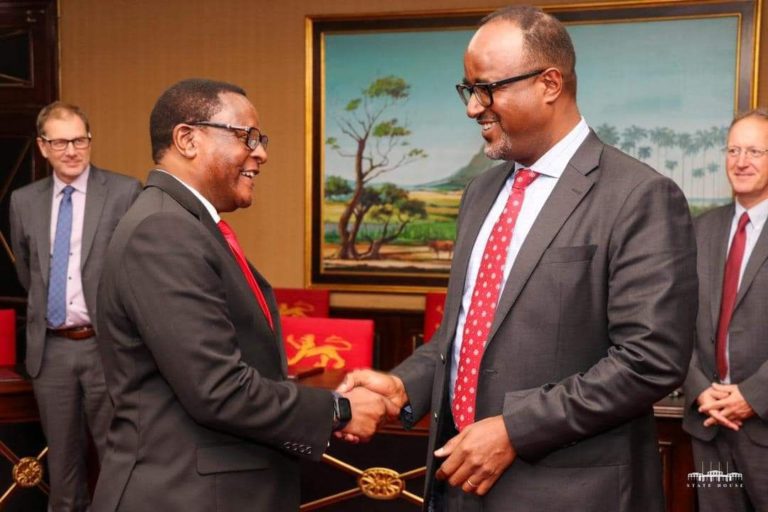
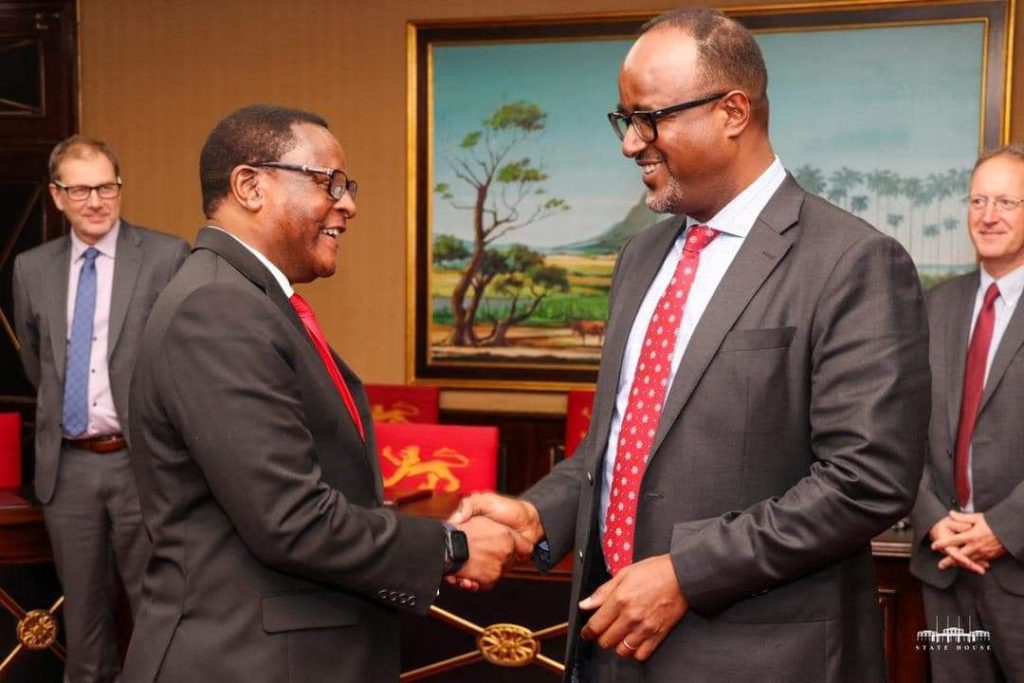
Belete and President Chakwera. File Photo

World Bank has been supporting Malawi for especially last year when the country was hit by Tropical Cyclone Freddy.

The Bank supported Malawi with a total financing of $850 million (about K1.4 trillion) and demonstrates its confidence and trust in the reforms the Malawi Government is implementing.

World Bank country director for Malawi, Zambia, Zimbabwe and Tanzania Nathan Belete said this at Kamuzu Palace in Lilongwe in December during the signing of a $137 million (about K232 billion) direct budget support agreement.

He asked the government to continue with the policy reforms aimed at restoring the economy and to focus on growth by utilising the abundant natural and human resources in the country. He pledged the bank’s continued support to government’s social

Media crucial in reporting health matters and promoting acceptable behaviours

0

By Maryam Mtengulah

National Malaria Control Programme coordinator responsible for Case Management and Malaria Vaccine John Sande has urged media houses in the country to strengthen their role in reporting health matters and engaging the population to promote acceptable behaviors.

The call was made in Blantyre, on Monday, during a one-day media advocacy meeting which was organised by the Reproductive Health Division in the Ministry of Health with support from MOMENTUM Tiyeni Project on Reproductive, Maternal, Newborn, Child, Adolescent Health, and Nutrition (RMNCAH+N) and Malaria.


Sande stated that although 2022 data shows that Malaria cases have reduced in the country, low media coverage and minimal audience engagement impedes efforts to eliminate Malaria by 2030.

“Eliminating Malaria by 2030 is achievable however the biggest challenge that the ministry has had is that the interventions we have been delivering are not taken by community members due to low media coverage.

“For instance, the number of pregnant women that are receiving SP to protect them during pregnancy is around 60 per cent and we need the coverage to be around 85 per cent, and in terms of children who should access Malaria treatment within 24 hours of the onset of the disease, we are still on 56 per cent instead of the required 90 per cent,” he said.

Deputy Director for Reproductive Health, Owen Chikhwaza said the country is doing well in reproductive health.

“Although most people deliver in hospitals, we have found that the leading cause of maternal mortality is infection and this is the reason we are advocating for hygiene in hospitals and amongst pregnant women,” Chakhwaza said.

He further advised media houses to intensify in reporting positively on RMNCAH+ N and Malaria for the country to win the battle against the diseases.

USAID-funded MOMENTUM Tiyeni is a five-year project, which started in 2022, with the aim of moving integrated maternal, newborn, and child health, family planning and reproductive health service delivery to scale.

Frank Maluwa of Lilanguka Community Radio Station in Mangochi called on the ministry of Health and its partners to engage the media more to ensure effective advocacy on health issues.

The call came as the media houses complained that that some health promotion officers who also act as public relations officers were not cooperative in responding to the media on health matters.

Chakwera applauds health workers

0

By Cedric Nkungula

President Dr. Lazarus McCarthy Chakwera has saluted health workers in the country for making huge personal sacrifices in rendering tireless services to the nation.

Speaking in Chiradzulu during Chilembwe Day commemoration, the president acknowledged that health personnel across the country forgo public holidays, year in and year out to render their services to Malawians.

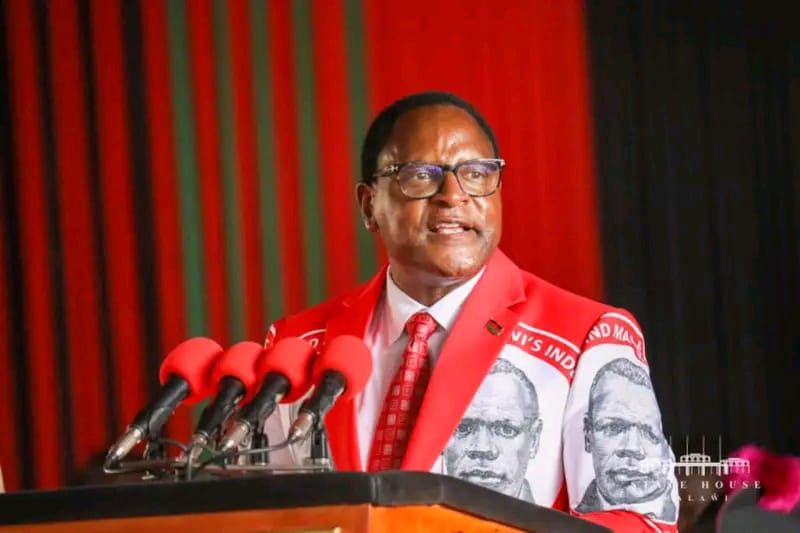
President Chakwera


“They make alot of sacrifices.They don’t know Christmas, they don’t know public holidays. For example today is a public holiday but they are busy working. That is the spirit of John Chilembwe,” he emphasized.

Chakwera who thereafter declared the newly inaugurated government hospital in Phalombe as John Chilembwe Hospital in honour of the fallen hero described the late Reverend John Chilembwe as someone who was “ahead of Malawi Vision 2063.”

On this note, Chakwera emphasised that the late Chilembwe, unlike many modern churches and missions, he advanced industrialisation as one major way of developing the country.

He said that is why his government is vigorously pursuing industrialisation drive as espoused in the Malawi Vision 2063, which is the country’s second long – term national development plan.