

Wednesday, December 17, 2025
No menu items!
spot_img
Home Blog Page 1393

High Court Judge Demands Access to Evidence In Chilima Case, Balancing National Security And Fair Trial Principles

0

By Twink Jones Gadama

In a significant development in the ongoing Chilima Case, High Court Judge Redson Kapindu has delivered an order that could potentially impact the course of the trial. The Judge has directed the State to provide the requested documents, constituting vital evidence, to the court by Monday, 22 January 2024, before 10 am.

Judge Kapindu’s ruling emphasizes the importance of these documents for him to ascertain their content and determine whether their classification as confidential is valid. To ensure an objective evaluation, the Judge has instructed the State to submit the evidence directly to him in his chambers, granting him exclusive access for assessment before making further decisions on the matter.

The crux of the Judge’s decision lies in the fact that matters concerning national security demand a meticulous and sensitive examination due to their intricate and complex nature. Balancing the principles of national security and the right to a fair trial, the Judge reaffirms his commitment to fostering justice without compromising the security of the nation.
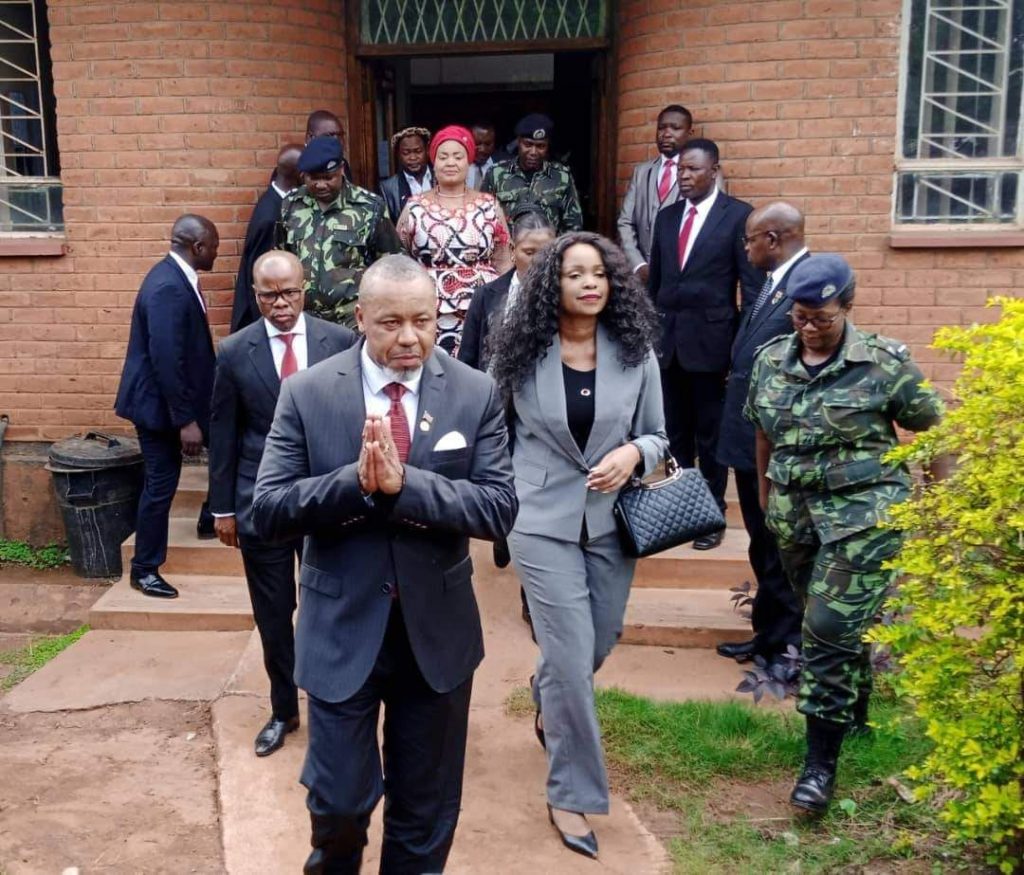
Chilima


The Judge’s order serves as a response to Vice President Saulos Chilima’s request for access to the aforementioned evidence, which he believes is crucial for him to mount an effective and comprehensive defense. This development presents a potential breakthrough for the Vice President’s legal team, as they now have a chance to examine the evidence and gather substantial information pertinent to the trial.

The Chilima Case has garnered significant attention due to its implications not only for the parties directly involved but also for the broader political landscape of Malawi. Vice President Chilima’s decision to challenge the results of the 2023 presidential election, citing electoral irregularities, has fueled public debates and concerns regarding the integrity of the electoral process.

With the trial poised to shape the trajectory of Malawi’s political landscape, Judge Kapindu’s order assumes particular significance. By demanding access to the evidence in question, the Vice President and his legal team aim to dispel any doubts regarding the legitimacy of their claims and present a robust defense.

Considering the compelling arguments presented by Vice President Chilima’s legal team and the broader public interest surrounding the case, Judge Kapindu’s decision underscores the pivotal role of evidence in obtaining a fair and just outcome. His ruling demonstrates a commitment to ensuring transparency and accountability in the justice system, enabling both sides to present their arguments based on verified information.

Balancing national security interests with the principles of a fair trial is a delicate task that Judge Kapindu addresses with utmost care. Recognizing the sensitive nature of matters concerning national security, the Judge’s decision emphasizes the importance of conducting a thorough evaluation of the evidence to preserve the interests of justice.

The submission of the documents directly to Judge Kapindu’s chambers allows for an impartial assessment, away from external pressures or potential interference. By assuming this responsibility, the Judge upholds judicial integrity and further assures the preservation of the information’s confidentiality, given its classified nature.

As the trial progresses, it is expected that this evidence will shed light on the allegations made by Vice President Chilima and provide clarity on the issues surrounding the 2023 presidential election. The submission of evidence will also play a crucial role in enabling the court to make evidence-based and unbiased decisions, ultimately shaping the outcome of the trial.

It is worth noting that while the Judge’s order seeks to strike a balance between national security and the right to a fair trial, it is imperative that all parties involved respect the confidentiality and sensitivity of the evidence. Safeguarding the integrity of these documents will not only uphold the values of justice but also contribute to the preservation of national security.

Judge Redson Kapindu’s order demanding the State to submit the requested evidence sets a significant stage in the Chilima Case. By prioritizing the principles of transparency, justice, and national security, the Judge’s decision ensures a fair trial for Vice President Chilima. As the constitutional challenge progresses, the revelation and examination of the evidence present a critical opportunity to establish a comprehensive understanding of the disputed election, ultimately determining its implications on Malawi’s political landscape.


Government to construct houses for late Henry Masauko Chipembere

0

By Bishop Witmos

Government has plans to construct houses in Mangochi for the grandchildren of the late Henry Masauko Chipembere, a Malawian nationalist politician who played a significant role in bringing independence from the colonial rule.

Chipembere, who hailed from Mangochi, but was staying in South Africa, returned home in 1954 to join his country’s independence struggle as a nationalist strategist and spokesman.

Considering that the independence movement needed a strong leader, he joined with other nationalists to invite late President Dr Hastings Kamuzu Banda to Nyasaland as the movement’s leader.

After Kamuzu Banda became leader, Chipembere was appointed cabinet minister in the run up to independence in July 1964.

Gumba inspecting the site


Speaking during the inspection site for the construction of the houses at Makumba Village, in the area of Traditional Authority (TA) Chowe on Wednesday, Minister of Lands Deus Gumba said late Masauko Chipembere played a very critical role in the fight for independence of the country from the colonial rule.

“The late Masauko Chipembere was one of the early freedom fighters in around 1950s. After so many years, President Dr Lazarus Chakwera thought it wise to honour his soul by constructing two permanent houses for his family.

“This is why, as Minister of Lands, I decided to visit Makumba Village to inspect a place where government will construct the modern houses in honour of the freedom fighter,” he said.

Gumba said the project, whose resources were already allocated in the current financial year, will start early next month and will be completed in a period of three months.

In his remarks, representative of the Chipembere family, who is nephew to the late freedom fighter, Peter Rashid, commended government for the initiative saying it is a great honour to the family.

‘‘We are very thankful to President Chakwera who recently invited us to Chikoko Bay State Lodge where he assured us of his support. The construction of the houses is, therefore, a clear manifestation of his love towards us,” said Rashid.

NICE Trust geared to mobilise many youths to cast their vote in the 2025 elections

0

By Memory Khutuliwa


National Initiative for Civic Education (NICE) Trust has set up mechanisms that will make youths come out in their large number to vote in 2025 local government, parliamentary and presidential elections.

In an interview, NICE Trust Executive Director Gray Kalindekafe said the Trust is aware that youth constitute a larger percentage of the Malawi population but fail to register to cast their vote in elections.

“We are aware of the hurdles that lie in the path of our youth and this is why we are planning to reach out to them through pyramid approaches,” he said.

Gray Kalindekafe


Kalindekafe said the trust intends to mainstream youth in all interventions in different projects lined up prior to the elections citing two projects namely Boma Lathu funded by the European Union (EU) and Nthawi Yao funded by the United Nation Development Fund (UNDP).

“As we promote women participation in politics, we will reach out and mobilise numerous youths that aspire to become representatives as councilors or members of parliament. In these initiatives, NICE will be able to share with the youth reasons why they should be the first to believe in the power to vote,” Kalindekafe explained.

He said the projects were meant to increase participation for women, youth and disadvantaged groups in the democratic and good governance processes that include local accountability systems as well as ensuring credibility of electoral processes through their participation.

“We intend to make youth participation in electoral processes meaningful, especially considering that elections are about power and authority that they are highly contentious hence emotive to the extent that violence is used to some extent,” Kalindekafe added.

He observed that political violence frustrates citizen participation in elections adding that, among others, NICE Trust will engage the youth in political parties and other organised group like faith community to discourage youth participation in acts of political violence.

Kalindekafe expressed hope that direct youth engagement will certainly encourage youth participation in the electoral process including casting their vote.

“Through voter and civic education mandate, NICE Trust will use its unique traditional approaches that are anchored in the 360 degrees Civic Education Model for civic and voter education that seeks to address challenges in democracy and good governance.

“We will embark on various approaches and methodologies through trainings or orientations workshops, mass awareness and mobilisation, community level meetings and shows, village caravans, youth centric interventions like sports bonanzas and brief talks in video show,” Kalindekafe added.

Through Area Civic Education Coordinators and other volunteers, NICE Trust also intends to target mobile youths through road shows around mobile markers, public debates and panel discussions on community radio stations to ensure that most youth are reached out.

Lilongwe’s State-of-the-Art Data Centre to Improve E-Government Services

0

By Paul Madise and Gift Chiponde

Director of E-government, Paul Katema has expressed satisfaction with the ongoing construction of a state-of-the-art Data Centre in Lilongwe saying it will advance Malawi’s digital transformation.

Speaking during a tour of the construction site, he said the Data Centre will centralise hosting services for various Government Ministries, Departments, and Agencies (MDAs) digital systems and data thereby ensuring the security of government information, and efficiency of e-government services, a key enabler for Malawi 2063 vision.


Katema highlighted that the Data Centre being constructed under the Digital Malawi Project (DIGMAP), aims to improve access to critical ICT infrastructure, enhance digital governance, reduce infrastructure costs and optimise the provision of automated services.

In his remarks, Paul Kanthambi, the Data Centre Technical Project Manager, emphasized that integrating ICT across all sectors will enhance government efficiency and transparency in line with the Malawi Growth and Development Strategy II (MGDS II).

He said DIGMAP leverages digital technology for economic growth, innovation, job creation, improved service access, information flow, and market accessibility.

The project is being implemented by Public Private Partnership Commission (PPPC) and financed by World Bank.

Malawi’s Unprecedented Financial Catastrophe: Alliance Capital Faces Liquidation

0

By Twink Jones Gadama


In a stunning turn of events, the High Court Commercial Division has issued a groundbreaking order that Alliance Capital Limited be liquidated, following a colossal financial scandal that has rocked the nation. With billions of Kwachas, an estimated total of K60 billion, lost by countless investors, including prominent government entities and individuals, Malawi finds itself in the midst of one of the largest financial crises in its history.

Led by its managers, Christian Majavinq, and directors Tom Daniel, Dean Lungu, and Kassam Okhai, Alliance Capital was once a promising investment company, attracting funds from various entities and individuals seeking financial growth and stability. However, recent discoveries have revealed a web of deceit, as it appears that the key players behind Alliance Capital have absconded to South Africa, the United States, and India, leaving a trail of financial ruin in their wake.

Government entities have been particularly hard-hit, with hundreds of millions of Kwachas lost by prominent organizations. Among these are the Malawi Police SACCO, losing a staggering K1 billion, while both the Malawi Communications Regulatory Authority (MACRA) and Malawi Energy Regulatory Authority (MERA) face losses of K500 million each. Meanwhile, the Malawi Revenue Authority (MRA) is grappling with a colossal loss of K1 billion.

The financial havoc extends beyond government institutions, as private companies and individuals have also suffered substantial losses. Nico Assett Managers, a well-respected investment firm, has reportedly lost K3 billion, while Zamara Pension Fund and Open Connect are reeling from the loss of K2 billion each. Other notable entities, including Britam and Reunion, have also seen their investments evaporate into thin air, with losses of K500 million each. Prominent individuals like Jimmy Korea Mpatsa and Zondiwe Mbano reportedly lost K2 billion and K500 million, respectively.

Adding further tragedy to the already harrowing circumstances, numerous families and individuals, who had entrusted their life savings to Alliance Capital, are now left devastated. The Nseula family, for instance, has lost K200 million, while the Kahumbe family is struggling to cope with a loss of K500 million. The heart-wrenching reality is that these losses are not isolated incidents; there are countless others facing financial ruin due to this fraudulent scheme.

It is crucial to note that the money lost was not simply invested with Alliance Capital, but rather borrowed from various financial institutions and individuals. Among the prominent borrowers are Bright Malopa, who allegedly borrowed an exorbitant K7 billion, while Mike Chilewe Jnr and Transglobe acquired K500 million and K5 billion, respectively. Stansfield Motors’ debt stands at a staggering K5 billion. Shockingly, not a single Tambala of these borrowed funds has been repaid, exacerbating the financial crisis and crippling the lenders.

The catastrophic fallout from this scandal is far-reaching, transcending mere monetary losses. Investors’ trust in financial institutions has been severely damaged, with some now questioning the effectiveness of regulatory bodies responsible for overseeing investment activities. The implications for the overall economic landscape of Malawi are dire, as the loss of billions of Kwachas will undoubtedly result in stagnant growth, reduced investments, and a general decline in investor confidence.

The Alliance Capital scandal has now become the focal point of intense public outrage, demanding answers, accountability, and justice. The affected individuals and entities, who were lured in by the prospect of financial growth, now find themselves victims of an audacious Ponzi-like scheme. Many eagerly await the court’s decisions and subsequent legal actions to ensure that those responsible for this financial catastrophe are held accountable for their actions.

In response to this monumental crisis, the Malawian government, along with regulatory bodies, must work tirelessly to restore faith and trust in the financial sector. Immediate and comprehensive investigations are necessary to prevent similar incidents from occurring in the future. As victims continue to face the aftermath of shattered dreams and financial devastation, it is imperative that support networks and resources are established to help those most affected rebuild their lives and recover from this immense setback.

The Alliance Capital scandal has undoubtedly left an indelible mark on Malawi’s financial landscape. The billions of Kwachas lost have reverberated throughout society, from government institutions to private individuals, leaving a trail of despair in its wake. As the investigations unfold and efforts to bring the perpetrators to justice intensify, the Malawian people are left grappling with profound questions about the security of their financial future. The scars of this catastrophic event will undoubtedly endure, serving as a stark reminder of the need for vigilance, transparency, and robust regulations within the financial sector to safeguard the interests and well-being of all Malawians.