
Tuesday, December 16, 2025
No menu items!
spot_img
Home Blog Page 1494

NCIC preaches about professionalism among local industry players

0


By Wilfred Golden

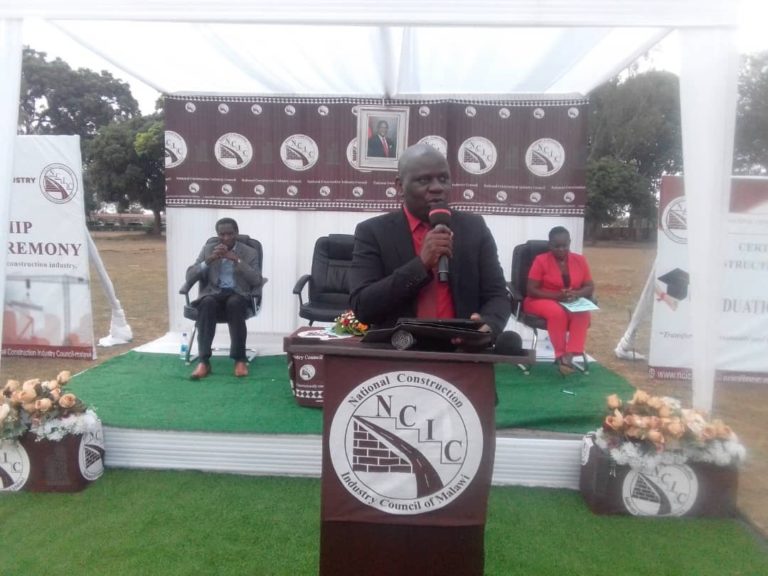
National Construction Industry Council of Malawi (NCIC), says there is need for local industry players in the country to adopt core values stipulated by the council which are; quality, integrity, partnership, innovation and stakeholders focus.

Chief Executive Officer at NCIC, Engineer Gerald Khonje, said this during a graduation ceremony held in two categories of Foremanship and Certificate in construction management.

He said these core values will enable them to work professionally as they are executing their duties.
Gerald Khonje


“As you are aware there has been an outcry regarding the issue of quality in the construction industry and we want that narrative to change, the beginning point is to have the sufficient capacity to be able to implement any type of project in the country and we are calling upon them to work diligently and professionally.

“But we are also calling upon others who are interested to take part in the construction industry to come and participate in these skills, so that their skills are sharpened,” Khonje highlighted.

In his remarks, Executive Director at TEVETA, Elwin Sichiola said it is very worrisome that big contract deals which had an opportunity of changing a life of a Malawian contractors are given to foreign contractors and emphasized that time has come that these local players should start winning big contracts as they have acquired the required skills and knowledge and he encouraged the graduates to have sharp minds as the sky is not even their limit.

“You must understand that construction is a big thing in this country as largely most Malawians have been in small constructions, but when we get to big contracts we have seen alot of foreign contractors and as these graduates most of them are already in the construction industry in different companies and some are not and we are saying go out there compete and grow so that one day as a country we can have a local company dominate big contracts in this country then it will help us to preserve forex and help in developing this country,” Sichiola said.

He also said that as TEVATA they are doing a number of interventions as they also work hand in hand with the construction industry in the development of the curriculum and they also make sure that all students who are on trainings are also involved in practical works offered by TEVETA as they believe that when they combine classroom trainings with industry experience the graduates tends to be more suited to the needs of the industry.

One of the graduating students Sarah Chirwa said as managers in the construction industry they will make sure that they factor in the issue of quality as they will be executing their duties.

NCIC, has accredited 60 students in Foremanship as well as 27 students with certificate in construction management.

MDF refusing to release documents in Chilima corruption case on security matters

0

By Chisomo Phiri

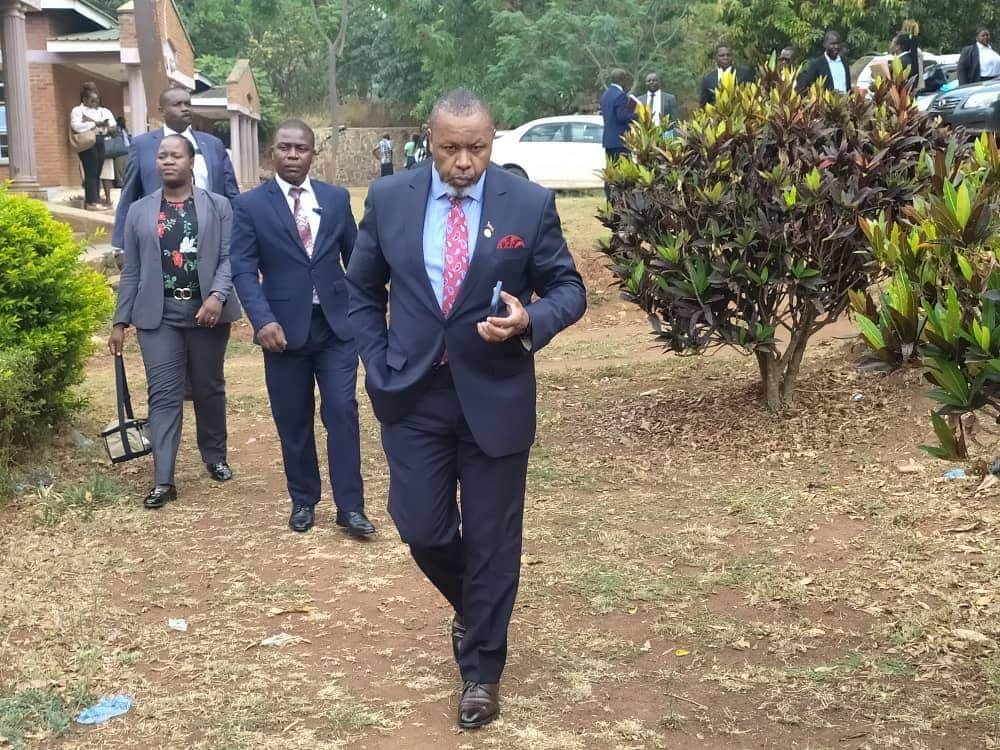
The Malawi Defence Force (MDF) through the office of Attorney General (AG) on Tuesday submitted before Financial Crimes Court Judge Redson Kapindu that it cannot not release documents that defence lawyers in the corruption case involving Vice President Saulos Chilima are demanding because the documents contain information bordering on national security.

The court met in camera for almost three hours where both parties submitted their oral arguments in the presence of
AG Thabo Chakaka Nyirenda.

Chilima


Speaking to journalists outside the court, one of the defence lawyers Bright Theu indicated that MDF are insisting that sharing the documents would put national security in jeopardy.

Theu however, refused to disclose details of the arguments the defence team advanced saying doing so would be preemptive of the discussion which was in camera.

Meanwhile,the court announced reserving its ruling on the matter and also directed both parties to file written submissions by Friday this week.

Chilima is being accused of receiving an unspecified bribe from businessperson and corruption suspect Zuneth Sattar to secure government contracts.

During his arrest in November 2022, Anti Corruption Bureau (ACB) charged him with six counts and alleged he had received $280 000 as a bribe before amending the charge sheet.

Ecobank introduces ‘Save as You Spend’ account for saving culture promotion

0

By Chisomo Phiri

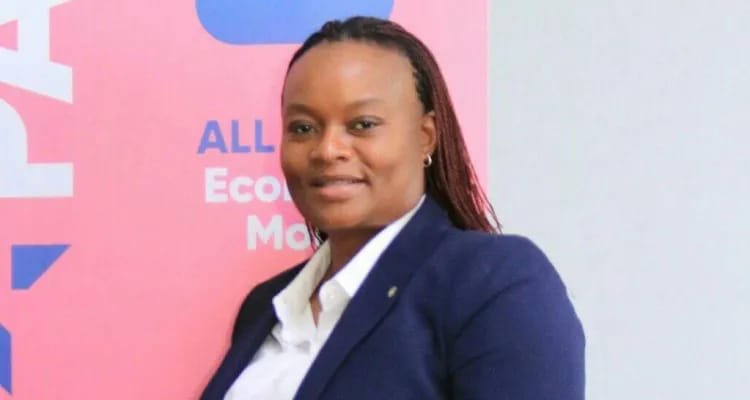
One of the country’s popular financial institutions, Ecobank Malawi has on Tuesday unveiled Save as You Spend Account, which allows customers to automatically save a percentage of their spending transactions.

According to the bank’s head of consumer banking Sophie Kalambule, the account is designed to help customers build up their savings while they spend on everyday needs.

“Customers can choose to save between one percent and 10 percent of their spending transactions, which will be transferred from their current account to their Save As You Spend Account,” she says.

Kalambule


Kalambule says the product is part of Ecobank Malawi’s commitment to promoting a saving culture and assist customers to achieve their financial goals.

She adds: “This is a simple and convenient way for our customers to save money while they spend.

“This is a unique and innovative savings account that automatically debits up to 10 percent of every transaction you make; hence, help our customers save effortlessly as they spend on their daily needs.”

Kalambule highlights that the account, with zero monthly fees, will enable customers to enjoy the benefits of saving such as earning interests, securing their future and accessing credit.

Ecobank Malawi is part of the Ecobank Transnational Incorporated, the parent company of the Ecobank Group that operates in 35 African countries.

Audit exposes DPP fraudulent activities

0

By Linda Kwanjana

A newly released Deloitte audit report has put recent past ruling Democratic Progressive Party (DPP) and its leadership on a tight corner following the plunder of money few months before they were booted out from Government

According to the report, between January 1, 2019 and June 30, 2020, illicit and dubious transactions were made at the Reserve Bank of Malawi through the hands and command of Reserve Bank Governor Dalitso Kabambe.

The audit found that K2.2 billion went out for “building maintenance, rentals, school fees allowances, recall of diplomats” but there are no supporting documents for these transactions. In short, this amount was stolen and Kabambe made a barefooted claim of these expenses.

Kabambe, masterminded of dubious transactions?


According to the document, K4.1 billion was paid to the Pensions and Gratuity Account without an approved funding instruction from government using FDH Bank while K6.5 billion went to FDH Bank in December 2018 and December 2020, which auditors found suspicious.

The audit further revealed that K3.9 billion costs payable to FDH Bank were not disclosed to the board for approval while USD$769 million was disproportionally channelled through FDH Bank.

The report has further revealed that K2.8 billion was paid to various law firms, but auditors did not trace any supporting documents while K27 billion was paid to retiring top managers, who in turn provided K7 billion to the then governing DPP in whose interest Kabambe has, at the material times, always worked.

The audit has found that Mulli Brothers Limited (MBL) was irregularly issued with letters of credit to supply fertilizer to the Government.

According to the audit , one company, Mitra, was awarded two contracts of K1 billion and K757 million contrary to RBM policy. Mitra was also irregularly paid 60% upfront.

According to the report K9.7 billion was siphoned in January 2020 through dubious purchase of overpriced materials for the Prisons Department worth US$18 million from the United Arab Emirates (UAE).

SKCs presidential eligibility deserves candid talk


Over the years, I have observed that Malawians tend to avoid engaging in candid discussions about prominent figures in society, often out of a sense of deep respect or to steer clear of potential conflicts and controversies.
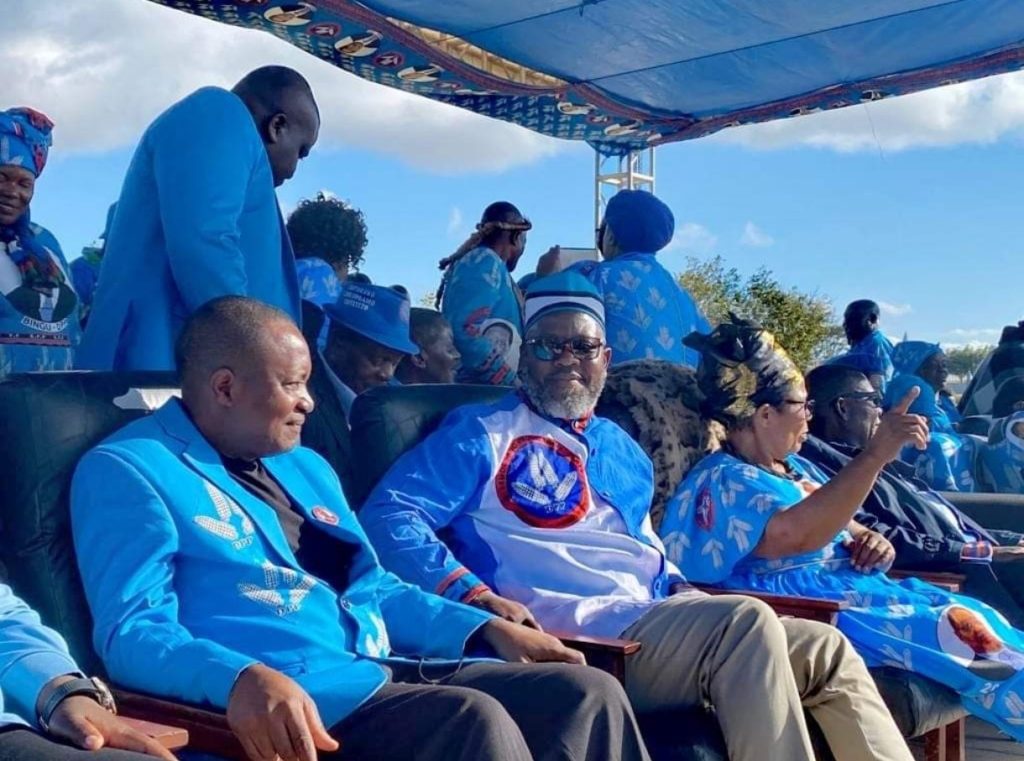
Saulos Chilima’s eligibility to contest in the 2025 presidential elections after serving two consecutive terms as vice president is undoubtedly a matter of great significance for Malawi’s political landscape.

This issue deserves a candid discussion, regardless of the personal likability of Chilima, as it concerns the fundamental principles of democracy and governance in the country.
First and foremost, it is essential to clarify that the decision regarding Chilima’s eligibility should be based on the law, as is the case in any democratic nation and not based on personality.
The Malawian Constitution is the supreme law of the land, and its provisions should guide the interpretation of eligibility for any political office, including the presidency.

The legal context surrounding this issue, as highlighted by the Supreme Court of Appeal in the Bakili Muluzi vs. The Electoral Commission case in 2009, indicates that the presidency encompasses both the President and the vice presidents.
This interpretation is consistent with the spirit of the Constitution, which seeks to prevent any individual from holding the presidency for an extended period, as it would be contrary to the principles of term limits and rotation of power.
The Malawi Constitution establishes positions for both First Vice President and Second Vice President, and it is evident that these offices are included in the constitutional provisions regarding term limits.

If the two-term limit applied exclusively to the President, it could create a situation where an individual could serve as Second Vice President for two consecutive terms and then transition to First Vice President for another two consecutive terms before eventually assuming the office of the President for another two terms.
This scenario would effectively defeat the entire purpose of limiting presidential terms, as the benefits and powers of the President and the Vice President positions are substantially similar.

It is clear, therefore, that the intention of the Malawian Constitution is to ensure that no individual holds a prominent executive position for more than two consecutive terms, whether as President, First Vice President or Second Vice President.
This interpretation is not only legally sound but also aligns with the principles of democratic governance, ensuring a fair and equitable distribution of power and leadership opportunities.

In light of this legal framework and the spirit of the Constitution, Saulos Chilima’s eligibility to contest in the 2025 presidential elections must be examined within the context of these provisions.
Chilima has served two consecutive terms. The first was from 2014 to 2019 when he paired with Arthur Peter Mutharika under the Democratic Progressive Party ticket and from 2020 to 2025 in the Tonse Alliance government.
After serving two consecutive terms as Vice President, it would be constitutionally consistent for the UTM leader to be ineligible to run for the presidency in 2025.

However, it is crucial to emphasise that any discussion on this matter should remain objective and within the bounds of the law.
The Malawian people, their leaders, and the judiciary should ensure that constitutional principles are upheld, providing a fair and just political environment where leadership transitions occur as intended by the Constitution.
It is important to leave out emotions and personalities in such discourse. The willingness to engage in open and candid discussions on such matters is essential for the continued strengthening of Malawi’s democracy and the rule of law.

Just to agree with Prof. Kamchedzera, Chilimas political future hangs in the balance. His situation needs to be interpreted by the constitutional court through a presidential referral and as far as 2025 eligibility is concerned, it is only President Lazarus Chakwera who can do that referral.