Saturday, April 11, 2026
No menu items!
spot_img
Home Blog Page 1496

End of the road for Nankhumwa, Jeffrey, Chazama and others as they are expelled from DPP

0

By Chisomo Phiri

The former ruling Democratic Progressive Party (DPP) has with immediate effect expelled from the party its former Vice President for the South, Kondwani Nankhumwa, former Secretary General Grelzeder Jeffrey, Former Director of Women Cecelia Chazama,former publicity secretary Nicholas Harry Dausi and Zomba Chisi Member of Parliament (MP) Mark Botomani.


Others expelled are National
Director of Research and Training Otria
Jere, National Director of Protocol
Fortunate Simeon Phiri, Deputy Treasurer General
(Centre) Fredrick Billy Malata, Deputy
National Director of Political Affairs (East)Joe Thomas Nyirongo, Deputy National
Director of Operations (North)
Kenneth Chatatata Msonda, NGC Member (North).

On top of this, the party has also removed other members from their positions in the National Governing Council (NGC).

They have also been suspended for nine (9) months.

Those affected are Henry Matemba, Joseph Mabvuto Kachali, Kondwani Ng’ong’ola, Shafee Khamisa, Brave Mkwezalamba, Marriam Chimbalanga, Dumisani Lindani, Baxter Kita, and Lameck Rajab Malimba.

The erstwhile party adds that its former Vice President (Centre) Uladi Mussa has been suspended from membership for nine (9) months while Ralph Jooma, has been removed from his position as National Director of Economic Affairs in the NGC.

Warns DPP: “The Party calls upon its members to respect and abide by the above resolutions, to desist from any misconduct in the Party and never to undermine and disrespect the leadership at any levels within the structures of the party. The Party will not hesitate to take any disciplinary action against any misconduct.”

Earlier this year, the party’s disciplinary committee summoned some of its members to explain their role in the NGC meeting that was held last year, organized by the party’s former Secretary General Grezelder Jeffrey without the party leader’s blessing.

Political analysts have repeatedly warned the party president, Peter Mutharika to tread carefully on how he handles his critics to avoid facing the predicament of losing some members ahead of the 2025 general elections.

During the DPP’s fundraising dinner and dance in 2023, Mutharika lamented losing 20 percent votes from UTM leader, Saulos Chilima to Tonse Alliance after he had dumped the party following political bickering.

Mutharika declared he would contest for the presidency at the party’s convention.

Ironically, the fired Nankhumwa openly declared to challenge Mutharika for the position.
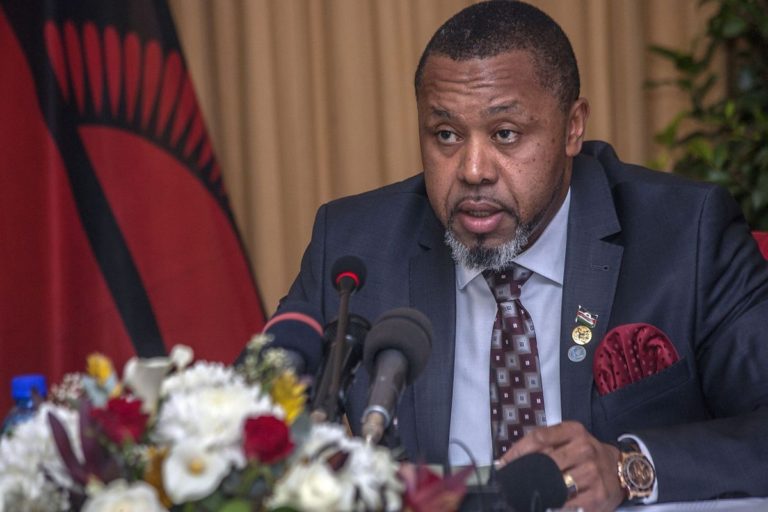
Chilima’s political future while the law bars him from standing for presidency

By Rick Dzida

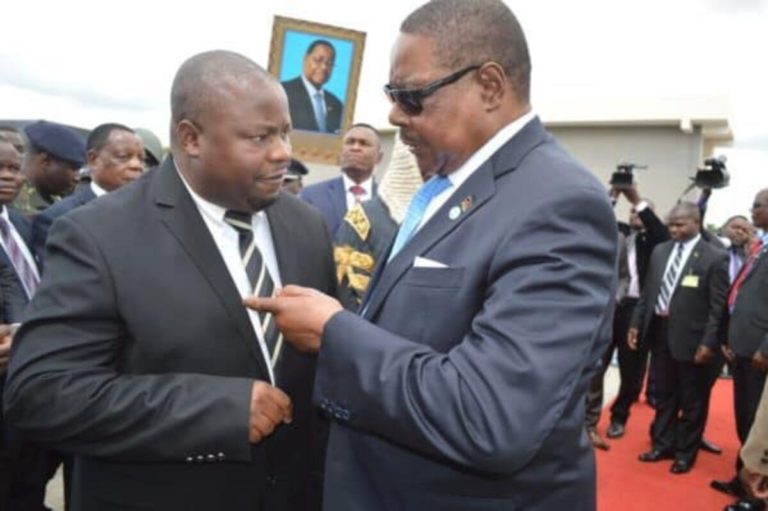
Sympathisers of Vice President Saulos Chilima appear gloomy when they are openly told that any person like Saulos Chilima who has served his maximum two terms as vice president is not eligible to stand for presidency.

This is according to the 2009 Constitutional Court which comprised Justice Twea, Justice Potani and Justice Dr.Mtambo.

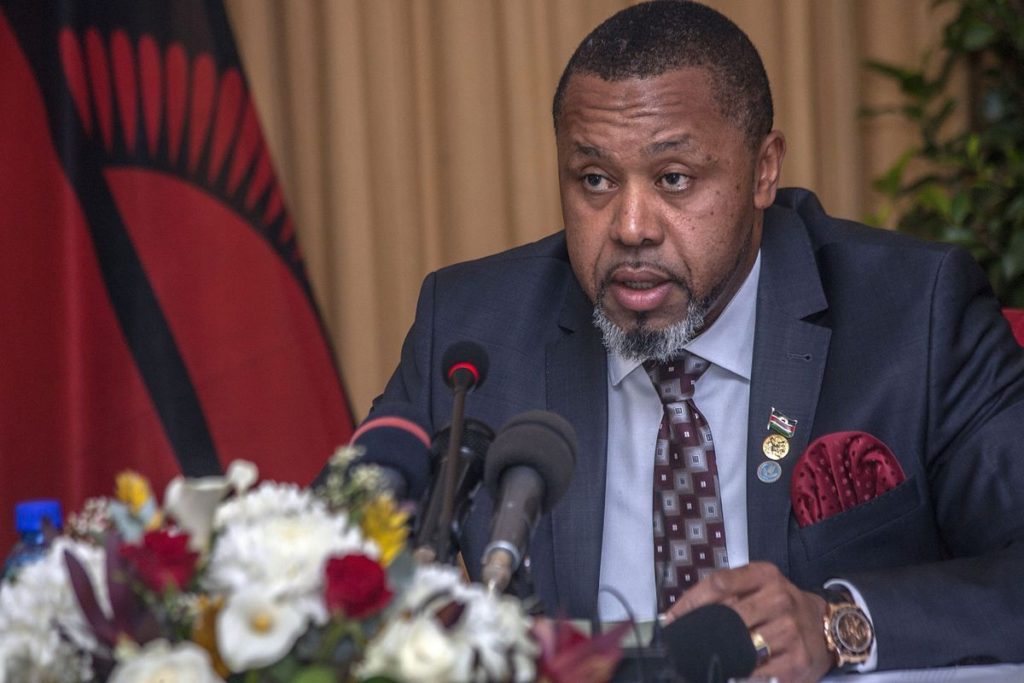
Political Future? Chilima


Some Chilima’s die-hards have been asking for a clause in the Malawi Constitution that disallows a vice president who has served his maximum two terms from standing for presidency.

Frankly speaking, the Malawi Constitution does not explicitly stipulate that.

This is where the jurisdiction of the Constitutional court comes into play.

Whenever there are contradicting interpretations of the Malawi Constitution, the High Court sitting as a Constitutional Court is mandated to provide a formal interpretation of the same.

Then there are some Chilima’s supporters who understand that the law indeed bars Saulos Chilima from standing for presidency and so they ask, what if Vice President decides to resign now, is he still ineligible to stand for presidency in 2025?

Unfortunately, he is still not eligible for presidency because once he was elected in 2020, he was serving his last term, the Chilima’s term. Anyone who comes in to assume the vice presidency will be serving the Chilima’s second term.

This is why, in this scenario, Chilima’s care-taker will still be eligible for another two terms in the presidency.

Still being disappointed with the law, Chilima’s staunch supporters do not tire to ask, isn’t there anything that Chilima can do to lift the ban for the presidency?

Fortunately, there are a myriad of options which Chilima can decide to follow.

Chilima can lobby the Cabinet and the National Assembly to deliberate a bill that will change the Malawi Constitution so that it explicitly stipulates that any vice president who has served his maximum two terms is eligible to stand for presidency.

This is not easy since two-thirds majority is required in the National Assembly to change the Malawi Constitution.

Chilima can also motivate the Executive arm of Government and the National Assembly to call for National Referendum to change the Constitution in his fair.

This is practically difficult as it would look like the whole nation is vesting its interest in a single individual.

My recommended option for Chilima is to wait and relax.

Whenever Dr. Chifundo Kachale, the Malawi Constitution Specialist and Chairman of the Malawi Electoral Commission (MEC) rejects Chilima’s candidature on the basis of the stipulated case law, Chilima can appeal against MEC’s decision.

The Chilima’s supporters continue to exude skepticism by further asking, what if the Chilima’s appeal fails?

If that happens, all is not politically lost for Vice President Chilima. He and his UTM party can form an electoral alliance with any political party.

Once the alliance forms government, Chilima can even be the cabinet minister or he can be sent to any diplomatic mission abroad.

Chilima can also choose to humble himself to vie for the position of the Member of Parliament which happens to be a stepping stone towards the speakership of the National Assembly.

Another pragmatic option for Chilima is to quit active politics and venture into private business here and beyond.

Indeed for Chilima, the sky is limit.

Worries Mount as English Grades Decline in Northern Education Division

0

By Twink Jones Gadama

Education authorities in the Northern Education Division have raised alarm over the deteriorating performance of students in English subjects across secondary schools. Concerns have been expressed regarding the recent MSCE examination results, which revealed an insufficient number of distinctions among students in the division. The decline in English proficiency has become a cause for worry, particularly in areas such as composition, comprehension, grammar, and reading.

Northern Education Division Manager, Jennings Kayira, addressed these concerns while inaugurating a two-day capacity-building workshop organized by the Association for the Teaching of English in Malawi (ATEM), in collaboration with the Anti Corruption Bureau and Vanguard Assurance Company. Participants included English teachers from various districts within the division.


Kayira emphasized that during the 2022/2023 MSCE examinations, the division saw a lackluster performance, with only 40 distinctions achieved in the entire division. This subpar performance across multiple English disciplines has become a major concern for educationists and education authorities.

Expressing his gratitude, Kayira commended ATEM for their proactive stance in improving the teaching and learning of English in secondary schools. These interventions, aimed at equipping educators with effective teaching strategies, have been well-received and appreciated by the teaching community.

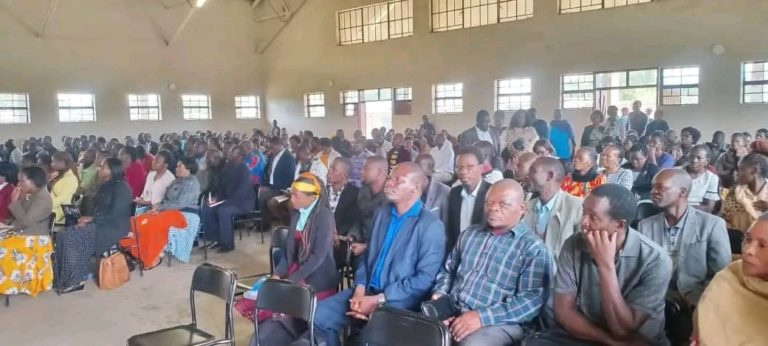
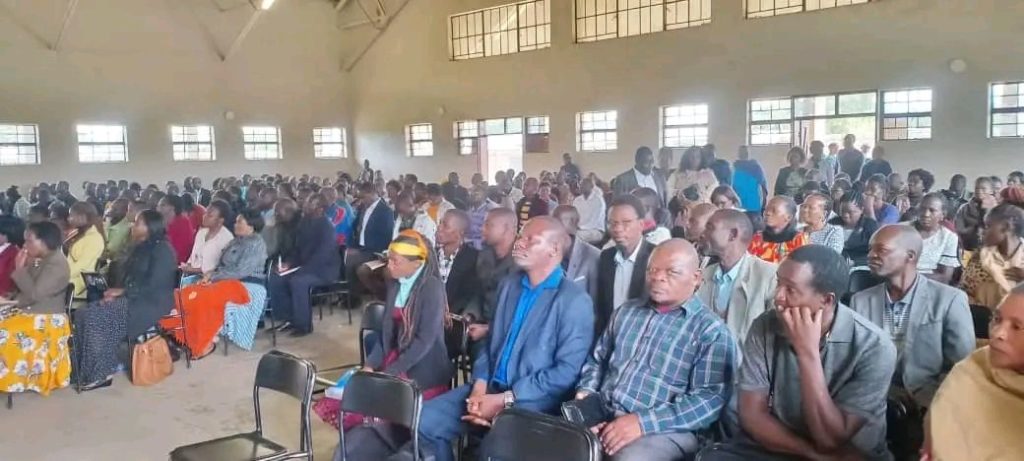
ATEM, in collaboration with other stakeholders, organized simultaneous workshops in Mzuzu, Mzimba South, and Karonga districts. Teachers from all districts within the Northern Education Division actively attended the workshops, which ended on Friday. The workshops served as platforms for English teachers to enhance their teaching skills, exchange ideas, and collectively find solutions to the declining performance in English subjects.

The declining performance of students in English subjects within secondary schools in the Northern Education Division has prompted education authorities to express their concerns. The lack of distinctions in the recent MSCE examination results has shed light on underlying issues in areas such as composition, comprehension, grammar, and reading.

Recognizing the urgency of the situation, the Association for the Teaching of English in Malawi (ATEM) initiated capacity-building workshops in partnership with other organizations. These workshops, held across multiple districts within the division, aimed to equip English teachers with effective teaching methodologies and foster collaborative solutions to improve English proficiency among students.

It is hoped that the educational interventions implemented in response to this concern will yield positive outcomes, ultimately leading to an improvement in English grades and the overall academic performance of students in the Northern Education Division.

Chilima applauds new Catholic Auxiliary Bishop of Lilongwe, Vincent Mwakhwawa for his acceptance to God’s call

0

By Staff Reporter

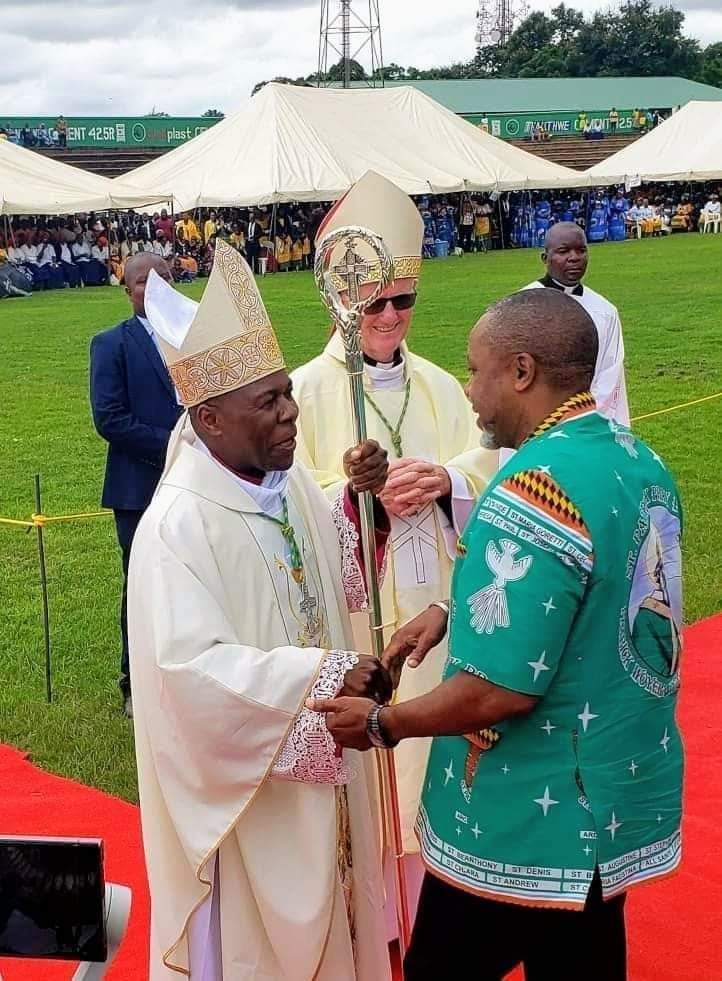
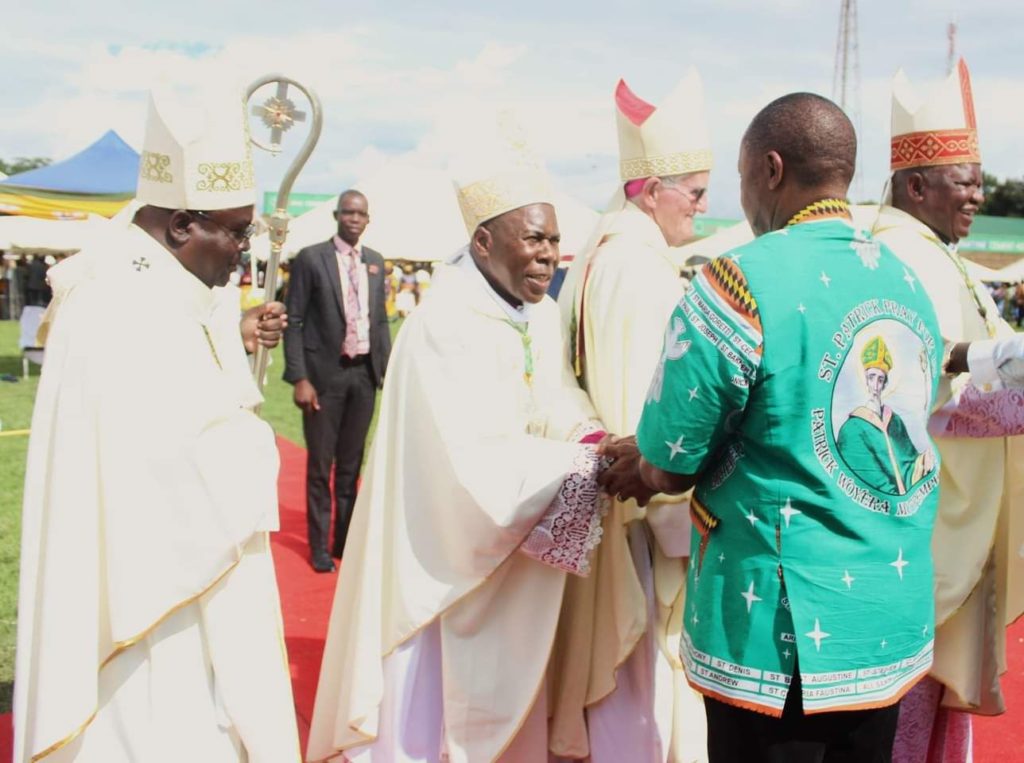
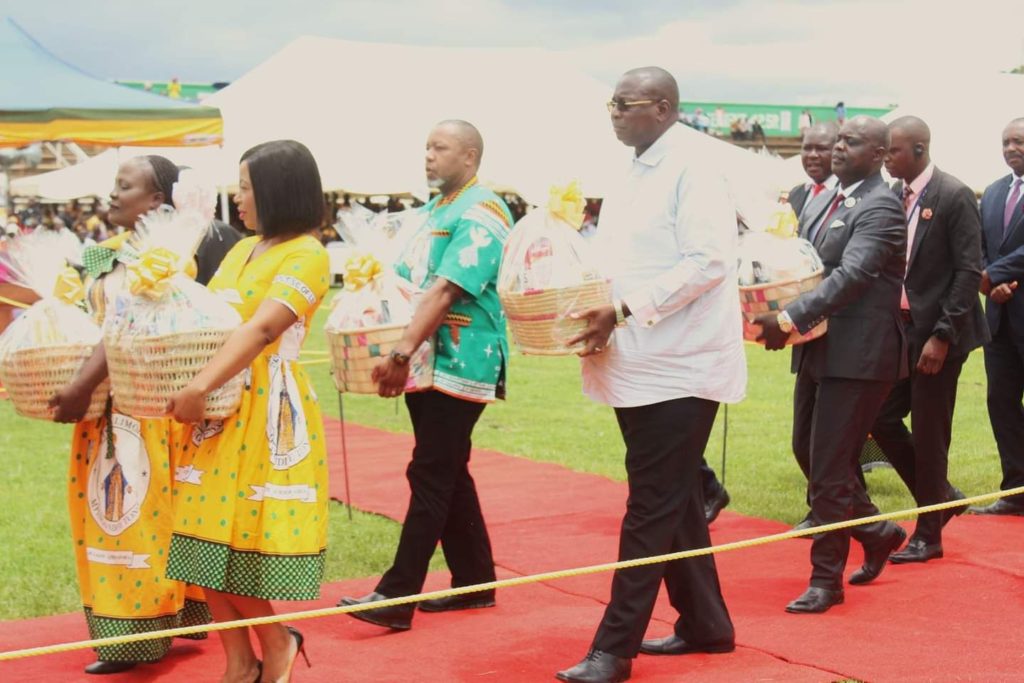
Chilima made the remarks today at Civo Stadium in Lilongwe during the consecration of the new Auxiliary Bishop where he represented the country’s President, Dr Lazarus Chakwera.

The Vice President also expressed government’s appreciation to the Catholic Church for its complementary role in the provision of essential social services in the country in areas such as education, health, women and youth empowerment, governance as well as agriculture through it’s institutions and development arms.


In his remarks, Archbishop Gian Luca Perici, Apostolic Nuncio to Malawi and Zambia also congratulated Bishop Mwakhwawa for accepting the calling.

He however advised the new Bishop to remain vigilant as he will be discharging his daily duties.

Most Rev. George Desmond Tambala, Archbishop of Lilongwe, who is also President of Episcopal Conference of Malawi (ECM) expressed his happiness for the newly ordained and consecrated Auxiliary Bishop, saying this has lightened up his duties and responsibilities.

In his address Rt. Rev. Vincent Mwakhwawa, expressed gratitude to the Catholic family for trusting him to carry out the mission.
He pledged total dedication and cooperation, and has pleaded for unity.

In his remarks, Laity Council Chairman, Gabriel Kamlomo disclosed that Lilongwe Archdiocese has 49 parishes and the Auxiliary Bishop has come on time.

Former Vice President, Khumbo Kachale; Speaker of the National Assembly, Catherine Gotani Hara; Minister of Lands, Deus Gumba; Leader Opposition in Parliament, Kondwani Nankhumwa and Malawi Congress Party Regional Chairperson for the Centre, Patrick Zebron Chilondola were among dignitaries who also attended the event.

Transfers in Malawi Police Services: A Political Game or a Routine Procedure?

By Twink Jones Gadama

The recent transfers of senior police officers in Malawi have raised eyebrows and sparked debates about the motives behind these actions. With President Chakwera experiencing a lukewarm welcome in the southern region, especially during a convoy passing through Blantyre, many believe that these transfers are politically motivated. This article delves into the details of these transfers and explores the allegations of political interference within the Malawi police services.

One incident that has particularly caught the attention of the public is the courageous act of some fearless individuals in Blantyre. They blocked President Chakwera’s convoy at the HHI roundabout, demonstrating their dissatisfaction with his leadership. Interestingly, these individuals were on their way to the graveyard or HHI cemetery, emphasizing the depth of their frustration and the significance of their actions.

Kaira

Hours after this unprecedented blockade, news broke that Commissioner of Police for the south-west region, Richard Luhanga, had been transferred to the northern region, maintaining the same position. In a surprising turn of events, Noel Kaira will replace Luhanga in the south-west division. Additionally, Rhoda Luhanga, who held the position of Regional Operations Officer 2, will now be heading to the north as Regional Operations Officer 3. These sudden transfers of senior police officers have not gone unnoticed by the public.

The Maravi Post, a well-respected news outlet, obtained a wireless message signed by the Malawi Inspector General of Police, MerLylin Nachulu Yolamu, announcing the transfers. According to this message, the transfers were effective immediately. The timing of these transfers, coinciding with President Chakwera’s visit to the Democratic Republic of Congo for the inauguration of President-elect Felix Antoine Tshisekedi Tshilombo, has raised suspicions among critics.

The Malawi police services have long been plagued by allegations of political interference, and these transfers only add fuel to the fire. It is no secret that the police force is heavily influenced by politics, and critics argue that these recent transfers are just another example of this phenomenon. While the government denies any ulterior motives and maintains that these transfers are routine and commonplace, security experts suggest otherwise.

Speaking on the condition of anonymity, a security expert claims that these transfers are politically strategic in nature. According to the expert, the transfers are a means for the government to maintain control and silence dissenting voices within the police force. By moving senior police officers who may have shown sympathy or support for the protesters, the government believes it can maintain its grip on power and prevent any further challenges to its authority.

In response to these allegations, National Police Public Relations Officer Peter Kalaya asserts that the transfers are normal and without sinister intent. He points out that transfers occur in all government departments, including the police force, and are a routine part of maintaining efficiency and effectiveness within the organization. Kalaya suggests that these transfers should not be viewed through a political lens but rather as a standard administrative procedure.

However, the skepticism surrounding these transfers cannot be ignored. Many Malawians have expressed their concerns about the erosion of trust in the police force and the government’s alleged manipulation of law enforcement agencies for political purposes. The arbitrary nature of the transfers, coupled with their timing and the public’s perception of them, only serve to deepen these concerns.

As the debate rages on, it is crucial for authorities to address these concerns and ensure transparency in the transfer process. A clear explanation from the government, backed by evidence, could assuage fears and restore faith in the Malawi police services. Without such transparency, the public’s trust in the police force and the government’s commitment to fair and impartial governance will continue to wane.

In conclusion, the questionable transfers within the Malawi police services have shed light on the deep-rooted problem of political interference. While the government insists that these transfers are routine and devoid of any political motives, critics argue otherwise. The timing and circumstances surrounding these transfers, coupled with the country’s overarching political climate, have raised suspicions among the public. It is essential for the government to address these concerns seriously and take steps to rebuild trust in both the police force and the administration as a whole. Only through transparency can the Malawian people have faith in the integrity and independence of their law enforcement agencies.