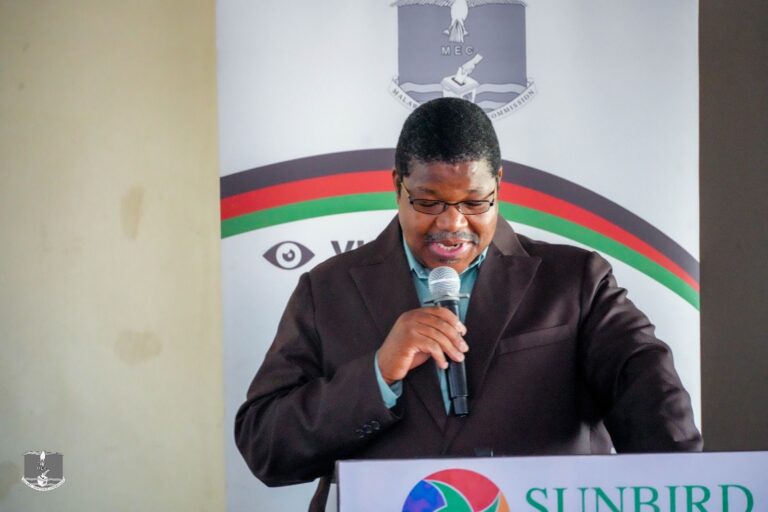
The Chairperson of the Independent Electoral Commission (IEC) of Lesotho, John Maphepe, is in Malawi on a study tour focused on Information and Communication Technology (ICT), electoral operations, and election logistics.
The visit comes as Lesotho prepares for its general elections scheduled for 2028.
Maphepe says the commission chose Malawi for the tour due to the long-standing relationship between the two countries and Malawi’s notable experience in managing electoral processes.
He expressed optimism that the delegation will gain valuable insights into the administration and management of elections.
John Maphephe
Meanwhile, Chairperson of the Malawi Electoral Commission (MEC), Annabel Mtalimanja, has expressed confidence that the engagement will strengthen cooperation between the two commissions on electoral matters.
Mtalimanja says the interaction provides an opportunity to share experience
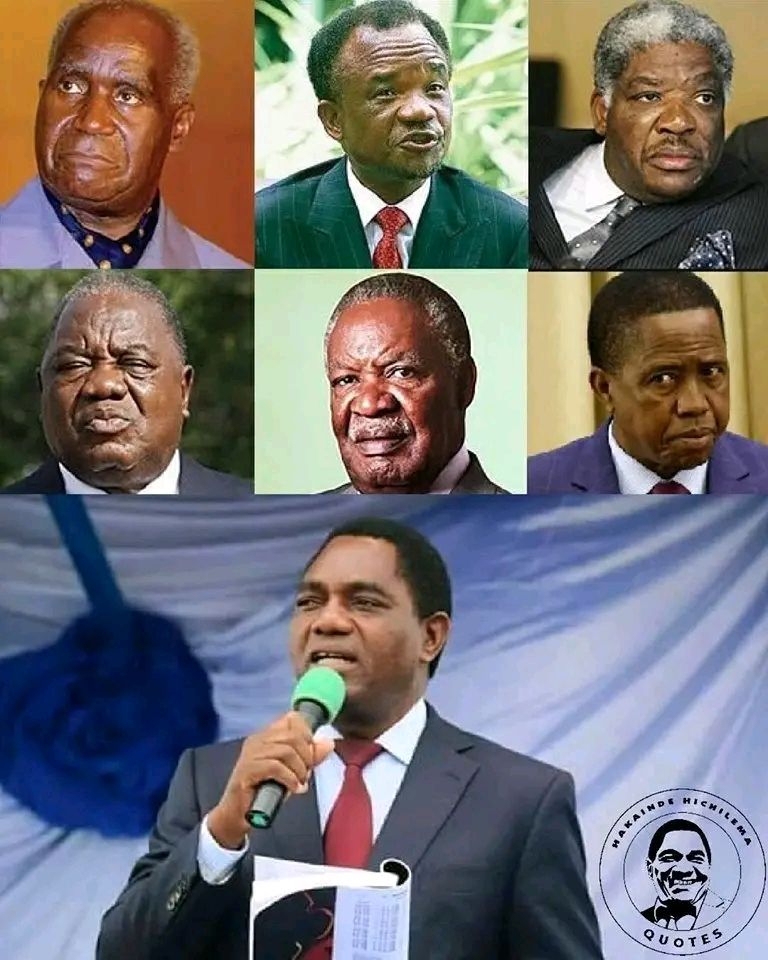
Zambia has had a rich presidential history since gaining independence in 1964, with seven official presidents and one acting president leading the nation.
The first president was Kenneth Kaunda, who led the country from October 24, 1964, until November 2, 1991, playing a crucial role in Zambia’s struggle for independence from British rule. Kaunda’s leadership and charm rallied the people, leading to Zambia gaining its freedom.
Kaunda’s government allowed multiple political parties initially, but he later declared Zambia a one-party state in 1973, citing unity and stability as reasons. During his time in office, Zambia faced economic struggles due to its reliance on copper exports and foreign aid.
Zambian Presidents
In 1991, Frederick Chiluba succeeded Kaunda, introducing multi-party democracy and serving until January 2, 2002. Chiluba’s presidency marked a significant shift towards democratic governance.
Levy Mwanawasa took office on January 2, 2002, focusing on anti-corruption efforts and improving living standards. He served until his death on August 19, 2008.
Rupiah Banda assumed the presidency after Mwanawasa’s death, serving until September 23, 2011. Banda emphasized economic growth and development.
Michael Sata became president on September 23, 2011, initiating infrastructure development projects. Unfortunately, he passed away on October 28, 2014.
Guy Scott briefly served as acting president after Sata’s death, before Edgar Lungu took office on January 20, 2015. Lungu served two terms, focusing on infrastructure expansion.
Hakainde Hichilema, the current president, assumed office on August 24, 2021, prioritizing economic revival and anti-corruption efforts.
*The Office of the Vice President*
The Office of the Vice President supports the President and assumes the presidency if the President is unable to serve. Notable vice presidents include Reuben Kamanga, Simon Kapwepwe, and Mutale Nalumango, the current Vice President.
The Ministry of Lands, Housing and Urban Development, says registration of land requires coordinated efforts by all stakeholders for all to feel ” My land my wealth- Malo anga chuma changa.
The Ministry is continuing to implement land related reforms through the operationalization of the 2016 land laws, their 2022 amendments and other related registration.
It is supporting several projects that are implementing land tenure security, interventions in the country in areas of land governance, land registration, land laws awareness, capacity building, and land information management system operationalization.
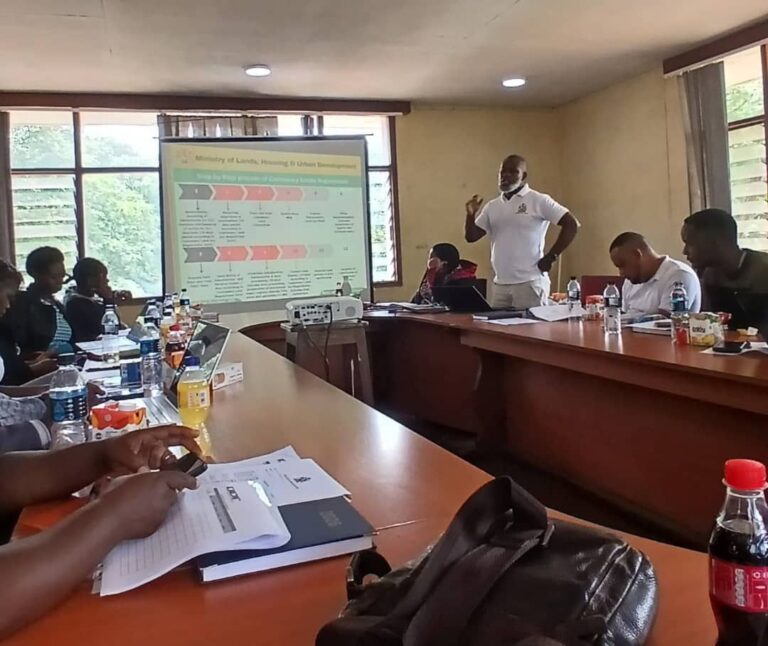
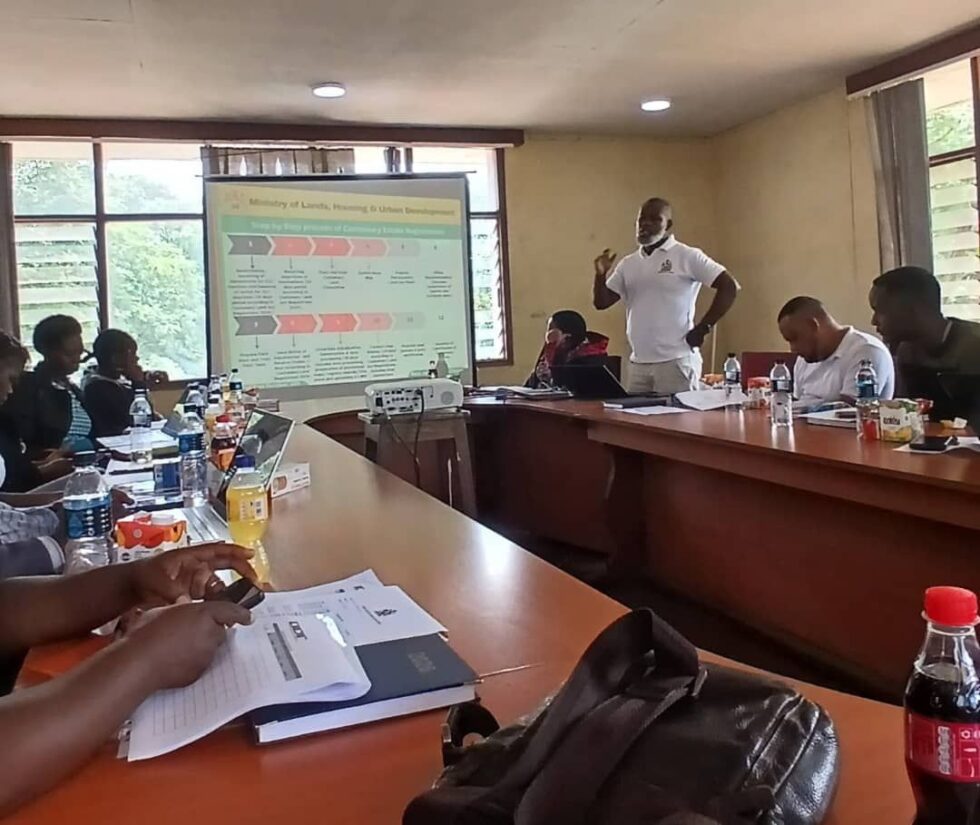
Wisdom Bwanali- Presenting ” Malo anga chuma changa” in Dowa district.
Briefing the District executive committee (Dec) in Dowa on AGCOM 11 Customary Land Registration, the Ministry’s Land use planning Specialist in the Land Reforms implementation Unit Wisdom Bwanali, said land registration provides communities and households with formal recognition of their land.
Bwanali said land registration reduces risks of land grabbing, encroachment or disrupt as well as strengthening confidence for long term investments in land related conflict resolution, economy, empowerment, and recognition of customary rights.
He said land registration improves land management and provides social benefits which in the end enhances trust between communities and government.
The Specialist said District executive committee (Dec) plays a critical role in ensuring that the customary land registration process is done in conformity with the applicable laws.
He said Dec is their to ensure that there is coordination, oversight, and advisory roles in the customary land registration processes and aligning customary land registration with District Development Plans ( DDP).
Bwanali said Dec is there to monitor adherence to procedures and legal requirements, providing technical guidance to Traditional Authorities and Community Land Committees, mobilsing and sensitizing communities to participate in land registration.
” Dec on customary land has a role to play to ensuring that there’s conflict prevention, monitoring and reporting,” he said.
However, Bwanali said customary land registration is facing challenges such as mobility, community awareness and participation gaps, land ownership and boundary disputes, institutional capacity, sustainability, and coordination, among others.
In her remarks, Dowa District Council’s Director of Planning and Development Mercy Mpakule, urged all stakeholders in the district to work hand in hand with the Ministry of Lands to ensuring that Customary Land Registration in the district is a success.
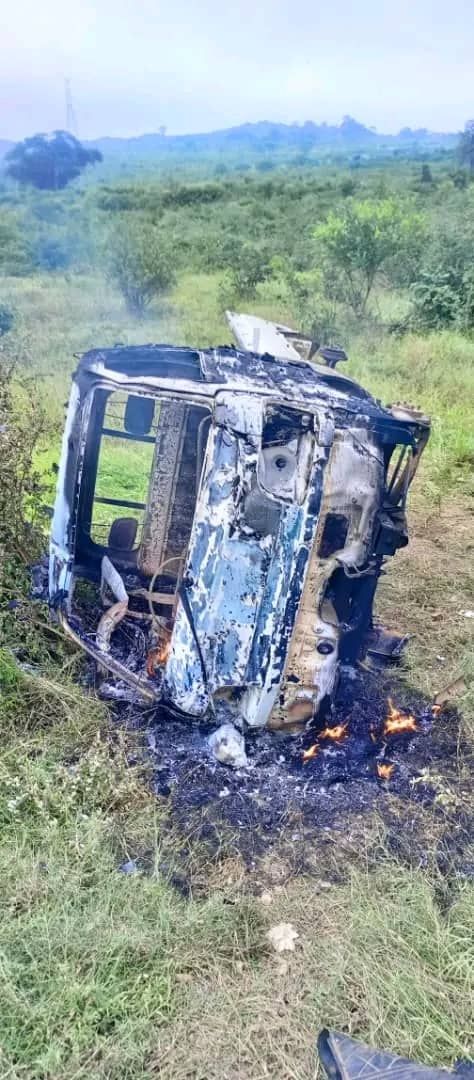
Angry villagers in Benjamini Village under Traditional Authority Symon in Neno District have burned a Hijet pick-up vehicle belonging to a man they suspected of stealing livestock.
The incident followed allegations that the man, together with his accomplice, had stolen cattle valued at K4 million as well as goats.
Neno Police spokesperson Rebecca Msoliza identified the two suspects as Chester Chigadula, aged 25, and Emmanuel Kameta, aged 39, both from Kasamba Village in the district.
According to Msoliza, the incident occurred yesterday around 5 PM when villagers intercepted the vehicle, registration number NN11635, carrying one cow and goats.
The situation intensified when the owner of the cow rushed to the scene and confirmed that the animal belonged to him.
This confirmation angered the villagers, who reacted by setting the vehicle on fire. When questioned by police, Kameta, who owns the vehicle, said he had hired it out and was not aware of any theft.
On the other hand, Chigadula claimed that he had been invited by another man, identified as Eliya Chizula, to help purchase the livestock.
Police have since launched a search for Chizula, who is currently on the run.
Meanwhile, the two suspects are being held at Zalewa Police Station as investigations continue.
Police say the suspects will appear in court soon to answer charges of livestock theft. The incident has raised concerns over mob justice, as communities continue to take the law into their own hands instead of allowing legal processes to take place.
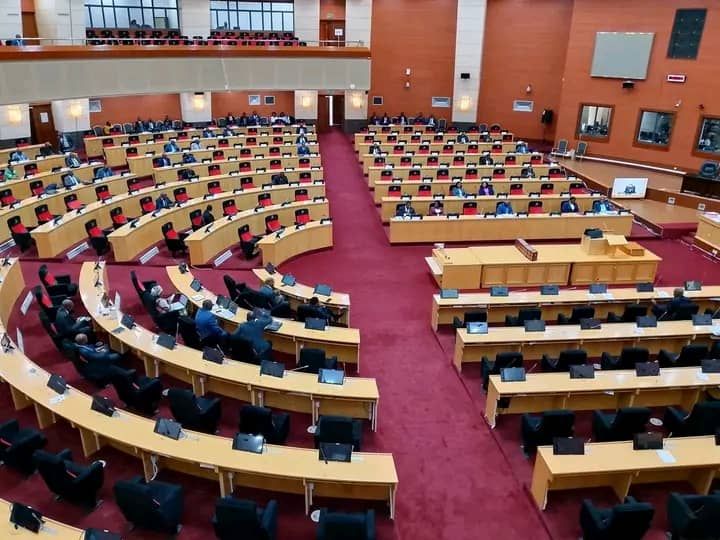
Malawi’s Parliament has approved a set of amendments to the country’s taxation laws, marking a significant shift in how the government collects revenue, particularly from the housing, mining and insurance sectors.
The newly passed Taxation Amendment Bill introduces a 15 percent rental income tax, a move authorities believe will help broaden the tax base and increase domestic revenue collection.
Presenting the bill in the House, Minister of Finance Joseph Mwanamveka said the changes are part of broader efforts to strengthen the country’s fiscal position and ensure consistent revenue inflows.
One of the key highlights in the amendments is the restructuring of mineral royalties, where payments will now be made monthly instead of quarterly, a change expected to improve government cash flow.
The bill also grants the Malawi Revenue Authority (MRA) powers to collect a 3 percent tax from motor vehicle insurance, further expanding the scope of taxable services.
While the government has defended the measures as necessary, some lawmakers have expressed concern over the potential impact on ordinary citizens.
Speaking on behalf of the Malawi Congress Party (MCP), Lawrence Chaziya said although his party supports the bill, there is a need to reconsider the 15 percent rental tax.
Chaziya argued that the rental tax could place an added burden on many Malawians, especially those already struggling with the rising cost of living.
On his part, UTM legislator Felix Njawala emphasized the importance of public awareness, saying citizens must be fully informed about the new tax measures.
Njawala noted that without proper communication, the reforms risk being misunderstood or resisted by the public.
In response, Mwanamveka maintained that most of the proposed taxes were already outlined during the presentation of the 2025/2026 national budget, suggesting that the changes should not come as a surprise.
As Malawi moves to implement the new measures, the debate now shifts to how the government will balance revenue generation with protecting citizens from additional financial pressure.