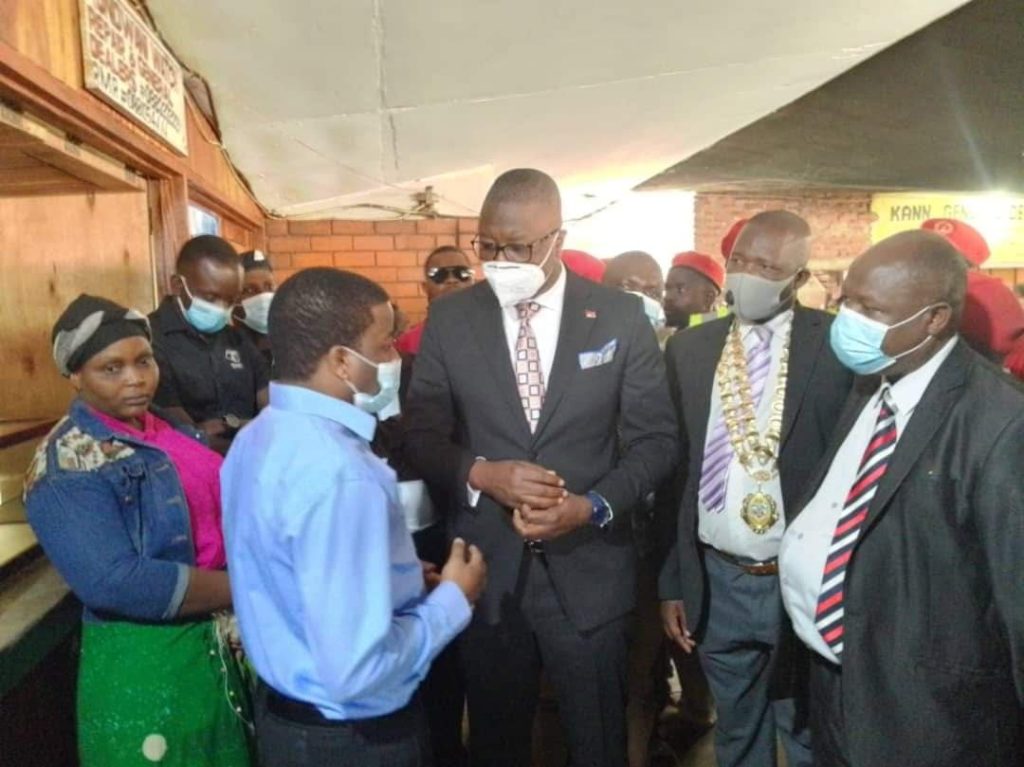
Karonga District commissioner Paul Kalilombe has warned Karonga market users against disposal of rubbish in drainage systems of the market saying it is puts the market at risk of floods.
Kalilombe’s remarks come in reaction to the District’s downscaled seasonal forecast for 2021 to 2022 by the Department of Climate Change and Meteorological services that has predicted that rainfall amounts exceeding 245mm are expected around town in March. “People’s habits of dumping rubbish in drains of our market is continuing and this shows that we might again have problems when rains begin, so this must be stopped if we are to prevent flood related problems that might come due to poor drainage system and we need the support of the people on this matter,” he said.
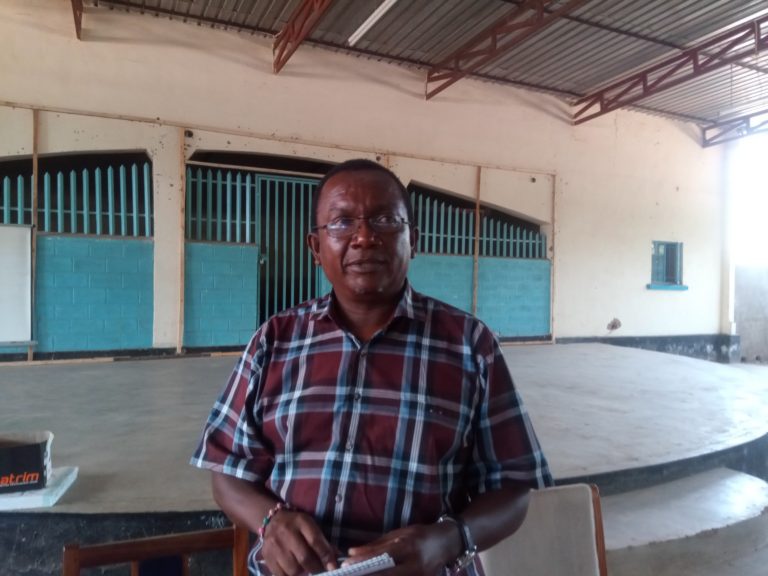
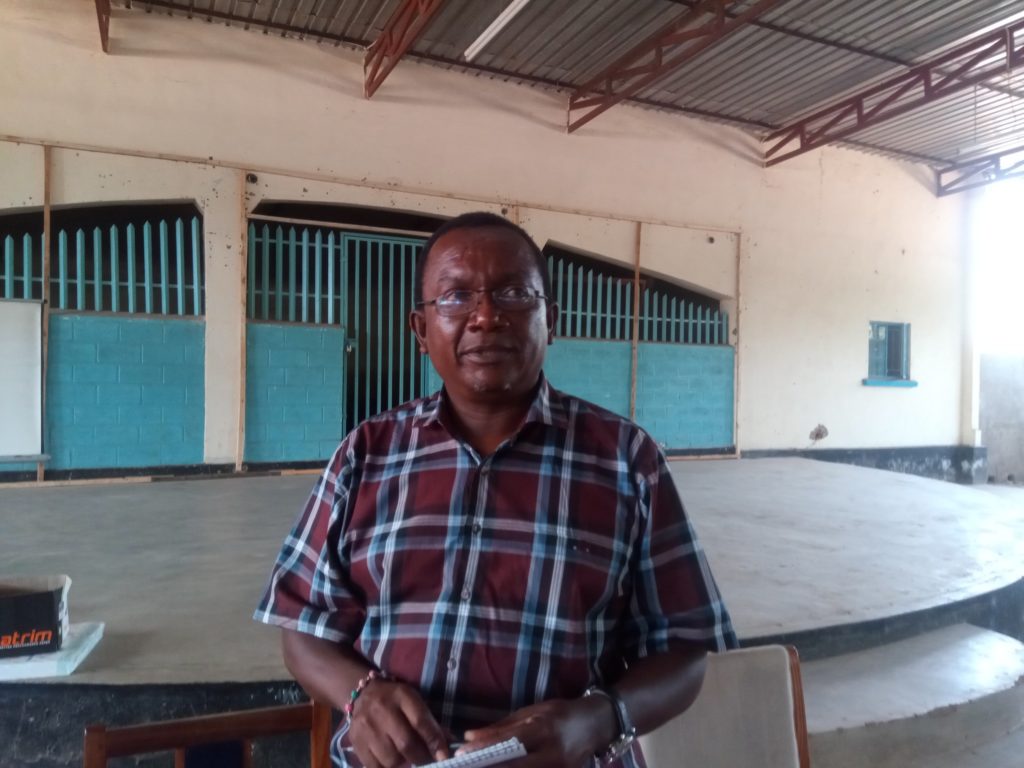
Karonga DC Paul Kalilombe
Kalilombe has since urged media practitioners plying their trade in the district to help in sensitizing people on negative effects of dumping rubbish in the drains. On his part, Karonga Market Chairperson, Goodwin Ghambi hailed the DC saying the warning is timely as his committee is also committed to making sure that drains are clean. “As of now, the council is cleaning the drains in the market, so the warning has come in good time as it will make people abide to the rules, our market committee is also committed to working with the council in making sure that the drainage system is clear,” he said.
Karonga district is one of the flood prone districts and poor drainage system has been one of the causes of flooding in the market during the previous rainy season.
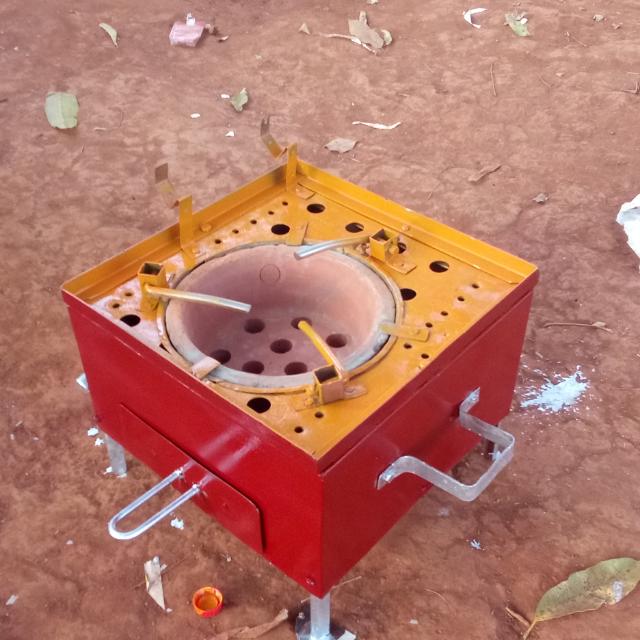
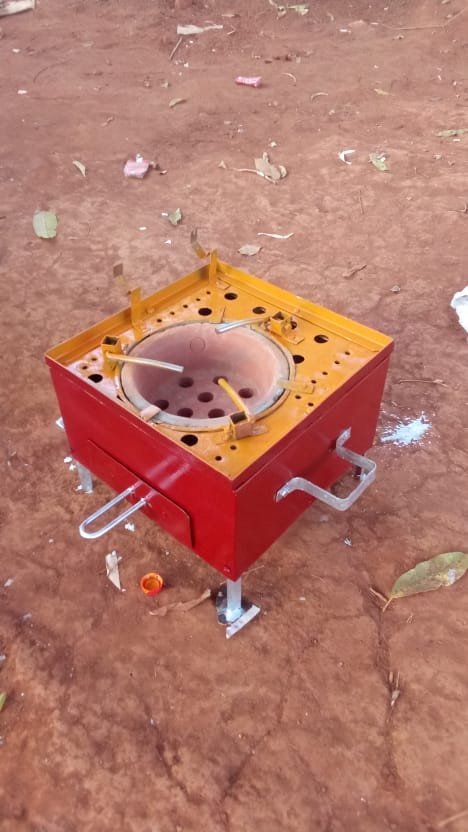
In an effort to conserve the environment, a 20 year old boy from Mulanje George Kalichero has innovated an electric stove called Kalichangu stove.
In a separate interview, Kalichero said the stove has been designed to use electricity when cooking instead of charcoal hence minimizing the deforestation that comes due to charcoal production.He said the stove uses only waste-made briquettes or lava rocks for it to gain a start-up heat and once it has gained heat, the rest is done by electric power. ” When using Kalichangu stove, what you all need to have are waste-made briquettes or lava rocks, just two to three of them for it to gain heat. Once it has gained heat, the rest you use electricity” said Kalichero.
On its use and efficiency, Kalichero explained that the stove is efficiency as it does not require a lot of electric power or briquettes to operate.
” Kalichangu is very efficiency in use. It does not require a lot of electric power or waste-made briquettes to operate it. Firstly, wen using Kalichangu, you need to have 3 waste-made briquettes and put them in the stove. After that, you put a match stick in the stove. Once you place a put on this stove, the stove automatically starts working”, he explained.
He added that the stove is made with up a socket where you can place a charger so as to either increase or decrease amount of fire during cooking.
” It has a socket where you put a charger and this is when you are using electricity. What happens is that, you increase or decrease the amount of fire during cooking and the stove is very fast. If you do not have ESCOM electricity, you can also use solar panel as the stove does not require a lot of energy to operate” said Kalichero.
The Kalichangu stove is made up using motor charges of a laptop, switches, plain sheets, wires and bolts.It is safe all the wires are placed inside hence reducing the risk of electric shock. Kalichero said he came up with the idea of inventing this electric stove so as to play a big role in conserving the environment by avoiding deforestation for charcoal burning.
” As youths, we have more time to live on this earth and it is our responsibility to conserve the environment. Charcoal production is one of the biggest challenges contributing to deforestation, so as youths who are to stay longer on this earth, we have to bring innovative ideas on how to conserve the environment”, said Kalichero. The innovator cited lack of materials being the biggest challenge he is facing to make more of these stoves which he believes will help a lot in conserving the environment countrywide. ” I have plans to establish my company where I will be making these stoves and employ my fellow youths, but the challenge remains how to have adequate materials. The materials are hard to find and I wish the government should support my work”, he said.
Kalichero has therefore called on government and other well-wishers to support him so as he scale up his project.
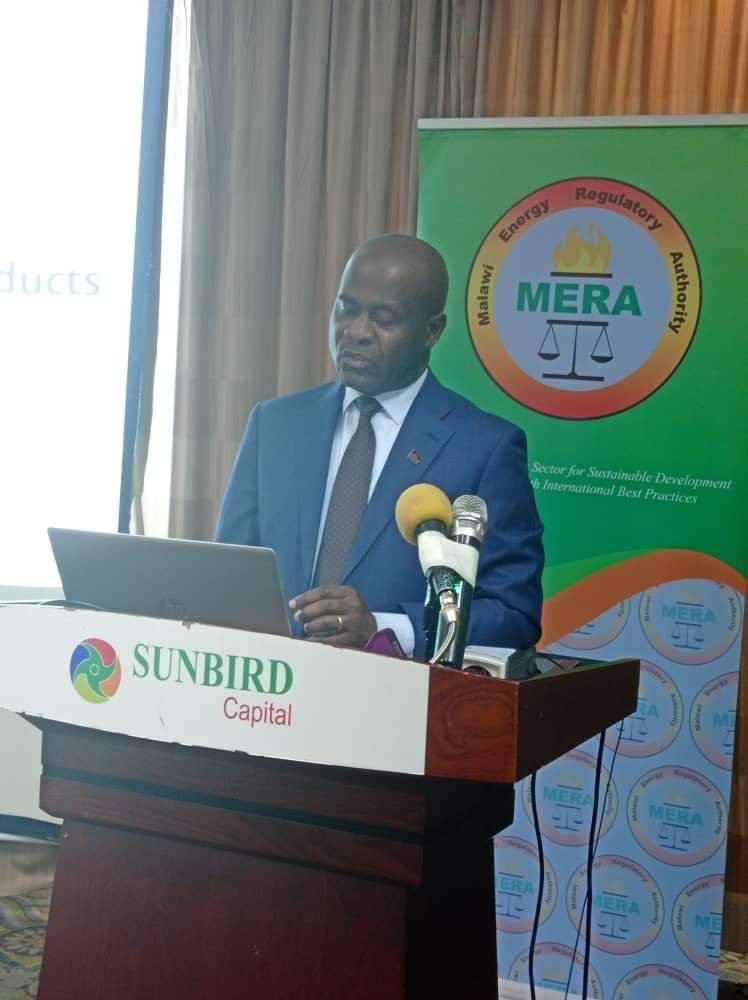
Malawians are braced for fuel price increase .The Malawi Energy Regulatory Authority (MERA) has announced an upward adjustment of fuel prices in the country effective midnight.
Making the announcement in Lilongwe, Motivation Speaker and now MERA CEO Henry Kachaje said Petrol will now be selling at K1,150.00 per litre from K899.20 per litre representing a 27.89 % increase.
MERA Chief Henry Kachaje
Diesel is now at K1,120.00 per litre from K899.00 per litre representing an increase of 24.72% while Paraffin is now at K833.20 per litre from K719.60 per litre, an increase of 15.79 %.
Kachaje attributes the rise to an increase of fuel prices on the international market and the weakening of the kwacha against major currencies.
Enekia Lunyamila scored the only goal of the game as Tanzania were crowned 2021 COSAFA Cup champions after a deserving 1-0 victory over Malawi Women’s Football Team, The Scorchers, in the decider at the Nelson Mandela Bay Stadium in South Africa on Saturday.
The result means Tanzania who played the competition without losing any game, are regional champions for the first time.
Tanzania had the better of both the opening and the second half, but could not make that dominance count on the scoreboard.
The breakthrough for the Tanzanians finally came on 64 minutes when Enekia Lunyamila scored the winner from the rebound.
After the game, Scorchers coach McNerbet Kazuwa accepted defeat saying their oponents we’re just a better side on the day.
“First of all I would like to thank God for making us reach this year’s final. The girls did their best to claim the title but I have to admit that Tanzania were just a better side and they really played well today. They deserve the title,” said Kadzuwa.
Kadzuwa further urged Malawians not to loose hope but to give the Scorchers enough support in order to do much better in the coming competitions.
This was the first time for Malawi to reach the final and they did that in a spectacular way having defeated the hosts and defending champions South Africa 3-2.
Low literacy and income levels, geographical restrictions, lack of motivation to use technology, lack of physical access to technology, and digital illiteracy have contributed largely to the digital divide in Malawi. To bridge this digital divide, President Lazarus Chakwera has committed to implement a number of initiatives to ensure that digital services closer to the people.
On Friday, October 8, 2021, the Malawi Government embarked on an ambitious digital initiative that would provide free internet connectivity to selected public places to facilitate easy communication among people of Malawi.
The Ministry of Information, in conjunction with the Public Private Partnership Commission (PPPC), is rolling out the Public Free WI-FI initiative that Malawi Government’s Digital Malawi Project is implementing through the Commission. TNM and Office Mart are the service providers under this initiative
Minister of Information, Gospel Kazako, presided over the official public free Wi-Fi initiative launch at Blantyre Secondary School in Blantyre.
Recently, President Chakwera also launched the Malawi ICT EXPO organized by ICT Association of Malawi in the Capital City, Lilongwe where he highlighted ‘digitization’ as one the major tools for achieving wealth creation, food security and industrialization, the three focal areas of his administration.
Kazako launching free WiFi in Blantyre
President Chakwera further pointed out that one of the key tools in achieving the said focus areas is digitization. President Chakwera said the future of everything is digital and Malawi must not only be a part of it, but also be one of its creators. He said even those who are resistant to embracing new technology have been forced to see its uses during Covid-19 pandemic. A door of opportunity to normalize and democratize ICT usage has opened before us, and we must not waste it, the President had said.
When he officially launched the free public Wi-Fi in Blantyre, Minister Kazako said the Chakwera administration has always emphasized that there can never be a new Malawi without embracing new technologies and propagating delivery of e-services to the people.
The Chakwera administration is fully aware that delivery of e-services and adoption of new technologies is dependent on firstly and foremost addressing the key basic issues such as internet connectivity, proper ICT Infrastructure and digital skills.
Under the initiative, the Kamuzu and Chileka international airports will be provided the free Wi-Fi so that they are at par with other international airports around the world. Globalization demands the need to have an outward thinking on what others in various countries are doing as opposed to being limited to your own situation and conditions.
The Chakwera administration is also working overtime to ensure that hospitals and schools are also connected to Free Wi-Fi under this initiative, as a matter of urgency.
Through proper connectivity, health officials can interact with other professionals and experts in different countries and seek guidance and knowledge on critical medical areas without going there physically and even transfer of medical records from one hospital to another in times of referrals can be done online.
President Chakwera and his government are also keen to see that schools and libraries are connected to reliable internet and this has an obvious result of allowing learners to access vast information. The world is more open and connected now, and there must be no resistance to the adoption of ICT for whatever reason. ICT is now a necessity and not an option at every level, and today even businesses that fail to adapt to new technologies are dying natural deaths.
The growth of ICT has even changed how products are marketed and purchased. The provision of WI-FI in the marketplaces will enable traders to appreciate the trending market prices, place their orders online, explore potential export markets and even advertise their products.
MCP PLEDGE
What President Lazarus Chakwera and his MCP administration are implementing today with regard to ICT and digitalization is based on a well thought through strategy as contained in the Malawi Congress Party (MCP) 2019-2024 manifesto.
Under the manifesto, it was the vision of the MCP government is to develop a vibrant, competitive and efficient ICT industry.
More specifically, the MCP pledged to create an enabling environment for the growth of ICT and telecommunication as a key strategic sub-sector of the economy; reduce the cost of ICT services, through among other things, securing access to the new submarine infrastructure along the East African coast and review the taxation regime of the industry; promoting effective competition in the industry by allowing new entrants as a strategy to boost coverage and lower the cost of services.
The MCP also committed to extend broadband internet connection to all urban and rural centres through extension of fibre optic cable network to these areas to enhance access.
In June, President Chakwera officially launched the National Fibre Backbone Phase II.
The MCP had also pledged to remove all tariff and non-tariff barriers on internet facilities (including laptops and computers, cables, modems, routers etc.) in order to reduce the price of broadband internet; and connect all government offices and public facilities such as universities, colleges, secondary schools, hospitals, security installations to broadband internet.