Monday, December 22, 2025
No menu items!
spot_img
Home Blog Page 2147

Remembering Professor James David Rubadiri

By John Chirwa

September 15 passed silently without a national remembrance of Malawi’s hero, Professor David Rubadiri, who died on the same day last year.

However, in this silence reigned a loud whisper at Chancellor College in Zomba as scholars hatched an idea to celebrate his heroics through publication of the Journal of Humanities as a special issue.

This idea is now a reality.

The college, through its English Department, has released the journal Celebrating Professor David Rubadiri which features eight papers and poems written by scholars from both within and outside Malawi.

The journal’s editor Emmanuel Ngwira says the publication follows a call for papers the department made earlier to honour the fallen hero.

“On September 15 2018, the academic community woke up to the shocking news of the passing of Professor David Rubadiri, a day after celebrating his 61st anniversary in marriage.

“Prof Rubadiri was a celebrated poet, playwright, novelist, critic, diplomat and one-time Vice Chancellor of the University of Malawi. He also taught at universities of Makerere in Uganda, Nairobi in Kenya, and Botswana. His biography and work anticipate the figure and the preoccupations of a transnational and trans-cultural artist, and visionary leader,” says Ngwira.

But how has the academy remembered this celebrated artist in the journal?

Fragments of Rubadiri

Associate professor of Literature at Makerere University, Susan Kiguli, explores the intersections of Rubadiri’s roles as a student, poet and teacher.

In the article Fragments of Rubadiri: Student, Teacher and Poet, Kiguli says she seeks to address silences and gaps the apparent absence of Rubadiri’s full auto/biographical work creates.

The University of Leeds trained academic says she relied on the archive to trace three stages in Rubadiri’s life: his days as a student at Makerere, his time as a teacher at the same university and his career as a poet.

“I observe that his remarkable abilities and personality as attested to by his teachers during his student days allowed him to transition into a celebrated teacher and an intuitive poet later in his life.

“I also observe that as a student, teacher and poet, his strengths were anchored in his ability to understand the importance of being human and the shifting boundaries of human experience.

“Further, I touch on notions of home and exile in Rubadiri’s life and poetry, particularly in the context of Makerere University and Uganda, his adopted home,” writes Kiguli.

Trauma, drama in Rubadiri’s poetry

Rubadiri was “one of Africa’s most widely anthologised poets,” with some of his poetry appearing in respectable anthologies such as Poems from East Africa, co-edited with David Cook, and Growing up with Poetry that he curated.

Rubadiri is not only widely anthologised, but he is also one of the most read African poets because his poetry “has been prescribed reading in many African education systems than his single novel No Bride Price.

No wonder, in his entry Melancholy and Trauma in David Rubadiri’s Poetry, Makerere University lecturer of literature Edgar Nabutanyi delves into the literary life of Rubadiri and lays bare his traumatic experiences of postcolonial Africa.

Nabutanyi, a holder of a doctorate degree in English, argues that it is inevitable for Rubadiri’s poetry to embody undertones of trauma because “of the colonial epistemic violence committed against Africans during and after colonialism”.

“This is perhaps why his works interrogate the dual collective traumatic memory of Africa’s colonial and post-independence disillusionment. It is unsurprising that the poetic works of Rubadiri generally, and those explored in this article simultaneously betray nostalgic melancholy of the continent’s squandered opportunities and promise at independence,” he says.

University of Malawi English lecturer Syned Mthatiwa agrees with Nabutanyi that Rubadiri’s popularity rests in poetry. But the former is quick to point out that “his poetic harvest is rather minimal—his only collection, An African Thunderstorm and Other Poems, boasts only twenty-three poems”.

“What the poems lack in numbers, they more than compensate for in the energy and beauty that they radiate, beauty that has seen most of them translated and anthologised around the world over the years.

“It is also this energy, the beauty of composition, and their tackling of relevant themes, which have made his poems the staple of many poetry classes in Africa and beyond,” says Mthatiwa.

Mthatiwa, therefore, argues that the success of Rubadiri’s poems is based on how the poet uses drama, which is “in turn reliant on his economic use of language, his descriptive skills, and his use of vivid and evocative images”.

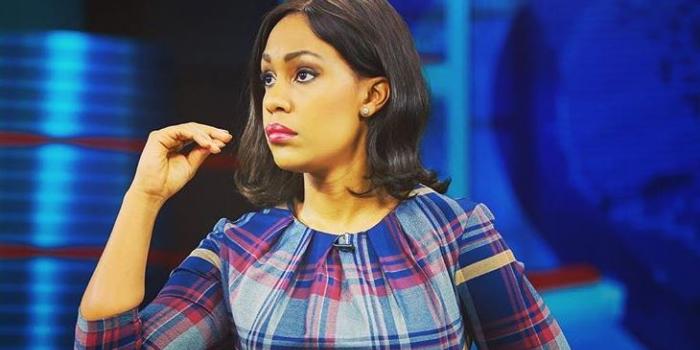
Kenya Citizen TV anchor Victoria Rubadiri , granddaughter of the late professor

“These aspects do not only render the poetry enduring and memorable, but they also make the poems and the action in them spring to life, cementing the legacy of the poet as one of the accomplished poets of his generation in Africa,” he writes.

Lessons learnt

The journal then takes a soft touch to issues as Mzati Nkolokosa and Asante Lucy Mtenje wrap up with the lessons and the legacy that Rubadiri left behind through his poetry and his lived life which is described as “a classroom for all of us even after his death”.

“Through various recollections of my interations with the late professor, I reflect on Rubadiri’s positive influence on my academic and literary journeys,” says Mtenje

She adds: “The article reads the impact that Rubadri’s life had on my life through the evocation of powerful quotations from other writers, which aptly sum up Rubadiri’s legacy as a writer, freedom fighter, humanitarian and mentor who touched many people’s lives in profound ways.”

In her entry Rubadiri, Ugandan poet Moureen Aol brings in a message of hope for such a loss in Rubadiri, envisioning his rebirth through the work of numerous poets that he influenced, including herself.

She writes: “… His heart of gold is preserved 

where decay has no power.

His footprints are still visible to us

We, who had no encounter, no second glance at him

will wear his shoes

The Rubadiri mask sits gently on every poet’s face

His mind holds our pens

His heart fuels ours

The ancestors claim his body

But in every poet, he is reborn

“A Grain Of Wheat”

Ngugi Wa Thiong’o might have said

In September.”

(original posting Nation Malawi)

Prophet Sabao gets prison sentence

0

A court in Lilongwe has sentenced a famous Malawian prophet, Chimwemwe Seer Sabao, to a 10 years jail term for forgery and falsifying documents.

Sabao , a shepherd prophet for worshippers at Angelic Gathering For Christ Church has since started his sentence at Maula Prison .Another person, Nomsa Plaigne who was Sabo’s accomplice, has been sentenced to four years in jail for uttering false documents.

A second grade magistrate court convicted Sabao a week ago after months of trial.He was charged with forgery and falsifying documents after being suspected of cashing out seven cheques from the bank account of Glalle Enterprises and General Dealers Stationers which belongs to his mother-in-law.

It is alleged that Sabawo a man of God connived to defraud Glalle Company by originating a cheque hired some young men to cash the case.

When the employed men sensed danger of arrest, they immediately reported Sabawo accomplices to Police who immediately pounced on him while he was busy administering Sunday services.

The money that was stolen amounts to K3, 350, 000. However, Sabao and his accomplice denied the charges.

Sabao was in the media a few months ago for assaulting his wife and dumping her in the family toilet.

But later her wife died in a very controversial manner in which it is alleged that she was poisoned through a witch doctor based in Mitundu in Lilongwe.

HRDC Snubs Symon Vuwa Kaunda, new demos In December

0

Human Rights Defenders Coalition (HRDC) has turned down the invitation by Ministry of Lands, Housing and Urban Development Symon Vuwa Kaunda to discuss land-related issues saying all they want is the ministry to resolve the matter.

Civil society organisations (CSOs) under HRDC banner Tuesday gave government five days to reverse sale of school land, failing which the CSOs will lead Malawians to a wave of protests.

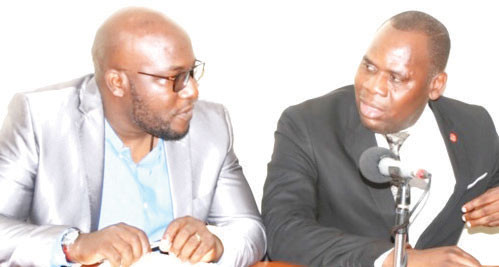
Timothy Mtambo and Gift Trapence

There have been revelations that Livimbo, Chimutu, New Shire, Chilambula and Magwero have been encroached on by developers in deals that are allegedly dubious.

Minister of Lands Symon Vuwa Kaunda invited HRDC to a roundtable saying he wanted the rights defenders to appreciate what the ministry is doing since the issues of sale of public land came out.

According to the letter of invitation Malawi News has seen, signed by Sosten Chinkonda, Ministry of Lands wants HRDC officials, Ministry of Education officials and the claimant of Livimbo School’s land to meet, go to the site and resolve the issues.

“We would like extend the invitation to you to witness the verification exercise of the boundaries when Surveyor General will be retracing the boundaries of the land for Livimbo School on Monday November 25, you may wish to note that the problem of encroachments on the land for public institutions is so huge and it is therefore my plea that we should work together to arrest the problem.” reads part of the letter.

However, in a separate interview, Vuwa Kaunda disclosed that his ministry has withdrawn documents relating to land in question for further scrutiny at the ministry.

According to the minister, this is to comply with HRDC’s demand.

HRDC press conference yesterday focused on the alleged sale of land in some public schools and push for the resignation of Malawi Electoral Commission Chairperson Justice Jane Ansah among others.

Mtambo warned people that are allegedly plotting to infiltrate and end the grouping that they will not succeed because God will not let it happen.

HRDC has meanwhile endorsed truck drivers’ strike scheduled for November 3 2019.

The coalition has also announced new wave of anti-Jane Ansah demonstrations on December 10.

HRDC has been organising nationwide demonstrations to push for Ansah’s resignation for allegedly mismanaging May 21 Tripartite Elections which Malawi Congress Party and UTM are challenging in court.

12 Magawa students arrested

0

Police in Mchinji have arrested 12 students of Magawa Secondary School for vandalising school property during Tuesday night. According to Mchinji Police the arrests were part of police interventions to restore peace at the school.

Police Spokesman Kaitano Lubrino

Mchinji Police spokersperson, Kaitano Lubrino said the students vandalised school property in reaction to the school’s authority move to suspend a student who had a radio in the school against school rules. The irate students petrol bombed the administration block where the head teacher’s office has been the most affected.

Early last month, students from the school took to the streets and presented a petition to Mchinji District Education Manager, where they complained over poor learning conditions at the school.

Fifa President coming to Malawi To inspect projects

0

Fifa President Gianni Infantino is expected to visit the country next week Wednesday to inspect the body’s Forward 2.0 project.

In a letter dated 14th November addressed to Nyamilandu a Fifa Council Member, Infantino said he was looking forward to meeting the members of Malawian football community and Government officials.

“It will be a unique opportunity to visit the various infrastructure projects carried out, to share our vision of football and the ways to further develop our game in your country and promote its values. I have no doubt this visit will strengthen our ties and enable us to continue working together to accomplish these objectives,” Infantino says in his later.

Confirming the development, Football Association of Malawi (Fam) chief executive officer Alfred Gunda told a local newspaper that Infantino’s visit to Malawi was part of his tour of Africa which will see him visiting other countries such as Namibia, Lesotho, Mozambique and Zimbabwe.

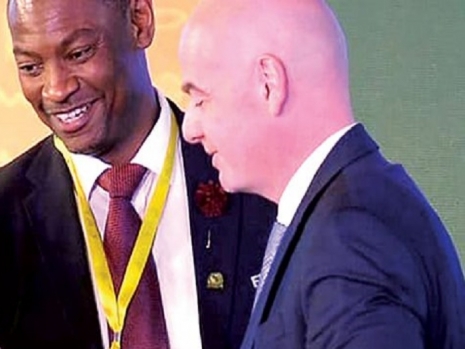
Nyamilandu and Infantino

He said Infantino will inspect Fifa funded projects and also officially open Mpira Village Stadium in Malalwi.

“This is a special visit because it will be his first time to be in Malawi. We are privileged that through his visit he will appreciate various football developments that have happened so far [in

Malawi] and also share future plans of Malawi football development,” he said.

This would be the second visit of a Fifa President to Malawi as the body’s former boss Sepp Blatter also visited Malawi in 2002.