Former Machinga South East legislator Fyness Magonjwa has officially conceded her parliamentary seat to independent candidate Donnex Mpuzeni following Tuesday’s election.
Acknowledging the unofficial results, Magonjwa described the campaign as “hectic” in a social media post. She expressed disappointment at not returning to serve but gracefully urged her supporters to unite behind Mpuzeni. She entrusted her successor to continue the development projects initiated during her time in office.
Fyness
Despite her personal loss, Magonjwa struck an optimistic note for her party at the national level. She stated she is “greatly comforted” by the anticipated victory of Democratic Progressive Party (DPP) leader Professor Peter Mutharika, who she believes will become Malawi’s next president.
Magonjwa made history in 2019 as the youngest member of that parliamentary cohort. Her concession emphasizes a peaceful transition and a focus on continued development for her constituency.
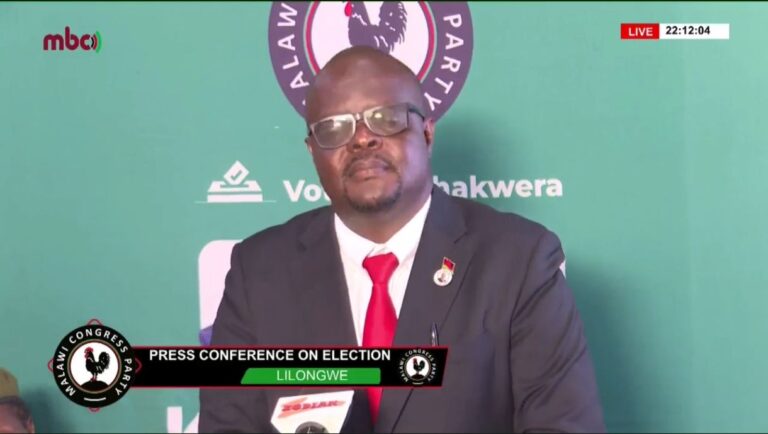
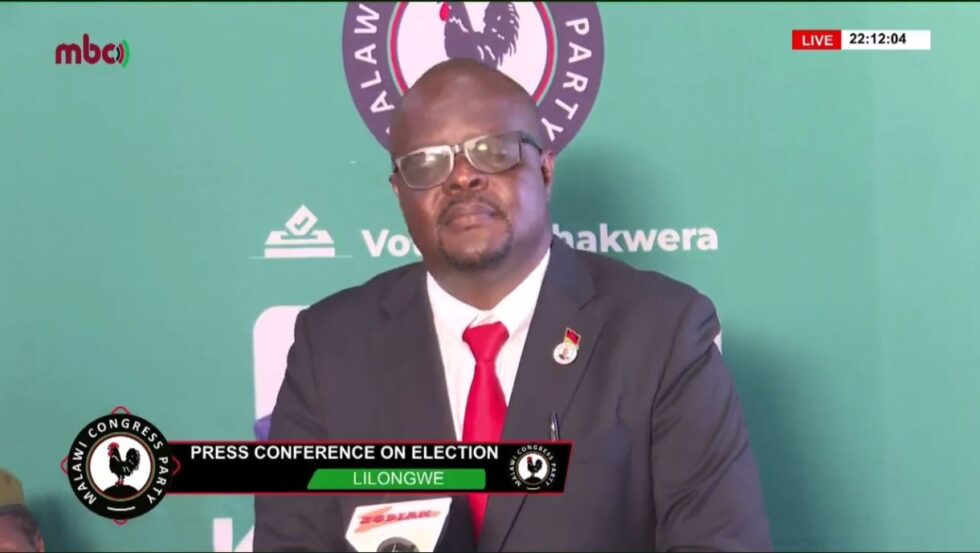
The Malawi Congress Party (MCP) held a significant press conference at its Lilongwe headquarters this evening, where senior officials addressed the nation amidst growing anticipation for the results of the September 16 presidential election. The event, attended by a host of prominent party figures and a vibrant crowd of supporters, was dominated by calls for calm and stunning allegations of a coordinated plot to discredit the electoral process.
MCP running mate Vitumbiko Mumba, who also served as the Minister for Trade and Industry, reassured party followers, urging them to remain peaceful as the Malawi Electoral Commission (MEC) prepares to announce the winner of the highly contested polls.
Mumba
He emphasized the party’s commitment to order and stability during this critical period. In a major disclosure, Mumba revealed that several presiding officers suspected of manipulating election results in favor of the opposition are currently in police custody, underscoring what he described as the MCP’s dedication to electoral integrity.
Party Secretary General Richard Chimwendo Banda reinforced this message, appealing to MCP supporters in both English and Chichewa to maintain peace and abide by the law. He assured party members that their votes were secure and urged them not to succumb to anxiety while awaiting the final results. His remarks sought to project confidence and discipline among the party’s base.
The Democratic Progressive Party (DPP) is facing condemnation for a targeted campaign of intimidation against Times journalist Wonder Msiska, in what observers call a desperate attempt to control the election narrative. The party has resorted to naming and shaming individuals it perceives as critical, with Msiska becoming a primary victim.
The threats escalated when DPP official Leonard Chimbanga issued a direct ultimatum to Msiska on Facebook, warning him to apologize within 20 minutes or face severe consequences. Chimbanga’s post included blatantly bullying language, stating, “I can unbundle you in minutes. Don’t play with me.”
Wonder Msiska
In a further act of intimidation, the DPP’s official page published a photo of a house allegedly being purchased by Msiska, insinuating corrupt ties to the opposing Malawi Congress Party (MCP) in an effort to discredit his reporting. The post was written in Chichewa, directly appealing to the public to distrust the journalist.
Media advocates have slammed the actions as a dangerous assault on press freedom. Such direct threats and public shaming create a climate of fear designed to force journalists into self-censorship and partisan reporting. The targeting of Wonder Msiska represents a severe threat to the integrity of the media and the democratic process in Malawi, where journalists must be protected to perform their duties without fear of retribution.
The Democratic Progressive Party (DPP) is facing condemnation for a targeted campaign of intimidation against Times journalist Wonder Msiska, in what observers call a desperate attempt to control the election narrative. The party has resorted to naming and shaming individuals it perceives as critical, with Msiska becoming a primary victim.
The threats escalated when DPP official Leonard Chimbanga issued a direct ultimatum to Msiska on Facebook, warning him to apologize within 20 minutes or face severe consequences. Chimbanga’s post included blatantly bullying language, stating, “I can unbundle you in minutes. Don’t play with me.”
Wonder Msiska
In a further act of intimidation, the DPP’s official page published a photo of a house allegedly being purchased by Msiska, insinuating corrupt ties to the opposing Malawi Congress Party (MCP) in an effort to discredit his reporting. The post was written in Chichewa, directly appealing to the public to distrust the journalist.
Media advocates have slammed the actions as a dangerous assault on press freedom. Such direct threats and public shaming create a climate of fear designed to force journalists into self-censorship and partisan reporting. The targeting of Wonder Msiska represents a severe threat to the integrity of the media and the democratic process in Malawi, where journalists must be protected to perform their duties without fear of retribution.
In the tense and uncertain atmosphere following Malawi’s elections, true leadership is not found in quiet backrooms but in the bold, public defense of democratic principles. Vitumbiko Mumba, running mate for the Malawi Congress Party, is providing a masterclass in precisely that.
While others preemptively declare victory or apply shadowy pressure on electoral bodies, Mumba has taken to social media to lead a meticulous, evidence-based exposure of what he alleges is a sophisticated rigging plot by the opposition Democratic Progressive Party.
Mumba
Mumba’s method is deliberate and powerful. He is not dealing in vague accusations but presenting specific, documented examples for public scrutiny. His detailed Facebook posts dissect questionable tally sheets, such as one from Mangochi South West where the arithmetic simply does not add up, revealing a sum of votes that inexplicably exceeds the total number of ballots cast. He correctly identifies this as a sinister evolution from the tippex scandals of past elections—a new technique for an old game of deception.
What distinguishes Mumba is his remarkable focus and courage. He is tackling the issue head-on, undeterred by the negative reactions he openly acknowledges. His message to supporters is one of calm resilience, urging them to “be at ease” while the party pursues formal legal channels. This composure underscores a strategic mind that delayed public revelations until ballot boxes were secured, learning from the arson that destroyed evidence in previous elections.
In a landscape polluted by disinformation, his calls for scrutiny are a clarion call for integrity. He challenges both major media houses and social influencers to look closer at the documents they are propagating.
Vitumbiko Mumba is demonstrating that leadership in a crisis is about keeping your eye on the ball, speaking truth to power, and ensuring that the will of the people, no matter how others try to obscure it, is ultimately the only result that stands.