Saturday, April 4, 2026
No menu items!
spot_img
Home Blog Page 27

‘Adya chibanzi’: The silencing of Malawi’s press through political appointments

By Durell Namasani

The recent appointment of Brian Banda as Director General of the Malawi Broadcasting Corporation (MBC) should raise serious concern on the direction of journalism in this country . It represents yet another troubling episode in what is becoming a sad state of Malawian journalism—where professional integrity is sacrificed at the altar of political patronage, and where the line between reporting on power and serving power becomes dangerously blurred.

My view is that appointing Brian Banda risks politicizing the media space further than we have already witnessed under this administration. Bringing in politically aligned “media gurus” to head public institutions does not strengthen institutional leadership, as the MBC board claimed in its announcement . Rather, it undermines media independence and weakens public trust in the very institutions meant to inform citizens objectively. When journalists are perceived as extensions of the ruling party’s communication machinery, the public loses faith that what they hear, read, and watch represents anything other than government propaganda.
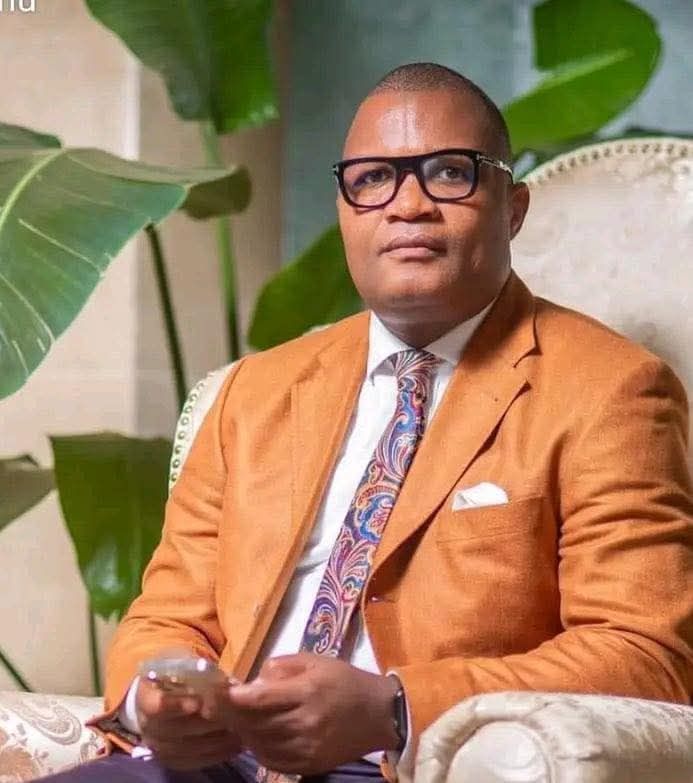
Brian Banda


This rewarding behaviour will only breed a new wave of hyper-partisan journalists—young reporters watching these appointments carefully and learning the wrong lesson. They will calculate that loyalty to the party in power, rather than commitment to ethical journalism, is the path to career advancement. They will shape their coverage not around truth and public interest, but around the hope that they too should be rewarded if a new party wins the next election. We are cultivating a generation of journalists who see themselves as prospective government spokespersons rather than watchdogs of democracy.

The list of journalists rewarded with government positions since the DPP returned to power is staggering. From Times TV alone, we have witnessed Brian Banda’s appointment as MBC DG, Cathy Maulidi as Presidential Press Secretary, Deogratias Mmana as Director of Information, Leah Malekano as Deputy Director of Information, David Gadama as PRO in the Office of the Second Vice President, Sam Bond Kaimira as PRO at the Ministry of Transport, Henry Mchulu as State House Videographer, and Emmanuel Simpokolwe as State House Photographer. This is not a coincidence—it is a systematic co-opting of the Fourth Estate.

If these were activists accepting government positions, Malawians would be shouting “adya chibanzi”—just as they did with Timothy Mtambo and others when they crossed from civil society to government. The public rightly calls out activists who abandon their advocacy roles for the comfort of government payrolls. Why should journalists be held to a different standard? When a journalist becomes a government appointee, particularly one whose job previously involved holding that same government accountable, the phrase “adya chibanzi” applies with equal force. They have eaten the spoils, and in doing so, they have compromised the institution they once served.

Catherine Maulidi


The DPP government is proving to be among the worst in terms of rewarding friends and relatives, a trend so dangerous to Malawi and so dangerous to the integrity of journalism. Renowned commentator Alexious Kamangila has described Banda’s appointment as “corruption of the media” and “political paralysation of the media space.” This assessment is spot on. When media houses become feeder teams for government appointments, when the most ambitious journalists aspire not to win awards for investigative reporting but to secure positions in State House, journalism itself dies a slow death.

Banda’s appointment is particularly concerning given the circumstances surrounding his departure from Times Group. Reports suggest he was asked to resign following what was described as “a catalogue of professional misconduct and serious errors of judgment” . Yet such a individual is now entrusted with leading the national broadcaster. Questions have also emerged regarding his academic qualifications, with the appointment reportedly thrown into uncertainty after Banda allegedly failed to produce education certificates required for the position .

Malawi deserves better. We deserve a public broadcaster led by qualified professionals whose primary allegiance is to the public, not to the politicians who appointed them. We deserve journalists who understand that their power comes from serving citizens, not from currying favour with those in power. Until we begin shouting “adya chibanzi” at compromised journalists with the same vigour we direct at compromised activists, this dangerous trend will continue—and Malawian journalism will remain held hostage by political patronage.


Leah Malekano

SeedCo plants K10 million into SKC Charity golf

0

By Linda Kwanjana

SeedCo Malawi has contributed K10 million towards the procurement of dialysis and monitoring machines for kidney failure patients, supporting the Saulos Klaus Chilima (SKC) Foundation’s charity golf tournament on March 28, 2026, at Lilongwe Golf Club.

SeedCo Malawi Finance Director Tawanda Ncube emphasized the importance of good health in economic development.

SKC


“We want to assist in a way that could make a great difference especially to patients facing kidney challenges by accessing good treatment hence our support of this initiative,” said Ncube urging others to contribute to the cause.

Sean Chilima, Trustee of the SKC Foundation and son to the late Vice President Saulos Chilima thanked SeedCo Malawi for their contribution, appealing for more support.

“The funds will directly purchase dialysis equipment aiming to improve healthcare outcomes for kidney patients. We are appealing for more support because we know that government alone cannot provide for everyone. The late Dr. Chilima believed in our ability as a people to assist government in uplifting the poor,” said Sean.

Malawi faces a critical shortage of dialysis machines, with only a handful available in public hospitals, resulting in numerous preventable deaths among kidney failure patients.

The SKC Foundation has organised the golf tournament in keeping up the charity spirit of Vice President, Dr. Saulos Klaus Chilima, who tragically lost his life in a military plane crash on June 10, 2024 along with eight others.

The late Dr. Chilima, a renowned corporate icon, philanthropist, and politician, left behind a legacy of service to the needy, and the golf tournament aims to continue his mission.

Sparc’s Owner Steps Down from MCCCI Presidency

0

By Linda Kwanjana

After two years of aggressive modernization and strategic growth at the helm of the Malawi Confederation of Chambers of Commerce and Industry (MCCCI), Dr. Wisely Phiri has announced he will not seek a second term as President of the chamber.

Dr. Phiri, who assumed the presidency on April 26, 2024, is widely credited with revitalizing the Chamber’s authority as the premier voice of Malawi’s private sector.

Dr Wisely Phiri


In an interview, Dr. Phiri – who owns Sparc Systems Limited a multinational IT company driving digital transformation across Africa – confirmed the development, saying he has done his part and he was leaving MCCCI in good shape.

“Indeed I will not be seeking the second team as President of the Chamber. It has been a privilege to lead this institution over the past two years, a period marked by robust growth across all our subdivisions,” Phiri said adding;

“Together, we have achieved significant milestones and the data speaks for itself;—from advancing policy advocacy and advancing the redevelopment of the Chichiri Trade Fair grounds into an SME hub, to securing a 36% increase in revenue growth through membership expansion.”

Phiri further said the strategic international collaborations he spearheaded, notably membership with the International Chamber of Commerce, helped to strengthen not only the chamber’s reginal but also global standing.

“Despite the national economic challenges encountered, the Chamber’s core lobbying efforts and subsectors have shown remarkable resilience, and I transition from this role with great pride in our collective success.” Dr. Phiri said.

Under his leadership, MCCCI achieved landmark milestones, including securing forex waivers for exporters, growing the membership base by nearly 50%, and increasing revenue by 36% through digital transformation and operational efficiency.

Notably, he oversaw the recovery and rebranding of the Malawi International Trade Fair, which saw a surge in participation by over 50% in 2025.

He also was at the herm of the operationalization of the Malawi International Arbitration Center (MIAC) where he represented the interest of the private sector as a Director.

Dr. Phiri, a tech visionary who founded Sparc Systems at just 29 years old, stated that he has fulfilled his primary mission to institutionalize resilience and inclusivity within MCCCI.

He said he now intends to dedicate his full focus on his multi-million-dollar enterprise, Sparc Systems Limited, which has expanded its footprint across several African countries.

“Dr. Phiri has done his part in laying a digital and policy foundation for the future,” noted an industry analyst. “His departure marks the end of a transformative era, as he returns to lead one of Malawi’s most successful multinational tech firms.”

Bullets Strengthen Defence with Signing of Ahmad Kung’unde

0


By Rahim Abdul

Malawi football giants FCB Nyasa Big Bullets have strengthened their squad after completing the signing of experienced defender Ahmad Kung’unde on a three-year contract that will keep him at the club until 2029.

The central defender joins the People’s Team after the expiry of his contract with their city rivals Mighty Wanderers, bringing to an end his spell with the Nomads.

Kung’unde’s arrival highlights Bullets’ determination to reinforce their backline as the club continues to reshape its squad ahead of upcoming competitions.

The defender becomes the third player to be signed by Bullets during the current transfer window, as the club intensifies its recruitment drive.

Ahmad Kung’unde


Earlier, the club secured the services of another defender Emmanuel Kaunga as well as goalkeeper McLean Mwale as part of efforts to strengthen key positions in the squad.

The move signals Bullets’ intent to build a solid defensive unit capable of competing strongly in domestic competitions.

Meanwhile, the club has also confirmed that forward Dastan Banda will be unveiled soon after Bullets reached an agreement with Civil Service United for the player’s transfer.

The development means supporters can expect more activity from the club as it continues to add quality players to its roster.

Kung’unde expressed gratitude to the Bullets leadership for trusting him and giving him the opportunity to join one of Malawi’s most successful clubs.

He said he is ready to work hard and contribute positively to the team’s ambitions.
The defender further pledged to give his best on the pitch and help the club achieve its targets in the coming seasons.

His arrival is expected to excite Bullets supporters, who will be hoping the experienced defender brings stability and strength to the team’s defence.

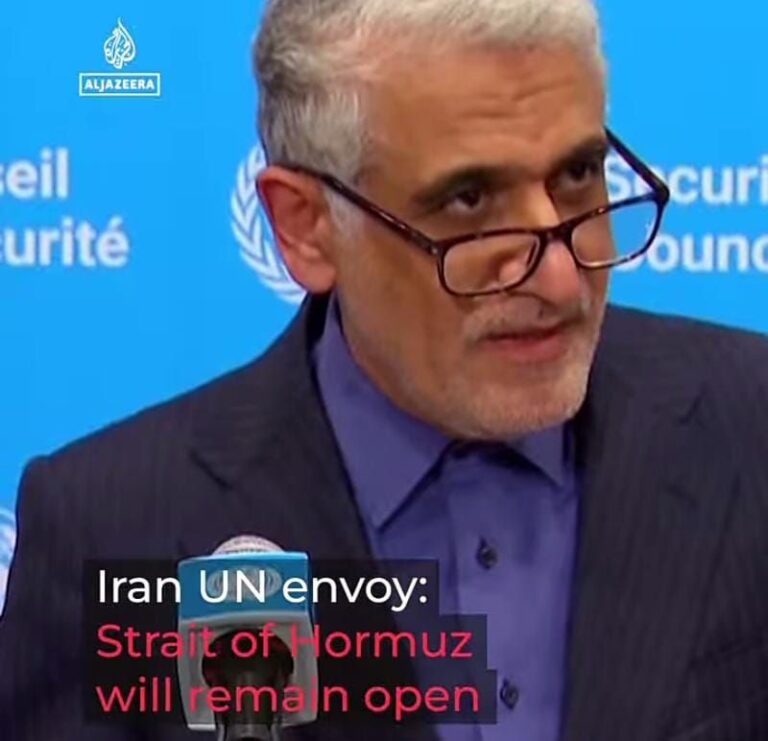
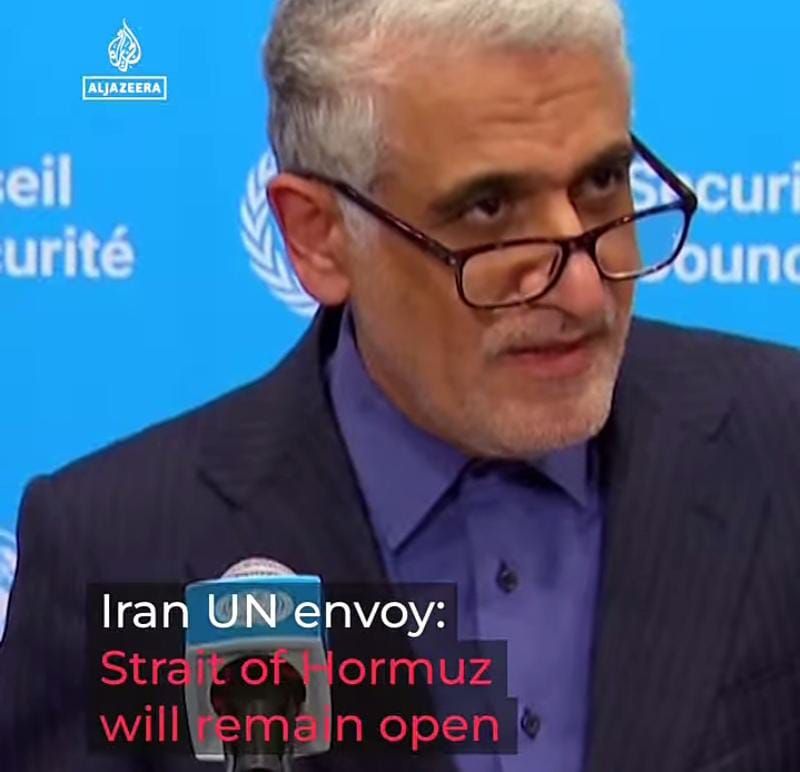
Iran plays down threat to strait of Hormuz, insists on freedom of navigation


By Burnett Munthali

Iran’s UN ambassador has sought to play down suggestions that Tehran could close the Strait of Hormuz, saying the country remains committed to freedom of navigation through the vital waterway. The statement comes after Iran’s Supreme Leader, Mojtaba Khamenei, hinted that the Strait could be used to pressure Iran’s enemies.

Ambassador Majid Takht-Ravanchi emphasized that Iran would not take such a step, which would have severe consequences for global oil supplies and the world economy. The Strait of Hormuz is a critical chokepoint for global oil trade, with around a fifth of the world’s oil passing through it.


The ambassador’s comments suggest that Iran is seeking to reassure the international community that it is not intent on disrupting global oil supplies, despite the escalating tensions with the United States and its allies. However, the statement also leaves room for interpretation, and it remains unclear what Iran’s actual intentions are.

The Strait of Hormuz has been at the center of tensions between Iran and the West for decades, with Tehran often threatening to close the waterway in response to perceived threats or provocations. The latest comments from Iran’s Supreme Leader have raised concerns that the country could take drastic action to counter the pressure from the US and its allies.

The US and its allies have been ramping up pressure on Iran over its nuclear program, and have imposed severe economic sanctions on the country. Iran has responded by threatening to take action to protect its interests, including potentially closing the Strait of Hormuz.

The international community is watching the situation closely, with many countries urging calm and restraint. The EU has called for de-escalation, while the US has warned that it will take action to protect its interests in the region.

The situation remains highly volatile, and it is unclear what the next move will be. What is certain, however, is that the Strait of Hormuz is a critical flashpoint, and any disruption to oil supplies could have severe consequences for the global economy.