U.S. President Donald Trump has issued a stark warning to Iran, threatening military action if the country does not reopen the Strait of Hormuz, a vital route for global oil shipments, by the second week of this month.
The Strait of Hormuz carries roughly one-fifth of the world’s oil supply, making it a strategic chokepoint that has long drawn international attention and heightened tensions in the Middle East.
Trump indicated that any failure to comply could lead to strikes on Iran’s critical infrastructure, including power generation facilities and key construction projects.
Tehran quickly responded, with officials warning that any attacks on its citizens would trigger a “major disruption,” hinting at the potential for escalation into a broader conflict.
Trump
Neighboring countries have expressed concern, as many rely heavily on oil shipments passing through the strait. Governments are closely monitoring the situation to prevent a regional crisis.
The uncertainty has already impacted global oil markets, with traders fearing supply shortages and potential spikes in fuel prices if the strait remains blocked.
Tensions come amid a backdrop of triangular strain involving the United States, Israel and Iran, with previous confrontations involving targeted strikes and cyber operations raising fears of direct military clashes.
Diplomatic channels remain open behind the scenes, but no formal negotiations have yet been announced to de-escalate the standoff.
The international community, including European nations and the United Nations, has urged restraint and dialogue, warning of the far reaching consequences of any military escalation.
Beyond oil, the crisis threatens shipping insurance costs, regional trade flows, and economic stability for countries dependent on Middle Eastern trade routes.
Domestically in the U.S., Trump’s hardline approach may appeal to parts of his political base that favor assertive foreign policy, while critics caution that threats of military action could exacerbate tensions without a multilateral strategy.
It has now been four months since the High Court, under the stewardship of Judge Simeon Mdeza, delivered a clear and unequivocal ruling ordering the Malawi Electoral Commission (MEC) to relocate its headquarters from Lilongwe to Blantyre.
This ruling came after MEC challenged President Peter Mutharika’s executive order mandating the relocation. The court dismissed MEC’s application and affirmed the president’s directive, expecting prompt compliance.
Malawi Electoral Commission
Yet, despite the passage of significant time, MEC has obstinately refused to move, flagrantly disregarding the court’s authoritative mandate.
This act of defiance raises serious concerns about MEC’s respect for judicial authority, the rule of law, and the very foundations of democratic governance in Malawi.
The judiciary in Malawi stands as a pillar of justice and fairness, charged with interpreting the law and ensuring that all entities, regardless of their status, abide by the rule of law.
The High Court’s decision on this matter was unambiguous, reflecting not only a legal interpretation but a binding order. The expectation is simple: MEC must comply.
Failure to do so is not merely a bureaucratic oversight but a direct challenge to the supremacy of the judiciary and the legal framework that governs the nation.
What makes MEC’s continued refusal even more egregious is the fact that the commission’s chairperson is herself a judge. A judge, by training and profession, is sworn to uphold the law, respect court orders, and embody the principles of justice.
The chairperson’s position should be one of the highest example in demonstrating obedience to the courts.
Instead, this scenario paints a troubling picture of selective compliance and undermines public confidence in both the commission and the judiciary. If a judge leading MEC can choose to ignore a clear court order, it sends a dangerous message that legal rulings can be flouted with impunity.
The role of MEC is fundamentally tied to the credibility and integrity of Malawi’s electoral processes.
Its mandate includes ensuring transparent, fair, and accountable elections, which are cornerstones of a functioning democracy.
However, respect for the judiciary and the legal system is equally critical. When MEC chooses to defy a court order, it risks eroding its legitimacy and, by extension, the public’s trust in the electoral system.
The commission’s actions—or lack thereof—jeopardize the very democratic values it is supposed to protect.
Moreover, the principle of separation of powers in a democratic state demands that the executive, legislature, and judiciary operate within their respective domains, respecting the boundaries and decisions of each other to maintain balance and order.
The High Court’s ruling was a clear exercise of judicial authority, and MEC’s non-compliance directly challenges this balance.
By refusing to relocate, MEC is not only defying the president’s directive, which the court has validated, but it is also undermining the judiciary’s role as a check and balance in governance.
It is important to emphasize the legal implications of MEC’s continued non-compliance.
The court’s order is binding and enforceable. Failure to obey such orders constitutes contempt of court—a serious offense under Malawian law.
Contempt of court is designed to protect the dignity, authority, and effectiveness of the judiciary. It ensures that court orders are respected and followed to preserve justice and social order.
MEC’s refusal to move its headquarters to Blantyre, therefore, places it squarely in contempt of the High Court. This is not a mere technicality but a grave legal breach that warrants immediate remedial action.
The consequences of MEC’s contempt extend beyond legal ramifications.
They reflect a blatant disregard for governance norms and threaten to trigger a constitutional crisis.
If one of the country’s key constitutional bodies openly disrespects the judiciary, it creates a precedent for other institutions or individuals to do the same, leading to institutional breakdown and chaos.
Upholding the rule of law means ensuring that no one—not even entities entrusted with critical national responsibilities—is above the law.
It is also worth reflecting on the practical implications of MEC’s refusal to relocate.
The president’s executive order to move MEC’s headquarters to Blantyre was presumably motivated by strategic considerations, including decentralization of government functions and equitable development.
By not complying, MEC is obstructing government policy aimed at national progress.
This not only delays administrative efficiency but also portrays MEC as an institution resistant to governmental directives, thereby politicizing an entity that should ideally remain neutral and cooperative in the national interest.
The public deserves transparency and accountability from MEC regarding its failure to implement the court’s ruling. Silence or vague excuses only fuel speculation of internal disagreements, political interference, or deliberate obstructionism.
As a body funded by taxpayers and charged with safeguarding democratic processes, MEC owes the citizens clear explanations and swift corrective actions.
Its current stance undermines public faith and diminishes its stature.
It is critical for all stakeholders—the judiciary, the executive, civil society, and the general public—to demand that MEC immediately honors the court’s order.
The judiciary must consider employing stronger enforcement mechanisms, including holding MEC in contempt formally and imposing penalties if necessary.
The executive should reinforce the rule of law by supporting judicial decisions and ensuring compliance.
Civil society and the media must continue to hold MEC accountable, amplifying the call for respect of the court’s ruling.
The Malawi Electoral Commission’s refusal to relocate its headquarters to Blantyre as ordered by the High Court is a serious affront to the rule of law and judicial authority.
This defiance, coming from a commission chaired by a judge, is particularly troubling and undermines the credibility of both the judiciary and the electoral body.
Continued non-compliance risks contempt of court charges and sets a dangerous precedent that threatens democratic governance in Malawi.
It is imperative that MEC promptly complies with the court order to restore respect for legal institutions and reinforce the principles of justice and accountability that are essential for the nation’s stability and progress.
The time for excuses has long passed; MEC must now act decisively and uphold the law it is sworn to respect.
Fourteen years have passed since the nation of Malawi lost one of its most influential leaders, President Bingu wa Mutharika, who died on April 5, 2012, at the age of 78. His sudden passing sent ripples of sorrow throughout the country and beyond, but the legacy he left behind continues to resonate powerfully with Malawians today.
As the founder of the Democratic Progressive Party (DPP), Mutharika’s leadership marked a pivotal era in Malawi’s political and economic history—a time when the country began to emerge from the shadows of economic hardship and step boldly onto the path of growth and development.
Mutharika
President Mutharika’s tenure is often remembered for the remarkable economic transformation he spearheaded.
Before his administration, Malawi struggled with chronic food shortages, a struggling agricultural sector, and limited industrial growth.
However, under his leadership, the country witnessed unprecedented progress, particularly in agriculture, which is the backbone of Malawi’s economy.
For the first time in the nation’s history, Malawi experienced bumper harvests that not only fed its people but also allowed for surplus production that could be marketed and exported.
This agricultural success was no accident but the result of visionary policies and determined leadership.
One of Mutharika’s most notable achievements was his focus on empowering farmers and promoting sustainable agricultural practices.
His government prioritized investment in agriculture through subsidies for fertilizers and improved seeds, which helped boost crop yields significantly. This policy, often referred to as the Farm Input Subsidy Program (FISP), revolutionized farming in Malawi, lifting millions of smallholder farmers out of poverty and hunger.
The impact was transformational—the country moved from food deficit to food surplus in a remarkably short time, an accomplishment that drew international recognition and admiration.
Mutharika’s economic vision extended beyond agriculture. He championed infrastructure development, focusing on improving roads, energy supply, and telecommunications.
These investments laid the foundation for Malawi’s gradual transformation into a regional economic hub.
He understood that a thriving economy required a robust infrastructure system to connect producers with markets both locally and internationally.
His administration’s commitment to infrastructure development facilitated trade and investment, creating new opportunities for economic diversification and growth.
Beyond economics, Bingu wa Mutharika was a founding father of the Democratic Progressive Party (DPP), which remains a major political force in Malawi. The DPP was born out of his vision for a more prosperous and stable Malawi, one governed by principles of hard work, accountability, and inclusiveness.
Over the years, the party has maintained its popularity, largely because of the values and direction instilled by its founder.
The DPP continues to be loved by Malawians across the country, a testament to Mutharika’s enduring influence on the nation’s political landscape.
In a recent interview with Maravi Post, Dr. Shadrick Namalomba, the DPP Publicity Secretary and Government Official Spokesperson, reflected on the legacy of the late president.
He described Mutharika as a leader who embodied a strong work ethic and a genuine commitment to the welfare of every Malawian. “He was not nepotistic,” Dr. Namalomba emphasized, “but rather a leader who strived to serve all citizens equally and fairly.” Such qualities endeared Mutharika to many and set a high standard for leadership in Malawi.
Dr. Namalomba further stated that the DPP will continue to honor its founder’s memory by upholding the values he championed. “His death will never be forgotten,” he said solemnly, “and we pray that his soul continues resting in eternal peace.”
This sentiment is shared widely, not just within the party but among Malawians who experienced firsthand the positive changes during his presidency.
While no leader is without criticism, it is impossible to ignore the transformative impact Bingu wa Mutharika had on Malawi’s trajectory. His policies and leadership style ignited economic growth, fostered political stability, and inspired a generation to believe in the potential of their nation.
His vision of a prosperous Malawi is still alive today, and many continue to draw inspiration from his legacy as the country faces new challenges and opportunities.
As Malawi marks 14 years since the passing of this remarkable leader, reflection on his contributions is both timely and necessary. Bingu wa Mutharika’s story is one of dedication, resilience, and unwavering commitment to progress.
His leadership showed what is possible when vision meets action and when a leader places the interests of the nation above all else.
The DPP’s ongoing relevance in Malawian politics and the country’s economic strides serve as enduring proof that the foundations laid by Mutharika were solid and forward-thinking.
Malawi’s journey toward becoming an economic hub in the region can be traced back to the bold steps taken during his presidency—steps that changed the lives of millions and reshaped the nation’s future.
In remembering Bingu wa Mutharika, Malawians honor a man who dared to dream big and who worked tirelessly to turn those dreams into reality.
His legacy is a beacon of hope and a reminder that with visionary leadership and collective effort, Malawi can continue to rise and prosper for generations to come.
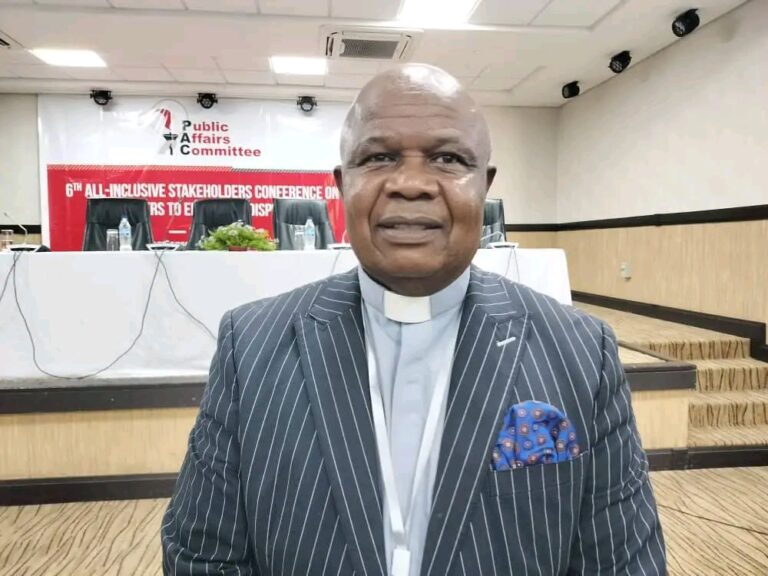
The Public Affairs Committee (PAC) has commended Christians across the country for their conduct during the Easter period.
PAC Chairperson, Father Patrick Thawale, says the faith community has demonstrated unity, tolerance, and peaceful coexistence—an indication that they understand the true meaning and significance of Easter.
He adds that many Christians attended church services, prayers, and other religious activities, reflecting their commitment and devotion to God during the sacred period.
Father Patrick Thawale
Thawale has since urged Malawians to sustain the spirit of peace, love, and unity beyond the Easter celebrations, emphasizing the importance of continued respect, moral responsibility, and community cohesion.
He further called on citizens to uphold values of forgiveness and compassion principles central to the Easter message as the country strives to promote national unity and social harmony.
Malawians are crying, gnashing their teeth in frustration as President Peter Mutharika, an old man struggling to rule, is more concerned with clashing egos and power struggles than addressing the country’s pressing issues. The ones surrounding him are feasting, growing fat on corruption and nepotism, while the nation suffers.
Mutharika’s advanced age and reported hearing difficulties have only emboldened those around him, who manipulate him like a puppet. Norman Chisale, the unofficial bodyguard turned power broker, is a prime example. Despite being an MP and deputy minister, Chisale has cemented his position as the president’s shadow, controlling who gets access to Mutharika and influencing key decisions. Sources reveal Mutharika fears Chisale, who’s become untouchable.
Gertrude Mutharika
Another beneficiary of Mutharika’s weakness is Shadrick Namalomba, the minister of information and government spokesperson. Namalomba’s alleged role in blocking DPP loyalists from meeting Mutharika has raised eyebrows, with many seeing him as a power-hungry opportunist. Together with Chisale, he’s accused of orchestrating the vice president’s ill treatment, all to feed their own interests.
Getrude Mutharika, the president’s wife, completes the triumvirate of power. Her influence over Mutharika is undeniable, with whispers she controls his every move. Her supposed goal is to ensure Tadikira, a non-biological child, gets more attention than Mutharika’s own flesh and blood.
Malawians are trapped, ruled by this toxic trio. Chisale, Namalomba, and Getrude Mutharika care little for the nation’s welfare, only their own gains. The appeasement policy that brought Namalomba to his position has backfired, with Malawians paying the price.
As Mutharika’s first term set the stage for corruption, his second term is shaping up to be a free-for-all. The people suffer, while the few in power get richer. It’s a sad state of affairs, with Malawians crying out for change.
The nation demands accountability, transparency, and leadership that prioritizes its people. Until then, the triumvirate will continue to rule, and Malawians will continue to suffer.