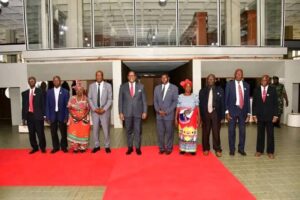
The Dr. Jane Ansah Foundation is on a mission to transform the lives of Malawi’s most vulnerable communities.
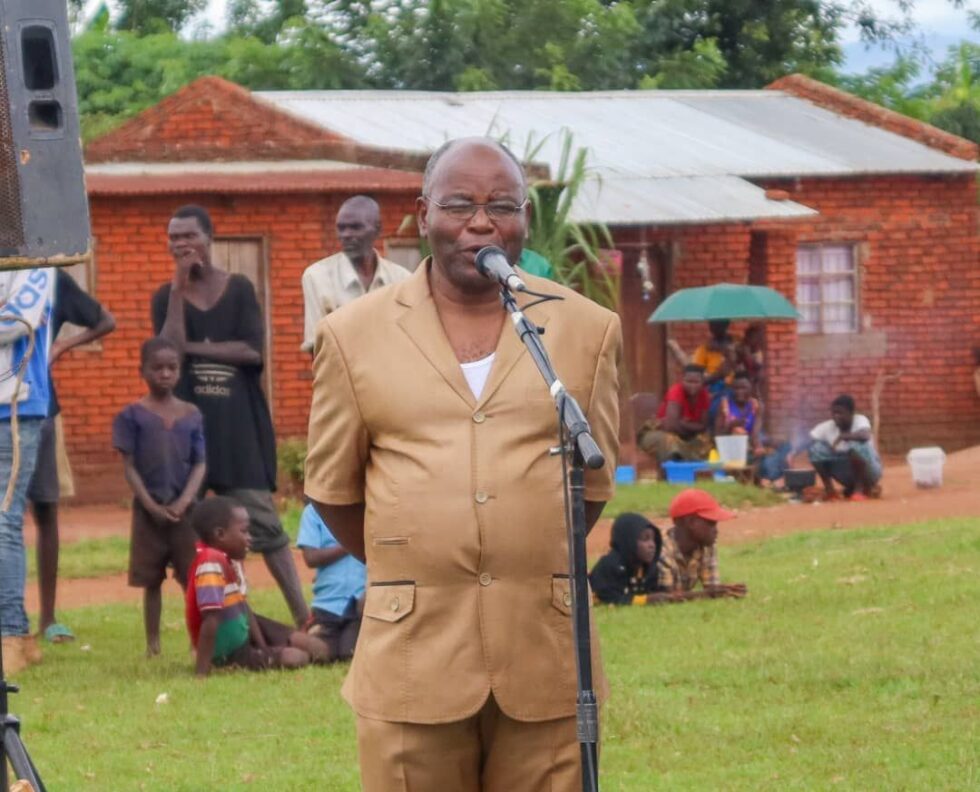
Interim board Chairperson Rogers Kamanga outlined the foundation’s vision and mission, emphasizing its commitment to empowering those in need.
Speaking with conviction, Kamanga said the foundation’s work is a testament to Vice President Dr. Jane Ansah’s lifelong passion for helping others.
He referenced the many beneficiaries who have shared their stories of transformation, highlighting Dr. Jane Ansah’s dedication to public service.
The foundation supports vulnerable groups, including poor children, the aged, and people living with albinism.
Kamanga explained that the foundation provides education, food security, economic empowerment, and social inclusion initiatives.
The foundation has already begun providing comprehensive support to students, addressing multiple challenges facing vulnerable communities.
Kamanga expressed gratitude to the government of Malawi for its efforts to uplift citizens’ lives.
The ultimate aim is to make vulnerable groups financially and economically independent, contributing to community development and supporting others in need.
The Dr. Jane Ansah Foundation is ready to support Tiafikile cooperative, helping it become registered and empowering Malawi’s vulnerable communities.
Police in Mangochi have arrested a 24 year old sex worker, Chrissy Paulo, who plies her trade at Makawa Trading Centre, for allegedly stabbing a client following a misunderstanding over payment.
The incident occurred on March 13, 2026, at around 23:00 hours at Mgoza Bar within Makawa Trading Centre.
The victim (name withheld) had gone to the bar to have a good time. While there, he allegedly agreed with the suspect to spend the night with her at her house within the area.
Chrissy Paulo
However, while at the suspect’s house, a quarrel reportedly erupted over payment. In the heat of the argument, the suspect allegedly produced a knife and stabbed the victim on the left side of the back, causing a deep cut.
The victim was later rushed to Mangochi District Hospital where he is receiving treatment.
According to police records, the suspect was previously arrested in January last year for severing her ex-husband’s little finger on his left hand after finding him socialising with other women at a bar within the same area.
Paulo is expected to appear before court to answer a charge of unlawful wounding, contrary to section 241 of the Penal Code, after the completion of paperwork.
She hails from Kambembe village, Traditional Authority Mlumbe in Zomba.
The revelations emerging from Parliament’s Public Accounts Committee have sent shockwaves through every corner of Malawian society, as details of the K128.7 billion Amaryllis Hotel pension fund heist continue to drip out like poison from an open wound. Malawians are watching in horror as their public servants’ retirement savings—money meant to feed families and send children to school—were apparently gambled away on a luxury hotel deal that stinks to high heaven of greed, incompetence, and outright theft.
The evidence so far reads like a crime novel, except the victims are real and their suffering is happening right now. An unregistered valuation firm called EMJ Advisory somehow managed to convince someone in authority that a hotel worth perhaps K48 billion according to professional valuers was actually worth between K115 billion and K145 billion .
Mutharika
When PAC chairperson Steve Malondera rightly demanded answers, the firm’s director Emmanuel Chisale admitted under oath that his company is not even licensed to conduct property valuations . Let that sink in. Unlicensed operators determined how much of your pension would be spent, and they pulled figures from thin air that conveniently justified a massive overpayment.
But the rot goes much deeper. Former PSPTF board chairperson James Kumwenda delivered testimony that should make every trustee and public official involved lose sleep forever. He told the committee that during an extraordinary board meeting on January 17, 2024, trustees unanimously agreed NOT to proceed with acquiring the Amaryllis Hotel . Professional asset managers from NICO Asset Managers had warned that the deal posed serious liquidity risks and that projected returns wouldn’t meet performance expectations . The board listened. They made a decision. They protected pensioners.
And then the minutes of that meeting mysteriously disappeared .
Someone with access to official records made a conscious decision to erase the evidence that the deal had been rejected. Someone decided that the unanimous will of the board should be scrubbed from history so that the purchase could proceed anyway. And proceed it did, to the tune of K128.7 billion of your money.
The current and former PSPTF boards have both appeared before Parliament defending their actions, insisting decisions were based on professional advice . But if the board rejected the deal, who revived it? If professional managers warned against it, who overruled them? And on whose authority was nearly K130 billion committed to a purchase that trustees themselves had voted down?
These questions hang over Malawi like a thundercloud, and the answers lead directly to individuals currently holding positions of power in President Peter Mutharika’s government.
This is not some abstract policy disagreement or administrative oversight. This is theft on an industrial scale, dressed up in business suits and justified with fake valuations from unqualified firms. This is people in positions of trust looking at retirement savings accumulated over decades of service and deciding to treat them as their personal investment fund.
President Mutharika has issued a statement backing the investigation and claiming his administration maintains a firm stance against corruption . He says public office is a sacred trust and that misuse of public resources for personal gain is a serious betrayal . These are fine words, carefully crafted by communications staff who understand the optics of scandal.
But fine words do not feed the families of public servants whose pensions have been looted. Fine words do not restore confidence in a system that allowed unregistered valuers to determine how billions would be spent. And fine words will not save Mutharika’s presidency if he fails to act on the findings of this inquiry.
The clock is ticking, and Malawians are watching with the same hawkish intensity they showed during the Chakwera era. We remember what happened when the previous administration faced corruption scandals. We remember the protests, the outrage, the complete loss of trust that paralyzed government and destroyed any credibility Lazarus Chakwera might have had. The Malawi Congress Party and its leadership are still paying the price for failing to act decisively when corruption was exposed on their watch.
Chakwera’s biggest mistake was simple and catastrophic: he refused to fire those blatantly caught doing corruption. He shuffled them, protected them, made excuses for them, and hoped the storm would pass. But storms don’t pass in Malawi when the people’s money is involved. They intensify. They become cyclones. And eventually, they sweep away governments.
The internal rebellion now brewing within MCP, with party insiders openly calling for Chakwera to step down over corruption and mismanagement , should serve as a warning written in fire for the new administration. When your own party turns on you because you failed to clean house, you have nowhere left to hide. When your own loyalists feel betrayed because you protected the corrupt, you have no army left to defend you.
Mutharika stands at a crossroads that will define not just his presidency but his legacy. On one path lies decisive action: heads rolling immediately, resignations demanded before the investigation even concludes, a clear signal that his government will not tolerate the looting of public funds. On the other path lies the Chakwera approach: expressions of concern, statements of support for investigations, and ultimately protection for those implicated while hoping the public has a short memory.
Malawians do not have short memories. We remember Cashgate. We remember every fuel procurement scandal, every overpriced contract, every minister who rode into office on a wave of promises and rode out in a luxury vehicle purchased with stolen money. We remember because we are the ones who pay the price when hospitals lack medicine, when schools lack teachers, when roads remain unpaved because the money disappeared into someone’s offshore account.
The Amaryllis scandal demands immediate action, not after the investigation concludes, but right now. Certain individuals occupying senior positions in this government need to step aside pending clearance. Not because we have already proven their guilt in a court of law, but because the stench of this deal is so overwhelming that their continued presence in office poisons public trust in everything this government tries to do.
If the board rejected the deal and minutes went missing, someone in authority made that happen. If an unregistered firm provided valuations that defied professional logic, someone in authority accepted those valuations and authorized payment. Those someones should not be sitting in government offices today, making decisions about other people’s money, while an inquiry examines whether they already stole once.
President Mutharika has an opportunity here that few leaders get: the chance to define his presidency in its first major test. If he shields the culprits, if he allows the usual Malawian pattern of investigations that lead nowhere and prosecutions that never happen, then his goodwill and political honeymoon are over before they properly began. Malawians are ruthless when they lose trust in a government, and they have every right to be. We have been burned too many times to accept more smoke and mirrors.
But if he acts decisively, if he demonstrates that his stated commitment to accountability means something in practice, if he shows that no one is too powerful to face consequences for betraying the public trust, then he can emerge from this crisis stronger. He can prove that his presidency represents a genuine break from the corruption that has plagued this nation for decades.
The evidence emerging from the PAC hearings grows more damning by the day. Missing minutes, unregistered valuers, professional warnings ignored, board decisions erased . This is not a complex case requiring months of forensic analysis to understand what happened. The outline is already clear: people entrusted with pension funds decided to treat them as play money, and when professionals tried to stop them, they found ways around those obstacles.
The question now is whether President Mutharika has the courage to follow the evidence where it leads, regardless of whose desk it lands on. The question is whether he will do what Chakwera could not: fire the corrupt, prosecute the guilty, and send an unmistakable message that Malawi’s public funds are not a buffet for the connected and powerful.
Heads must roll. Not after the inquiry wraps up in a few months, not after the report is debated in Parliament, but now. Resignations should be tendered today. Suspensions should be announced immediately. The message must be clear: if your name appears anywhere near this scandal in a way that suggests involvement, you have no place in a government that claims to serve the people.
The alternative is unthinkable but predictable. If Mutharika protects the guilty, if the Amaryllis scandal becomes just another case where Malawi’s elite circle the wagons and wait for the outrage to pass, then his presidency will carry the stench of this deal forever. Every promise he makes about fighting poverty, every speech about development and progress, will ring hollow because Malawians will know that his government protected those who stole from pensioners.
We have been here before. We have heard the promises before. We have watched the investigations that go nowhere and the prosecutions that never happen before. The Chakwera government fell because it failed this exact test, because it protected the corrupt and hoped Malawians would forget.
We have not forgotten. We will not forget. And Peter Mutharica’s presidency will live or die based on what he does right now, in this moment, with the entire nation watching and waiting to see if he is truly different from those who came before.
On Friday, Former President Lazarus Chakwera met with MCP veterans at the party’s Lilongwe headquarters, marking a moment of reflection, gratitude, and renewed commitment to the values that have defined the Malawi Congress Party, as the party sought to strengthen its foundations and chart a course for the future.
The gathering was an opportunity for President Chakwera to express his appreciation for the veterans’ dedication, sacrifice, and loyalty to the party over the years, acknowledging the foundation they laid for the party’s current strength and resilience, and underscoring the importance of their continued guidance and wisdom.
The veterans shared their experiences and memories, offering words of encouragement to the current leadership and younger generation, emphasizing unity, discipline, and service to the people of Malawi as essential pillars for the party’s future, and highlighting the need for the party to remain focused on its core values and principles.
In response, President Chakwera reaffirmed his commitment to leading with integrity, listening to party elders, and ensuring the MCP’s legacy guides Malawi toward development and prosperity, as he sought to reassure the veterans of his dedication to the party’s core values and its mission to serve the people of Malawi.
The meeting concluded with a sense of unity and mutual respect, highlighting the importance of honoring those who have contributed to the party’s journey while working together for a stronger future, and setting the stage for a renewed focus on the party’s mission to serve the people of Malawi and promote national development.
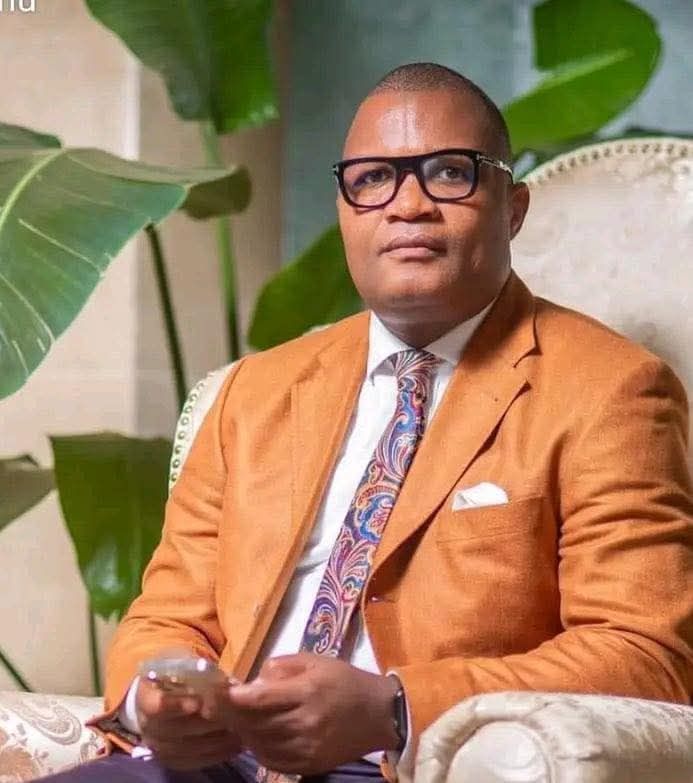
The recent appointment of Brian Banda as Director General of the Malawi Broadcasting Corporation (MBC) should raise serious concern on the direction of journalism in this country . It represents yet another troubling episode in what is becoming a sad state of Malawian journalism—where professional integrity is sacrificed at the altar of political patronage, and where the line between reporting on power and serving power becomes dangerously blurred.
My view is that appointing Brian Banda risks politicizing the media space further than we have already witnessed under this administration. Bringing in politically aligned “media gurus” to head public institutions does not strengthen institutional leadership, as the MBC board claimed in its announcement . Rather, it undermines media independence and weakens public trust in the very institutions meant to inform citizens objectively. When journalists are perceived as extensions of the ruling party’s communication machinery, the public loses faith that what they hear, read, and watch represents anything other than government propaganda.
Brian Banda
This rewarding behaviour will only breed a new wave of hyper-partisan journalists—young reporters watching these appointments carefully and learning the wrong lesson. They will calculate that loyalty to the party in power, rather than commitment to ethical journalism, is the path to career advancement. They will shape their coverage not around truth and public interest, but around the hope that they too should be rewarded if a new party wins the next election. We are cultivating a generation of journalists who see themselves as prospective government spokespersons rather than watchdogs of democracy.
The list of journalists rewarded with government positions since the DPP returned to power is staggering. From Times TV alone, we have witnessed Brian Banda’s appointment as MBC DG, Cathy Maulidi as Presidential Press Secretary, Deogratias Mmana as Director of Information, Leah Malekano as Deputy Director of Information, David Gadama as PRO in the Office of the Second Vice President, Sam Bond Kaimira as PRO at the Ministry of Transport, Henry Mchulu as State House Videographer, and Emmanuel Simpokolwe as State House Photographer. This is not a coincidence—it is a systematic co-opting of the Fourth Estate.
If these were activists accepting government positions, Malawians would be shouting “adya chibanzi”—just as they did with Timothy Mtambo and others when they crossed from civil society to government. The public rightly calls out activists who abandon their advocacy roles for the comfort of government payrolls. Why should journalists be held to a different standard? When a journalist becomes a government appointee, particularly one whose job previously involved holding that same government accountable, the phrase “adya chibanzi” applies with equal force. They have eaten the spoils, and in doing so, they have compromised the institution they once served.
Catherine Maulidi
The DPP government is proving to be among the worst in terms of rewarding friends and relatives, a trend so dangerous to Malawi and so dangerous to the integrity of journalism. Renowned commentator Alexious Kamangila has described Banda’s appointment as “corruption of the media” and “political paralysation of the media space.” This assessment is spot on. When media houses become feeder teams for government appointments, when the most ambitious journalists aspire not to win awards for investigative reporting but to secure positions in State House, journalism itself dies a slow death.
Banda’s appointment is particularly concerning given the circumstances surrounding his departure from Times Group. Reports suggest he was asked to resign following what was described as “a catalogue of professional misconduct and serious errors of judgment” . Yet such a individual is now entrusted with leading the national broadcaster. Questions have also emerged regarding his academic qualifications, with the appointment reportedly thrown into uncertainty after Banda allegedly failed to produce education certificates required for the position .
Malawi deserves better. We deserve a public broadcaster led by qualified professionals whose primary allegiance is to the public, not to the politicians who appointed them. We deserve journalists who understand that their power comes from serving citizens, not from currying favour with those in power. Until we begin shouting “adya chibanzi” at compromised journalists with the same vigour we direct at compromised activists, this dangerous trend will continue—and Malawian journalism will remain held hostage by political patronage.