Minister of Transport and Public Works Jacob Hara has called on local architects to adopt resilient and sustainable design principles to drive national transformation.
Speaking at the 42nd Annual General Meeting and Continuing Professional Development Workshop of the Malawi Institute of Architects in Mangochi, Hara emphasized the critical role architects play in shaping the country’s future.
“Architecture is more than just creating spaces,” Hara said, adding that, “It is about developing designs that are stronger and more resilient to climatic shocks.”
Hara
He urged architects to use their profession to build a more sustainable Malawi, aligning with the country’s long-term development plan, Malawi 2063.
Hara described architects as “masters of the future,” highlighting their potential to create transformative designs that can help the country achieve its development goals.
He emphasized the need for architects to prioritize sustainability and resilience in their work.
In a keynote address, Musunka Silungwe, an official with the Zambia Institute of Architects, challenged Malawian architects to adopt a transformative mindset by valuing local resources and talent.
“Countries such as Malawi and Zambia face similar challenges, underutilization of local resources and undervaluing our own capabilities,” Silungwe said.
Malawi Institute of Architects president Khumbo Chirwa echoed these sentiments, stressing that the country’s future depends on visionary architects who can design multipurpose and adaptable structures aligned with national development goals.
“We are committed to helping the country by delivering designs that are resilient, sustainable, and reflective of our evolving needs,” Chirwa said.
The 42nd AGM, themed “Sustainability in construction: The need for flexibility and adaptability,” brought together architects and industry stakeholders to discuss ways of promoting sustainable design and construction practices in Malawi.
The meeting highlighted the importance of collaboration and innovation in achieving national development goals.
By prioritizing sustainable design and construction, architects can play a critical role in shaping Malawi’s future and contributing to the country’s long-term development goals.
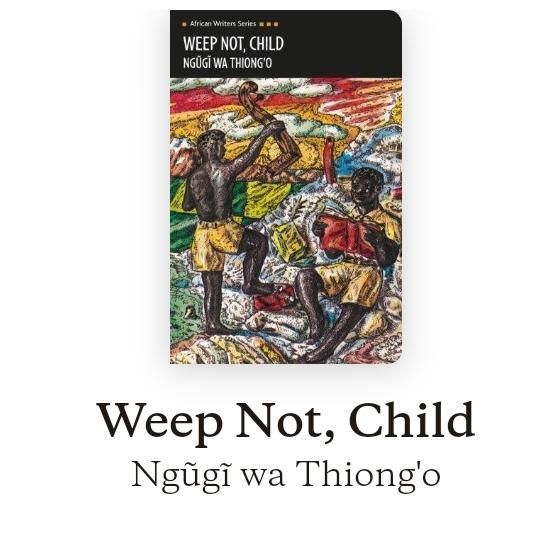
Ngugi wa Thiong’o, a towering figure in African literature, has left an indelible mark on the literary world with his profound insights into the complexities of colonialism, identity, and the human experience. Among his many celebrated works, “Weep Not, Child” stands out as a poignant exploration of the loss of innocence amidst the backdrop of political turmoil in Kenya.
This novel, published in 1964, is not merely a story about a young boy navigating the challenges of adolescence; it is a powerful commentary on the socio-political landscape of a nation grappling with the legacies of colonialism and the quest for independence.
At the heart of “Weep Not, Child” is the character of Njoroge, a young boy whose dreams and aspirations are intricately woven into the fabric of his family’s struggles and the broader societal upheaval.
Ngugi masterfully captures the innocence of childhood, juxtaposing it against the harsh realities of a society in flux. Njoroge’s journey is emblematic of the broader Kenyan experience during a time when the nation was on the cusp of independence from British colonial rule.
Through Njoroge’s eyes, readers are invited to witness the complexities of loyalty, betrayal, and the quest for identity in a world that is rapidly changing.
Ngugi’s prose is both lyrical and evocative, painting vivid images of the Kenyan landscape and the lives of its people.
The author’s use of language is particularly noteworthy; he employs a rich tapestry of imagery and symbolism that resonates deeply with readers. For instance, the recurring motif of the land serves as a powerful symbol of identity and belonging.
The land is not merely a physical space; it embodies the hopes and dreams of the characters, particularly Njoroge, who sees education as a pathway to a better future.
However, as the narrative unfolds, it becomes evident that the land is also a site of conflict, representing the struggles between the colonizers and the colonized.
Moreover, Ngugi’s exploration of family dynamics adds another layer of depth to the narrative. Njoroge’s relationship with his parents, particularly his father, is fraught with tension as differing ideologies clash.
Njoroge’s father, a traditionalist, embodies the values of the past, while Njoroge, influenced by the promise of education and modernity, yearns for a different future.
This generational conflict is reflective of the broader societal tensions in Kenya, where the push for independence often led to divisions within families and communities.
Ngugi deftly navigates these complexities, illustrating how the quest for personal and national identity can lead to both unity and discord.
As the story progresses, the impact of colonialism becomes increasingly pronounced, culminating in a series of events that shatter Njoroge’s innocence.
The violence and chaos that accompany the struggle for independence are depicted with unflinching honesty, forcing readers to confront the harsh realities of a society in turmoil.
Ngugi does not shy away from portraying the brutality of the colonial regime, nor does he romanticize the fight for freedom. Instead, he presents a nuanced perspective that acknowledges the sacrifices made by individuals and communities in their pursuit of liberation.
The title “Weep Not, Child” is particularly significant, as it encapsulates the central themes of loss and resilience.
The phrase serves as both a lament and a call to action, urging readers to reflect on the consequences of conflict and the importance of hope in the face of adversity.
Njoroge’s journey is ultimately one of self-discovery, as he grapples with the complexities of his identity and the weight of his heritage. The novel challenges readers to consider the implications of their choices and the impact of history on their lives.
In addition to its thematic richness, “Weep Not, Child” is also notable for its exploration of education as a transformative force.
Njoroge’s desire to attend school represents a yearning for knowledge and empowerment, a desire that is emblematic of the aspirations of many Kenyans during this tumultuous period.
However, Ngugi also highlights the limitations and challenges that accompany this pursuit. The educational system, influenced by colonial ideologies, often serves to reinforce existing power structures rather than liberate individuals.
This critique of education as a tool of both empowerment and oppression adds a layer of complexity to the narrative, prompting readers to question the role of education in their own lives and societies.
Furthermore, Ngugi’s decision to write in English, despite his native Kikuyu language, speaks to the complexities of language and identity in post-colonial Africa.
While English serves as a means of reaching a broader audience, it also raises questions about authenticity and cultural representation.
Ngugi’s choice reflects the tensions inherent in navigating multiple identities, a theme that resonates throughout the novel.
The characters’ struggles with language and communication mirror the broader challenges faced by a nation grappling with its colonial past and striving for a cohesive identity.
As the narrative reaches its climax, the consequences of the characters’ choices become increasingly apparent. Njoroge’s journey is marked by moments of profound loss, forcing him to confront the harsh realities of a world that is often unforgiving.
The emotional weight of these experiences is palpable, as Ngugi deftly captures the complexities of grief and resilience.
The novel ultimately leaves readers with a sense of ambivalence, as the quest for freedom and identity is fraught with both hope and despair.
“Weep Not, Child” is a powerful and thought-provoking exploration of the intersection of innocence, conflict, and identity.
Ngugi wa Thiong’o’s masterful storytelling and rich prose invite readers to engage with the complexities of the human experience, challenging them to reflect on their own identities and the legacies of history. The novel serves as a poignant reminder of the enduring impact of colonialism and the resilience of the human spirit in the face of adversity.
As we remember Ngugi and his contributions to literature, “Weep Not, Child” stands as a testament to his ability to illuminate the intricacies of the human condition, making it a timeless work that continues to resonate with readers around the world.
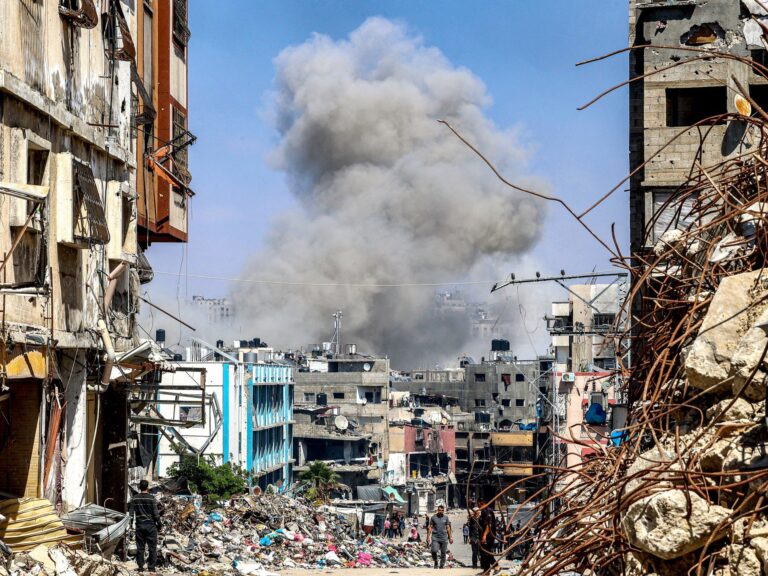
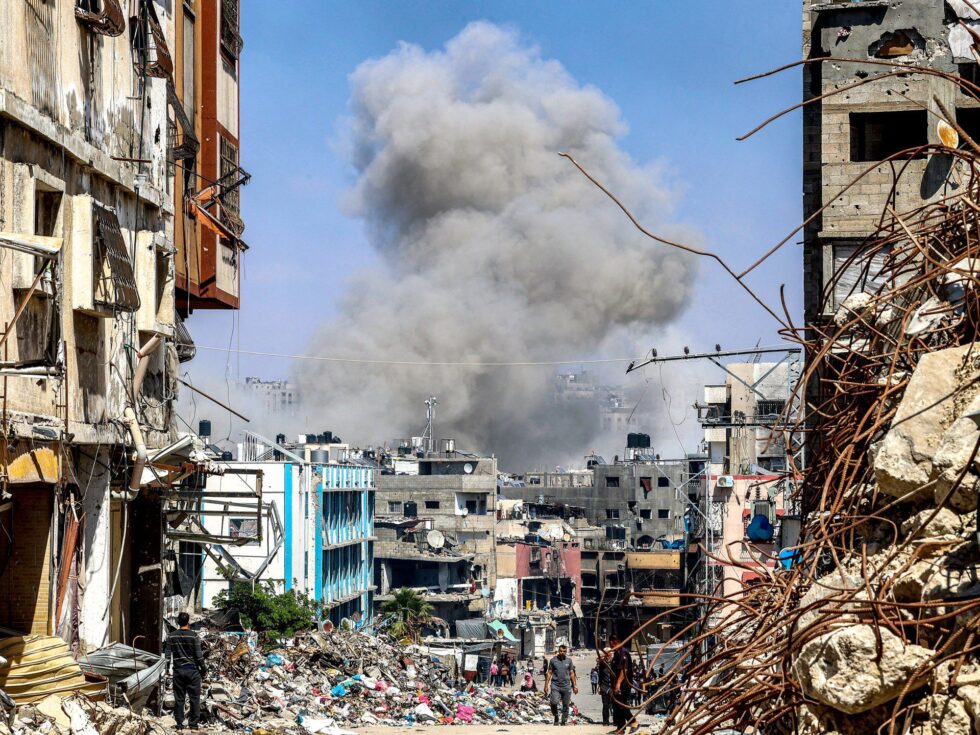
As Israel marks 600 days of war with Hamas, the question on everyone’s mind is: has Israel won, lost, or is the ending still unwritten?
The conflict, which began with a devastating attack on October 7, has resulted in significant losses for both sides, but the outcome remains far from clear.
According to military experts, Israel has made significant strides in damaging Hamas’s military infrastructure, destroying much of its weapons arsenal, and eliminating top commanders.
The group’s ability to launch rockets at Israel has been severely impaired, with rocket fire becoming sporadic at best.
However, the extent of the damage to Hamas’s tunnel system remains unclear, with reports varying on the IDF’s success in demolishing the underground infrastructure.
Despite these military gains, Israel’s objectives in the war remain unfulfilled. The return of all hostages, the elimination of Hamas, and ensuring Gaza never again poses a threat to Israel are still elusive goals.
Former MK Mossi Raz succinctly captured the complexity of the situation, stating, “In war, two sides lose.” While Israel has suffered significant losses, including the collapse of public faith in the security establishment and government, Hamas has likely lost more. However, as Raz noted, “that does not help me.”
Lt.-Col. (res.) Maurice Hirsch of the Jerusalem Center for Security and Foreign Affairs acknowledged that Israel has achieved its military goals to a great extent, but emphasized that the job is far from done. Brig.-Gen. (res.) Yossi Kuperwasser, head of the Jerusalem Institute for Strategy and Security, echoed this sentiment, stressing that the war is a work in progress and that patience is essential.
The conflict has also raised questions about the feasibility of Israel’s objectives. Can Hamas be completely eliminated, or will it continue to pose a threat to Israel?
How can Israel ensure the safe return of all hostages, and what role will Gaza play in the region’s future?
As the war continues, Israelis are left grappling with the uncertainty of the outcome. Many feel the losses are ongoing, with 58 hostages still held in Gaza.
The public’s faith in the government’s ability to secure their release and bring an end to the conflict is wavering.
In the midst of this uncertainty, one thing is clear: the war’s outcome will be nuanced, and its impact will be felt for years to come.
As Kuperwasser noted, “We have to be more patient than the enemy.” Only time will tell if Israel will emerge victorious, or if the conflict will continue to drag on, with no clear winner in sight.
The international community is watching closely, as the conflict has significant implications for regional stability and global security.
As the situation continues to unfold, one thing is certain: the fate of Israel, Gaza, and the hostages remains uncertain, and the path forward will be complex and challenging.
The 600-day mark of the Israel-Hamas war serves as a poignant reminder of the conflict’s complexity and the need for a nuanced understanding of the situation.
As the war continues, Israelis and the international community alike are left wondering what the future holds and when the conflict will finally subside.
Minister of Information and Digitilisation Moses Kunkuyu and Democratic Progressive Party (DPP) Director of Youth Norman Chisale have called for peace and harmony in the country ahead of the September 16 general elections .
Speaking during a peaceful march organized by the Rastafarian community in Blantyre on Tuesday,the two leaders emphasized that violence has no place in a democratic nation.
Kunkuyu and Chisale in Blantyre
They urged citizens to prioritize peace and stability, noting that violence would only undermine the country’s progress.
On her part,empress Chisomo of the Nyabingi National Council of Malawi also spoke at the event, emphasizing that politics should not divide the country.
She noted that the use of violence would be counterproductive and that peace should be maintained before, during, and after elections.
National Initiative for Civic Education (NICE) Trust Programmes Officer for Blantyre district, Glory Ngosi Maulidi, hailed the march as it spread the message of peace and unity in the lead-up to the general elections.
In a heartwarming display of corporate social responsibility, Capital Oil Refining Industries (Cori) through its Kukoma Cooking Oil brand has come to the rescue of Malawi’s national kickboxing heavyweight champion, Jimmy Katsoka.
The company has provided Katsoka with K1 million to support his participation in the Africa Day Kickboxing Championship scheduled for this Saturday in Harare, Zimbabwe.
Katsoka, who recently turned professional, had initially appealed for K500,000 to cover his trip expenses.
However, Cori’s operations manager, Moshin Sheikh, decided to double the amount to ensure the athlete’s comfort during the tournament.
Speaking during the cheque presentation in Blantyre, Sheikh emphasized the company’s commitment to changing lives and contributing to sports development in Malawi.
“We believe in supporting talented individuals like Jimmy Katsoka, and we’re confident that our contribution will make a significant difference in his performance,” Sheikh said.
He added that Cori is prepared to offer further support if Katsoka emerges victorious against his Zimbabwean opponent, Royal Dengezi.
Katsoka expressed his gratitude to Cori for the timely support, promising to do his best to make Malawi proud.
“I’m deeply touched by Cori’s generosity, and I assure them that I will put in my best effort to bring honor to our country,” Katsoka said.
This gesture by Cori highlights the importance of corporate support in promoting sports development in Malawi.
Many athletes face financial constraints that hinder their participation in international competitions.
By bailing out Katsoka, Cori has not only enabled him to participate in the championship but has also sent a strong message about the value of investing in sports talent.
As Katsoka prepares to face off against Dengezi, Malawians are eagerly awaiting the outcome, hoping that their national champion will bring glory to the country.
With Cori’s support, Katsoka is well-equipped to take on the challenge and make a mark in the Africa Day Kickboxing Championship.
The partnership between Cori and Katsoka is a testament to the power of collaboration between the private sector and sports personalities in driving national development and pride.