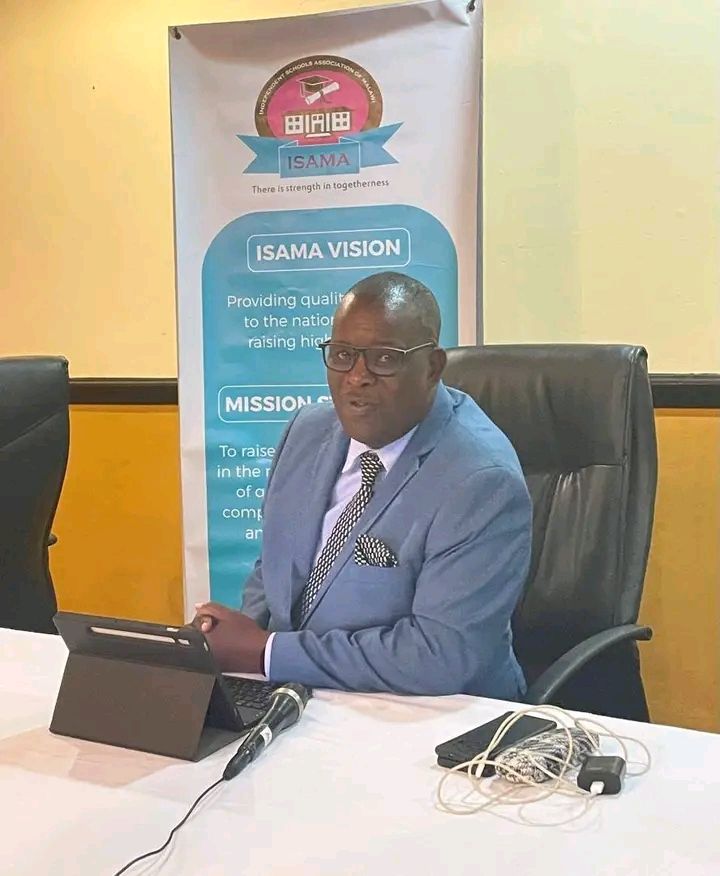
The Independent Schools Association of Malawi (ISAMA) is urging private schools to adopt digitalization and inclusive practices to ensure quality education for all learners.
Speaking at a press briefing at Sunbird Mount Soche in Blantyre, ISAMA President Wycliffe Chimwendo emphasized the importance of creating an enabling environment that allows all learners to thrive.
The call to action comes ahead of ISAMA’s annual conference, scheduled for May 28-29, which will focus on addressing inclusion and digitalization solutions in the education sector.
Chimwendo
Chimwendo highlighted that private schools play a vital role in shaping the future of education in Malawi and must adopt inclusive practices to cater to learners with disabilities.
“Learners with disabilities will no longer be barred by inadequate structures and outdated learning materials when inclusion is adopted,” Chimwendo said.
ISAMA Vice-President Coxley Kamange echoed these sentiments, stressing that inclusion and digitalization are essential for quality sustainable education in Malawi.
The conference theme, “Advancing digitalisation, quality education and standards, inclusion and corporate governance for a sustainable future,” underscores the need for private schools to prioritize digitalization and inclusion.
By embracing technology and inclusive practices, private schools can improve learning outcomes, enhance teacher development, and increase access to information.
This initiative aligns with the World Bank’s Inclusive Digitalization in Eastern and Southern Africa (IDEA) Program, which aims to increase access to the internet and digitally enabled services in the region.
By prioritizing inclusive and digitally enabled education, Malawi’s private schools can play a critical role in shaping the country’s future and promoting sustainable development.
The Anti-Corruption Bureau (ACB) has suspended the recruitment of Health Surveillance Assistants (HSAs) across the country due to an ongoing corruption investigation.
In a restriction notice dated May 21, ACB Acting Director Hillary Chilomba ordered the Principal Secretary of the Ministry of Health to halt all hiring processes for HSAs in local councils.
The directive, issued under Section 23(1) of the Corrupt Practices Act, bars the ministry from proceeding without written approval from the bureau.
Ndala
The ACB has not disclosed specific allegations but indicated that the probe involves potential violations of anti-graft laws.
The Ministry of Health has yet to comment on the development. The suspension of the recruitment process has raised questions about the transparency and accountability of the hiring process.
The ACB’s decision to intervene in the matter demonstrates its commitment to ensuring that government processes are free from corruption.
The investigation will likely examine whether the recruitment process was conducted fairly and transparently.
The recruitment of HSAs is a critical process that affects the delivery of healthcare services in Malawi.
The suspension of the process may cause delays in the deployment of HSAs, which could impact the healthcare system.
The ACB’s investigation will be closely watched by stakeholders, including the Ministry of Health, local councils, and the general public.
The outcome of the investigation will determine the next course of action regarding the recruitment process.
As the investigation unfolds, it remains to be seen how the Ministry of Health will respond to the allegations and what measures will be taken to ensure that the recruitment process is conducted fairly and transparently.
The ACB’s action is a significant step towards promoting accountability and transparency in government processes.
President Lazarus Chakwera has assured that his government is working tirelessly to create a conducive environment for the private sector to thrive, with the aim of promoting economic transformation in Malawi. Chakwera made the remarks during the official opening of the 35th Malawi International Trade Fair at Chichiri Trade Fair Grounds in Blantyre.
According to Chakwera, his administration has implemented strategies to support private sector growth, including providing financial support to women and youth entrepreneurs.
Chakwera
Over the past four years, the government has supported 100,000 businesses with K300,000 each, and an additional K1 trillion from the African Development Bank will be provided through the National Economic Empowerment Fund over the next five years.
“We have put in place strategies aimed at creating a conducive environment for the private sector to scale up their investment and increase production to promote economic transformation of the country,” Chakwera said.
Malawi Confederation of Chambers of Commerce and Industry (MCCCI) President Dr. Wisely Phiri commended Chakwera for presiding over the event, saying it demonstrates the government’s commitment to a vibrant and dynamic private sector.
The Malawi International Trade Fair, which runs until May 29, features 191 exhibitors from Malawi and other countries, including Zambia, Egypt, Zimbabwe, Mozambique, and Tanzania.
The event provides a platform for businesses to showcase their products, network, and explore opportunities for growth and collaboration.
Chakwera’s assurance that the government is working to create a conducive environment for the private sector is a positive signal for investors and businesses.
With the government’s support and investment in entrepreneurship development, Malawi’s economy is poised for growth and transformation.
Malawi is set to increase its tourism base through the upcoming Transfrontier Conservation Area (TFCAs) summit, according to Deputy Minister of Foreign Affairs Patricia Nangozo Kainga. Speaking at the end of the Southern Africa Development Community (SADC) TFCA Council of Ministers meeting, Kainga said President Lazarus Chakwera’s presence at the summit will enhance cooperation and integration among member states.
The summit, which marks 25 years of TFCA fostering regional integration and sustainable development, will bring together Heads of State from SADC member countries.
Kainga Nangozo
Kainga highlighted the importance of the President’s attendance, saying it will provide an opportunity for bilateral talks with fellow Heads of State to strengthen cooperation.
“President Dr. Lazarus Chakwera will hold several bilateral talks with fellow Heads of State to strengthen their cooperation, and the President will also hold meetings with development partners who are already here on financing and other important issues that will benefit Malawi,” Kainga said.
Minister of Tourism Dr. Vera Kamtukule emphasized the significance of tourism in Malawi’s economy, noting the sector’s tremendous growth.
“Tourism has seen tremendous growth in Malawi, and we believe that this summit will provide a platform for us to showcase our country’s potential and attract more tourists,” Kamtukule said.
The TFCAs initiative aims to promote sustainable development and regional integration by establishing transfrontier conservation areas that transcend national borders.
By working together, SADC member states can unlock the potential of their shared natural resources and promote economic growth.
The summit is expected to attract investors, development partners, and tourists, providing a unique opportunity for Malawi to showcase its tourism potential.
With its rich cultural heritage, stunning natural beauty, and friendly people, Malawi is well-positioned to capitalize on the growing tourism industry.
As President Chakwera prepares to attend the summit, Malawians are hopeful that the event will yield positive outcomes for the country’s tourism sector.
The government’s efforts to promote tourism development and investment are expected to bear fruit, contributing to the country’s economic growth and development.
The TFCA summit is a significant event that will shape the future of tourism in the SADC region.
With Malawi at the forefront, the country is poised to reap the benefits of increased tourism activity, creating jobs, stimulating economic growth, and improving the lives of its citizens.
_Malawi to boost tourism through transfrontier conservation area summit_
By Jones Gadama
Malawi is set to increase its tourism base through the upcoming Transfrontier Conservation Area (TFCAs) summit, according to Deputy Minister of Foreign Affairs Patricia Nangozo Kainga. Speaking at the end of the Southern Africa Development Community (SADC) TFCA Council of Ministers meeting, Kainga said President Lazarus Chakwera’s presence at the summit will enhance cooperation and integration among member states.
The summit, which marks 25 years of TFCA fostering regional integration and sustainable development, will bring together Heads of State from SADC member countries.
Kainga highlighted the importance of the President’s attendance, saying it will provide an opportunity for bilateral talks with fellow Heads of State to strengthen cooperation.
“President Dr. Lazarus Chakwera will hold several bilateral talks with fellow Heads of State to strengthen their cooperation, and the President will also hold meetings with development partners who are already here on financing and other important issues that will benefit Malawi,” Kainga said.
Minister of Tourism Dr. Vera Kamtukule emphasized the significance of tourism in Malawi’s economy, noting the sector’s tremendous growth.
“Tourism has seen tremendous growth in Malawi, and we believe that this summit will provide a platform for us to showcase our country’s potential and attract more tourists,” Kamtukule said.
The TFCAs initiative aims to promote sustainable development and regional integration by establishing transfrontier conservation areas that transcend national borders.
By working together, SADC member states can unlock the potential of their shared natural resources and promote economic growth.
The summit is expected to attract investors, development partners, and tourists, providing a unique opportunity for Malawi to showcase its tourism potential.
With its rich cultural heritage, stunning natural beauty, and friendly people, Malawi is well-positioned to capitalize on the growing tourism industry.
As President Chakwera prepares to attend the summit, Malawians are hopeful that the event will yield positive outcomes for the country’s tourism sector.
The government’s efforts to promote tourism development and investment are expected to bear fruit, contributing to the country’s economic growth and development.
The TFCA summit is a significant event that will shape the future of tourism in the SADC region.
With Malawi at the forefront, the country is poised to reap the benefits of increased tourism activity, creating jobs, stimulating economic growth, and improving the lives of its citizens.
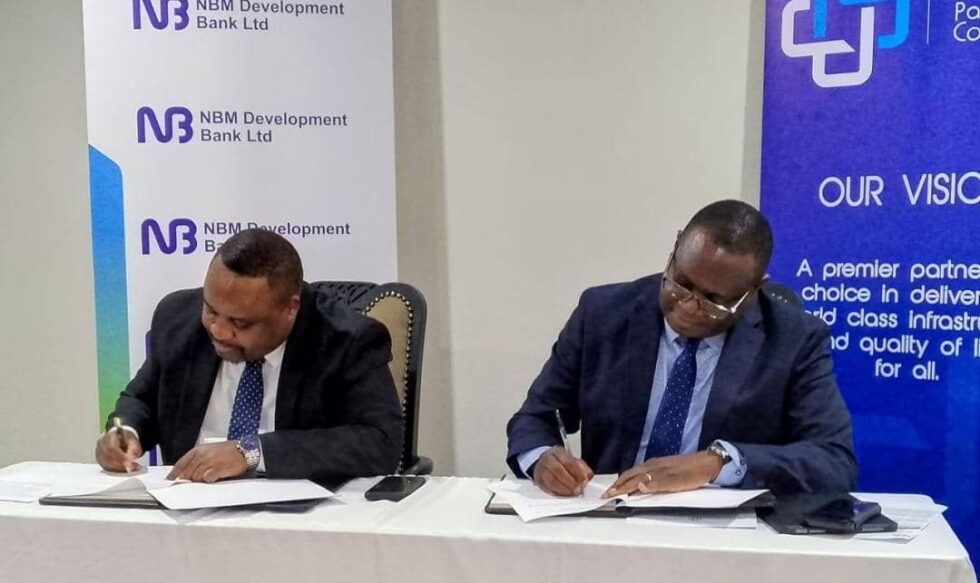
NBM Development Bank Limited has entered into a partnership with the Public Private Partnership Commission (PPPC) to facilitate access to long-term financing for transformative development projects across the country.
NBM Development Bank (NBMDB), a wholly owned subsidiary of National Bank of Malawi (NBM) plc, provides both debt and equity capital to start-ups, existing businesses and high-risk ventures that contribute significantly to economic development.
Speaking during the signing ceremony on Tuesday, NBM Development Bank General Manager, Bernard Masi expressed optimism about the potential of the partnership to drive sustainable national development.
“Through our international collaborations and affiliated institutions, we intend to source and attract long-term capital into the bank so that we can provide funding to large infrastructure projects that would have a significant impact on the economy,” said Masi.
He further indicated that the newly established agreement between the two is expected to unlock new avenues of long-term financing for development projects, particularly those driven by local entrepreneurs.
“At the heart of this collaboration is a shared goal, which is to empower local Malawians to take an active role in building the nation through infrastructure and service delivery ventures that create a lasting impact.”
“Most commercial banks do not provide startup funding due to the perceived high risks, but at NBM Development Bank, we are structured to take on that challenge. We finance both greenfield and brownfield projects, as long as they are viable and have a developmental impact,” added Masi.
On his part, PPPC CEO, Patrick Kabambe, hailed the agreement as a milestone that will enhance the Commission’s efforts to implement PPPC projects through local participation.
He further indicated that this collaboration with regional and international development finance networks enables PPPC to engage with global capital providers through NBM Development Bank’s platforms which opens new opportunities for Malawi to attract external investment and technical expertise.
“One of the biggest challenges we face is access to long-term finance, especially for local investors. This partnership with NBM Development Bank will enable us to unlock that potential by supporting Malawians to invest in infrastructure and service delivery.”
“This collaboration will not only address the supply and demand sides of long-term capital but will also ensure that more PPPC projects are led or co-owned by Malawians, creating a ripple effect in terms of job creation, service delivery, and national progress,” said Kabambe.
According to the two parties, the MoU further aligns with national development priorities, including the Vision 2063 agenda, the Agriculture, Tourism, and Mining (ATM) strategy, and the MEGA Farms initiative being championed by the Government.
Notable sectors that are being targeted are Agribusiness – both mechanization and value addition, Education, Energy, ICT, Health, Manufacturing, Mining, Tourism, Water, and Sanitation.
Since its establishment in 2019, NBM Development Bank has championed projects that have promoted import substitution, job creation, environmental sustainability, and access to quality healthcare and education.